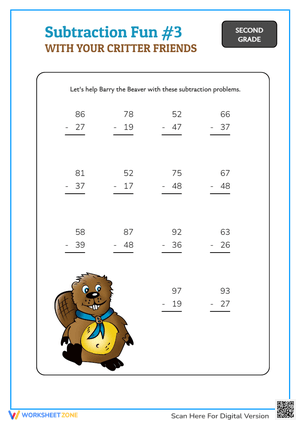
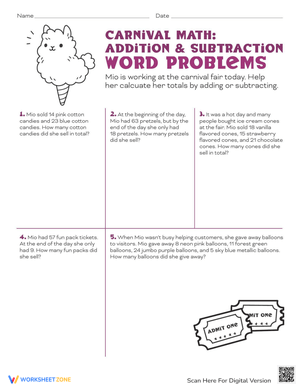
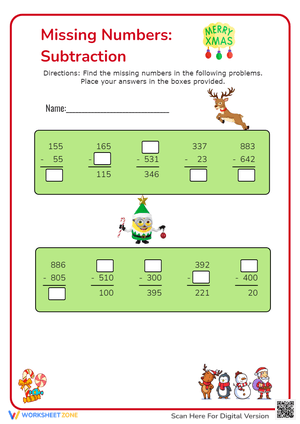
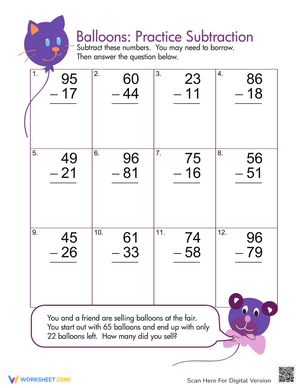
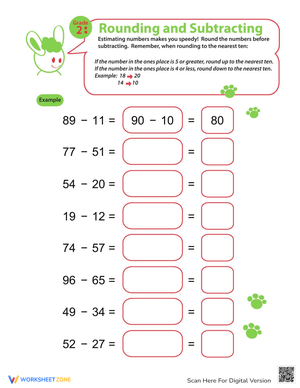
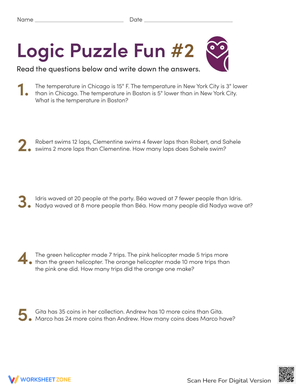
These 2nd grade two digit subtraction worksheets cover the full instructional arc — from clean no-regrouping practice to regrouping with visual models to mixed-format word problems — giving teachers a ready set of resources that mirrors how this concept actually unfolds across a second-grade unit. The worksheets work across whole-group instruction, small-group intervention, math centers, and formative checks without requiring modification between uses.
What's Inside the Set
The worksheets divide into four distinct skill areas, each targeting a different instructional moment.
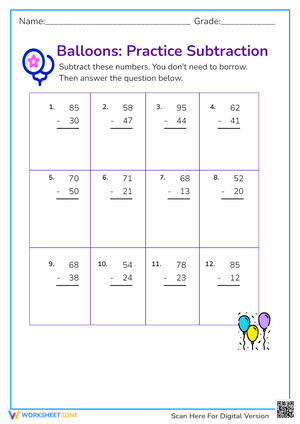
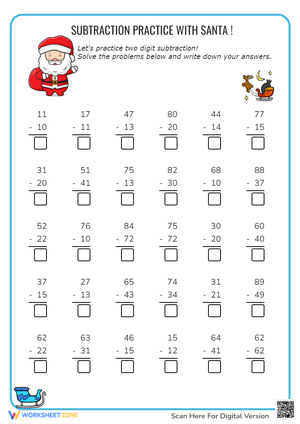
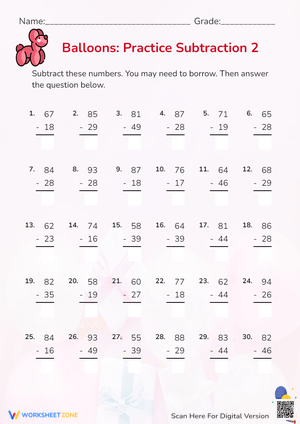
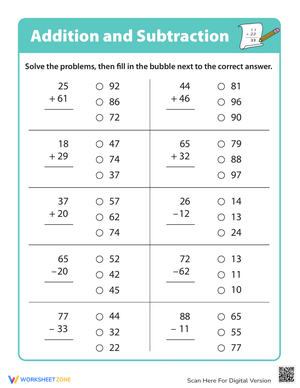
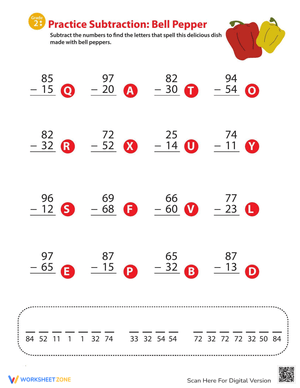
- No-regrouping subtraction: Students subtract two-digit numbers where the ones digit in the top number is greater than or equal to the digit below it. These worksheets direct attention to place-value alignment and the structure of the vertical algorithm without adding the complexity of trading a ten for ones — important for confirming foundational understanding before regrouping enters the picture.
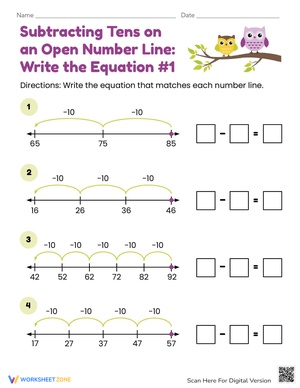
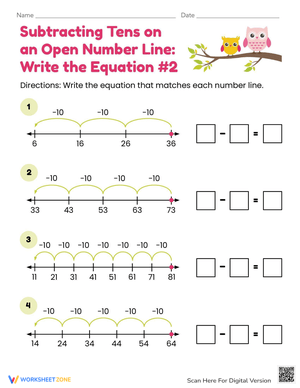
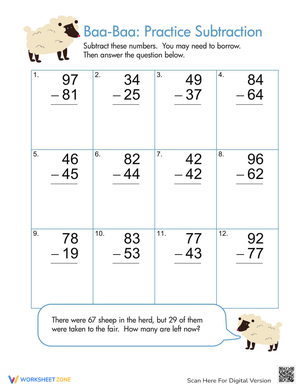
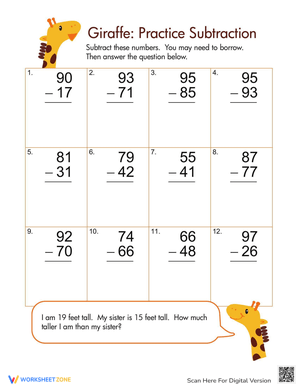
- Regrouping practice: Early worksheets in this group pair base-ten block drawings or expanded form with the standard algorithm, making the trade-a-ten step concrete and visible. Later worksheets drop the visual support so students practice the algorithm independently — a gradual reduction that keeps students moving forward without abrupt difficulty jumps.
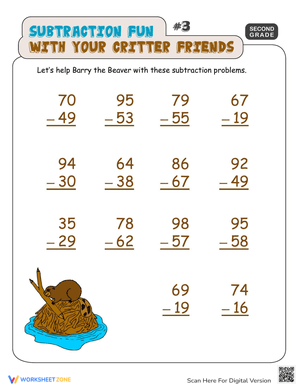
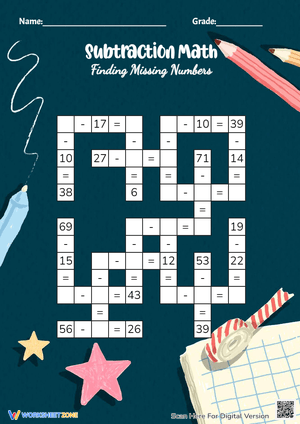
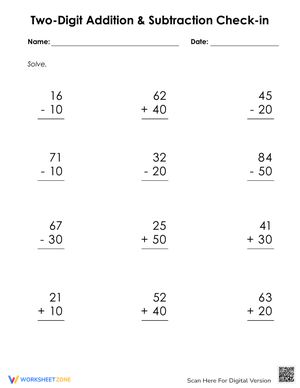
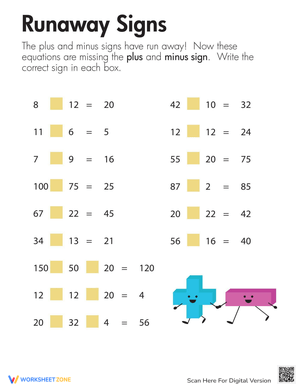
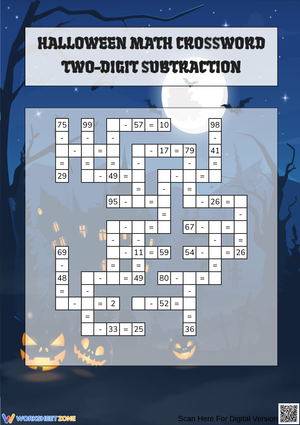
- Mixed review: These worksheets present regrouping and no-regrouping problems side by side, which forces students to examine the ones place before starting rather than running the same procedure on every problem. This is where you learn whether a student understands the concept or has only memorized steps.
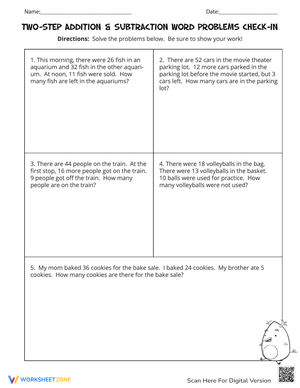
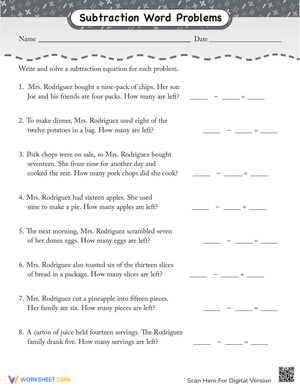
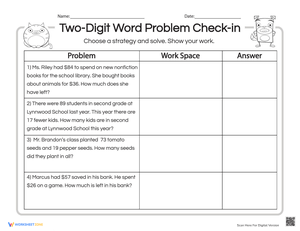
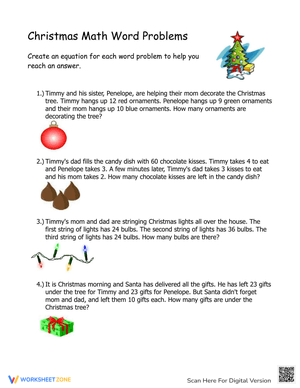
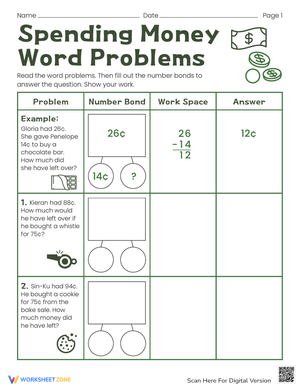
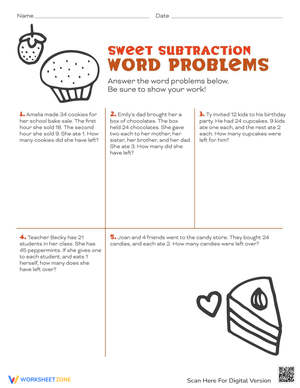
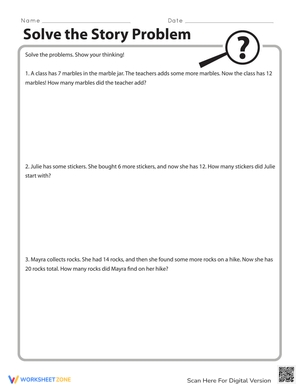
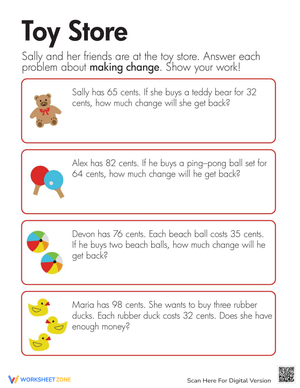
- Word problems: Short two- to three-sentence problems asking students to find differences, compare quantities, or determine how many remain. These work best after students compute reliably; reading and interpreting a word problem adds cognitive load that causes algorithm accuracy to drop, giving teachers useful diagnostic information about where the gap actually sits.
Mistakes Students Make That These Worksheets Help You Catch
Two-digit subtraction generates a predictable cluster of errors — predictable enough that you can name them before handing anything out. The most common one is the reversal: a student working 53 − 27 subtracts 3 from 7 in the ones column, records 4, then subtracts 2 from 5 in the tens column and writes 34 as the answer. The number is plausible. Nothing looks obviously wrong to a seven-year-old scanning their own paper, and because both digits do appear in the problem, the error sails past a quick check. Worksheets that include workspace for regrouping marks — a crossed-out tens digit with the reduced value written above it — create a visible paper trail for teachers to review.
A second pattern appears once regrouping is introduced but not yet automatic. In the same problem, a student correctly crosses out the 5 and writes 4, borrows 10 ones, and solves the ones column accurately. Then, in the tens column, they compute 5 − 2 instead of 4 − 2 — ignoring the adjusted digit they just wrote — and land on 56 instead of 26. The mechanics were present; the follow-through was not. The 2nd grade two digit subtraction worksheets in this set include ample workspace above the tens digit so this adjusted value stays visible during review, which helps both the student checking their own work and the teacher scanning the room.
Alignment errors are a third pattern worth watching. Students who copy a horizontal expression into vertical format — or who simply write quickly — shift a digit into the wrong column, turning a tens digit into a ones digit or vice versa. One quick fix: ask students to underline the tens digit in both numbers before setting up the algorithm. It takes about 15 seconds and cuts column misalignment noticeably.
Fitting These Worksheets Into Your Instruction Week
Each worksheet serves a different role depending on where students are in the unit. No-regrouping worksheets work well as Monday warm-ups at the start of the subtraction sequence — five minutes of familiar practice surfaces who came in with solid place-value grounding and who needs a reteach before the week's new content begins. Regrouping worksheets fit naturally into the window right after a mini-lesson, when the teacher's model is still fresh and students are ready to try the steps with someone circulating the room.
For small-group intervention, pulling one focused worksheet — regrouping only, with generous workspace — and working through it at the table with four or five students is more productive than sending the group to complete a full mixed review independently. The worksheet becomes a vehicle for conversation about what regrouping actually means, not just a task to finish. 2nd grade two digit subtraction worksheets also run well in math centers when paired with base-ten blocks or a place-value mat; students who finish early can swap papers and check each other's regrouping marks rather than moving to an unrelated activity.
Standard Alignment
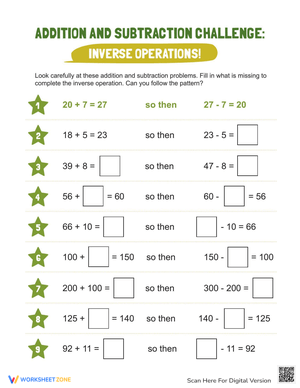
The computation worksheets address CCSS 2.NBT.B.5, which requires students to fluently add and subtract within 100 using strategies based on place value, properties of operations, and the relationship between addition and subtraction. In classroom terms, this standard appears twice in the school year: once as new direct instruction — typically in winter for most curricula — and again as a fluency component integrated into warm-ups and center rotations through spring. The word-problem worksheets connect to 2.OA.A.1, which extends that fluency into problem-solving contexts within 100. Teachers planning intervention work will find that these two standards often need to be addressed together, since a student who misreads a word problem is sometimes struggling with the operation context, not the computation itself.
Adapting These Worksheets for a Range of Learners
Students who are still developing place-value understanding do best starting with no-regrouping worksheets alongside physical base-ten blocks. Reduce the number of problems assigned and ask these students to draw a quick base-ten sketch beside each answer rather than only writing the number — the drawing slows them down in a productive way and makes their reasoning visible. For students who are on grade level but making careless regrouping errors, the mixed-review worksheets work well with a self-checking step added: after solving, students circle every problem where they regrouped and confirm that the tens digit was reduced. That brief audit turns the worksheet into a self-monitoring exercise rather than another round of the same practice.
Students who are ready to move beyond the grade-level standard can use the word-problem worksheets as a springboard — solve the problem, then write a companion problem using different numbers. Writing a subtraction word problem requires understanding what the operation is describing, which is a distinct cognitive task from computing an answer. It keeps the extension work tied to the same standard rather than jumping to entirely new content.
Frequently Asked Questions
When in the unit should regrouping be introduced?
Introduce regrouping after students can accurately subtract two-digit numbers without it and can explain what the tens and ones digits represent. Rushing that sequence produces procedural mimicry — students follow steps during the lesson and fail them entirely the next morning. A no-regrouping worksheet used as a readiness check, combined with a few questions about what the digits mean, gives a clearer picture than a computation pretest alone.
How many problems should each worksheet include for second graders?
For regrouping practice, 8 to 12 problems with generous workspace is a workable range. Past that, students in second grade tend to rush through the second half, which is exactly when regrouping errors spike. No-regrouping worksheets can carry more problems since the cognitive demand per item is lower — 15 to 18 is usually enough to build fluency without exhausting students before the rest of the math block.
Can these worksheets be used with students who have not yet learned regrouping?
Yes. The no-regrouping and regrouping worksheets are separate resources, so teachers assign them independently based on where each student is in the progression. 2nd grade two digit subtraction worksheets organized this way let teachers differentiate by which worksheet type a student receives, rather than modifying individual problems by hand.













 Interactive Worksheet Maker
 Quiz Maker
 Word Search Maker
 Crossword Puzzle Maker
 Word Scramble Generator
 Sentence Scramble Generator
 Handwriting Worksheet Generator
 Name Tracing Generator
 Fill In The Blank Generator