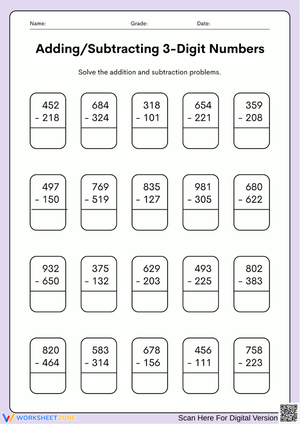
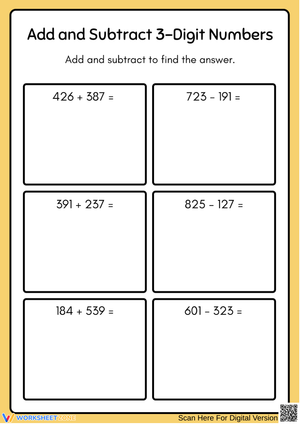
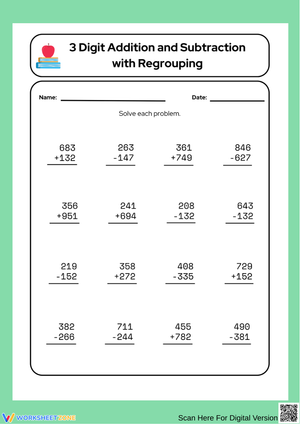
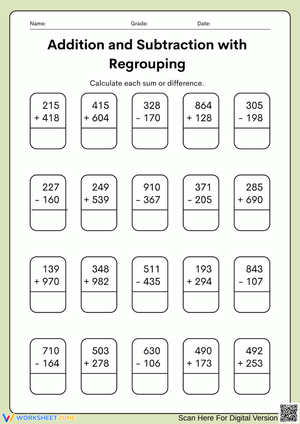
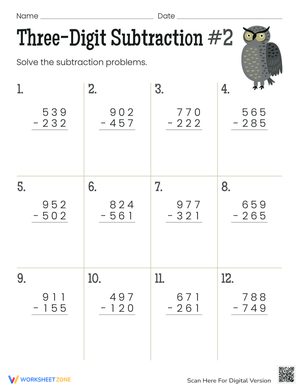
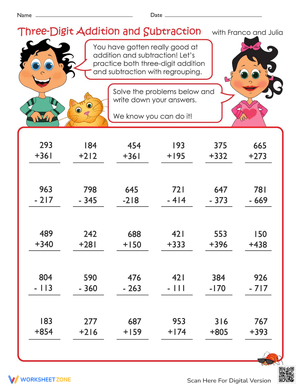
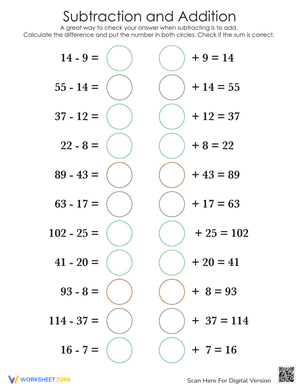
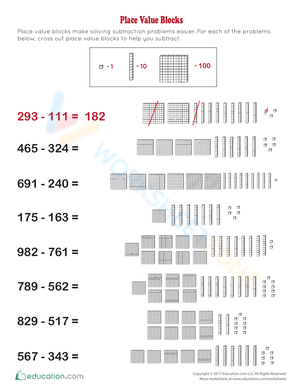
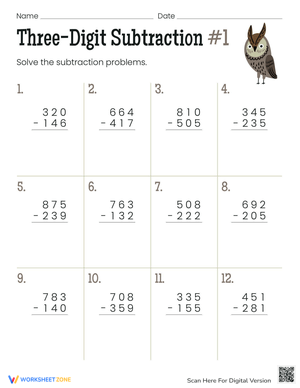
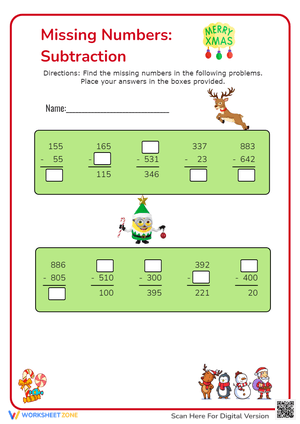
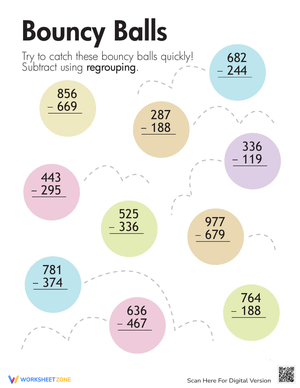
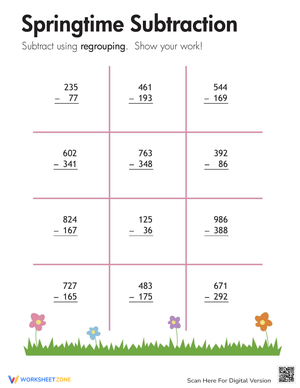
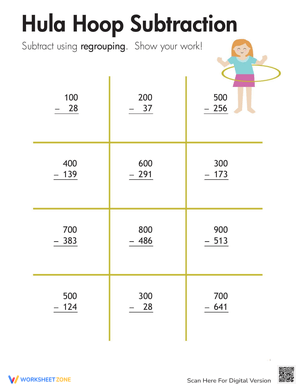
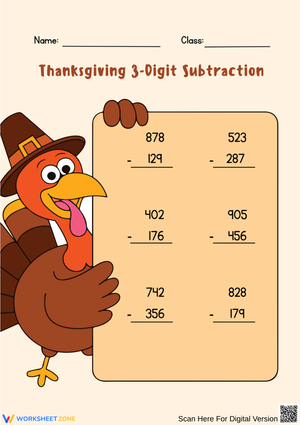
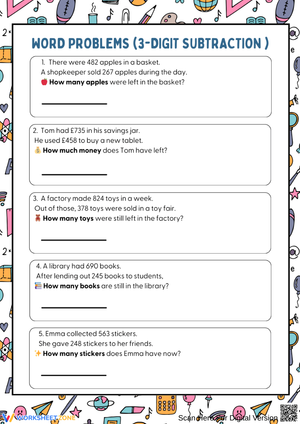
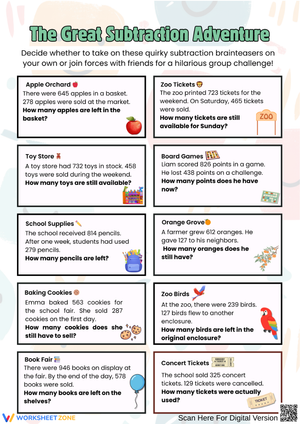
Three digit subtraction and regrouping pdf worksheets for 2nd grade give teachers a structured way to move students from place value models to written subtraction without losing the conceptual thread. What matters most at this stage is sequence — not just whether problems are hard or easy, but whether students have had enough time working with one type of regrouping before encountering a problem that demands both.
What These Worksheets Cover
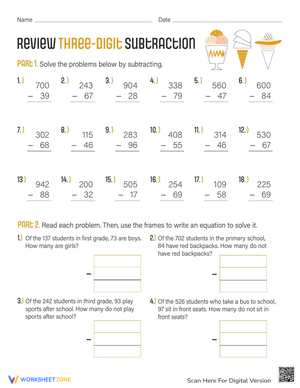
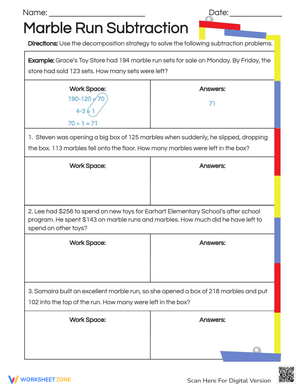
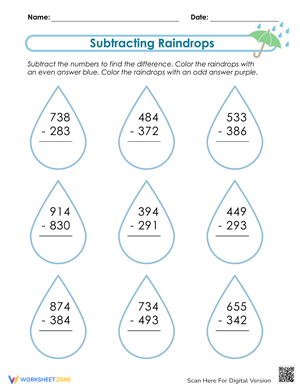
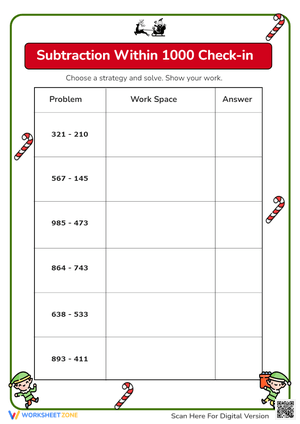
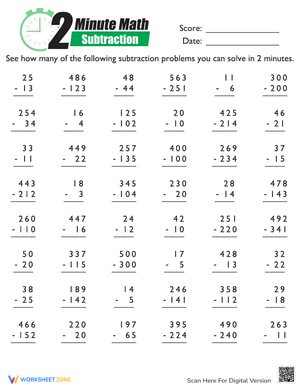
The set spans three-digit subtraction across a deliberate range of problem types: no-regrouping problems for students still internalizing column alignment, single-regroup problems (either tens-to-ones or hundreds-to-tens), and mixed sets where students decide for themselves whether regrouping is necessary. Word problems appear as well, asking students to translate a story context into a subtraction equation before solving — a step that reveals whether a student understands the operation or is only pattern-matching a column format.
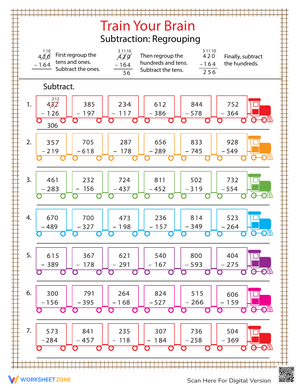
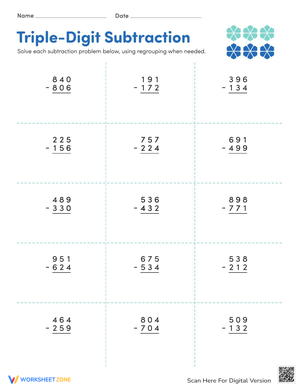
Each worksheet includes enough workspace for students to cross out original values, write the renamed digit above the column, and mark regrouping clearly. When students erase their regrouping work instead of striking through it, teachers lose the record of where the breakdown happened. The workspace protects that information.
Errors That Appear in Student Work and How to Catch Them
The most persistent mistake in three-digit subtraction is subtracting the smaller digit from the larger one regardless of position — so 432 minus 178 becomes 346 rather than 254, because the student computes 8 minus 2 instead of recognizing that 2 is insufficient. This error shows up in student work even after students can explain regrouping verbally. Seeing the equation on paper triggers a different habit than talking through it aloud.
A second pattern: students regroup correctly but forget to reduce the column that was exchanged. They rename 5 tens as 4 tens and 10 ones, write the correct value in the ones column, and then subtract from 5 tens instead of 4. The final answer is wrong by exactly 10, but the mistake is invisible unless the regrouping notation remains on the worksheet. When reviewing three digit subtraction and regrouping pdf worksheets for 2nd grade, check the crossed-out tens or hundreds digit first — that notation tells you more than the final answer alone.
Language is part of the picture too. Students who have heard the word borrowing sometimes expect the ten to return. The term regrouping corrects that — one ten is renamed as 10 ones, nothing comes back, and the total value stays constant. Consistent word choice across instruction, practice, and homework eliminates one predictable source of confusion.
How to Build These Worksheets Into Your Lesson Plans
The most effective pattern runs across several days. After a Monday mini-lesson with base-ten blocks or quick sketches, a short no-regrouping worksheet the same day confirms column alignment before regrouping enters the picture. Tuesday and Wednesday work well for single-regroup practice — one worksheet focused on the tens-to-ones exchange, another on hundreds-to-tens. Mixed problems belong later in the week, once students have reliable habits in both directions.
For math centers, keep visual-support worksheets (those with place value boxes or base-ten pictures) in the teacher-guided station and the mixed practice worksheets in the independent station. Students who rotate before they are ready for mixed problems make more errors — and those errors can become fixed patterns if they repeat without correction.
Exit checks work well here too. Cut one worksheet into two- or three-problem strips. Students complete one strip in the final few minutes of the math block. Teachers see immediately who can regroup without prompting and who needs another day of single-regroup work before advancing.
Adjusting the Set for a Range of Learners
For students who need more structured support, use worksheets that include partially completed regrouping notation — the crossed-out digit already shown, the student writing only the renamed value. This removes one cognitive demand at a time rather than stripping the problem of its challenge. Pairing those worksheets with a reference card showing one annotated example gives students a check they can use independently during practice.
On-level students work through single-regroup and then mixed worksheets in sequence. For students who move through the set quickly, ask them to write a word problem that matches one equation they solved. That task requires a deeper understanding than solving the equation alone — students who can do it consistently are ready for multi-step problems.
Color coding is a low-effort support worth naming: students mark hundreds digits in one color, tens in another, and ones in a third before subtracting. It takes less than a minute and catches the alignment slips that cost otherwise capable students accuracy on problems they would get right.
Standard Alignment
These worksheets address CCSS 2.NBT.B.7, which requires students to add and subtract within 1,000 using concrete models, drawings, and strategies based on place value and properties of operations. Three digit subtraction and regrouping pdf worksheets for 2nd grade sit at the written-strategy phase of this standard — they follow base-ten block and visual-model work and help students record regrouping symbolically. The same procedural accuracy this standard targets at second grade feeds directly into 3.NBT.A.2, which expects fluency within 1,000, so getting the regrouping habit right here has implications well beyond the grade level.
Frequently Asked Questions
Are second graders expected to regroup in both the ones and tens columns within a single problem?
CCSS 2.NBT.B.7 includes subtraction within 1,000, which can require regrouping in both places. Most second-grade classrooms introduce double-regrouping only after students are confident with single-regroup problems. The worksheets in this set follow that sequence — mixed problems come after single-regroup practice, not alongside it.
What is the difference between regrouping and borrowing?
Borrowing implies a temporary exchange that gets returned. Regrouping describes what actually happens: one unit in a given place value is renamed as 10 units in the next smaller place. The total value stays the same. Students who think of it as borrowing sometimes try to "pay back" the ten, which produces wrong answers in subsequent steps.
How many problems per worksheet is right for second grade?
Eight to twelve problems per worksheet is the right range for most second graders. Fewer than eight can feel incomplete; past twelve, accuracy falls off as attention fades. For intervention groups, six focused problems with generous workspace produce more useful information than a longer worksheet completed too quickly to show real thinking.
Can these worksheets be used for homework?
Three digit subtraction and regrouping pdf worksheets for 2nd grade work well as homework when families understand the classroom language. Send a brief annotated example home with the first homework assignment — showing the crossed-out digit, the renamed value written above, and the label regrouping rather than borrowing. That one step prevents most of the confusion that surfaces when a parent tries to help and uses different terminology than the classroom does.













 Interactive Worksheet Maker
 Quiz Maker
 Word Search Maker
 Crossword Puzzle Maker
 Word Scramble Generator
 Sentence Scramble Generator
 Handwriting Worksheet Generator
 Name Tracing Generator
 Fill In The Blank Generator