


























Views
Downloads
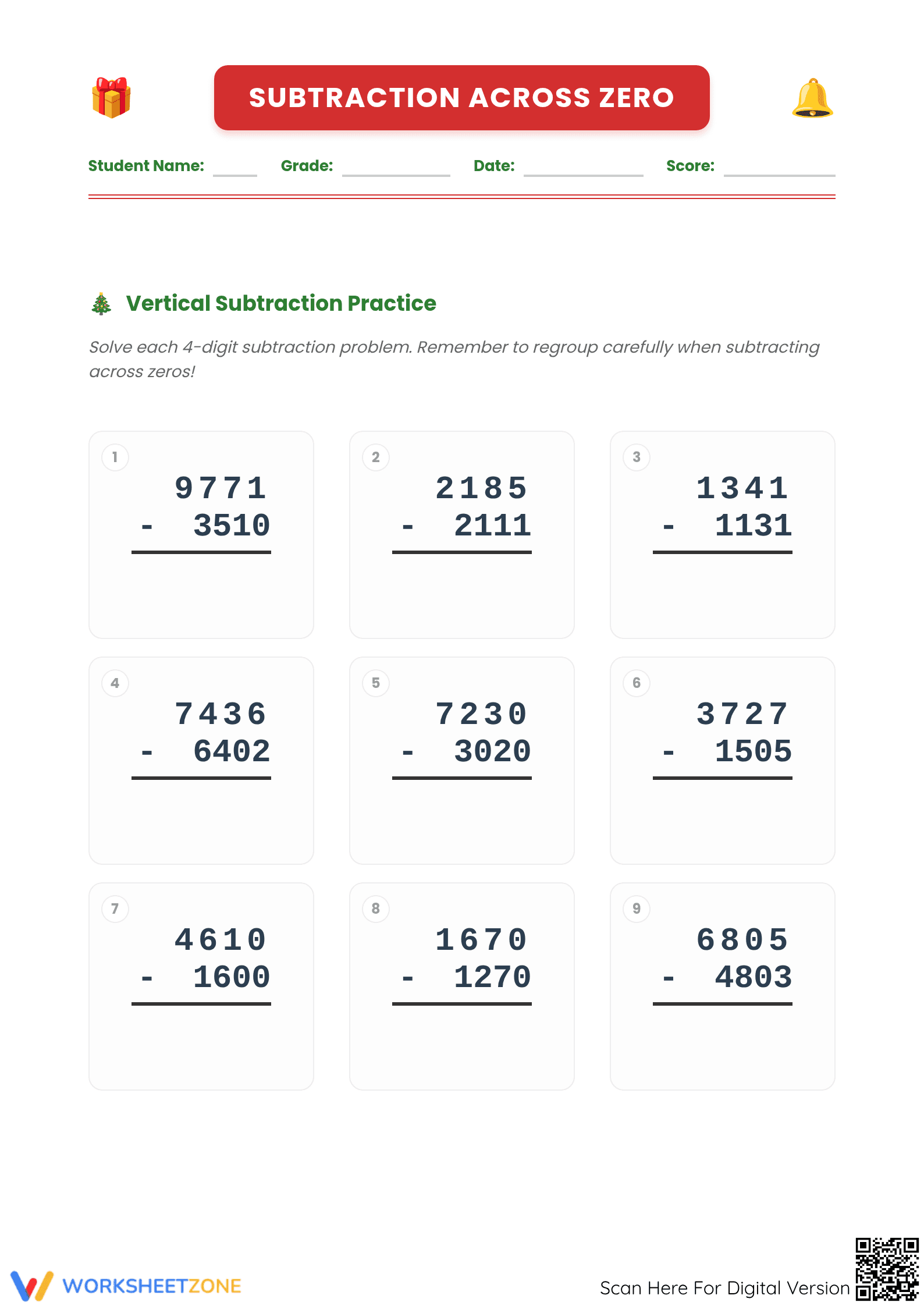


Subtraction Across Zero Worksheet | Grade 4 Printable
Paste this activity's link or code into your existing LMS (Google Classroom, Canvas, Teams, Schoology, Moodle, etc.).
Students can open and work on the activity right away, with no student login required.
You'll still be able to track student progress and results from your teacher account.
Mastering multi-digit subtraction is a critical milestone for upper elementary students. This Subtraction Across Zero worksheet provides concentrated practice on the specific challenge of regrouping through multiple zeros. By working through these twenty-five structured vertical problems, learners build the computational fluency required for complex math operations and real-world problem-solving scenarios.
At a Glance
- Grade: 4 · Subject: Math
- Standard:
CCSS.MATH.CONTENT.4.NBT.B.4— Fluently subtract multi-digit whole numbers using the standard algorithm- Skill Focus: Subtraction across multiple zeros
- Format: 3 pages · 25 problems · Answer key included · PDF
- Best For: Independent practice and homework assignments
- Time: 20–30 minutes
This comprehensive packet contains three pages of vertical subtraction exercises. The layout features 25 clear, large-print problems specifically designed to isolate the skill of regrouping across zeros in the thousands, hundreds, and tens places. The document includes a student heading for tracking progress and comes with a full-page answer key to facilitate rapid grading or student self-correction.
Zero-Prep Workflow
- Step 1: Print the three-page PDF in seconds (under 1 minute).
- Step 2: Distribute the handouts to students for immediate engagement (1 minute).
- Step 3: Review student work using the included answer key to identify common regrouping errors (2-5 minutes).
Total teacher preparation time is effectively under two minutes, making this an ideal solution for substitute plans or unexpected schedule shifts.
Standards Alignment
This worksheet aligns directly with CCSS.MATH.CONTENT.4.NBT.B.4: "Fluently add and subtract multi-digit whole numbers using the standard algorithm." The problems specifically target the most difficult aspect of the subtraction algorithm: regrouping through a zero. This standard code can be copied directly into lesson plans, IEP goals, or district curriculum mapping tools to ensure instructional compliance.
How to Use It
Use this worksheet as a focused exit ticket after a direct instruction lesson on multi-digit subtraction to gauge student mastery of regrouping. Alternatively, assign it for homework to reinforce the algorithm through independent practice. During use, circulate and observe if students are correctly "hopping" across zeros or if they are simply subtracting the smaller digit from the larger, regardless of placement.
Who It's For
This resource is tailored for Grade 4 students but serves as excellent remediation for Grade 5 learners who struggle with accuracy. It is particularly effective for students requiring high-repetition practice to solidify procedural memory. Pair this worksheet with a place value chart or base-ten blocks to provide visual scaffolding for students who are still building a conceptual understanding of regrouping.
The development of computational fluency in multi-digit subtraction is a cornerstone of elementary mathematics, particularly as it relates to CCSS.MATH.CONTENT.4.NBT.B.4. Research indicates that students often struggle with the "borrowing" process when zeros are present in the minuend, necessitating targeted, high-repetition practice to achieve mastery. According to the ScienceDirect TpT Analysis (2024), structured vertical practice sheets are highly effective for consolidating algorithmic steps into long-term memory. This worksheet provides twenty-five opportunities for students to apply regrouping strategies, ensuring they move from procedural knowledge to fluent application. By isolating the "subtracting across zeros" variable, teachers can more accurately diagnose where the breakdown in the standard algorithm occurs. This evidence-based approach to math practice supports the gradual release of responsibility, moving students toward the independent mastery required for success in middle school algebraic thinking and complex measurement tasks.


