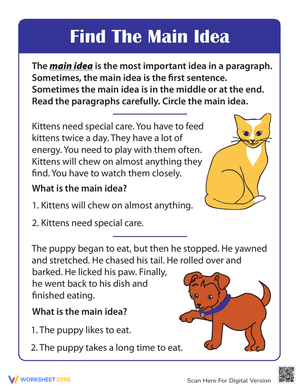
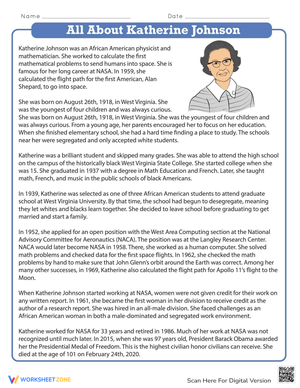
These 2nd grade reading genres and types printable worksheets resources give teachers a focused set of practice materials for one of the most fundamental shifts in early literacy: helping students move from decoding words to analyzing how a text is structured and why. Seven- and eight-year-olds are ready for that step — but the move from "is this real or made-up?" to "what kind of text is this and what does it do?" rarely happens without deliberate practice across a range of genres and formats.
The Specific Skills Targeted
Each worksheet isolates one genre or text category so students work with a single set of characteristics at a time. The set covers these core genres:
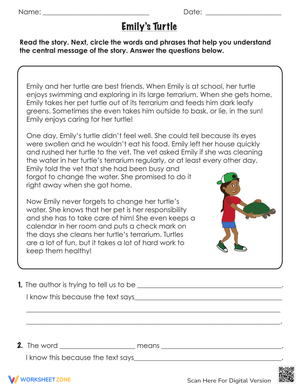
- Realistic fiction — students underline story details confirming that events could actually happen
- Fantasy — students circle impossible elements such as enchanted objects, talking animals, or characters with magical powers
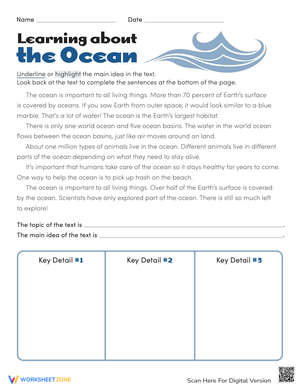
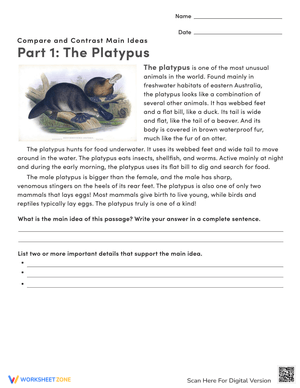
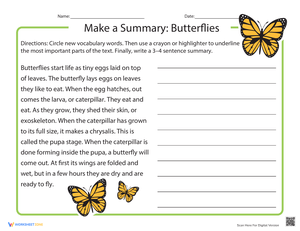
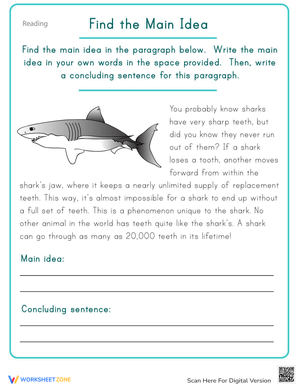
- Informational text — students annotate and label text features: headings, captions, bold vocabulary, and diagrams
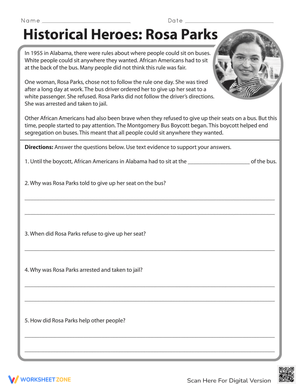
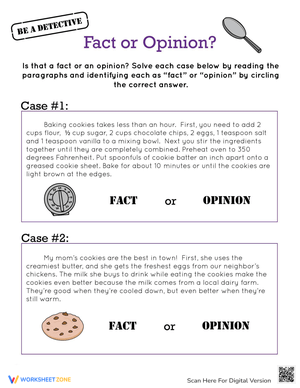
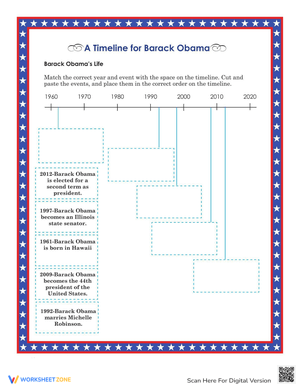
- Biography — students sequence a real person's life events on a timeline and identify factual statements versus interpretive ones
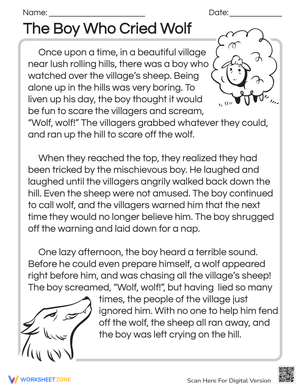
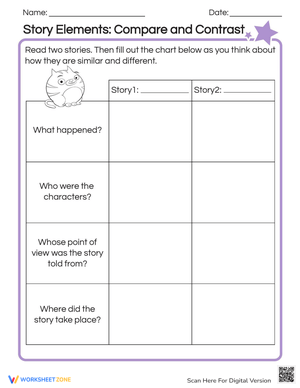
- Fables and folktales — students identify the moral, note recurring structural patterns, and compare cultural versions using a Venn diagram
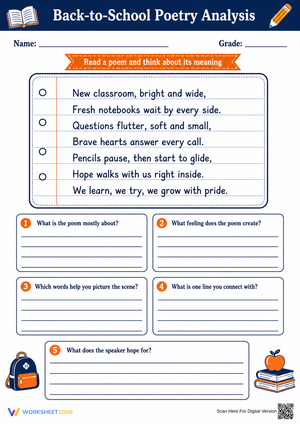
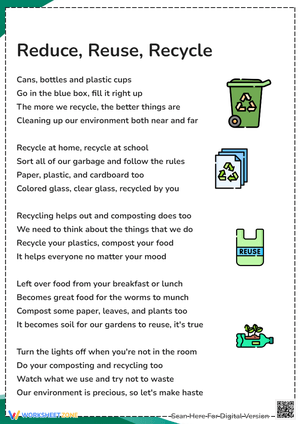
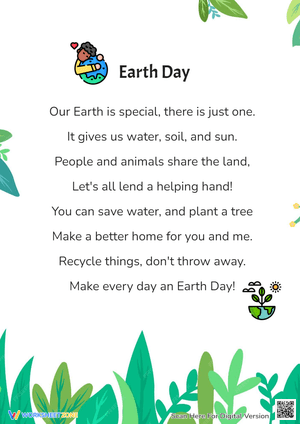
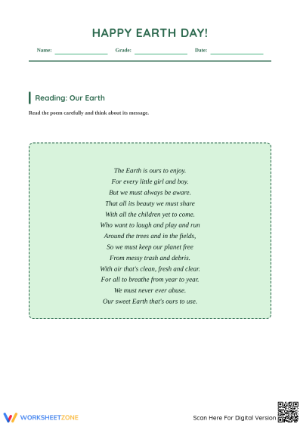
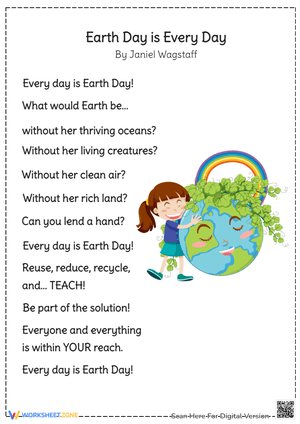
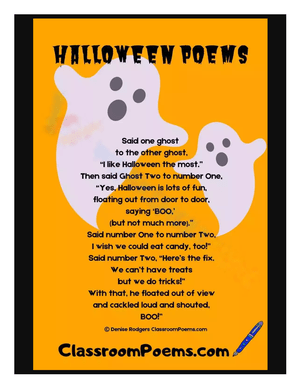
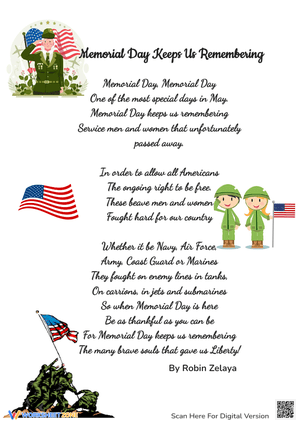
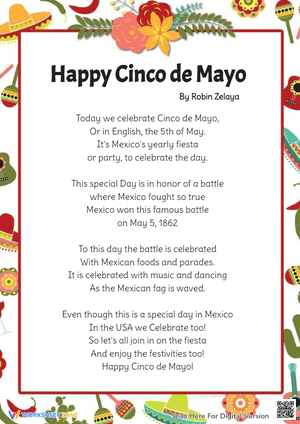
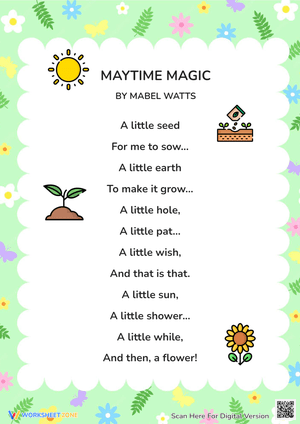
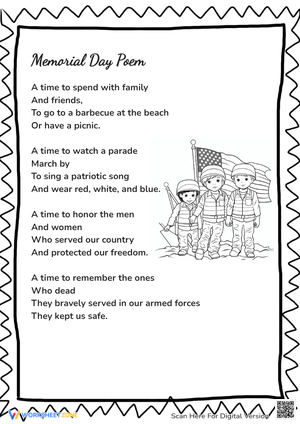
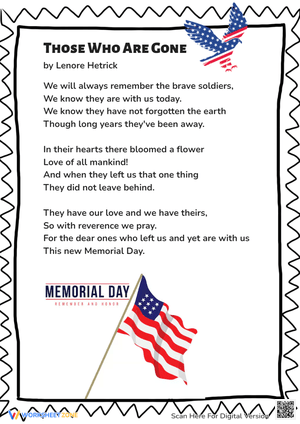
- Poetry — students mark rhyme schemes and explain how line breaks affect how a passage reads aloud
Genre identification practiced only through labeling ("circle the fantasy") stays shallow. When students annotate, sort, and compare within the same genre study, they build mental categories that transfer to unfamiliar texts — including ones they encounter on assessments well before they've had explicit practice with those specific passages.
Mistakes Students Make That These Worksheets Help You Catch
The most persistent confusion sits at the realistic-fantasy boundary, but not where most teachers expect it. Students identify a talking fox as fantasy without hesitation. The harder case is semi-realistic fantasy — a story where an ordinary child finds a magic door inside a school hallway. Students see "school" and lean toward realistic fiction. The familiar setting overrides the impossible element, and they misclassify the genre entirely. This pattern shows up consistently in student work and is worth addressing directly before moving to sub-genre tasks.
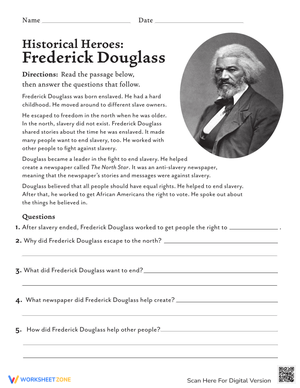
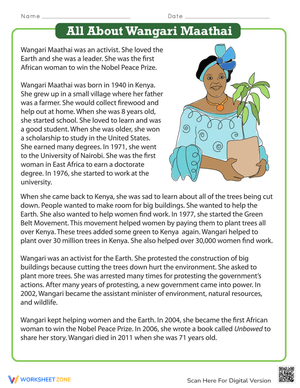
Within nonfiction, biography trips students up in a specific way. Most understand that biography covers a real person's life, but they treat sequencing life events as the complete skill and ignore the text-feature work. Ask a second grader to label a caption beneath a photograph of Harriet Tubman, and a meaningful portion will write "title" — they've mapped the heading label onto anything printed near an image. Catching this early prevents it from hardening before the informational text unit goes deeper.
Fables bring their own reliable problem: students confuse the moral with a plot summary. "The ant was mean to the grasshopper" is not a moral — it's a retelling of what happened. Getting students to abstract a lesson from specific story events requires explicit modeling across multiple examples before the distinction holds.
How to Build These Worksheets Into Your Lesson Plans
The genre-sorting activities — students read short blurbs and assign each to a category — work especially well as Monday warm-ups. After a weekend away from the material, students need an activation task that doesn't ask them to hold a long passage in working memory. Sorting from brief, descriptive blurbs takes about eight minutes and reactivates vocabulary without the cognitive overhead of a sustained reading task. The informational text feature annotation worksheets fit naturally into the 10–15 minutes after a nonfiction read-aloud, when students have just heard the features named aloud and can immediately mark them in print.
Cross-curricular placement is worth the setup time. These 2nd grade reading genres and types printable worksheets resources for informational text pair directly with science units — a worksheet asking students to label headings, captions, and bolded terms on a passage about animal habitats builds genre knowledge and content vocabulary at the same time. Biography worksheets slot naturally into social studies when students are already reading about historical figures, letting the genre work happen inside content students already care about.
Traditional Literature: Fables and Folktales in Second Grade
Fables and folktales occupy a distinct place in the genre study because they carry cultural weight that second graders respond to in a way they don't always respond to informational text. Every culture has versions of these stories, which means students bring their own prior knowledge into the room. The 2nd grade reading genres and types printable worksheets resources covering traditional literature ask students to identify the moral in a fable, recognize the use of animal characters to model human behavior, and track recurring structural patterns in folktales — the rule of three, the three wishes, the clever underdog who outsmarts a more powerful figure.
The folktale comparison task — placing two culturally distinct versions of a story side by side on a Venn diagram — is one of the more demanding activities in the set. A West African variant of Cinderella and the European version students already know share a structural skeleton but differ in setting, cultural values, and character motivation. Students who work through that comparison come away understanding that genre has rules that bend across cultures — a more nuanced grasp of traditional literature than most second graders arrive with.
Standard Alignment
These resources address CCSS.ELA-LITERACY.RL.2.5, which requires students to describe the overall structure of a story, and CCSS.ELA-LITERACY.RI.2.5, which asks students to know and use various text features to locate key facts or information. In most second-grade classrooms, RL.2.5 enters instruction early in the year during the fiction units — realistic fiction and fantasy — while RI.2.5 becomes the central focus once instruction shifts toward nonfiction, typically mid-year when science and social studies content gets heavier and students are expected to read to learn rather than simply follow a narrative.
Adjusting the Set for Different Student Levels
For students who are still solidifying the fiction/nonfiction distinction, the most practical adjustment is reducing text length and leaning on visual support. An excerpt with one heading, one labeled image, and a caption gives a student enough evidence to practice the skill without requiring them to process a full passage. These students work the broad-category worksheets first — fiction versus nonfiction, story versus information — before moving into sub-genres.
Students who are ready for more challenge get the sub-genre distinctions: realistic fiction versus historical fiction, biography versus autobiography, fable versus folktale. The Venn diagram folktale comparison works well as an extension because it layers a comparison structure on top of genre knowledge — a meaningful step up in cognitive demand. The 2nd grade reading genres and types printable worksheets set includes enough task variety that most classrooms can run two or three levels simultaneously without needing entirely different materials for every group.
Frequently Asked Questions
What genres are usually covered in a second-grade genre study?
Most second-grade units address realistic fiction, fantasy, informational text, biography, fables, and folktales. Poetry sometimes appears as a distinct category rather than being folded into fiction. The goal at this level is a working understanding of broad categories and their defining features — not mastery of every sub-genre, which comes in grades 3 and beyond.
How do I help a student who keeps confusing realistic fiction with nonfiction?
Anchor the distinction in purpose rather than subject matter. A story about a child who loves baseball is still fiction even though baseball is real. The question is whether the author invented the story or reported something that actually happened. Showing two contrasting examples side by side — a realistic fiction picture book and a sports biography — and asking students to explain the difference in their own words before they write anything tends to unstick this confusion faster than worksheet practice alone.
Are graphic novels a genre students should learn to identify at this level?
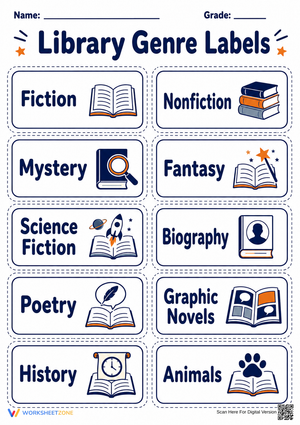
Graphic novels are a format, not a genre — a graphic novel can be fantasy, realistic fiction, or nonfiction. At the second-grade level, it's more useful to identify the genre a graphic novel belongs to than to treat the visual format as the genre itself. That said, using a graphic nonfiction title alongside the informational text feature worksheets is a strong move — it shows students that text features appear across formats, not just in traditional prose books.
How do these worksheets connect to independent reading?
The most direct connection is the sorting habit. Once students have practiced assigning blurbs to genre categories, many will start doing it automatically with books from the classroom library — reading the back cover, checking for photographs versus illustrations, and making a prediction before they open the book. That pre-reading move is exactly what genre awareness produces, and it's a concrete behavior teachers can observe and name when they see it.












 Interactive Worksheet Maker
 Quiz Maker
 Word Search Maker
 Crossword Puzzle Maker
 Word Scramble Generator
 Sentence Scramble Generator
 Handwriting Worksheet Generator
 Name Tracing Generator
 Fill In The Blank Generator