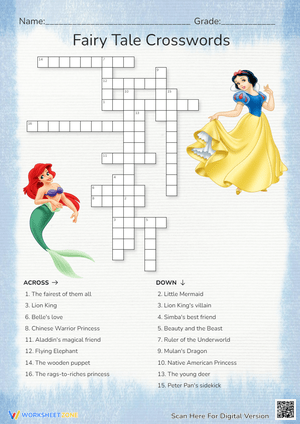
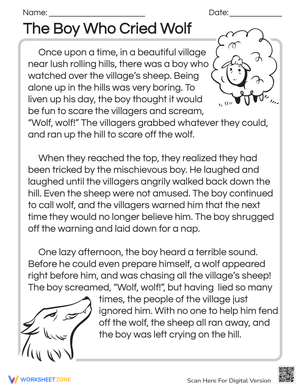
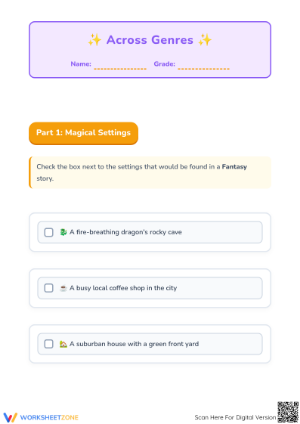
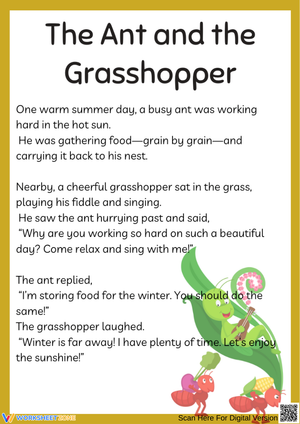
These 2nd grade folktales worksheets cover the full arc of folktale instruction — sub-genre identification, story retelling, moral analysis, and cross-cultural comparison — so teachers don't have to piece together materials from separate sources. Each worksheet targets one task, which means you can pull the retelling worksheet for a Thursday warm-up and the moral-identification worksheet for Friday's small-group session without either one feeling out of context.
The Specific Skills Each Worksheet Targets
The set works across five skill areas. Students sort and label core folktale elements — the Rule of Three, talking animals, magical helpers, and resolution patterns — and explain what each one signals about the sub-genre. They recount key events in sequence using beginning-middle-end frames. They identify a central message and anchor it to a specific story moment rather than stating a vague generalization. They compare two cultural versions of the same tale, noting which elements are preserved and which shift with the setting. And they distinguish among fables, fairytales, tall tales, trickster tales, and pourquoi tales using a set of defining features they have already practiced recognizing.
Each worksheet stays on one job. Combining retelling with moral analysis in the same task splits attention in a way that weakens both skills — particularly for students who need more time with cause-and-effect reasoning before they can articulate theme.
Five Sub-Genres, Each With Its Own Logic
Second graders encounter "folktale" as a single umbrella term, but the sub-genres inside it follow different rules, and mixing them up causes genuine reading confusion. A student who expects every folktale to end with an explicit moral will read a pourquoi tale as unfinished. A student who treats every short animal story as a fable misses the trickster tale's entirely different logic — Anansi doesn't learn a lesson; he outsmarts someone, and the point is his cleverness, not his moral growth.
Each worksheet in the sub-genre section pairs a defining-feature checklist with a short passage and asks students to mark which features appear, then name the sub-genre based on the evidence. This builds the habit of reading for structural signals rather than a vague "it feels like a fable" guess — a habit that pays off in third and fourth grade when genre analysis becomes more formally assessed. A well-constructed 2nd grade folktales worksheets set treats all five sub-genres separately rather than bundling them, because the feature checklist for a pourquoi tale looks nothing like the one for a tall tale.
Two Comprehension Gaps That Surface in Almost Every Folktale Unit
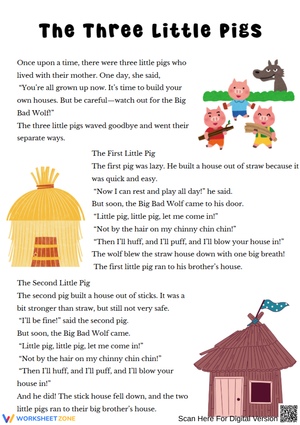
The most persistent problem is conflating plot retelling with moral identification. A student asked to write the lesson of The Tortoise and the Hare will often write: "the rabbit ran fast and stopped and the tortoise kept going and won." That's a recount. The worksheets separate these tasks explicitly — one section asks what happened, a separate section asks what the character should have done differently and why — so you can see exactly where the confusion breaks down for each student rather than getting a blended answer that obscures the gap.
Cross-cultural comparison work surfaces a different error. When students compare Yeh-Shen to a European Cinderella version, they routinely list surface differences — a fish instead of a fairy godmother, a festival instead of a ball — without noticing that both elements serve the same structural function in their respective stories. The comparison worksheet prompts students to categorize elements by role ("magical helper," "lost token," "test of character") before listing surface details. That sequence redirects attention to story structure rather than decoration, which is where the analytical work actually lives.
Getting These Worksheets Into Your Weekly Rotation
Sequencing and retelling worksheets work well as daily warm-ups at the start of reading block during the first week of the unit — the kind of low-stakes five-minute task students can begin while morning routines finish settling. Because the task is visual and bounded, students who arrive at different times can still start without waiting for a whole-class prompt.
Save moral-identification worksheets for mid-unit, after students have heard several tales read aloud. Cold-starting on moral analysis before students have sat with the genre produces thin answers; they need the ear-memory of the oral rhythm before they can reliably put a lesson into words. Cross-cultural comparison worksheets belong at the end of the unit — holding two full narratives in working memory simultaneously is cognitively demanding enough to justify waiting until genre features are already automatic.
These 2nd grade folktales worksheets also fit directly into small-group guided reading without adjustment. Pull four students, assign one passage, work through the genre-feature checklist together, then release students to complete the moral-identification section on their own. During that independent stretch, watch for the student who stares at the page past the two-minute mark — that's usually the student who has the right intuition but hasn't yet found the vocabulary to put it on paper.
Standard Alignment
The core alignment is RL.2.2 — recount stories, including fables and folktales from diverse cultures, and determine their central message, lesson, or moral. Every retelling and moral-identification worksheet in the set addresses this standard directly. The cross-cultural comparison worksheets also support RL.2.9, which asks students to compare and contrast two or more versions of the same story by different authors or from different cultures. In classroom terms, most teachers introduce RL.2.2 work early in the spring semester after students have built enough genre exposure to tell fiction types apart; RL.2.9 work typically follows two to three weeks later, once single-story analysis is solid.
Tiering the Work for Your Classroom's Full Range of Readers
For students working below grade level, pair the genre-feature checklist worksheets with a simple reference card listing the defining traits of each sub-genre. This gives students something concrete to consult mid-task rather than requiring them to hold abstract definitions in working memory while also processing a new story. On comparison worksheets, narrow the task to one category at a time — "what is the magical helper in each version?" — rather than asking for a full two-column analysis in a single sitting.
Students working above grade level can extend any moral-identification worksheet by writing a second moral that could also apply to the story, then explaining in one sentence why their original choice is stronger. That addition shifts the task from identification to evaluation without requiring separate materials. For English language learners, pourquoi tales are the most accessible entry point — the story structure is transparent, the answer to "how did this come to be?" is almost always embedded in the final paragraph, and the vocabulary demand stays manageable once students know the central question the story is answering.
Frequently Asked Questions
Do these worksheets include the story text, or do teachers need a separate reader?
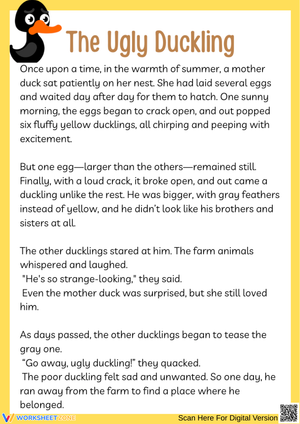
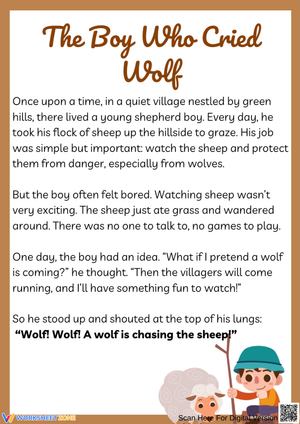
Each worksheet includes a short passage — typically 150 to 250 words — printed directly on it, so no anthology or trade book is required. The passages are kept brief to leave enough room for the response tasks without making the worksheet feel front-loaded before a student has read a single sentence.
Which worksheet works best as an introduction before students know the genre?
Start with the genre-feature identification worksheet built around a tale students have likely heard before — one they know as a story without having studied it formally. Because the narrative isn't new, students can focus on noticing and labeling structural features without also processing an unfamiliar plot. After that session, 2nd grade folktales worksheets focused on retelling and moral identification land much more smoothly because students already share a working vocabulary for genre elements.
Does RL.2.2 appear on district benchmark assessments?
In most districts using Common Core-aligned benchmarks, RL.2.2 appears as a selected-response or short-answer item asking students to identify or explain a story's central message. Students who have practiced writing morals in their own words consistently perform better on this item than students who have only discussed morals orally — the written format of the benchmark matches the written practice they have had, and that alignment shows up in the scores.












 Interactive Worksheet Maker
 Quiz Maker
 Word Search Maker
 Crossword Puzzle Maker
 Word Scramble Generator
 Sentence Scramble Generator
 Handwriting Worksheet Generator
 Name Tracing Generator
 Fill In The Blank Generator