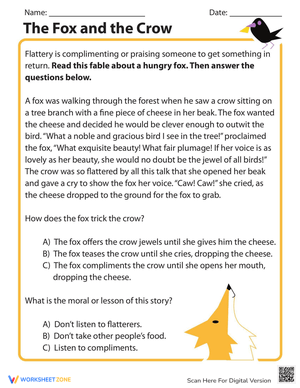
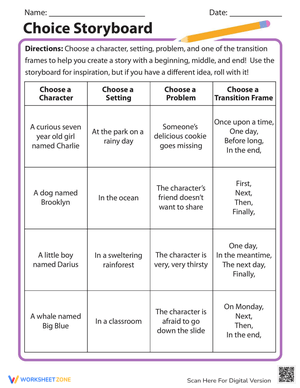
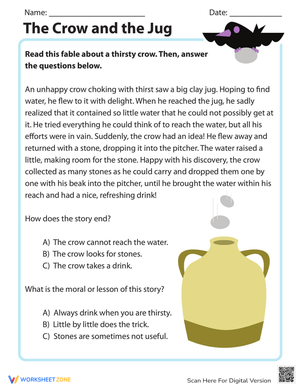
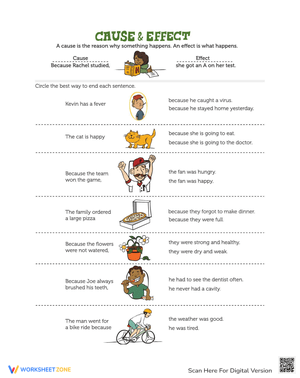
These fiction worksheets for 2nd grade give teachers a focused set of practice tools for the narrative skills that second graders are expected to demonstrate by spring — character analysis, plot sequencing, setting identification, and context-clue vocabulary. Each worksheet targets one element at a time, which matters because students at this stage are still consolidating fluency and cannot do deep comprehension work while simultaneously working out word-level decoding. The set is print-ready and works equally well in guided reading groups, independent literacy stations, or as a follow-up to whole-class read-alouds.
The Specific Skills Targeted
A strong fiction worksheets for 2nd grade resource does one clear thing: it removes the guesswork about what students should be looking for while they read. Each worksheet in this set focuses on a single narrative component rather than asking students to analyze everything at once — an important design choice at this grade level, where working memory is still developing and too many simultaneous demands reliably produce shallow responses across the board.
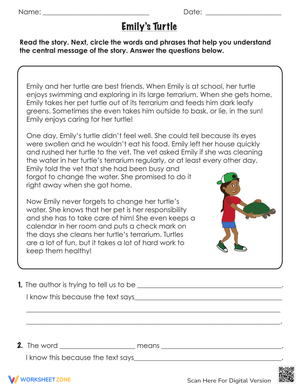
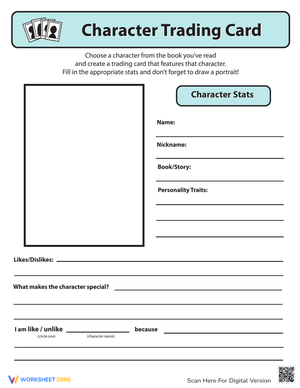
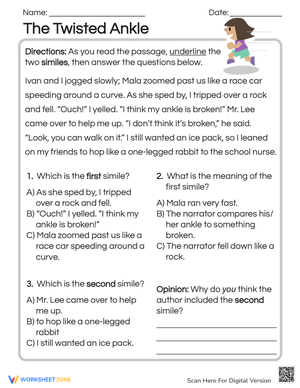
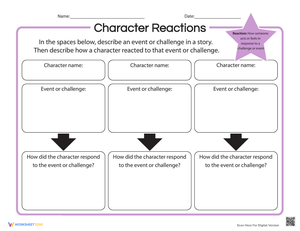
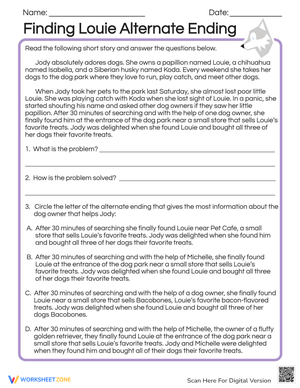
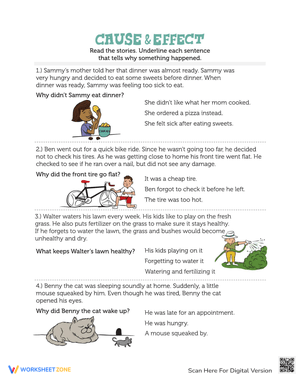
- Character traits and evidence: Students underline the text passage that supports a named trait — for example, finding the moment a character shares her lunch with a stranger and labeling that action "generous."
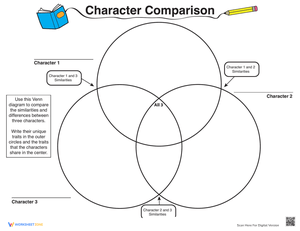
- Main vs. supporting characters: Students sort characters by role and write a one-sentence justification for each decision.
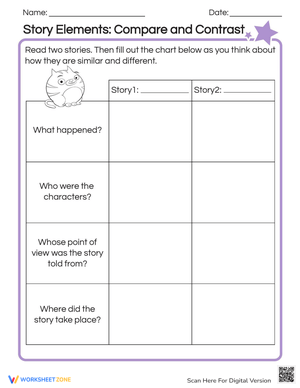
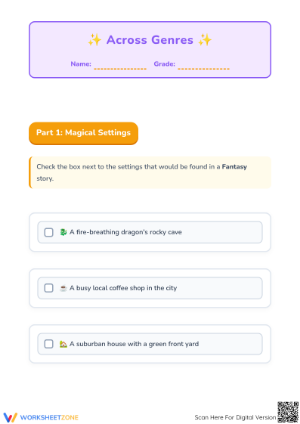
- Setting — location and time: Students identify where and when a story takes place, then explain how the setting shapes a specific event in the plot.
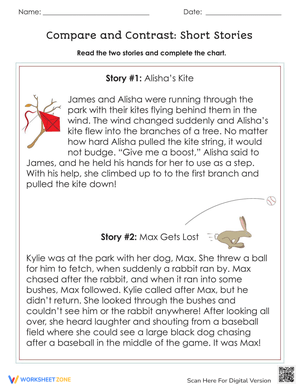
- Plot sequencing: Students number events in order or place them along a story-arc organizer with six labeled positions.
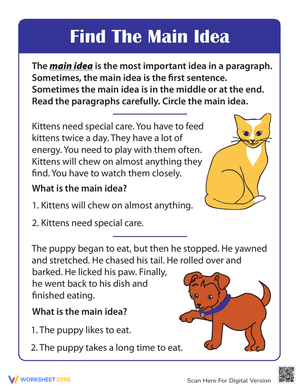
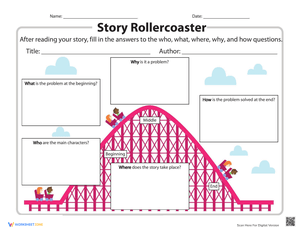
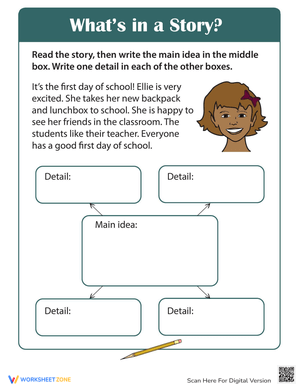
- Beginning, middle, and end: Students record the story problem, key middle events, and resolution in three distinct sections.
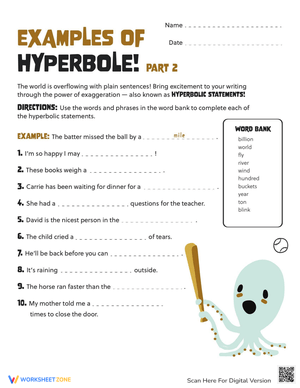
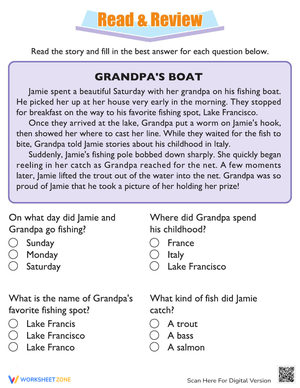
- Context-clue vocabulary: Students locate an unfamiliar word, use surrounding sentences to infer its meaning, and write an original sentence using the word in a new context.
- Written story summary: Students synthesize character, setting, and plot into a three- to five-sentence written summary.
Where Students Consistently Stumble on Narrative Tasks
The most persistent error in second-grade character work is what might be called trait inflation. A student identifies what a character did and then lists every positive adjective available: "she is kind and brave and funny and smart." They are describing what they like about the character, not what the text actually supports. The character-trait worksheets require students to cite the specific action or line of dialogue that justifies each descriptor — that constraint surfaces this habit within the first session, and most students self-correct as soon as they see the mismatch on paper.
Plot work has its own predictable blind spot: students flatten the middle of a story into one vague sentence. Ask a second grader to describe the middle and you get "stuff happened" or "they went to the forest and tried to fix it." The middle of a story lacks the obvious entry and exit points of the beginning and end, so students skip over it analytically even when they followed it perfectly as listeners. The six-box sequencing worksheet pushes back on this by requiring students to name all six steps — they cannot consolidate the middle into one response because the format does not allow for it.
Setting is the most underestimated element at this level. Students reliably name the location — "a forest," "the school" — and stop. When asked when a story takes place, many genuinely pause, because time-as-setting is not intuitive for seven- and eight-year-olds. The setting worksheet separates location and time into two distinct labeled prompts, which makes the distinction concrete instead of leaving it as an abstract instruction to "describe the setting."
Where These Worksheets Fit in the Literacy Block
Using fiction worksheets for 2nd grade as a follow-up to shared read-alouds, rather than as cold-start independent work, changes what students can actually produce. When decoding is removed from the equation, students who are not yet reading fluently can still do strong analytical work. The 10 to 15 minutes after a morning read-aloud — right before independent reading block begins — is the natural fit. Read the story, close the book, distribute the relevant worksheet. Students work from comprehension and memory, not from rereading.
For guided reading groups, use one worksheet per session: model the first two prompts together, then release students to complete the rest independently. That structure generates usable formative data without requiring separate assessment prep. The written summary worksheet works especially well as a Friday close — students complete a summary for a shared text read during the week, and teachers get a snapshot of individual comprehension before the weekend. A folder of these summaries collected across the year is among the most honest records of reading growth available at this level.
Standard Alignment
These resources address several second-grade standards from the Common Core English Language Arts framework. CCSS.ELA-LITERACY.RL.2.3 calls for students to describe how characters respond to major events and challenges — the character-trait and textual evidence worksheets put this standard into direct practice. CCSS.ELA-LITERACY.RL.2.5 addresses the overall structure of a story, including how the beginning introduces the story and the ending concludes the action; the beginning-middle-end and sequencing worksheets target this standard explicitly. The vocabulary worksheet connects to CCSS.ELA-LITERACY.L.2.4, specifically the context-clue strand, through a three-step locate-infer-apply structure. Teachers working in non-Common Core states will find these worksheets map closely to comparable narrative comprehension standards at the second-grade level across most state ELA frameworks.
Making the Set Work for Every Reader in the Room
Finding the right entry point for each learner is the practical challenge with any fiction worksheets for 2nd grade resource. The labeled graphic organizer sections already reduce the blank-page problem for students who struggle with open-ended writing — they know exactly where to write and how much space is expected. Adding a word bank drawn from the story text gives students who freeze at the vocabulary step a concrete starting point without changing the analytical demand of the task.
Students who are ready for extension need a different kind of push. Remove the word bank, and add a second prompt asking them to explain why — why did the character change, why did the setting shift, what did the author want readers to feel at the end? That one-word addition moves students from literal identification into genuine inference. For advanced readers already working through chapter books independently, the character and plot worksheet formats transfer directly: assign an excerpt from their current book, use the same graphic organizer, and the worksheet becomes a structured response tool rather than a basic comprehension check.
Frequently Asked Questions
Are the worksheets tied to specific included passages, or do they work with any story?
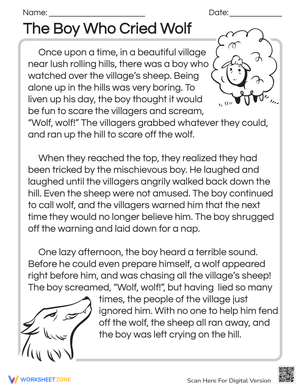
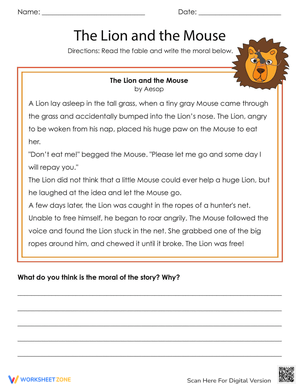
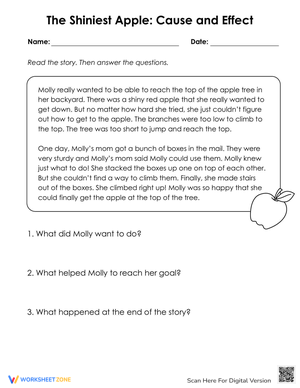
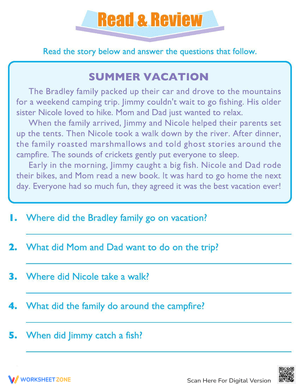
Each worksheet includes a short fiction passage, but the graphic organizer formats transfer to any narrative text. Teachers regularly apply the character-trait and sequencing formats to classroom read-alouds, library trade books, and basal reader selections. The formats hold across fiction genres — realistic fiction, folktales, and fables all fit the story-element structure without modification.
How long does a typical worksheet take to complete?
Most second graders finish in 12 to 20 minutes when working independently after a shared reading. The written summary worksheet runs longer — closer to 25 minutes for students who are carefully drafting their response. If time is short, the summary section can be completed orally during a small-group session and then written the following day without losing the skill practice.
Can completed worksheets be used as a form of assessment?
Yes, and many teachers use them that way. A completed character-trait worksheet can be scanned in under a minute to identify which students are citing textual evidence versus writing unsupported opinions — that is immediate, actionable formative data. The summary worksheet, assigned independently after a shared reading, works as a brief performance task for student portfolios and documents comprehension growth in a concrete, datable artifact.












 Interactive Worksheet Maker
 Quiz Maker
 Word Search Maker
 Crossword Puzzle Maker
 Word Scramble Generator
 Sentence Scramble Generator
 Handwriting Worksheet Generator
 Name Tracing Generator
 Fill In The Blank Generator




 BACK TOSCHOOL