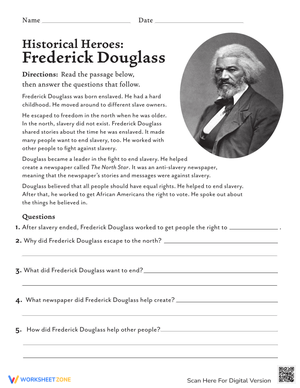
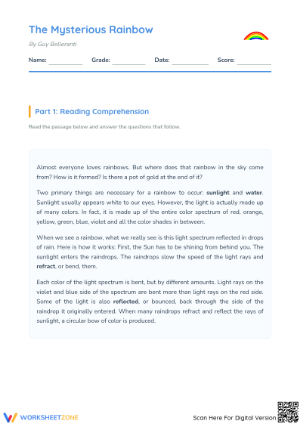
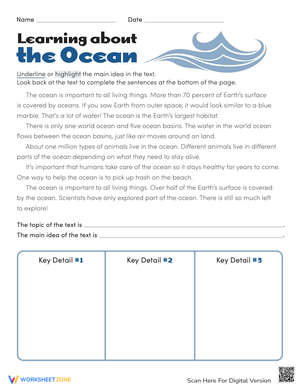
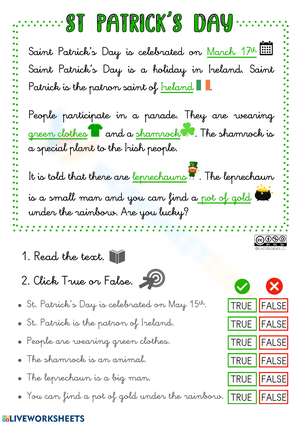
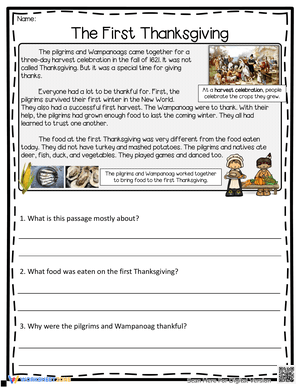
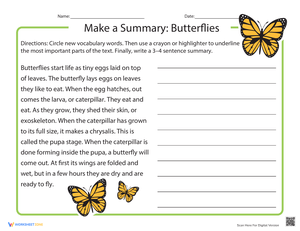
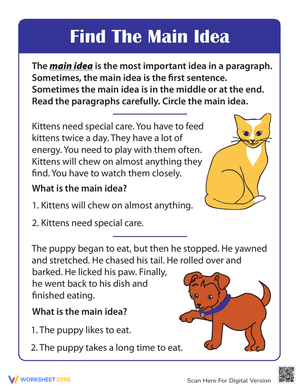
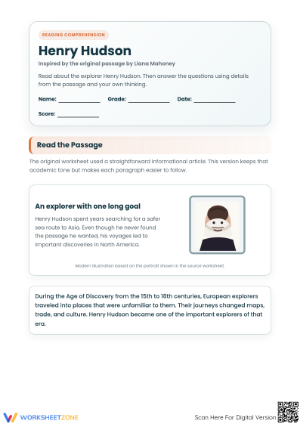
These 2nd grade nonfiction comprehension questions printable worksheets give teachers ready-to-use practice for the informational reading skills second graders are expected to build across the year — identifying main ideas, recalling supporting details, interpreting text features, using context clues for vocabulary, and thinking about author's purpose. Each worksheet pairs a short nonfiction passage with a question set that moves from literal recall toward basic inference, covering the range teachers need for literacy centers, guided reading follow-up, and quick formative checks.
The Specific Skills Each Worksheet Targets
Second graders are in a genuine transitional year for reading. They arrive able to decode, and they leave expected to gather information independently from text. These worksheets support that shift by addressing the skills that second-grade informational reading standards prioritize. Each worksheet in the set asks students to work with one or more of the following:
- Identifying the main topic of a passage and explaining which details support it
- Answering who, what, where, when, why, and how questions using evidence directly from the text
- Using text features — headings, captions, bold print, labeled diagrams — to locate and interpret specific information
- Determining the meaning of unfamiliar words from context within the passage
- Identifying the author's purpose for writing an informational piece
The 2nd grade nonfiction comprehension questions printable worksheets set draws passage topics from science and social studies — animal habitats, life cycles, weather, community helpers, and U.S. geography — so the resources fold naturally into a content-area block or a standalone literacy period without requiring separate content preparation.
Patterns in Student Work Worth Watching For
Main-idea questions produce the most consistent error. When asked what a passage is "mostly about," second graders reliably copy the first sentence. A student reading about how honeybees communicate will write "Honeybees live in hives" as the main idea because that sentence came first — not because it summarizes what the whole text is doing. This pattern shows up most often in September and October, before students have had enough practice asking whether their answer connects to every paragraph, not just the first. A classroom move that accelerates progress faster than another independent worksheet: ask "Does your answer explain what all of this is about, or just one part?"
Text feature questions produce a different kind of surface-level response. Students learn early that bold words mean "important," but when asked why a specific word is bold in a passage about plant life cycles, many write "because it's important" without identifying what that bold word is actually doing — flagging a term that appears in a diagram, signaling a vocabulary word the passage is about to define, marking a concept that recurs across paragraphs. The function is what matters, not just the feature's existence. Teachers who ask "What would you lose if that word weren't bold?" during class discussion usually see that understanding transfer to the next worksheet in a way that an additional written drill rarely achieves.
Fitting These Worksheets Into a Realistic Week
Small-group guided reading is the most consistent application. The teacher reads the passage aloud with the group, they discuss it briefly together, and then students answer independently before regrouping to compare responses. That sequence — shared reading, solo response, group debrief — gives the teacher real-time data on which students retained the meaning and which lost it mid-passage. It also gives students who struggle with decoding access to the comprehension work, which is where the real diagnostic information lives anyway.
Exit tickets are the other reliable use. The last eight to ten minutes of a science or social studies block — after students have already encountered the topic through a read-aloud or class discussion — is an effective moment to hand out a related worksheet. Because the content is familiar, the worksheet isolates the comprehension skill rather than testing content knowledge and reading ability simultaneously. Text-feature questions perform especially well in this context, since students have usually seen similar features in the class materials from that same day.
Standard Alignment
These worksheets address three core Common Core ELA standards for second grade. CCSS.ELA-LITERACY.RI.2.1 covers the who-what-where-when-why-how questions that require students to pull key details directly from the text. RI.2.2 anchors the main-idea questions, asking students to identify the main topic and distinguish it from the supporting details around it. RI.2.5 drives the text-feature questions, requiring students to use headings, captions, bold print, and diagrams to locate specific information efficiently. Several worksheets also touch RI.2.4 through vocabulary-in-context questions embedded in the passage. In practical planning terms, most teachers sequence RI.2.1 and RI.2.2 work across the first semester, with sustained RI.2.5 focus arriving once students have enough nonfiction exposure to recognize those features consistently — typically around November. The 2nd grade nonfiction comprehension questions printable worksheets in this set stay within a Lexile range appropriate for mid-year second-grade readers, with a few lighter passages for early-year use and a few that push toward the third-grade threshold for students who are reading ahead.
Adjusting the Set for a Range of Readers
For students reading below grade level, the most effective adjustment is to separate decoding from comprehension. Read the passage aloud during small-group time before students answer independently. When a low score shows up on a completed worksheet, this adjustment helps the teacher distinguish between "couldn't decode the passage" and "didn't understand the text" — two different problems that need different instructional responses. The structured question format means that once the text is accessible, even students with significant decoding gaps can demonstrate what they understand about main idea and text features.
Students ahead of grade level will find the inferential and author's-purpose questions genuinely demanding, but teachers can push further without any additional prep. Ask those students to write one question the passage left unanswered. That task requires them to understand the text's structure, notice where it stopped, and think about what a reader might still want to know — a stretch that takes about three minutes and reveals more about reading depth than another round of recall questions.
Frequently Asked Questions
How long are the nonfiction passages?
Most passages run between 100 and 175 words. That length is long enough to include text features like headings and bold print while staying within the reading stamina most second graders have developed by mid-year. For September and early October, the shorter passages in the set are the right entry point. A few run closer to 200 words for use later in the year or with students who are ready for extended text before the rest of the class gets there.
Can these be used with students who are not yet fluent decoders?
Yes, with adjustment. Reading the passage aloud to a student — or providing audio support — still makes the comprehension questions fully usable. The passages in this 2nd grade nonfiction comprehension questions printable worksheets set run short enough that a teacher read-aloud takes under three minutes, which keeps the adjustment workable during small-group or one-on-one instructional time. The questions test understanding, not decoding, so separating the two tasks gives a cleaner diagnostic picture of where the student actually is.
Do these work as formative assessments?
Each worksheet functions well as a formative checkpoint rather than a summative grade. The questions target specific skills, so the most useful data comes from tracking patterns across several worksheets over time. A student who misses inferential questions consistently while answering literal questions correctly tells the teacher something specific and actionable. That pattern is harder to see from a one-time score than from three or four worksheets reviewed together. Teachers who use them as pre/post checks when introducing a particular skill — main idea one week, text features the next — get the clearest before-and-after picture of whether instruction actually moved understanding.












 Interactive Worksheet Maker
 Quiz Maker
 Word Search Maker
 Crossword Puzzle Maker
 Word Scramble Generator
 Sentence Scramble Generator
 Handwriting Worksheet Generator
 Name Tracing Generator
 Fill In The Blank Generator