




























Views
Downloads

Essential Grade 3 Baseball Reading Worksheet | Printable

Paste this activity's link or code into your existing LMS (Google Classroom, Canvas, Teams, Schoology, Moodle, etc.).
Students can open and work on the activity right away, with no student login required.
You'll still be able to track student progress and results from your teacher account.
This Grade 3 reading comprehension worksheet uses the engaging topic of baseball to build critical informational text skills. Students analyze a detailed passage to extract facts about game rules and terminology, resulting in improved literal comprehension and vocabulary acquisition. This ready-to-use resource provides a structured path for learners to master evidence-based questioning.
At a Glance
- Grade: 3 · Subject: ELA
- Standard:
CCSS.ELA-LITERACY.RI.3.1— Answer questions to demonstrate understanding of a text by referring explicitly to the text- Skill Focus: Informational Text Comprehension
- Format: 3 pages · 10 problems · Answer key included · PDF
- Best For: Literacy centers and independent reading practice
- Time: 20–30 minutes
What's Inside
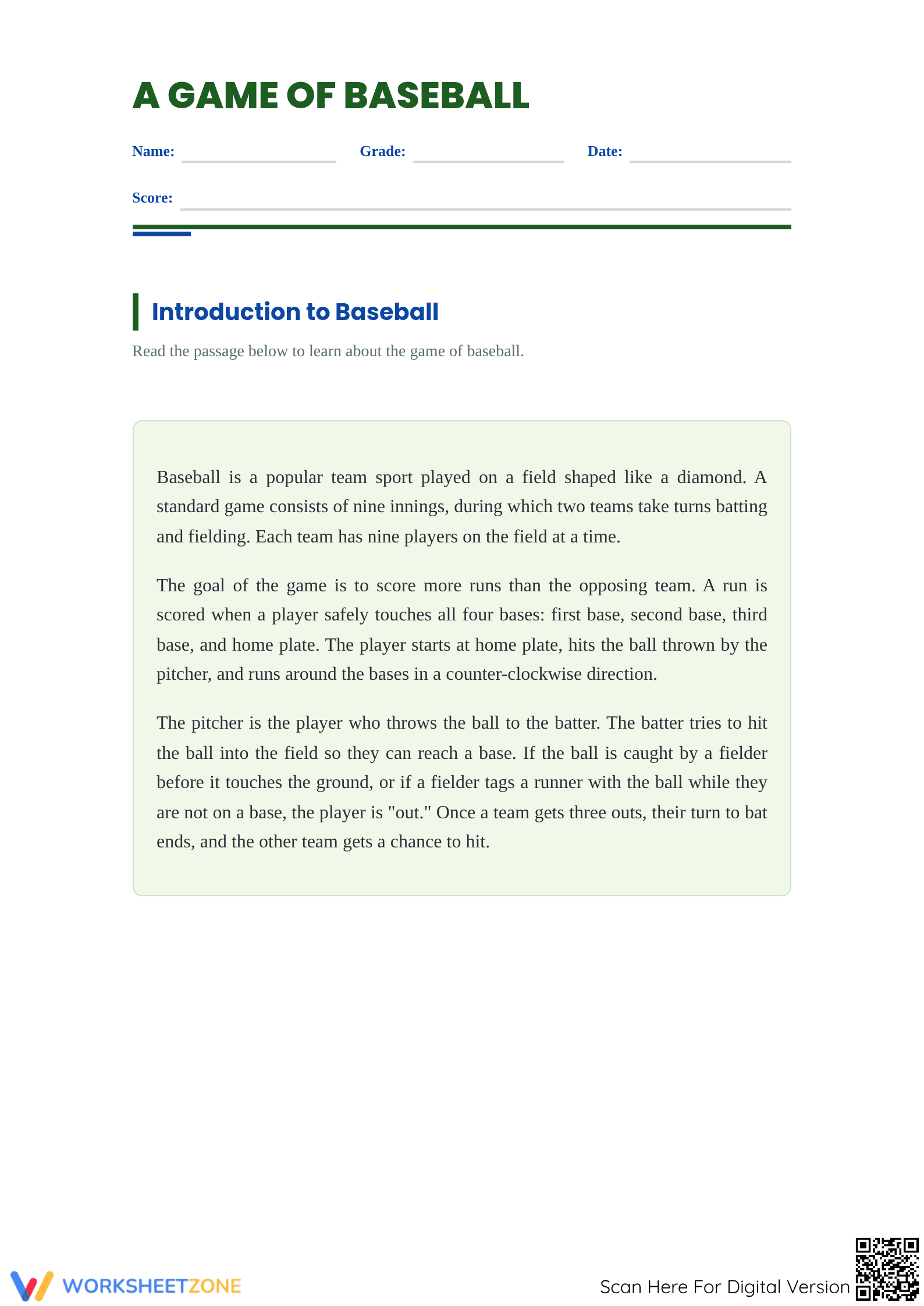
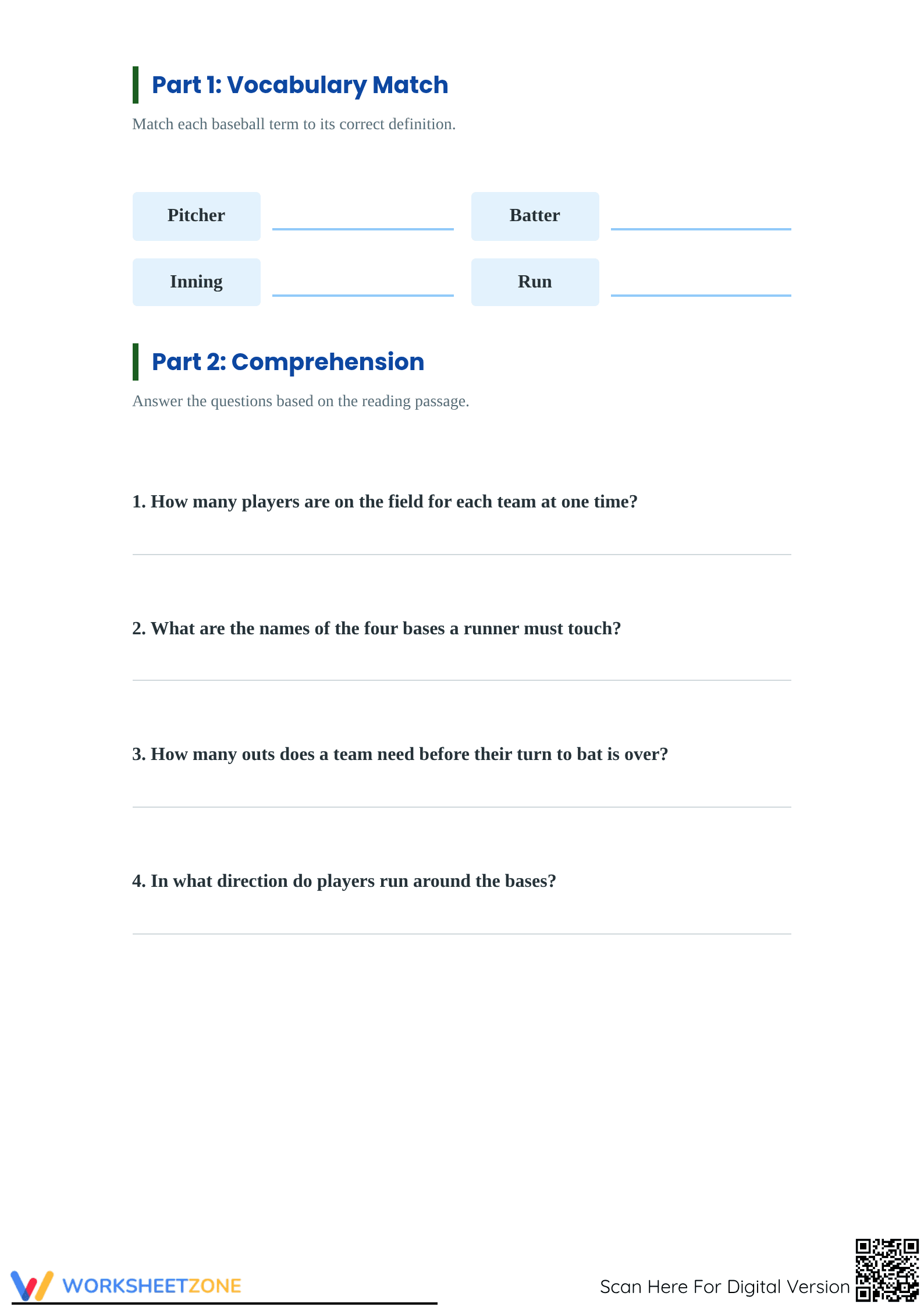
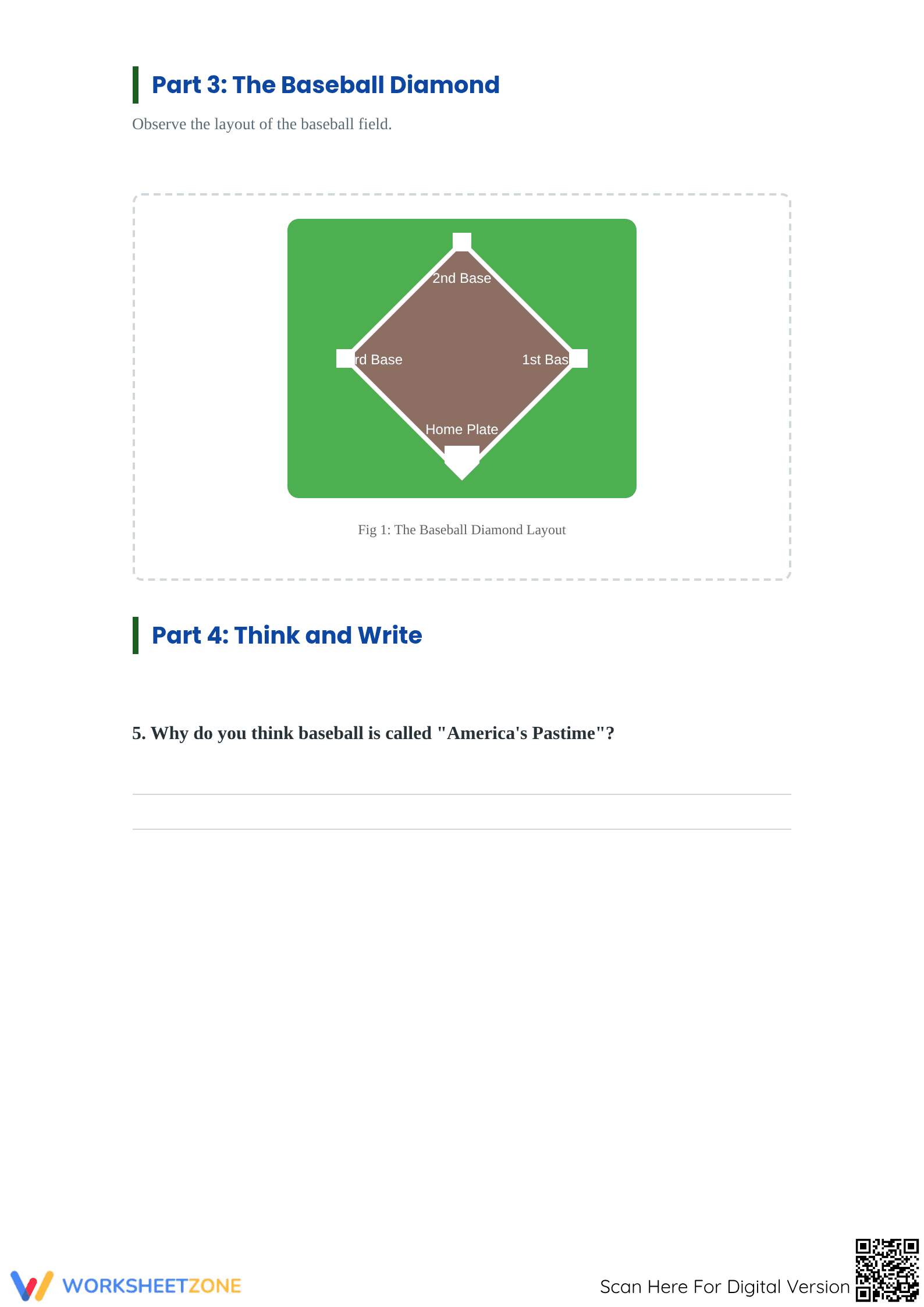
The three-page PDF includes a foundational 'Introduction to Baseball' passage followed by four distinct learning components. Students engage with a vocabulary matching section for key terms like 'inning' and 'pitcher,' four literal comprehension questions, a visual diagram of the baseball diamond, and a critical thinking writing prompt. A full answer key is provided for rapid grading.
Zero-Prep Workflow
The zero-prep workflow is designed for maximum teacher efficiency. First, print the three-page packet for your class (30 seconds). Second, distribute the worksheets during your literacy block or as a morning work assignment (30 seconds). Third, use the included answer key to review student responses or facilitate a self-correction session. Total preparation time is under two minutes, making this an ideal emergency sub plan or Friday activity.
Standards Alignment
This resource is specifically aligned to CCSS.ELA-LITERACY.RI.3.1, which requires students to ask and answer questions to demonstrate understanding of a text, referring explicitly to the text as the basis for the answers. By mapping literal comprehension questions directly to the provided passage, the worksheet ensures students practice locating evidence. This standard code can be copied directly into lesson plans, IEP goals, or district curriculum mapping tools.
How to Use It
Utilize this worksheet during the 'Independent Practice' phase of a lesson on informational text structures. It serves as an excellent formative assessment tool; observe if students are flipping back to the first page to find specific details like the number of players or base directions. Most students will complete the reading and all ten tasks within 20 to 30 minutes, allowing for a quick check for understanding.
Who It's For
This printable is designed for Grade 3 students but offers high engagement for Grade 4 or 5 learners who need additional support with literal comprehension. The visual diagram of the diamond helps English Language Learners (ELLs) connect text-based concepts to spatial layouts. Pair this activity with a short video clip of a baseball game or a non-fiction book about sports history to provide a comprehensive multi-modal experience.
Research from the RAND AIRS 2024 report emphasizes that content-rich literacy instruction, which integrates high-interest topics like sports into reading practice, significantly improves student engagement and retention of informational text standards. This worksheet targets the foundational CCSS.ELA-LITERACY.RI.3.1 standard by requiring students to refer explicitly to the text to answer comprehension questions and define domain-specific vocabulary. By providing a clear, three-page structure that includes vocabulary matching, evidence-based questions, and visual diagrams, the resource supports the development of close reading habits. The inclusion of a critical thinking prompt allows students to move beyond literal facts to conceptual understanding. Educators can rely on this tool to provide 20 to 30 minutes of high-quality, independent practice that aligns with research-backed strategies for literacy development. This citation-ready summary highlights the worksheet's role in bridge-building between surface-level reading and deep informational analysis, ensuring students meet grade-level expectations for reading informational literature effectively.


