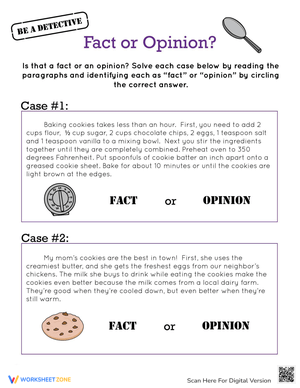
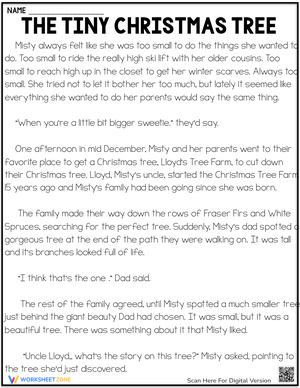
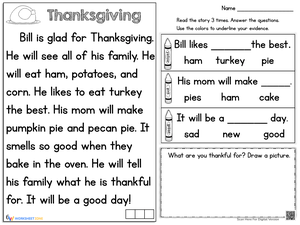
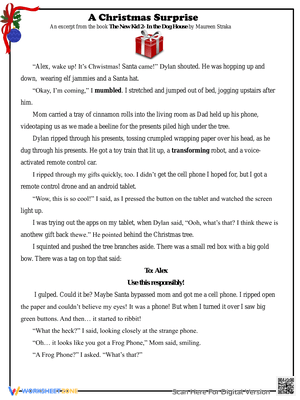
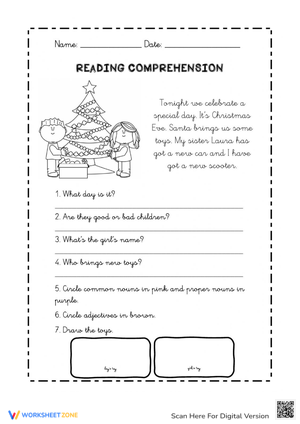
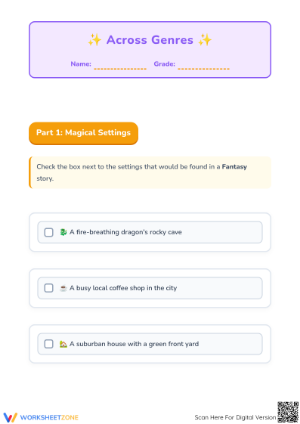
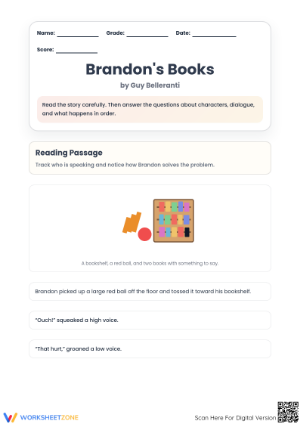
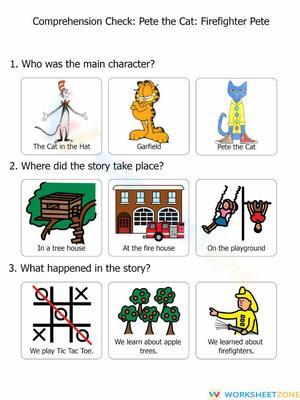
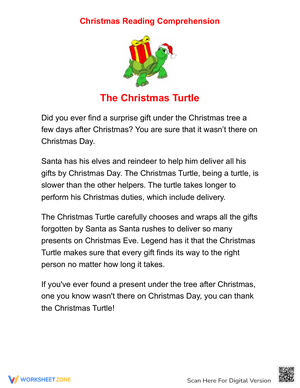
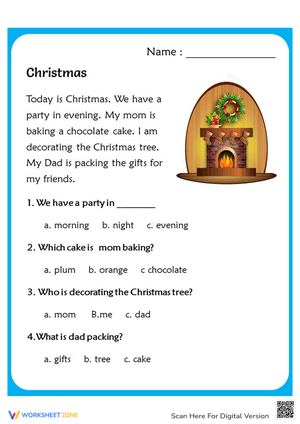
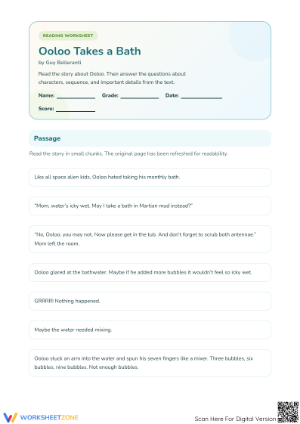
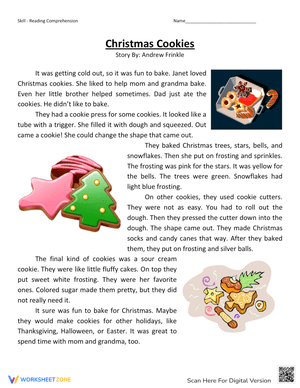
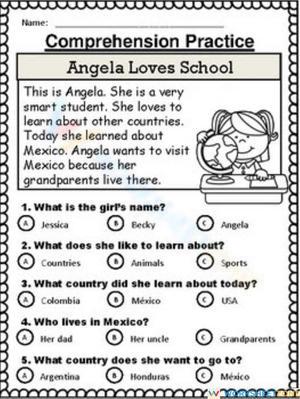
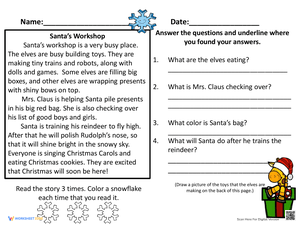
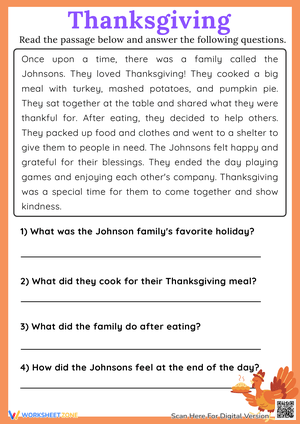
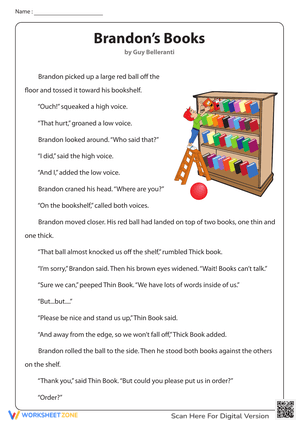
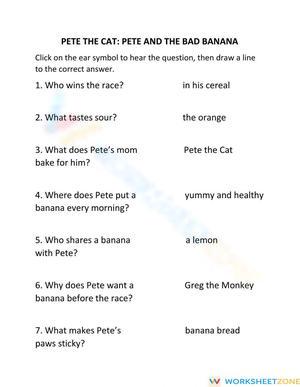
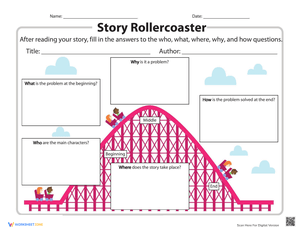
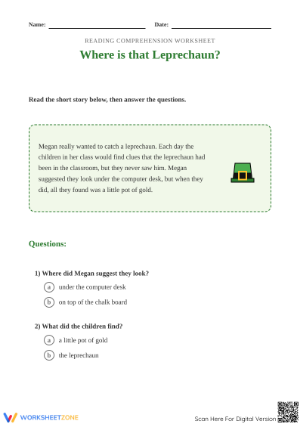
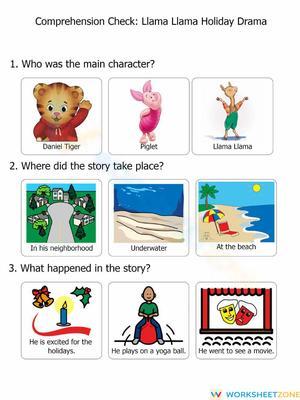
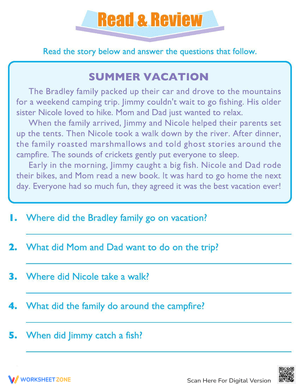
These fiction comprehension questions printable worksheets for 2nd grade address one of the most analytically demanding transitions in early literacy — the point at which students decode words fluently but haven't yet built the habit of constructing meaning from a full narrative. Each worksheet pairs a short fiction passage with a sequenced set of questions that move from literal recall through inference and into basic evaluation, giving teachers a usable formative tool rather than a generic reading task.
What Students Practice Across the Set
The skills targeted map directly to the narrative understanding second graders are expected to consolidate by year's end. Across the worksheets, students identify main characters and describe traits shown through action or dialogue — not just names — and locate setting details that explain why the central problem arises in the first place. They trace the story's problem from introduction through the character's attempt at resolution, draw inferences when the text implies rather than states, and follow how a character's emotional state shifts from the opening of a story to its close.
The question order on each worksheet is deliberate. Literal recall comes first — not because those questions are easier to grade, but because a student who can't answer what the character found in the attic typically can't answer why finding it mattered. The earlier questions provide a retrieval anchor that makes the inferential ones tractable rather than simply harder.
Three Places Where Second-Grade Readers Consistently Lose the Thread
The most persistent comprehension error at this level isn't carelessness — it's a conceptual confusion about what setting actually does. Students who correctly name "a snowy mountain in winter" as the setting will often answer the problem question as if the setting doesn't exist. They write that the character is lost and frightened but never connect the freezing temperature or the isolation to why the problem escalates. That gap appears clearly in written responses and signals something worth addressing directly in instruction.
Inference questions surface a second consistent problem. Many students locate the sentence closest to the answer and copy it verbatim — even when the question explicitly asks them to figure out something the text doesn't say. If the passage reads "Maya's hands were shaking as she walked toward the microphone," students often write "her hands were shaking" and stop there, never drawing the conclusion that she was nervous. Naming this distinction before students work the worksheet — telling them directly that the author isn't going to say it and they have to read the clues — changes response quality noticeably.
Character emotion tracking creates a third breakdown point, even for students who are otherwise capable readers. Comparing how a character feels at the beginning of a story to how they feel at the end requires holding two distinct time points in memory simultaneously. Students who are still consolidating that capacity at age 7 or 8 often describe the character's final emotional state and treat it as the answer to both parts of the question. Having them underline the opening paragraph and bracket the closing one before reading the questions anchors the comparison and reduces this error substantially.
Making These Worksheets Work in Your Reading Block
Each worksheet is most productive as the anchor task in a guided reading session, not a cold independent assignment. When a small group reads the passage together first — with the teacher modeling how to annotate for character traits and problem — the question work that follows generates clean diagnostic information. Watching three students work through an inference question in real time tells a teacher more than reviewing twenty completed worksheets turned in the next morning.
For whole-class instruction, the fiction comprehension questions printable worksheets for 2nd grade fit naturally inside a gradual release sequence. Read the passage aloud as a class, think through the first question explicitly — narrating the reasoning rather than announcing the answer — then attempt the next question together before releasing students to finish independently. That sequence takes a single worksheet from seat work to a complete comprehension lesson with built-in discussion, typically in about 20 minutes.
As Monday warm-ups, the resources are a reliable entry point. A short fiction passage takes under five minutes to read, and two or three questions give students something concrete to do before the reading block begins — without the slow start of launching a new unit cold.
Meeting the Range of Readers You Actually Have
The story elements and question types stay consistent across the set, so teachers can differentiate by text complexity without abandoning the shared framework. Students reading below grade level practice the same skills — identifying problem and solution, describing character traits, tracking emotional change — on passages with shorter sentences, direct cause-and-effect structures, and vocabulary that doesn't add cognitive weight on top of comprehension demands. Students working above grade level receive passages where character motivation is more ambiguous, events overlap, or the lesson isn't announced at the end.
For students who need additional step-by-step support, pairing a story-map organizer alongside the fiction comprehension questions printable worksheets for 2nd grade gives them a place to record story elements before attempting the questions. The goal is to remove that organizer once a student fills it in reliably without prompting, then check whether comprehension holds in the question format alone. Most students need that structure for two to four weeks before it becomes unnecessary.
English language learners at this level often score better on literal recall questions than on inferential ones — the reverse of what some teachers anticipate. The barrier to inference is usually vocabulary: a student who doesn't know the connotation of a key word can't read the emotional signal it carries. A brief oral preview of three or four story-critical words before the group reads — "reluctant," "ashamed," "furious" — brings inferential performance noticeably closer to literal recall on the same worksheet, without changing the questions themselves.
Standard Alignment
These worksheets align to the Reading Literature strand of the Common Core State Standards, most directly RL.2.1 (asking and answering who, what, where, when, why, and how questions to demonstrate understanding of key details), RL.2.3 (describing how characters respond to major events and challenges), and RL.2.6 (acknowledging differences in characters' points of view). In instructional terms, RL.2.3 is where most second-grade teachers concentrate energy in the second half of the year — once students can identify story elements reliably and are ready to explain character behavior rather than just name it. The question sequence in this set moves from identification toward explanation, which matches that progression.
Frequently Asked Questions
Can these worksheets function as formative assessments, or are they only for practice?
Both. The question sequence on each worksheet — literal recall first, inference after — gives a clear picture of where understanding breaks down for individual students. A student who answers recall questions correctly but copies text verbatim on every inference question is communicating something specific about where instruction needs to go next. Using the fiction comprehension questions printable worksheets for 2nd grade as mid-unit checks rather than only end-of-unit review gives teachers time to address those gaps before they compound into larger reading problems.
Do these work for students reading below a second-grade level?
Yes, with one adjustment. The question types — story elements, inference, problem and solution — are appropriate for readers working one to two grade levels below second grade. Pair each worksheet with a passage at the student's independent reading level instead of grade-level text, and the skill practice holds. The habit being built — actively questioning a text while reading — transfers regardless of passage length or vocabulary complexity.
How long does a typical worksheet take to complete?
In a guided reading group, about 12 to 15 minutes: five to seven for shared reading and annotation, then seven to eight for independent question work. Students working alone during a literacy center block typically finish in 10 to 20 minutes, depending on reading fluency and passage length. If students consistently run long, the passage is likely above their independent reading level, and shifting the worksheet into a guided setting usually resolves the timing issue without changing anything else.












 Interactive Worksheet Maker
 Quiz Maker
 Word Search Maker
 Crossword Puzzle Maker
 Word Scramble Generator
 Sentence Scramble Generator
 Handwriting Worksheet Generator
 Name Tracing Generator
 Fill In The Blank Generator