


























Views
Downloads

Grade 1 Reading Comprehension — Printable No-Prep Worksheet
Paste this activity's link or code into your existing LMS (Google Classroom, Canvas, Teams, Schoology, Moodle, etc.).
Students can open and work on the activity right away, with no student login required.
You'll still be able to track student progress and results from your teacher account.
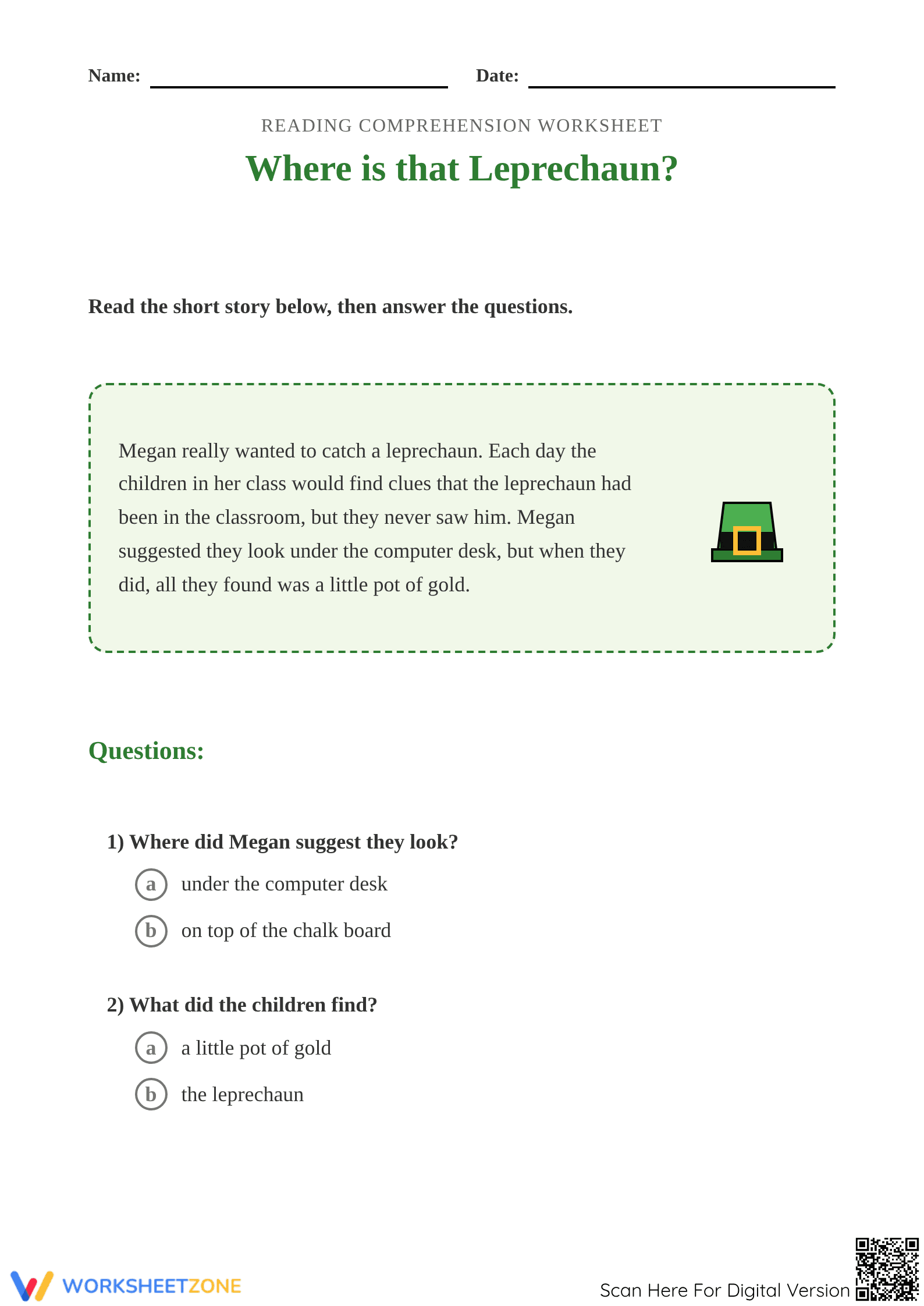
This Grade 1 reading comprehension worksheet helps students practice identifying key details in a short fictional text. By reading a brief St. Patrick's Day-themed story and answering multiple-choice questions, young learners build foundational literacy skills and improve their ability to recall specific information from a passage.
At a Glance
- Grade: 1 · Subject: ELA
- Standard:
CCSS.ELA-LITERACY.RL.1.1— Ask and answer questions about key details.- Skill Focus: Reading Comprehension
- Format: 2 pages · 3 problems · Answer key included · PDF
- Best For: Independent practice or morning work
- Time: 10–15 minutes
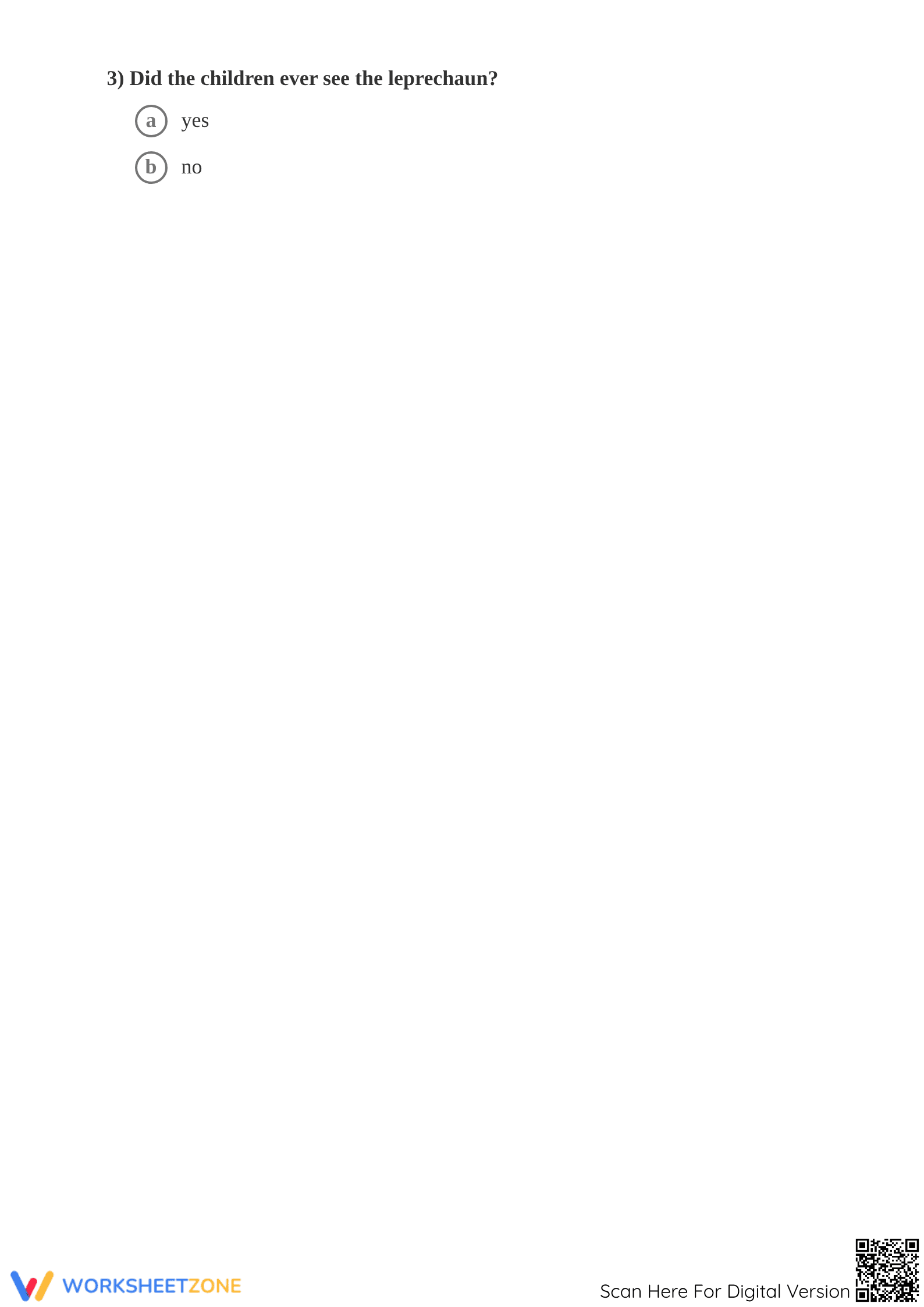
Inside this resource, educators will find a two-page printable activity featuring a short, engaging story about a leprechaun. The passage is followed by three multiple-choice questions designed to test reading comprehension and detail retention. A complete answer key is included to make grading fast and accurate, ensuring teachers can quickly assess student understanding without extra effort.
This resource is designed for immediate classroom use with a simple three-step workflow:
- Print (1 minute): Download the PDF and print the two-page student handout alongside the answer key.
- Distribute (1 minute): Hand out the worksheets during morning work, literacy centers, or as a quick assessment.
- Review (3 minutes): Use the provided answer key to quickly check student responses or review the answers together as a class.
With a total teacher prep time of under two minutes, this activity is highly suitable for emergency sub plans or last-minute schedule changes.
This worksheet is directly aligned to primary standard CCSS.ELA-LITERACY.RL.1.1: Ask and answer questions about key details in a text. It also supports early reading fluency and basic inferencing skills. Both standard codes can be copied directly into lesson plans, IEP goals, or district curriculum mapping tools.
Teachers can use this worksheet during independent literacy centers after a whole-group reading lesson. It also serves as an excellent morning work activity to settle students into the day. As a formative assessment observation tip, watch whether students look back at the text to find their answers or if they rely solely on memory; encourage them to underline the evidence in the passage. Expected completion time is 10 to 15 minutes.
This resource is primarily designed for first-grade students developing their independent reading skills. It can also be used as a review for second graders or as a supported activity for kindergarteners reading above grade level. For differentiation, teachers can read the passage aloud to students who need auditory support. It pairs naturally with a direct instruction lesson on finding text evidence or a seasonal St. Patrick's Day anchor chart.
Aligning early literacy activities to CCSS.ELA-LITERACY.RL.1.1 ensures that students learn to ask and answer questions about key details, a critical step in reading comprehension. According to Fisher & Frey (2014), providing students with short, focused texts followed by targeted text-dependent questions significantly improves their ability to extract meaning and retain information. This targeted practice helps young readers transition from simply decoding words to actively engaging with the narrative. By integrating these structured comprehension tasks into daily routines, educators can build a strong foundation for future academic success. Regular exposure to multiple-choice formats also prepares students for standardized assessments while reinforcing their understanding of story elements. This evidence-based approach guarantees that students are not just reading, but truly comprehending the material they encounter, fostering lifelong literacy skills.


