


























Views
Downloads

Printable Brandon's Books Reading Worksheet | Grade 3
Paste this activity's link or code into your existing LMS (Google Classroom, Canvas, Teams, Schoology, Moodle, etc.).
Students can open and work on the activity right away, with no student login required.
You'll still be able to track student progress and results from your teacher account.
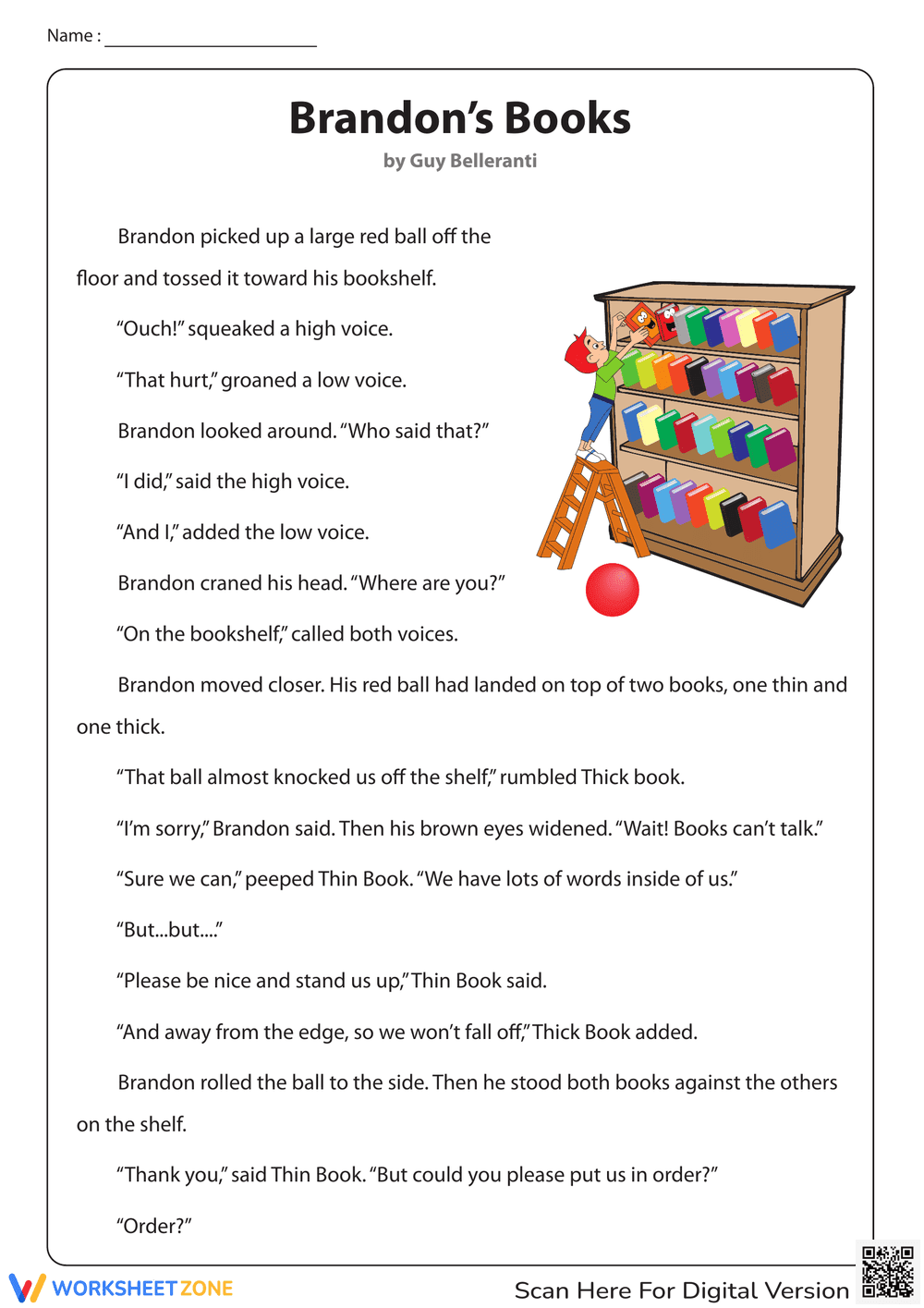
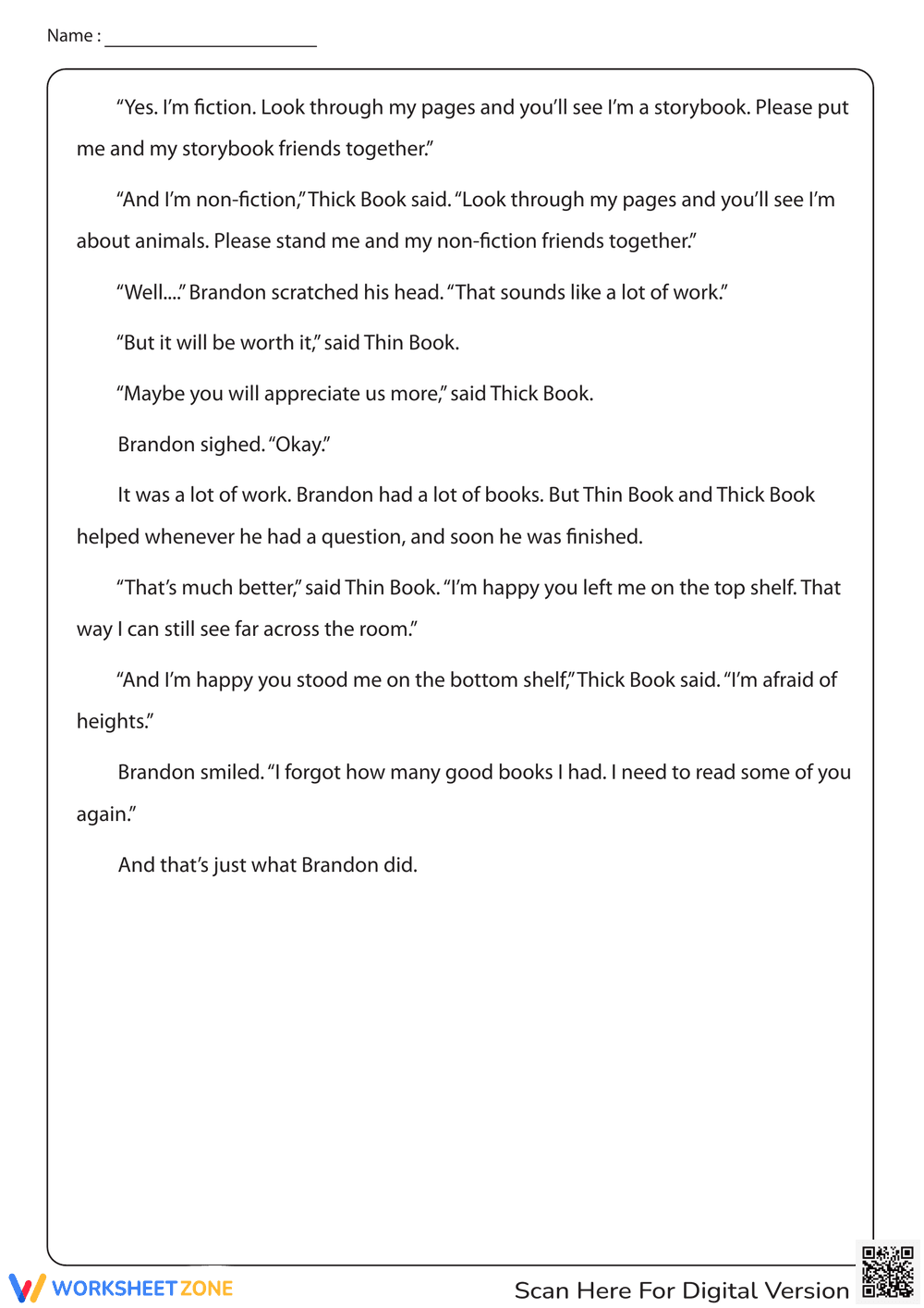
This printable Grade 3 reading comprehension worksheet builds critical literacy skills. Students read the two-page story about Brandon's talking books and answer text-dependent questions to demonstrate understanding. This resource targets key comprehension strategies, ensuring students learn to locate evidence directly within the text.
At a Glance
- Grade: Grade 3 · Subject: English Language Arts
- Standard:
CCSS.ELA-LITERACY.RL.3.1— Ask and answer questions to demonstrate understanding of a text- Skill Focus: Reading comprehension and vocabulary
- Format: 4 pages · 5 problems · Answer key included · PDF
- Best For: Independent practice and reading assessment
- Time: 20–30 minutes
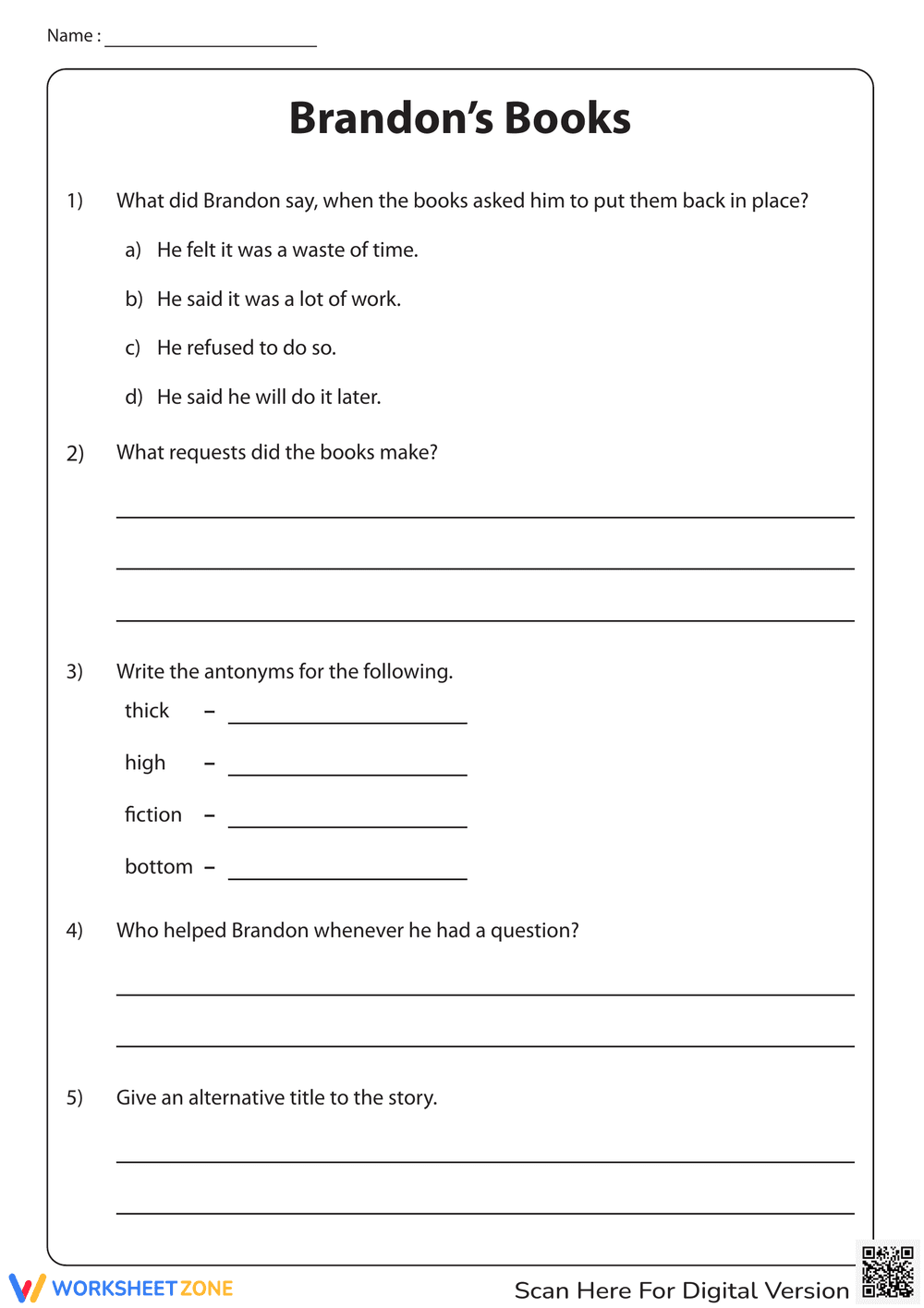
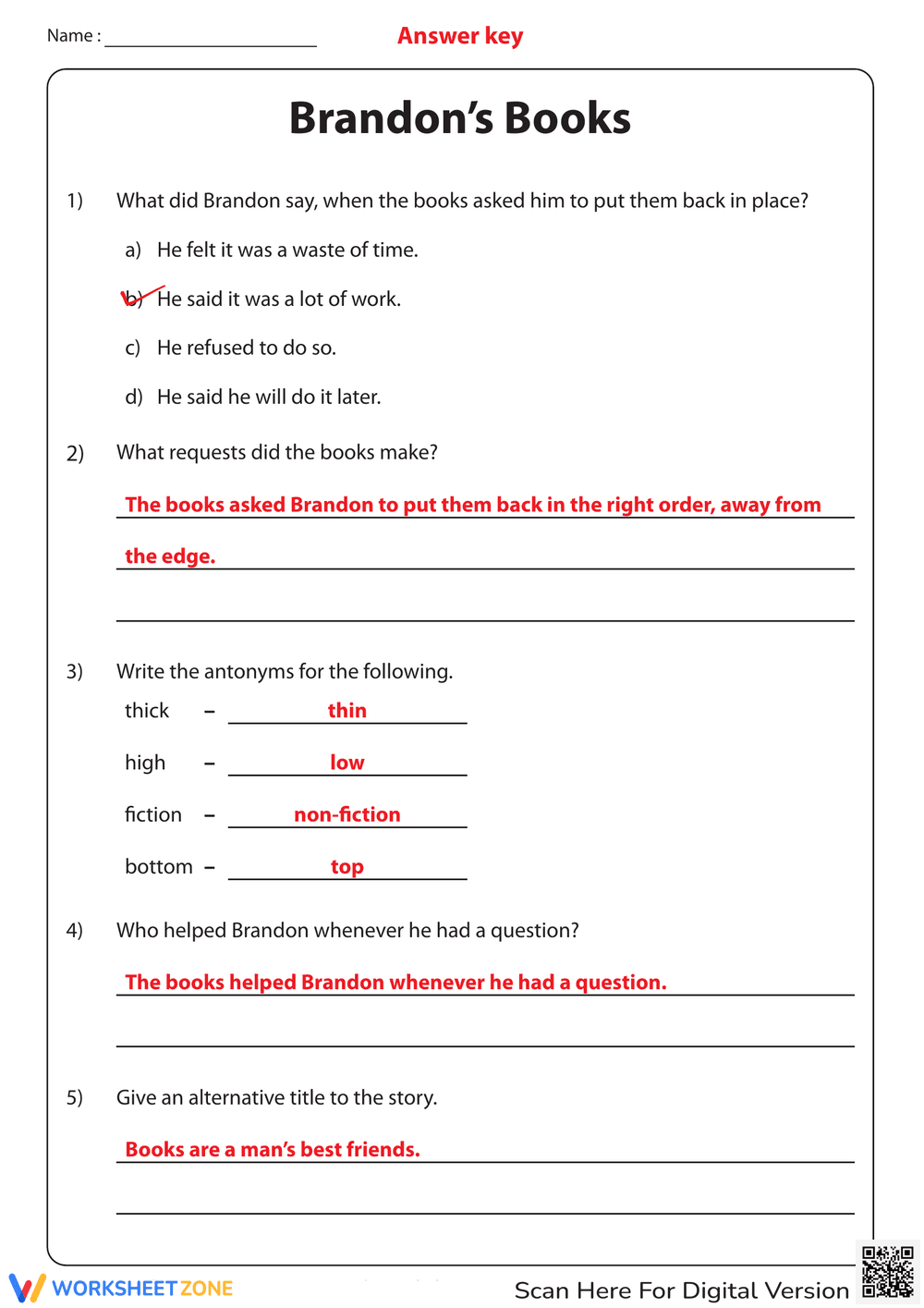
This packet contains a two-page narrative passage titled "Brandon's Books" by Guy Belleranti, followed by an assessment page. The assessment features five tasks, including multiple-choice, open-ended text-dependent queries, antonym matching, and a creative title task. A complete answer key is appended to facilitate rapid grading.
Zero-Prep Classroom Workflow
This resource minimizes teacher preparation. Implement this activity in three simple steps:
- Print (1 minute): Print the double-sided story and the single-page question sheet.
- Distribute (1 minute): Hand out materials during independent work or as a sub plan.
- Review (5 minutes): Use the included answer key to grade submissions or guide review.
With under two minutes of prep time, this packet provides an immediate, high-quality academic task.
Standards Alignment
This activity aligns directly with Common Core Standard CCSS.ELA-LITERACY.RL.3.1, requiring students to answer questions to demonstrate understanding of a text, referring explicitly to the text. The antonym activity supports vocabulary acquisition. Both standard codes can be copied directly into lesson plans, IEP goals, or curriculum mapping tools.
How to Use It
Use this worksheet during independent practice after direct instruction on finding text evidence. Alternatively, administer it as a formative assessment to gauge literal comprehension. Observe whether students refer back to the story pages to locate answers. Expect completion within 20 to 30 minutes.
Who It's For
This resource is ideal for third-grade students reading at Level M, but also serves as intervention for fourth graders or enrichment for advanced second graders. Pair this worksheet with a mini-lesson on fiction versus non-fiction text features to deepen student engagement.
This reading comprehension resource aligns with evidence-based literacy practices highlighted in the Fisher & Frey (2014) framework for close reading. By requiring students to answer text-dependent questions and identify antonyms, the worksheet reinforces the connection between vocabulary acquisition and literal comprehension. Research indicates that structured, text-based questions help elementary students build cognitive pathways necessary for deeper analysis. The inclusion of a complete answer key ensures immediate feedback, which is critical for correcting student misconceptions during independent practice. Teachers can confidently integrate this tool into their daily ELA blocks, knowing it meets the rigorous demands of CCSS.ELA-LITERACY.RL.3.1. The structured layout supports diverse learners by separating the narrative text from the assessment questions, reducing cognitive load and promoting focus.


