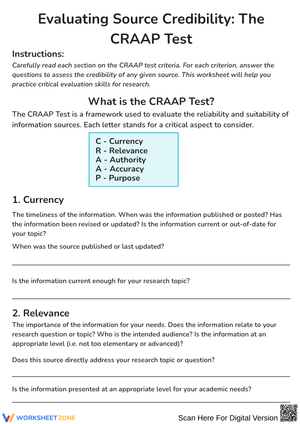
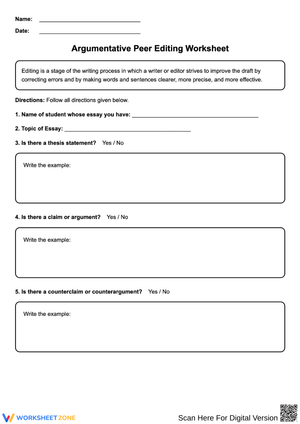
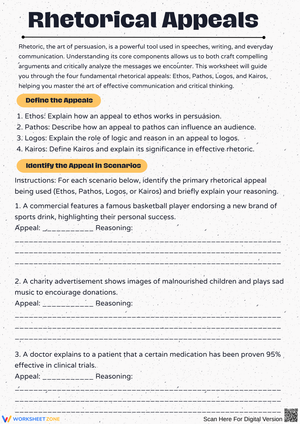
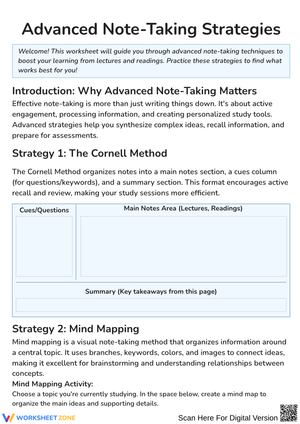
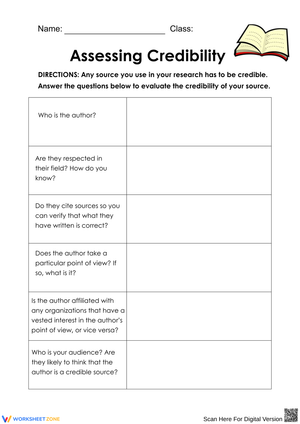
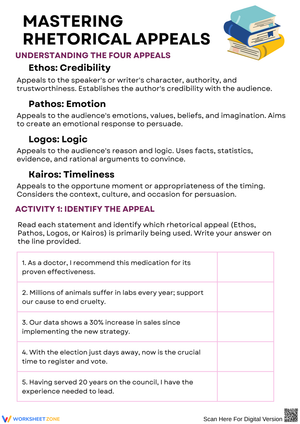
These writing worksheets pdf for 11th grade give English teachers a set of focused, ready-to-use resources that target the specific writing moves juniors need to master — argument, literary analysis, evidence integration, and revision — without requiring teachers to assemble everything from scratch. Each worksheet zeroes in on a single skill rather than sweeping across multiple concepts at once, which matters at this grade level because students are writing longer, more complex essays and need targeted practice they can immediately apply to a draft already in progress.
Skills These Worksheets Build
The skills represented here reflect what junior ELA actually demands. Students who can state an opinion often cannot write a defensible, arguable thesis — and the difference is worth practicing directly. The set addresses:
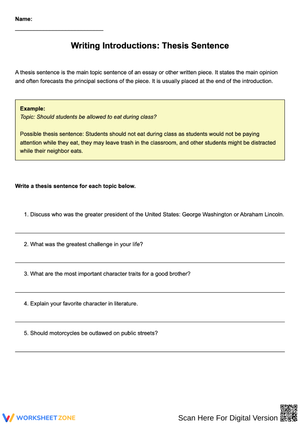
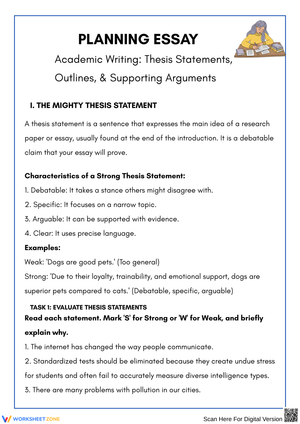
- Thesis and claim construction: Students compare weak and specific thesis statements, identify what makes a claim arguable, and revise their own claims for precision and scope.
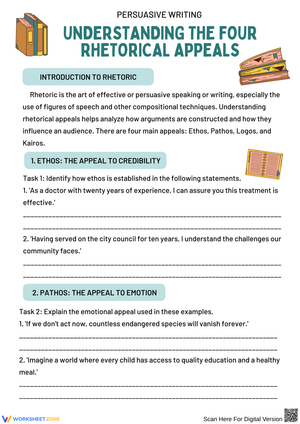
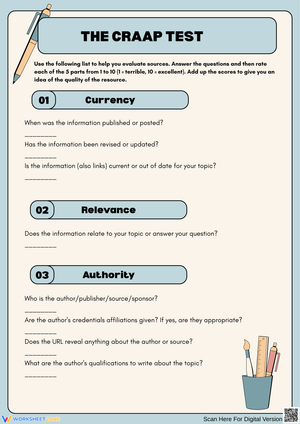
- Evidence selection and integration: Students choose among quotations, introduce them with context, and practice the introduce — quote — explain structure rather than dropping evidence without framing.
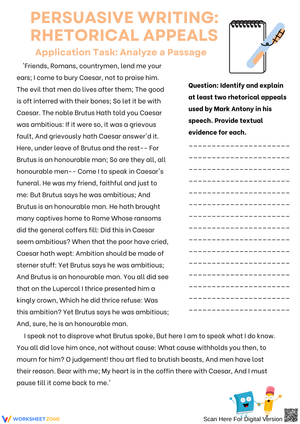
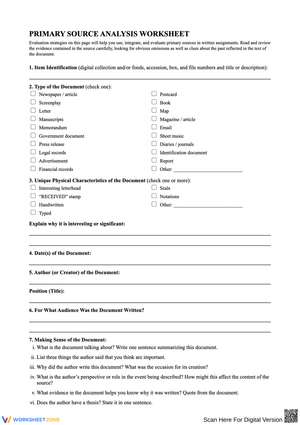
- Commentary and analysis: Students explain how evidence supports a point, identify what a text reveals about an author's reasoning, and move past surface-level summary.
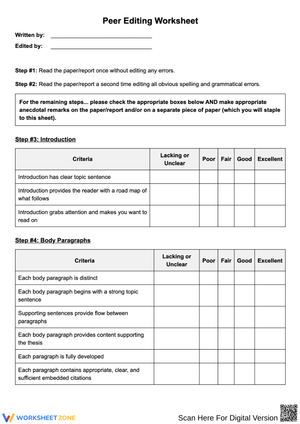
- Paragraph organization: Students sequence body paragraph elements, evaluate transitions, and use structured outlines to plan counterclaims and conclusions.
- Revision as decision-making: Students improve logic, reorder ideas, and sharpen word choice — not just correct errors — by working through targeted revision tasks.
- Grammar and sentence fluency in context: Sentence-combining tasks and punctuation practice connect directly to academic writing rather than sitting in isolation from it.
Writing worksheets pdf for 11th grade are most useful when each worksheet stays narrow. A resource that asks students to practice thesis writing and body paragraph structure and transitions at the same time tends to produce shallow work on all three. The set stays specific so students can practice one move deeply before returning to their own writing.
Common Misconceptions to Watch For and Correct
The most persistent error in junior writing is not missing evidence — it's stopping after the evidence. Students will find a relevant quotation, drop it in, then move immediately to the next point. They write "This shows that the character is conflicted" and consider the paragraph finished. The commentary worksheets interrupt that habit directly: students work with a body paragraph from which the analysis has been removed, write the missing explanation themselves, and then compare their version to a stronger model. That sequence makes the gap visible in a way that class discussion alone rarely does.
Thesis errors take a different shape at this level than they do in ninth grade. Younger students write vague claims. Eleventh graders tend to write claims that either restate the prompt's language back as if it were an argument, or narrow so far that there's nothing left to argue. A worksheet that asks students to mark which of five thesis statements could actually be argued — and explain why the others fail — makes that distinction concrete and transferable.
Revision is where the most revealing errors surface. When asked to improve a paragraph, most students add words rather than change thinking. They'll extend a sentence or swap an adjective, but they won't identify that the paragraph's logic is out of order or that a sentence undercuts the claim. Revision worksheets here ask students to reorder, cut, and reframe — not just reword — which is what actual revision requires.
How to Build These Worksheets Into Your Lesson Plans
The most effective classroom use is pairing each worksheet with a draft already in progress. If students are writing an argument essay, use the claim-and-counterclaim worksheet before they revise their body paragraphs. If they are finishing a literary analysis, use the commentary worksheet as a mid-draft checkpoint: students complete the targeted practice, then immediately apply the same move to one paragraph of their own essay. That ten-minute combination — worksheet then draft revision — transfers the skill while it's still fresh and keeps the practice from feeling like a detour.
Bell-ringer use works reliably for thesis and sentence-fluency worksheets. Five to eight minutes at the start of class before moving into writing workshop keeps the skill visible without consuming lesson time. For sub plans, the evidence integration and paragraph-organization worksheets include enough context that students can work without teacher facilitation — which makes them genuinely useful rather than just time-filling. Writing worksheets pdf for 11th grade also fit naturally into a writing station rotation, where different groups of students work on different skills simultaneously while the teacher pulls a small group for conferencing.
For accountability, ask students to submit both the completed worksheet and a revised paragraph from their current draft. That pairing makes it easy to see whether the practice carried over into their actual writing, which is the only thing that matters.
Differentiating the Set Across Student Readiness Levels
These worksheets support differentiation without requiring completely separate lesson designs. Students who need more structure can start with the paragraph-frame and outline worksheets, which provide a template before asking for independent writing. Students who need more challenge can skip the frames and work through the open-ended revision tasks, where there is no single correct answer and the work requires judgment rather than completion.
For students who can demonstrate a skill in isolation but don't yet apply it in their own writing, the most effective approach is to assign the worksheet alongside a paragraph from their current draft and ask them to annotate both — marking where the skill appears in the model, then marking where they'll add it to their own paragraph. Writing worksheets pdf for 11th grade also adapt well for differentiated homework: one group completes a guided commentary frame, another revises a full paragraph using a checklist, and both are working toward the same essay goal at an appropriate level of difficulty.
Frequently Asked Questions
Will working through these worksheets make student writing feel formulaic?
Only if the worksheet replaces drafting rather than supporting it. When students complete targeted practice and immediately apply the skill to their own writing, the structure becomes a tool they modify rather than a template they're locked into. The goal is to make a writing move visible, not to enforce it permanently. Students who understand why a move works are far more likely to make it their own.
How many worksheets on one skill are actually useful before students need to just write?
One focused worksheet per skill is usually enough before returning to a draft. Working through three or four on the same concept in a row tends to diminish returns — students start going through the motions. The more productive pattern is: brief targeted practice, immediate draft application, then return to another worksheet only if students' revised writing shows the skill didn't transfer. What shows up in their actual paragraphs is a better diagnostic than how they performed on the practice task.
Are these worksheets useful for AP preparation and timed writing?
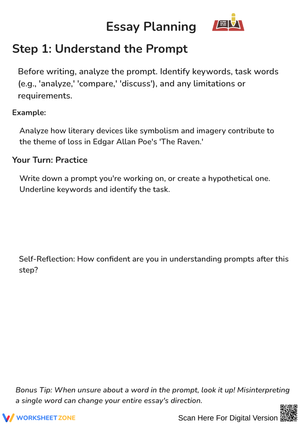
Yes. The thesis, evidence integration, and commentary worksheets all transfer directly to timed essay tasks. Students who practice these moves in a low-stakes format — where they can compare, revise, and discuss — handle on-demand prompts with more steadiness than students who only write full essays under time pressure. The prompt-analysis and quick-outline resources are worth assigning in the weeks before any timed assessment.
Can these be used digitally instead of printed?
Several worksheets work in a PDF-fillable format or can be reproduced in a document editor for digital submission. The print versions hold up especially well for annotation tasks where students are marking, underlining, or comparing examples side by side on the same worksheet — that kind of visual comparison is harder to manage on screen and worth preserving in print when possible.