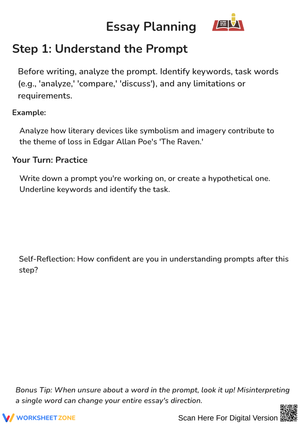
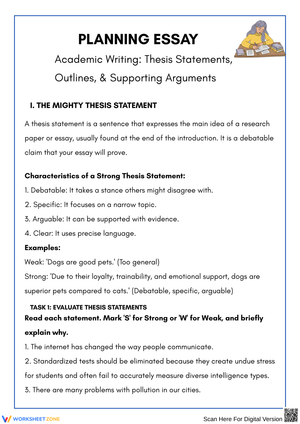
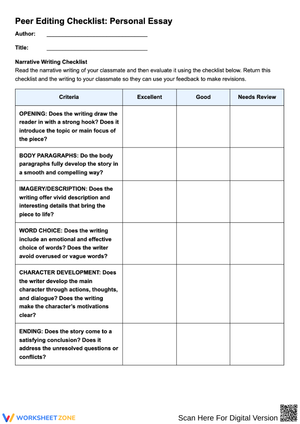
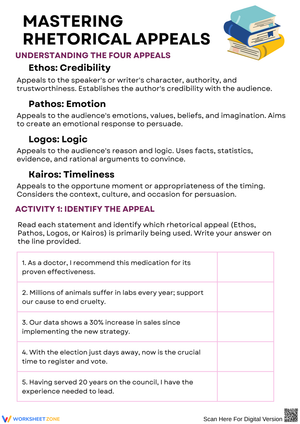
These 11th grade nonfiction writing worksheets pdf give teachers a targeted set of exercises built around the specific demands of junior-year composition — rhetorical analysis, synthesis writing, argument construction, citation formatting, and personal essay development. At this grade level, students aren't still learning what an argument is; they're learning to evaluate whether evidence actually supports a claim and why an author chose one rhetorical move over another. That's a harder skill, and it requires more targeted practice than most general writing assignments provide.
What's Inside the Set
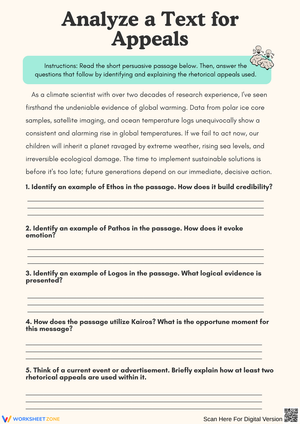
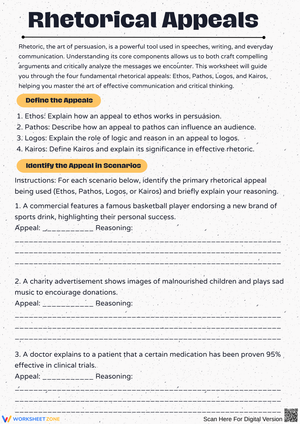
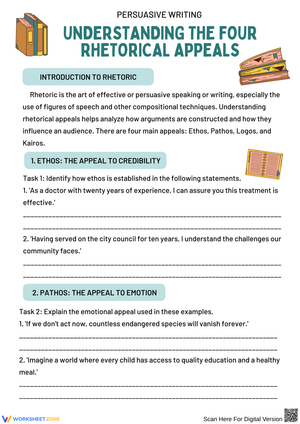
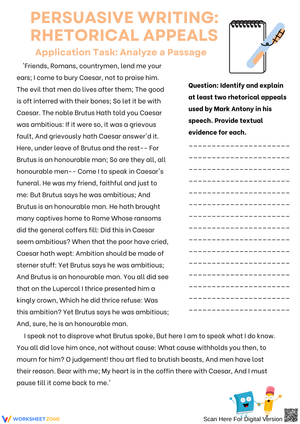
Rhetorical analysis worksheets ask students to annotate excerpts from speeches, historical documents, and published essays — marking not just which appeals appear but where they occur and what strategic effect they create at that specific moment. Students underline passages, label the rhetorical strategy, and write a sentence explaining the author's choice. Not the content of the passage. The choice. That distinction is what these worksheets push toward.
Synthesis writing gets its own worksheets, each providing three or four short nonfiction excerpts on a shared topic. The graphic organizers use a source conversation format: students map what each author would say directly to the others before they attempt a paragraph. That step exists specifically to stop the default pattern of source-by-source summaries disguised as synthesis.
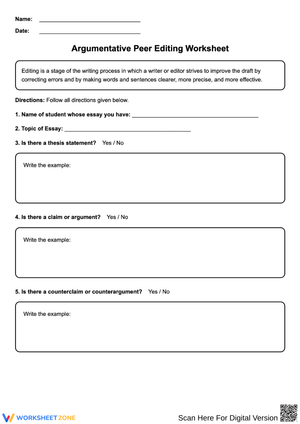
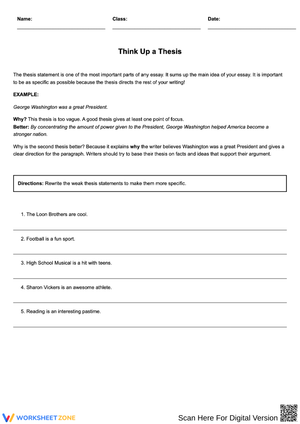
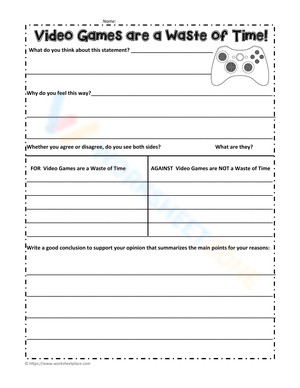
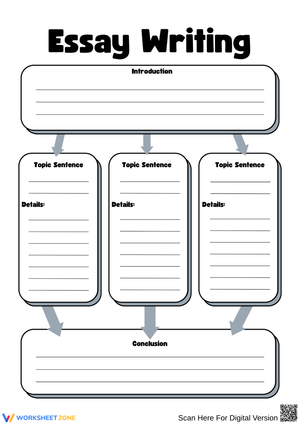
The argumentative structure worksheets focus on thesis precision and counterclaim development. Students rewrite observational statements as arguable claims, then draft rebuttals to their own arguments — a move that forces them to stress-test their own positions. Citation worksheets run alongside research assignments, giving students repeated low-stakes MLA formatting practice before a graded paper where errors count.
Where Eleventh-Grade Nonfiction Writing Breaks Down
The most persistent problem in rhetorical analysis is description wearing analysis as a costume. A student writes: "The author uses pathos by describing the suffering of refugees." That sentence names a strategy and its content — it analyzes nothing. The response a teacher actually wants explains what the appeal accomplishes at that moment in the argument, why it appears there, and how it connects to the author's larger claim. These worksheets address this directly by separating each annotation into a "what" field and a distinct "how and why" field, so students can't conflate the two.
In synthesis writing, the default error is sequential source treatment. Paragraph one covers Source A, paragraph two covers Source B, and so on until all sources are accounted for. Real synthesis organizes by idea, not by source. Students who haven't internalized this write essays that look complete but aren't doing what synthesis asks. The source conversation organizer makes the structural demand visible before writing begins — students can't fill it out and still produce a sequential summary.
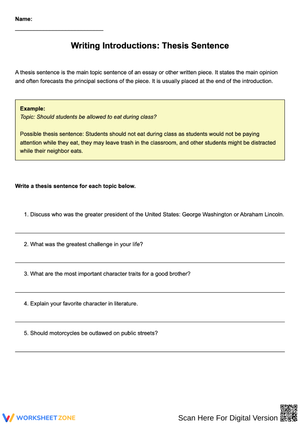
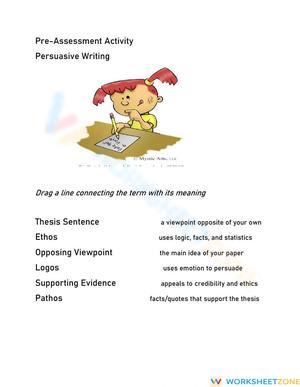
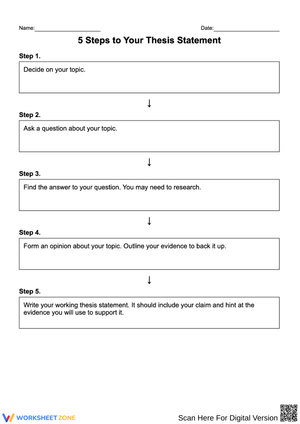
Thesis statements in 11th grade frequently land as observations rather than arguments. "Climate change is a serious issue" describes a state of affairs; it doesn't stake a position that can be contested. Even students who understand this intellectually slip back into observation mode under timed conditions. The thesis development worksheets ask students to rewrite observational claims as arguable ones, then identify which type their current draft most closely resembles. That self-evaluation step is where the real learning happens.
Fitting These Worksheets Into a Junior-Year Course
A short rhetorical analysis worksheet works well as a weekly warm-up — five to seven minutes at the start of class before discussion or extended reading. The routine builds annotation habits gradually, which matters more than any single analysis lesson. For synthesis writing, introduce the source conversation organizer midway through a research unit, after students have read all their sources but before drafting begins. That specific placement targets the moment when students most need help seeing across texts rather than just inside them.
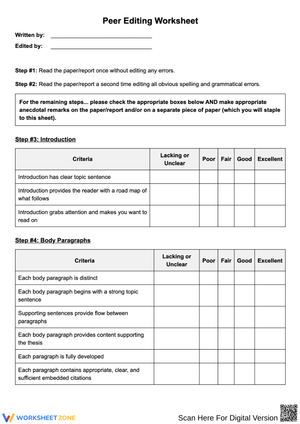
The argumentative structure worksheets double well as peer review checklists. A student reviewing a classmate's draft marks where the thesis appears, whether a counterclaim is present and where, and whether evidence connects explicitly to the claim rather than floating alongside it. That structured attention generates more useful feedback than open-ended commentary. These 11th grade nonfiction writing worksheets pdf work across the full arc of a junior-year ELA course — not just as isolated practice but as recurring tools that build toward the extended writing students face in 12th grade and on college placement assessments.
Standard Alignment
The set targets W.11-12.1, the argument writing standard, which requires students to introduce precise and knowledgeable claims, develop them with valid reasoning and relevant evidence, and address counterclaims fairly. It also targets W.11-12.2, covering informative and explanatory writing through effective organization and precise language. Both standards govern most high-stakes writing 11th graders encounter, from in-class timed essays to independent research papers, and both appear on AP Language and Composition assessments and state ELA exams at this level.
Rhetorical analysis work supports RI.11-12.6, which asks students to determine an author's point of view and analyze how rhetorical choices advance purpose. Citation exercises address W.11-12.8, requiring students to gather and integrate information from credible sources using standard formatting conventions. Each worksheet maps to a specific skill named in the standard — not broadly aligned, but exercise-to-skill matched.
Adjusting the Set Across Ability Levels
For students who struggle to hold a complex writing task in their heads at once, the source conversation organizer reduces the cognitive load to one step at a time — identify each source's argument, locate where sources agree or diverge, then build a claim that requires more than one source to support. That sequence breaks the task into its component moves without lowering the intellectual standard. The goal is still genuine synthesis; the path to it is just made explicit.
Advanced writers often resist structured organizers, and that resistance is reasonable when the organizer constrains thinking they've already done. Give those students the open-ended versions — the rhetorical analysis prompt without sentence starters, the synthesis prompt without source mapping boxes. The challenge for high-performing 11th graders is usually precision, not comprehension: they can identify a rhetorical strategy but write loose, unspecific analysis sentences. Removing the organizer forces them to supply that precision themselves rather than treating the filled boxes as the finished product.
The 11th grade nonfiction writing worksheets pdf serve the full classroom range, including students preparing for AP Language and Composition, where rhetorical analysis, argument, and synthesis are the three primary essay tasks on the exam. Teachers running standard and AP junior English in the same school can pull from the same set.
Frequently Asked Questions
How do I push students past summary and into actual rhetorical analysis?
The most effective fix is restricting what students can reference in their analysis sentences. Require them to write every sentence without naming the content of the passage — only the technique and its effect on a reader. It's an artificial constraint, but it forces the shift in focus. The annotation worksheets build this in by separating the "what" box from the "how and why" box, so students must populate each one independently before writing a full analysis sentence.
When exactly should I hand out the source conversation organizer?
After all reading is complete, before any drafting begins. Students need to have every source read and a working sense of each one's position. Introducing the organizer too early — while students are still reading — turns it into a note-taking sheet instead of a synthesis tool. Its purpose is to bridge reading and writing, and that means the reading has to be finished before the organizer does its job.
Do these worksheets line up with AP Language and Composition course expectations?
Directly. The AP Language and Composition exam tests three essay types: rhetorical analysis, argument, and synthesis — the same three skill categories this set covers. These 11th grade nonfiction writing worksheets pdf don't replicate timed exam conditions, but the skills they build are exactly what AP essay tasks require. A teacher running AP Language and a standard junior English section can work from the same set, adjusting the level of structure offered to each group.