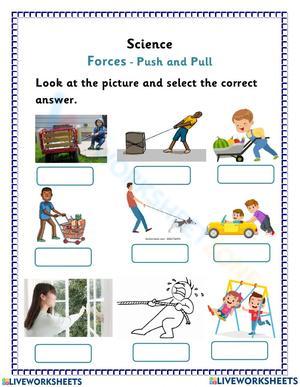
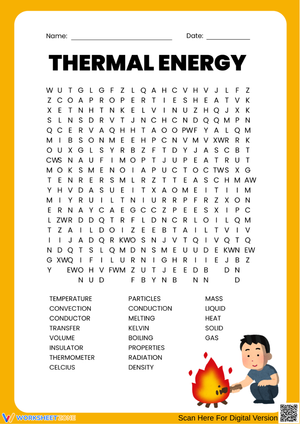
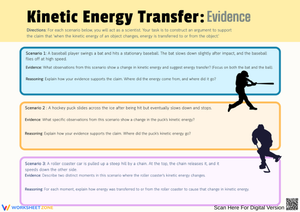
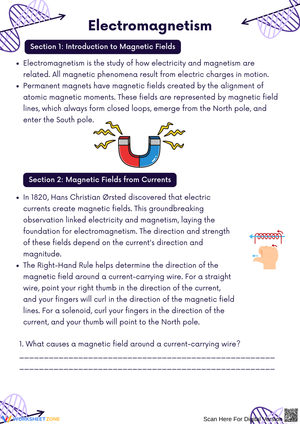
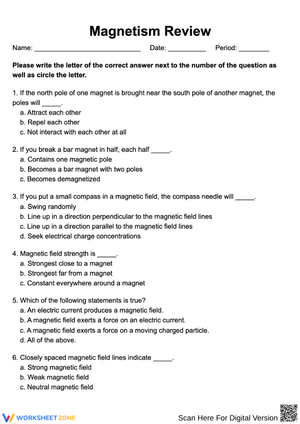
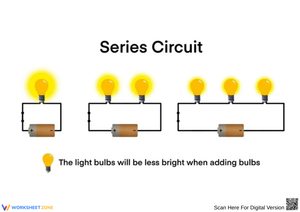
These physics worksheets for 10th grade give teachers a topic-organized set that covers the full range of a standard course — kinematics, Newton's laws, energy, waves, and basic circuits — with each worksheet focused tightly enough to work on the day of direct instruction, as a homework set, or as a pre-assessment review without any reformatting. Each worksheet is self-contained, which means it holds up equally well as a bell ringer, a station activity, or a substitute plan. The set is built for the reality that 10th-grade physics asks students to do three cognitively distinct things at once: reason about physical systems, manipulate formulas with correct units, and extract information from graphs — and most single resources address only one of those demands at a time.
Topics and Skills Built Across the Set
Six topic areas organize the worksheets, and within each area the items move from concept-level questions toward calculation and interpretation tasks. That progression gives teachers a choice of entry point depending on where students are in a unit — vocabulary review at the start, formula work mid-unit, mixed reasoning as assessment approaches.
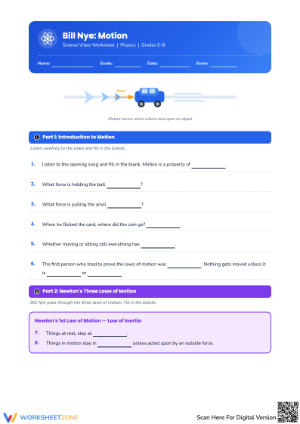
- Motion and kinematics: average speed, instantaneous velocity, acceleration calculations, and slope-based interpretation of both distance-time and velocity-time graphs — including tasks that force students to distinguish between a steep slope and a high y-value, which most confuse.
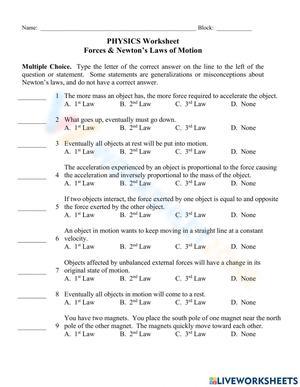
- Forces and Newton's laws: net force problems, balanced and unbalanced scenarios, and mass-versus-weight distinctions — with problems deliberately written to give mass in kilograms when students need to find force in newtons, so the conversion step cannot be skipped.
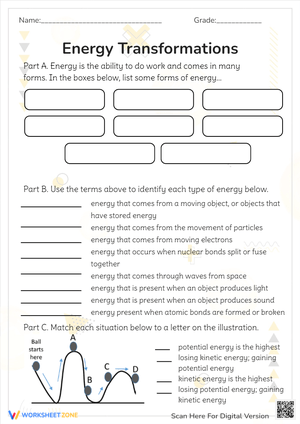
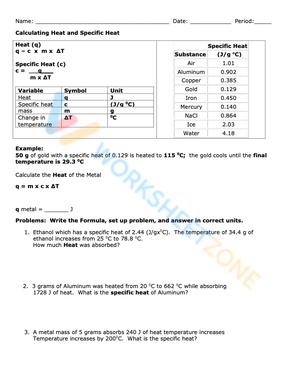
- Work, energy, and power: kinetic and potential energy computations, conservation of mechanical energy, and power problems that require students to track joules and watts consistently rather than treat them as interchangeable.
- Waves: wavelength, frequency, amplitude, wave speed, and comparison tasks that ask students to contrast mechanical and electromagnetic wave behavior rather than simply recall labeled definitions.
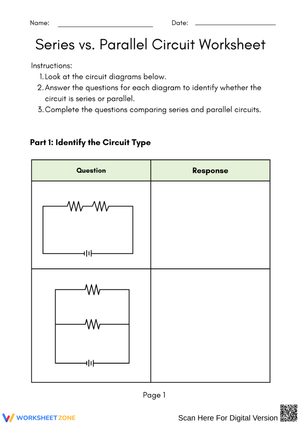
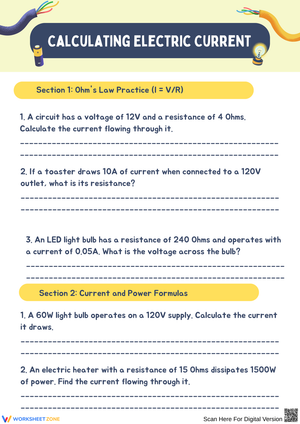
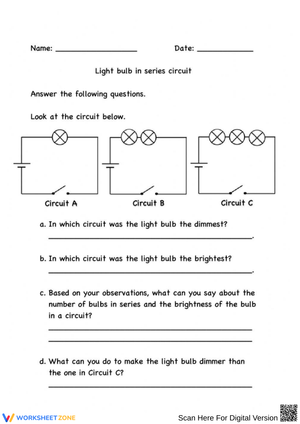
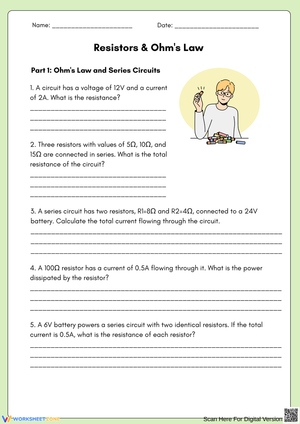
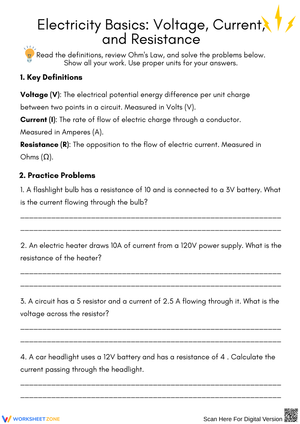
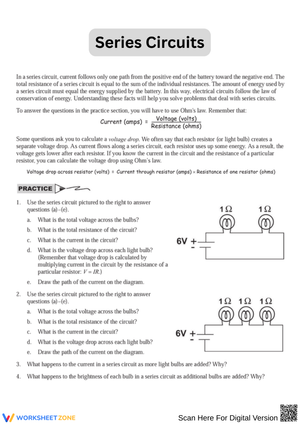
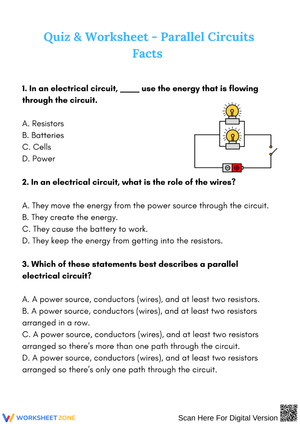
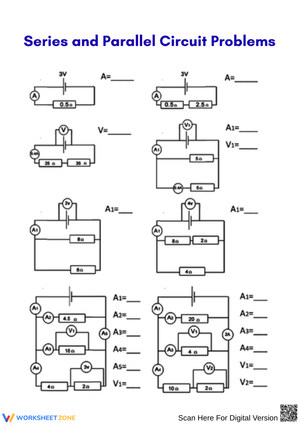
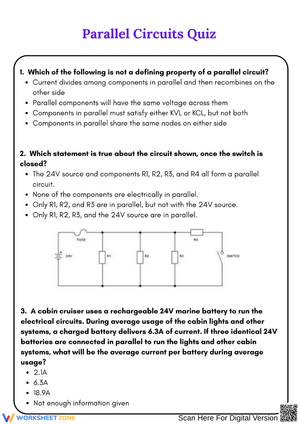
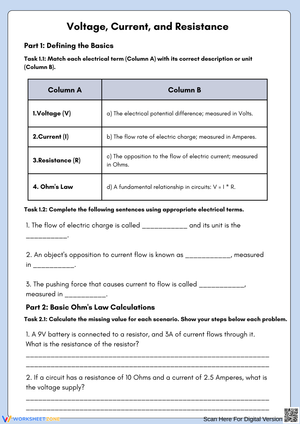
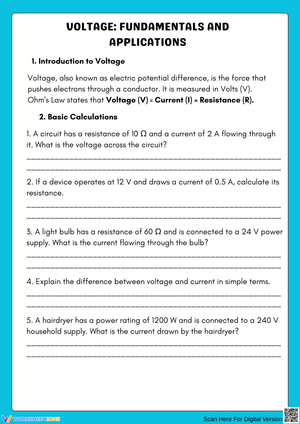
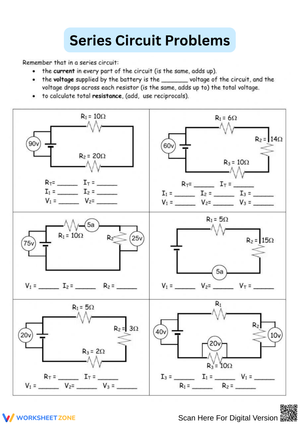
- Electricity: current, voltage, resistance, and Ohm's law, alongside circuit questions that require students to predict how one variable changes when another is altered — not just substitute into V = IR.
- Mixed review: multi-topic items requiring formula selection, unit conversion, and short written justifications so students practice the same decision-making that appears on unit assessments.
Answer keys accompany each worksheet. They show the full solution setup — known values identified, formula selected, units carried through each step, final answer labeled — so teachers can use them for grading or for student self-correction at a check station rather than just as a teacher reference.
Why This Format Holds Up Under Real Classroom Conditions
Physics content at the 10th-grade level sits at an awkward intersection: the algebra is manageable, but the conceptual reasoning is genuinely difficult. Worksheets that rely entirely on formula substitution inflate grades without building understanding — a student can arrive at the right number while explaining the physical situation completely backward. Each worksheet here mixes concept questions (identify, predict, compare, explain) with calculation items, so teachers see where each type of reasoning breaks down independently. A mixed-format page surfaces the gap between procedural fluency and conceptual clarity in a way a computation-only problem set never does.
Item count matters too. Each worksheet stays in the range of eight to twelve targeted problems. That range is deliberate: enough items to yield clear formative data, not so many that the last ten minutes of class become a race to finish. A student who completed six out of ten items correctly tells you something specific about where understanding broke down. A student who answered twelve out of twenty gives you much less useful signal.
Student Mistakes These Worksheets Help You Catch and Correct
Grade 10 physics generates a predictable set of errors — the same ones appear in student work year after year regardless of how carefully the concept was introduced. These worksheets address those patterns directly rather than assuming students will produce ideal reasoning after a clean lesson.
On kinematics graph questions, students read the value of a point instead of interpreting the slope. A student will report the velocity at a specific moment by reading the y-axis coordinate on a distance-time graph, bypassing the rise-over-run calculation entirely. The graph items in this set require written slope calculations, so that shortcut has no room to operate.
On Newton's law problems, students who correctly define weight as mg on a vocabulary check will then treat 65 kg as a force when solving a net force scenario — dropping the conversion from mass to weight before any other step. The force problems are written to make that conversion unavoidable: mass appears in kilograms, and the question asks for net force in newtons.
On energy problems, the most persistent conceptual error is treating kinetic and potential energy as two independent quantities that can both increase simultaneously, rather than as complementary expressions of a fixed system total. Short-answer items that ask students to explain what happens to each form of energy at a specific moment in a falling-object scenario — before calculating anything — expose this misunderstanding faster than any numerical problem does.
Fitting These Worksheets Into Your Weekly Lesson Sequence
Teachers who use physics worksheets for 10th grade regularly find that short, topic-specific pages outperform long mixed packets during active unit instruction. The most effective placement depends on the lesson stage: two to four questions from a kinematics page on a Monday warm-up — after students have been away from the material over a weekend — cost almost no prep time and consistently improve retention before new content is introduced. The full worksheet then works as guided or independent practice that same day, or as the assigned homework that night.
For station rotations, one reliable grouping places the conceptual page, the graphing page, and the calculation page from the same topic area at three separate stations with twelve-minute rotations. That timing is long enough for students to complete the targeted items and short enough to sustain focus. Teachers who run this format report a useful side effect: if every group stalls at the same station, that becomes the reteaching priority for the following day — a formative signal that requires no separate assessment to generate.
A practical move that saves real preparation time: keep a "formula support" version of each calculation worksheet in your classroom file. The problems are identical to the standard version, but the page includes a small formula bank in the corner and a margin prompt — "circle your known values before setting up" — that reminds students of the first step. Handing that version to students who need additional support requires no explanation and draws no attention, because the work on both versions looks the same from across the room.
Adjusting the Worksheets for a Mixed-Readiness Physics Class
Most differentiation in these worksheets comes from adjusting entry point and response demand — not from rewriting the content for each tier. For students who need more support, assigning only the first half of a worksheet — typically the vocabulary matching, diagram labeling, and single-step calculation items — gives meaningful practice without the cognitive overload that comes from encountering multi-step problems before the foundational reasoning is stable. Those students work through one guided calculation with a formula bank, then rejoin the class discussion during answer review.
For students who move through the standard items quickly, the extension is rarely a different worksheet — it's a different question asked about the same problems. Ask them to rewrite one calculation item so the unknown is a different variable, or to sketch a revised graph representing the same physical scenario with different initial conditions. Both tasks require deeper engagement with the underlying physics without requiring the teacher to prepare additional materials. Physics worksheets for 10th grade that include graph interpretation and short-answer reasoning tasks naturally create this kind of tiered opportunity without making the differentiation visible to the class as a whole.
Frequently Asked Questions
What topics are covered, and do the worksheets follow a fixed teaching sequence?
The set covers motion, forces, energy, waves, electricity, and mixed review. The worksheets are organized by topic rather than locked into a prescribed order, so teachers can pull pages in whatever sequence their course follows. Most standard 10th-grade courses introduce kinematics first, which makes the motion worksheets a natural starting point — but the forces and energy pages work equally well mid-semester when those units land in the schedule.
How detailed are the answer keys?
Each answer key shows the full solution process: known values identified, formula selected, units tracked through each calculation step, and the final answer labeled correctly. That level of detail lets teachers identify precisely which step a student missed during grading, and it makes the keys genuinely usable for student self-correction at a check station or for small-group error analysis — not just for teacher reference.
Do these worksheets function in a blended or fully digital classroom?
The PDF format supports both delivery modes. Printed copies allow students to annotate, show work in the margins, and mark what they know as they move through each problem — habits that matter in physics, where setup is as important as the final answer. Posted digital copies keep absent students current and allow LMS submission. Having both options available without reformatting is one practical advantage physics worksheets for 10th grade in PDF format carry over editable documents that lose their layout when opened on different devices.
Can a worksheet double as a brief formative quiz?
Yes, when the item count and format support it. A worksheet with eight to twelve items that spans concept checks, graph interpretation, and calculation gives enough range to function as a short formative assessment. Teachers who grade these for accuracy typically award partial credit for correct setup and unit labeling even when the final value contains an arithmetic error — a grading approach that rewards the physics reasoning rather than the arithmetic execution.












 Interactive Worksheet Maker
 Quiz Maker
 Word Search Maker
 Crossword Puzzle Maker
 Word Scramble Generator
 Sentence Scramble Generator
 Handwriting Worksheet Generator
 Name Tracing Generator
 Fill In The Blank Generator