These math printable worksheets for 10th grade target the exact crossover moment in high school math where foundational algebra stops being introductory and starts being assumed — quadratics, polynomial operations, functions in multiple representations, radical expressions, coordinate geometry, and descriptive statistics. Each worksheet covers one skill without mixing in unrelated content, which keeps student work readable and teacher feedback precise.
What Each Worksheet Covers
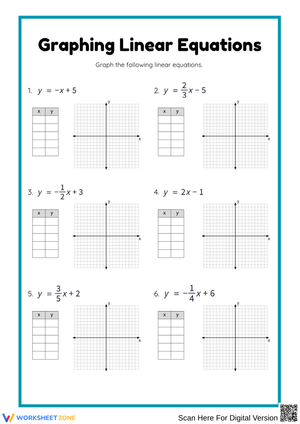
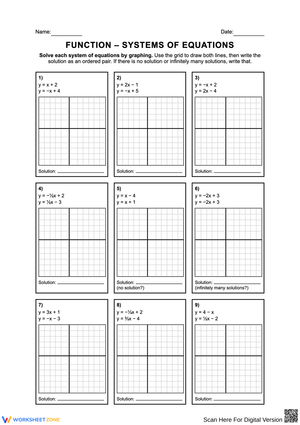
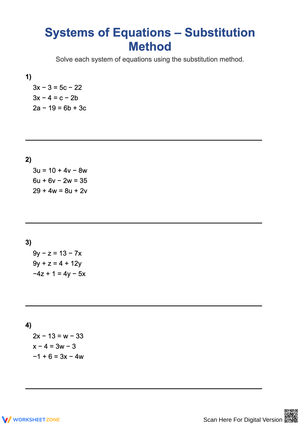
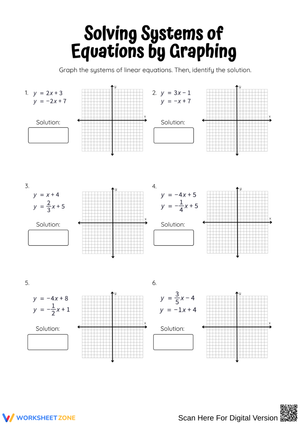
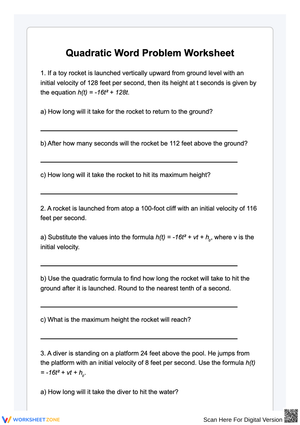
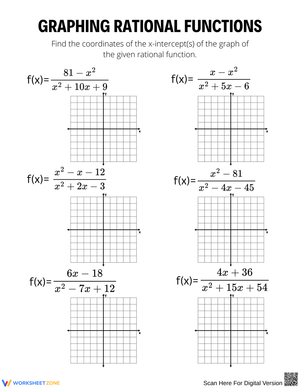
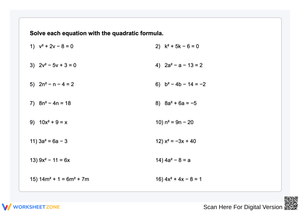
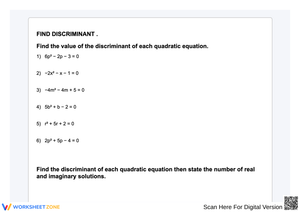
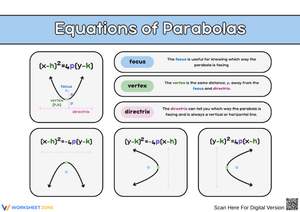
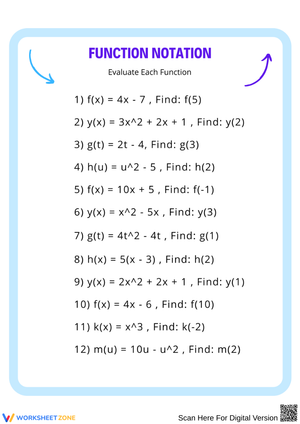
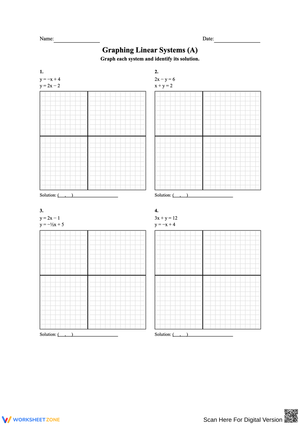
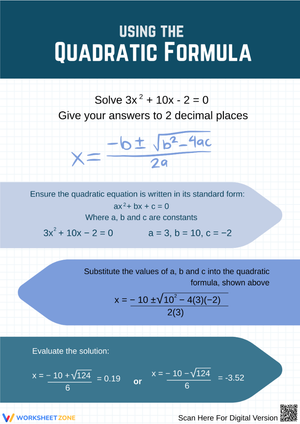
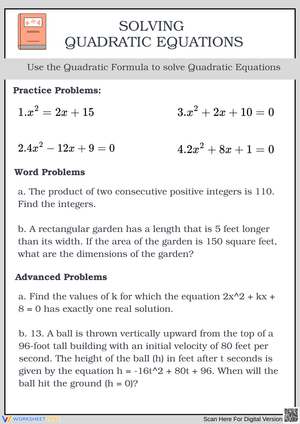
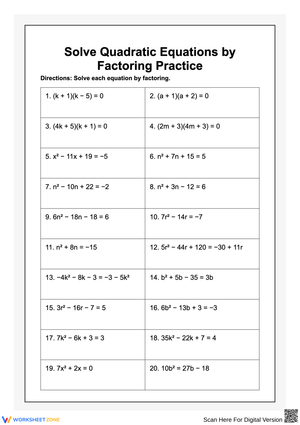
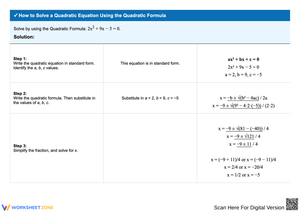
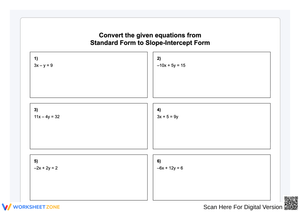
Six skill families make up the bulk of Grade 10 instruction, and the set addresses each one separately. The quadratic worksheets include factoring trinomials and binomials where a ≠ 1, solving by factoring, applying the quadratic formula, and graphing parabolas by identifying vertex, axis of symmetry, and x-intercepts in both standard and vertex form. Function worksheets ask students to evaluate, compare, and interpret — not just graph — with attention to notation, domain and range from tables and graphs, and rate of change across intervals. Polynomial operations worksheets cover addition, subtraction, multiplication, and long division, with enough multi-term problems that distributing negative signs across parentheses gets genuine repetition before it stops being a source of errors.
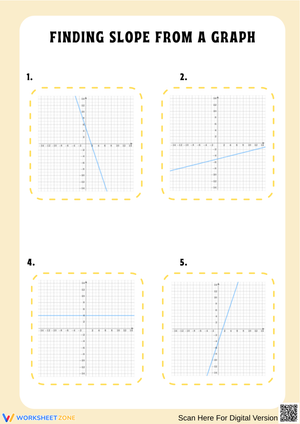
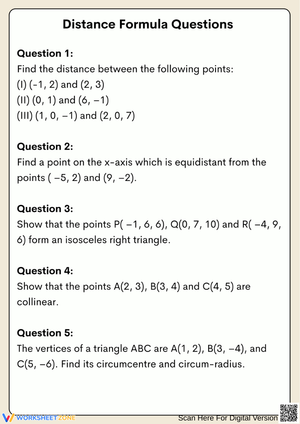
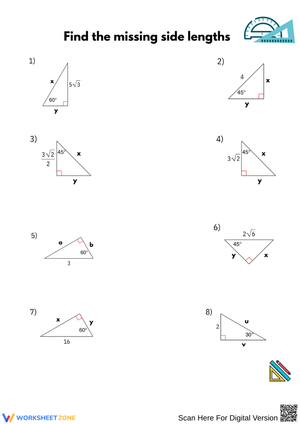
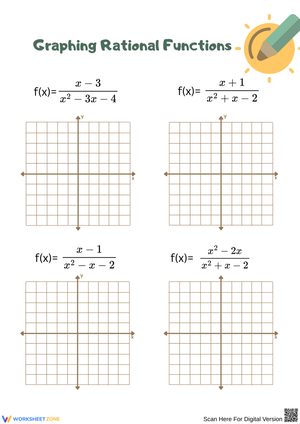
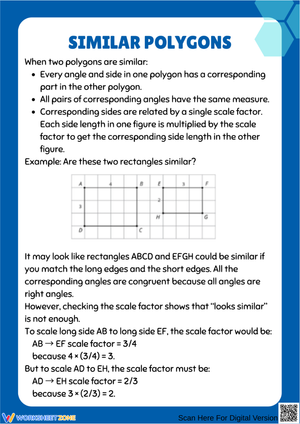
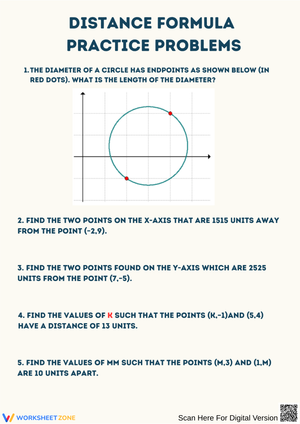
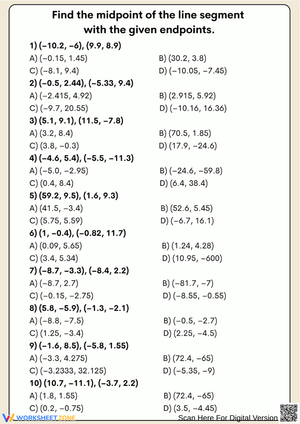
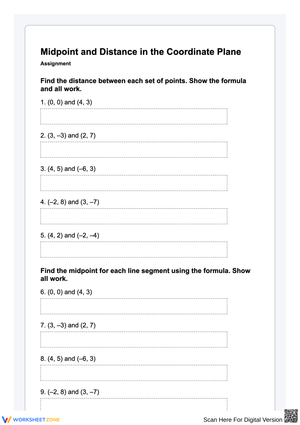
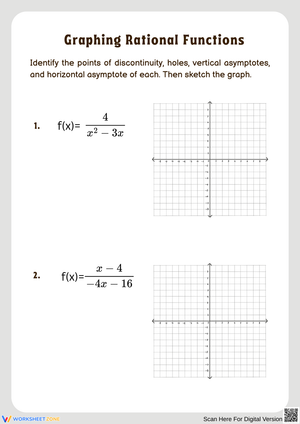
The geometry worksheets focus on coordinate geometry, similarity and congruence reasoning, area, volume, and triangle relationships — each isolated to exactly the skill the current unit requires. Radical and rational expression worksheets address simplifying, adding, and multiplying radical expressions, along with identifying restrictions on denominators. Statistics worksheets ask students to compute and interpret measures of center and spread, compare box plots and histograms side by side, and identify what a data display cannot show — a task routinely skipped in standard worksheet practice but worth including because it appears on most state assessments.
Student Mistakes These Worksheets Surface
In quadratic factoring, the most consistent error in student work is attempting to factor a trinomial before checking for a greatest common factor. A student who sees 3x² + 6x − 9 will often build two binomials directly and produce an incorrect factorization, rather than first pulling out the 3 to get 3(x² + 2x − 3) and then factoring cleanly. The quadratic formula brings a different predictable error: when b is negative, students write −b and treat it as still negative, collapsing the sign they were supposed to flip. Writing one quick numerical example — asking students to evaluate −(−5) before they touch the formula — catches this before it feeds into a wrong final answer.
Domain and range reverse consistently in student work, and the confusion is developmental, not just procedural. Grade 10 is typically when function notation becomes formal for the first time, and students who read graphs by scanning vertically out of habit assign y-axis values to domain. That reversal persists across multiple lessons until students have annotated enough graphs independently to feel the directionality. Radical simplification produces a similar pattern of premature stopping: students reach 2√12 and mark the answer complete, missing the step that produces 4√3. These worksheets mark partially simplified radicals as incomplete in the answer key, making the expected level of precision explicit rather than implied.
How to Build These Worksheets Into Your Weekly Lesson Plan
The most reliable structure is one worksheet per lesson as focused independent practice — not as a broad review. Work the first two or three problems together before releasing students to finish on their own. That gradual release sequence is especially useful with quadratic and function worksheets, where the step structure is unfamiliar enough that students need one worked model before they can proceed accurately.
- Bell ringers: Pull four or five problems from a previous worksheet and project them as the opening five minutes of class. Returning to yesterday's skill before introducing something new is spaced retrieval — it takes almost no class time and produces measurably stronger retention than massed practice on new material alone.
- Intervention folders: Sort worksheets by topic and code each one — R for review, O for on-level, C for challenge — so small-group sessions can begin without spending the first eight minutes locating the right page.
- Partner work: Assign each partner the odd or even problems, then have them check each other's work against the answer key. The conversation that follows a checking disagreement teaches more than another round of silent individual practice.
- Sub plans: Choose worksheets with self-contained directions and a single focused skill. A substitute does not need to explain context if the directions are specific and the format is predictable.
Teachers who compile math printable worksheets for 10th grade into a topic-indexed binder — physical or digital — reduce the planning lag between "we need to review radicals" and actually handing students something useful. That lag is where instructional minutes disappear.
Standard Alignment
These worksheets align to Common Core State Standards for high school mathematics across several domains. Quadratic and polynomial worksheets address HSA-REI.B.4 (solving quadratic equations in all forms) and HSA-APR.A.1 (arithmetic of polynomials). Function worksheets cover HSF-IF.A.1 and HSF-IF.B.4, which define function domain and range and require students to interpret key features from graphs, tables, and verbal descriptions. Geometry worksheets connect to the HSG-SRT cluster for similarity and congruence and to HSG-GPE.B for coordinate geometry applications. Statistics worksheets address HSS-ID.A.1 through A.3, which ask students to represent distributions and interpret measures of center and spread.
Most of these standards appear across the Algebra 1, Geometry, and Algebra 2 course sequence, which means Grade 10 teachers are frequently reinforcing concepts introduced in Grade 9 while extending them toward Algebra 2 expectations. These worksheets support that spiral without requiring teachers to source separate review materials for each course level.
Adjusting the Worksheets Across Readiness Levels
When math printable worksheets for 10th grade are assigned in mixed-readiness classes, a few targeted adjustments keep the same worksheet productive across different entry points. Students who need additional support benefit from a partially worked first problem — not fully solved, but with the GCF already factored out or the radical already broken into prime factors — so they enter the process at a workable point rather than stall before the first step. Students ready for extension can work the same skill in a multi-step application: instead of simplifying √75 in isolation, they find the exact perimeter of a triangle whose sides are expressed as radical expressions.
Error analysis items are particularly effective with stronger students. Present a worked problem containing one wrong step — a dropped negative in polynomial subtraction, or a domain stated where range belongs — and ask students to locate the error, explain what went wrong, and produce the correct solution. This requires the same procedural knowledge as a standard problem but demands analytical rather than mechanical application of it.
Frequently Asked Questions
Do these worksheets come with answer keys?
Yes. Each worksheet includes a complete answer key. For multi-step problems in quadratics and polynomial operations, the key shows the full solution process rather than only the final answer, which makes it useful for reteaching as well as self-checking.
Are these appropriate for both Algebra 2 and Geometry students in Grade 10?
The skill label on each worksheet identifies exactly what's covered, so the set works across course assignments. Teachers in a Geometry course pull the geometry and statistics worksheets; Algebra 2 teachers pull the quadratic, function, radical, and polynomial worksheets. Because the worksheets are labeled by skill rather than course name, they also work well in schools where Grade 10 students are split across different math tracks.
How many problems does each worksheet include?
Problem counts vary by topic and complexity. A quadratic formula worksheet typically includes ten to fourteen problems — enough to establish fluency without extending into diminishing returns. A statistics worksheet that asks students to interpret and compare two box plots might include six to eight questions, since each one requires careful reading rather than quick calculation. Most worksheets fit within a twenty-to-thirty-minute independent work window.
Can these worksheets be used for standardized test preparation?
When math printable worksheets for 10th grade are needed for assessment prep, the alignment to CCSS high school standards means the skill practice here maps directly to tested content on Algebra 1 and Geometry end-of-course exams, as well as PSAT math sections. Because each worksheet isolates one skill, teachers can use diagnostic data to identify specific gaps and then assign targeted review without building a separate prep packet from scratch.













 Interactive Worksheet Maker
 Quiz Maker
 Word Search Maker
 Crossword Puzzle Maker
 Word Scramble Generator
 Sentence Scramble Generator
 Handwriting Worksheet Generator
 Name Tracing Generator
 Fill In The Blank Generator