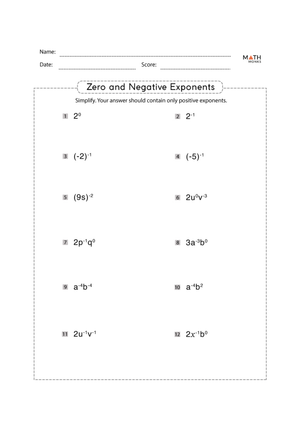
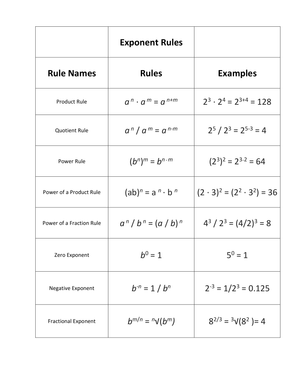
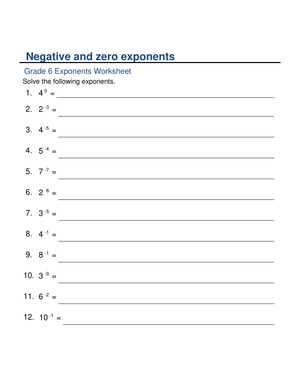
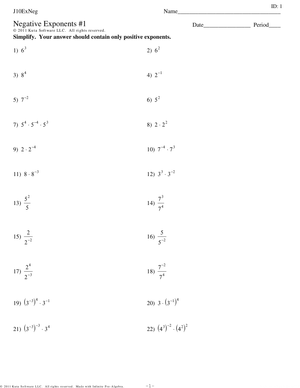
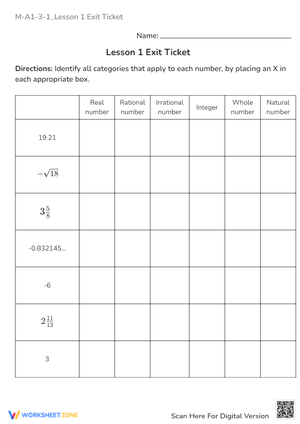
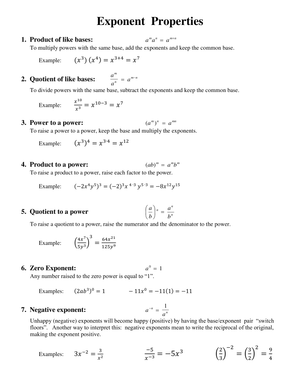
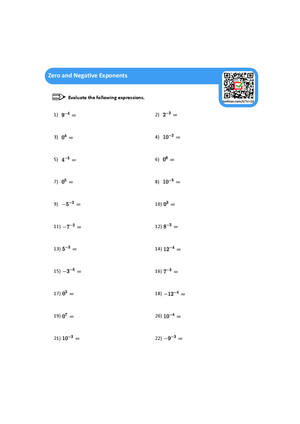
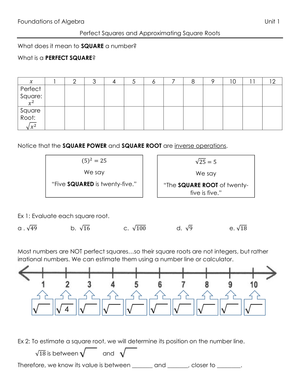
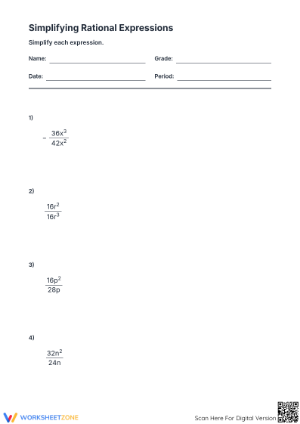
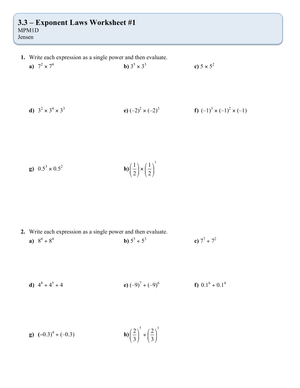
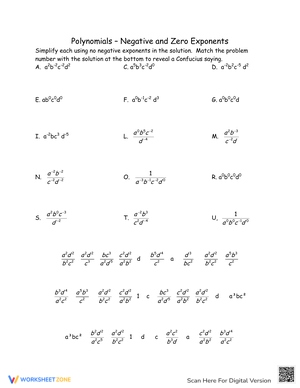
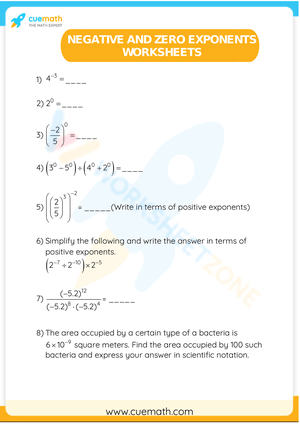
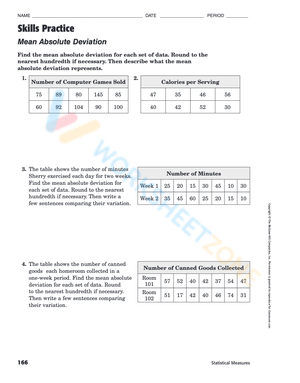
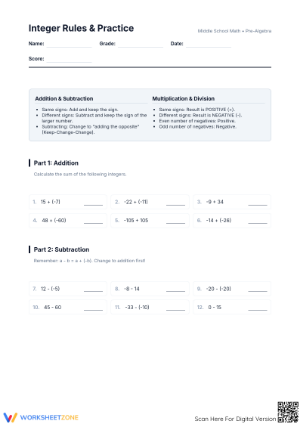
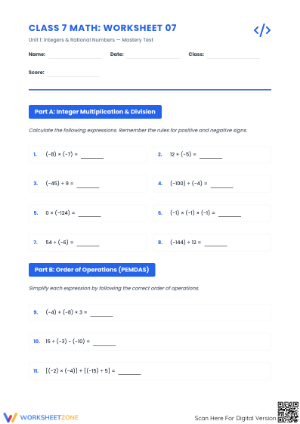
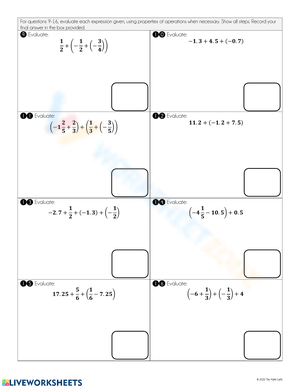
These numbers worksheets for 10th grade give math teachers a practical way to keep number sense in active circulation — not as a standalone unit to check off, but as steady, targeted practice that reinforces skills before algebra-heavy lessons, radical work, and any week where exponent fluency is actually tested. The set covers real number classification, rational and irrational distinctions, exponent rules, radical simplification, and scientific notation — the number topics that show up repeatedly in 10th grade math and create downstream errors when they aren't solid.
Concepts in the Set
Grade 10 number practice is maintenance, not remediation. Students are expected to apply number rules automatically while solving equations, working with polynomial expressions, and evaluating functions. When that fluency slips, mistakes compound quickly in longer problems. These worksheets address the specific skill areas that surface most often in student work:
- Real number classification: placing decimals, fractions, radicals, and integers within the structure of the real number system and explaining where each belongs.
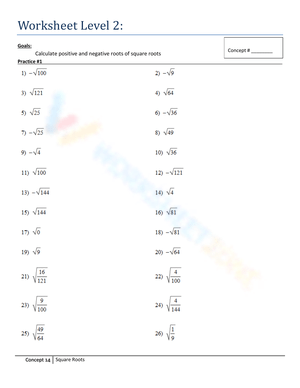
- Rational versus irrational numbers: recognizing that √9 simplifies to a rational value while √10 does not, and applying that distinction in problems that mix both types.
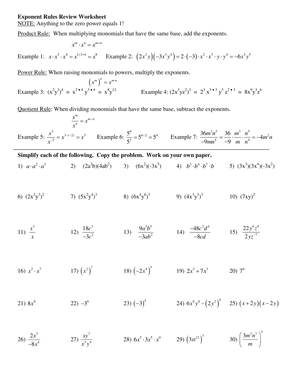
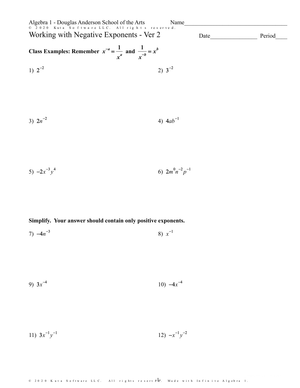
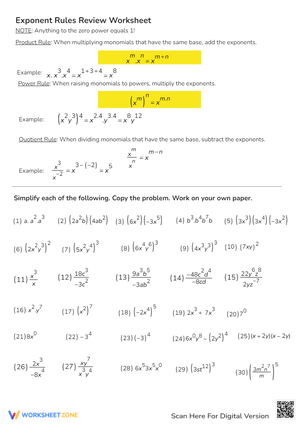
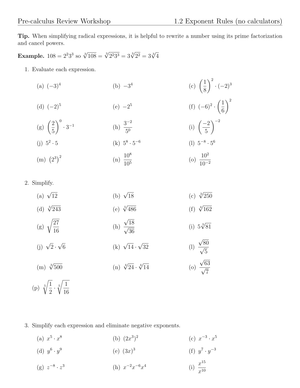
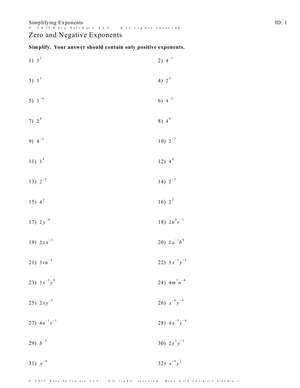
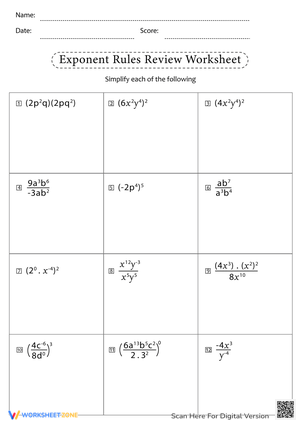
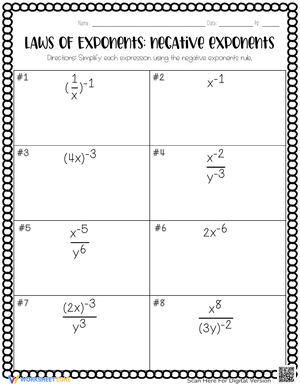
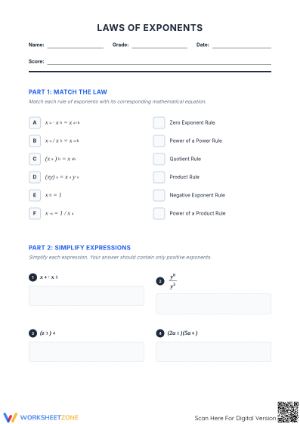
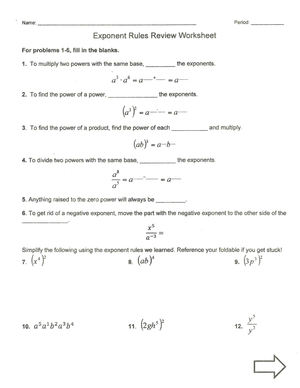
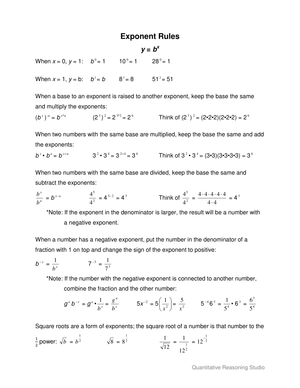
- Exponent rules: product, quotient, power, and negative-exponent rules — particularly when variables appear alongside numerical bases or when multiple rules must be applied in sequence.
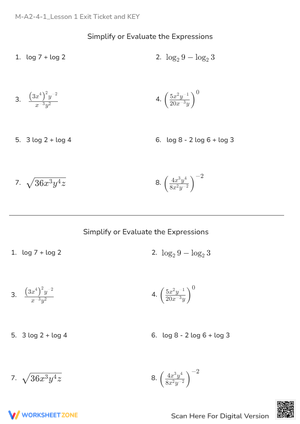
- Radical simplification: rewriting square roots in simplest form, estimating irrational values, and converting between radical notation and rational exponent form.
- Scientific notation: converting between standard and scientific form in both directions, and carrying out multiplication and division with values already expressed in scientific notation.
- Number properties in expressions: applying commutative, associative, and distributive properties correctly when simplifying expressions that combine integers, radicals, and exponents.
Where Grade 10 Students Consistently Go Wrong With Numbers
The most persistent error in this content area is the sign-and-exponent confusion between −3⁴ and (−3)⁴. Students who distinguish these correctly on a focused drill worksheet will frequently collapse the difference when the same expression appears inside a multi-step equation — the parentheses disappear, the negative sign floats, and the answer is wrong while the student is certain they followed the right rule. A worksheet that asks students to rewrite an expression before evaluating it, rather than jump straight to the answer, surfaces that gap more reliably than a standard quiz item.
Scientific notation produces a consistent off-by-one exponent error: when converting 0.00045, students regularly write 4.5 × 10⁻³ instead of 4.5 × 10⁻⁴ because they count zeros without accounting for the position of the leading decimal. One careful worked example corrects the procedure, but the correction only holds if students practice the conversion in both directions across multiple problems. Radical classification is worth watching separately: students will correctly label √4 as rational and √7 as irrational, then pause on a value like √(4/9), calling it irrational because the radical sign is still present — even though it simplifies cleanly to 2/3.
Fitting These Worksheets Into the Weekly Plan
Short, predictable practice blocks work better than saving number review for the week before a cumulative test. A 10-minute bell-ringer routine on Monday and Wednesday keeps exponent and radical accuracy from drifting during units where those skills are being used but not directly taught. The Monday slot works well for revisiting whatever number concept was assessed most recently; the Wednesday slot is better suited to mixed problems that require students to choose a rule rather than follow a single-drill format.
- Bell ringers: 3–5 problems that revisit a recently taught skill, graded together or checked against an answer key.
- Post-instruction practice: one focused worksheet assigned immediately after direct teaching, while the procedure is still fresh.
- Small-group reteaching: while most students work through a mixed-review worksheet independently, pull the students whose last exit ticket showed a clear gap.
- Test-prep packets: combine several worksheets from different number topics for cumulative review two or three days before a unit assessment.
- Sub plans: a well-structured worksheet with an included answer key runs itself without additional explanation.
One organizational habit worth developing: sort your numbers worksheets for 10th grade by error type rather than by topic alone. A folder labeled "sign errors with exponents," another for "scientific notation conversion," and one for "radical simplification errors" lets you pull exactly the right worksheet within moments of spotting a pattern in student work — instead of searching a general folder the morning after a quiz.
Standard Alignment
These worksheets align with several CCSS High School Number and Quantity standards. CCSS.MATH.CONTENT.HSN.RN.A.1 addresses rational exponents and their connection to radicals, which backs any worksheet task asking students to rewrite 8^(1/3) or convert between radical and exponent forms. CCSS.MATH.CONTENT.HSN.RN.B.3 requires students to explain why sums and products of rational and irrational numbers behave as they do — supporting tasks where students classify and justify rather than simply identify. CCSS.MATH.CONTENT.HSN.Q.A.1–3 covers quantities and unit reasoning, including the scientific notation work that comes up when students handle large or small measurements in science-integrated contexts.
In practice, RN.A.1 is typically introduced in late 9th grade and extended into 10th, so early-fall maintenance practice targets it at the right moment. RN.B.3 resurfaces naturally during any unit involving irrational solutions — quadratics being the clearest example — which makes it worth having a short focused worksheet ready for that unit rather than building something new from scratch.
Frequently Asked Questions
What number topics appear most in a 10th grade set?
Exponent rules, radical simplification, rational and irrational number classification, and scientific notation receive the most concentrated practice. These are the skills that produce the most downstream errors in algebra and geometry work when they aren't fluent.
Can teachers use these worksheets for students who are significantly behind grade level?
Yes, with some diagnostic work first. A student who hasn't solidified integer operations or fraction rules will run into difficulty on exponent problems that rely on both. The better approach is to identify which step breaks down in a worked example — not just that the student got a wrong answer — and pull a more targeted worksheet that addresses the underlying skill before returning to grade-level content.
How often should number worksheets be used in a 10th grade class?
Two to three short sessions per week during units that lean heavily on number operations — quadratics, radical expressions, and function evaluation in particular — keeps accuracy from eroding. During units that are less number-intensive, one session per week is generally sufficient to maintain fluency without crowding out other instruction.













 Interactive Worksheet Maker
 Quiz Maker
 Word Search Maker
 Crossword Puzzle Maker
 Word Scramble Generator
 Sentence Scramble Generator
 Handwriting Worksheet Generator
 Name Tracing Generator
 Fill In The Blank Generator