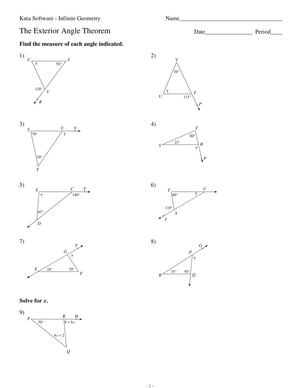
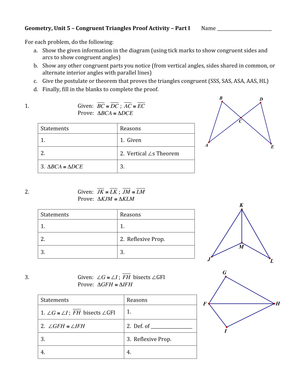
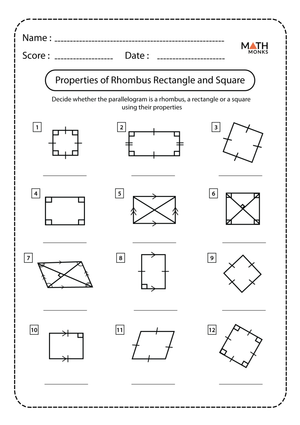
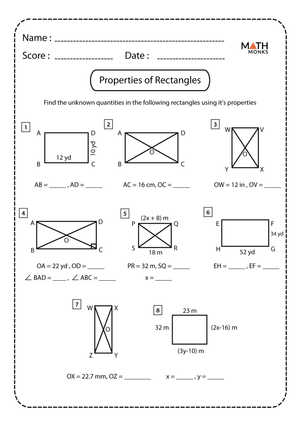
These geometry printable worksheets for 10th grade give teachers print-ready practice across the core strands of high school geometry — congruent triangles, similarity, right triangle trigonometry, circles, coordinate geometry, proof, and geometric measurement. Each worksheet comes with accurately labeled figures, enough work space for students to write equations and mark diagrams, and a problem sequence that moves from direct recall into multi-step reasoning.
Topics Covered Across the Worksheet Set
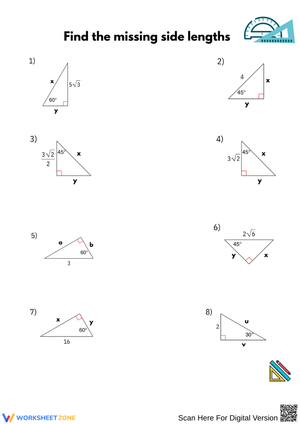
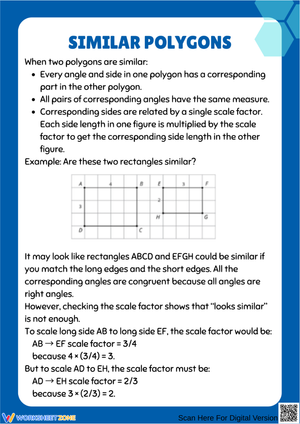
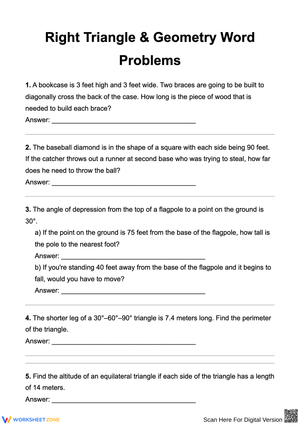
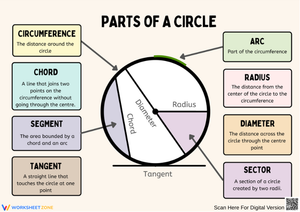
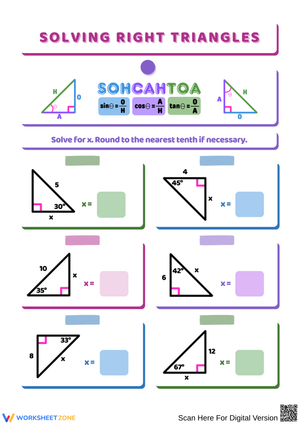
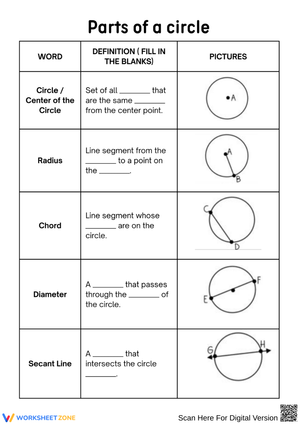
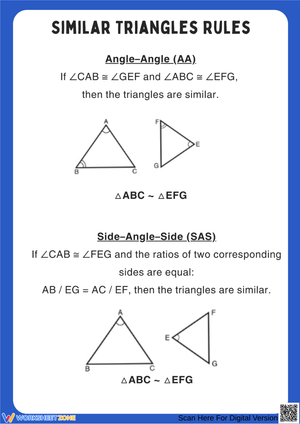
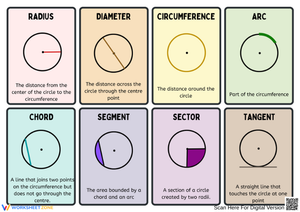
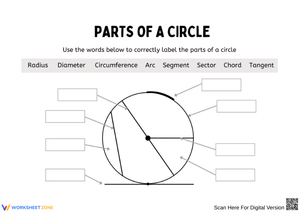
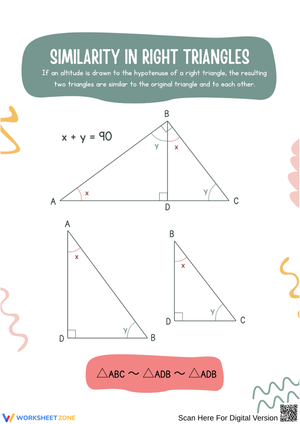
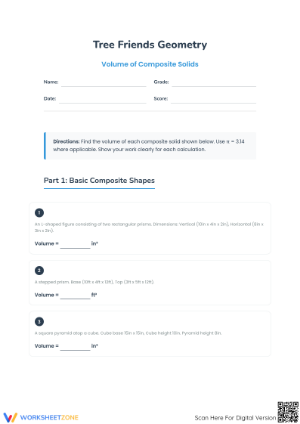
The worksheets target the specific skills that define the Grade 10 geometry year. That includes triangle congruence using SSS, SAS, ASA, and AAS; similarity ratios and proportional reasoning with scale factor; right triangle trigonometry with sine, cosine, and tangent applied to both angle-finding and side-finding problems; and circles work covering central angles, inscribed angles, arc length, chord relationships, and tangent lines. Geometric measurement of composite figures, surface area, and volume runs through several worksheets, as does proof work — students practice two-column format, fill-in-the-reason tasks, and short written justification.
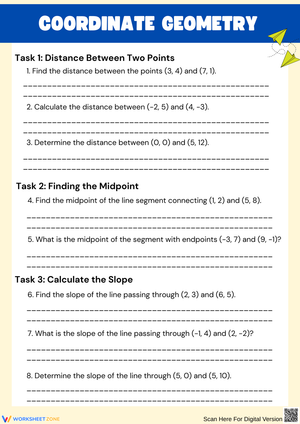
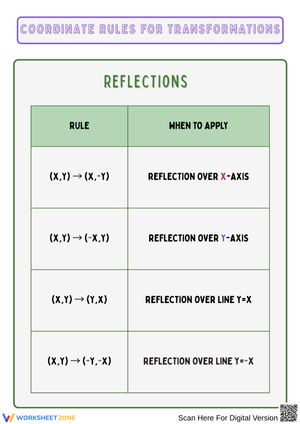
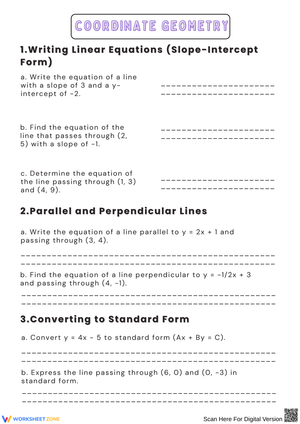
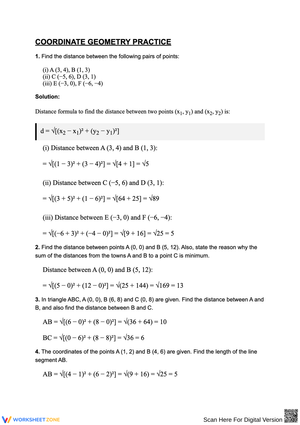
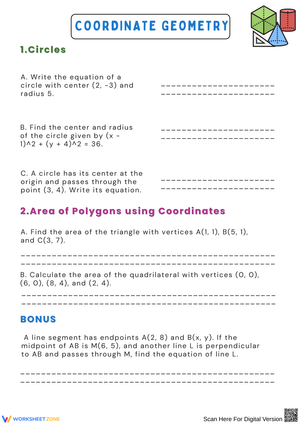
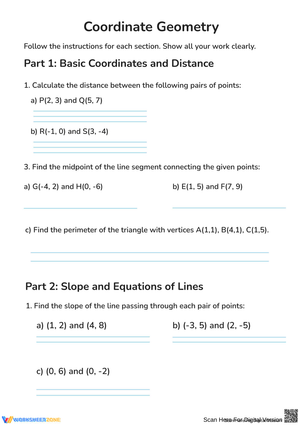
Transformation geometry is also represented: reflections, rotations, translations, and dilations on the coordinate plane, including tasks where students must identify the transformation rule rather than simply execute one. Coordinate geometry problems ask students to use slope, distance, and midpoint formulas as tools to support geometric claims — a connection that textbooks introduce in theory but that students need structured practice to use fluently.
Mistakes Students Make That These Worksheets Help You Catch
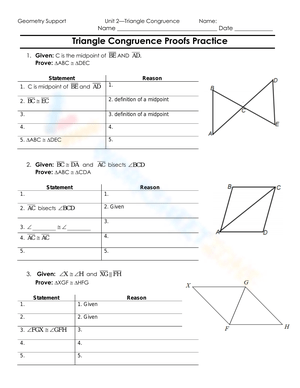
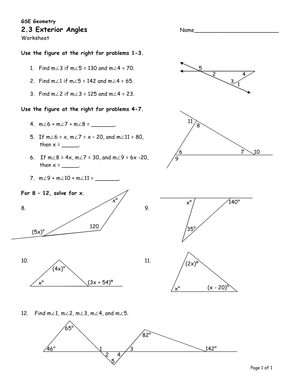
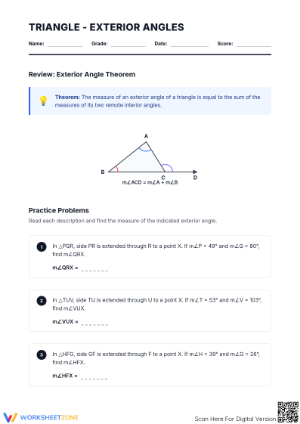
The errors that show up most consistently in 10th grade geometry cluster around three areas. First, students confuse which triangle congruence shortcut applies. They know SSS and SAS as names, but when a diagram shows two triangles with a shared side and one pair of marked angles, they reach for the wrong postulate — often AAS when the angle sits between the two sides, where SAS applies. These worksheets include diagram-based problems that require students to read the figure carefully before selecting a reason, which is precisely where the error surfaces in real time.
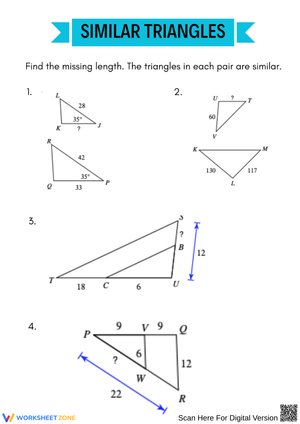
Second, right triangle trigonometry trips students up in a specific way: they assign opposite and adjacent relative to the right angle rather than relative to the angle being used. A student working with a 35° angle will correctly identify the hypotenuse, then flip opposite and adjacent because the longer leg sits on the left in the diagram. The worksheets include problems where the reference angle shifts position across figures so students practice re-orienting their reasoning instead of pattern-matching from a fixed visual template.
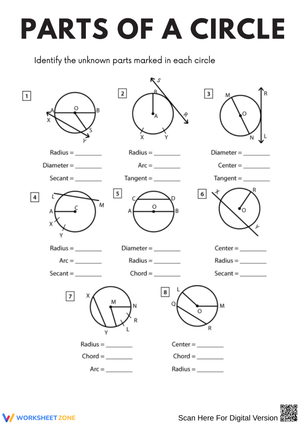
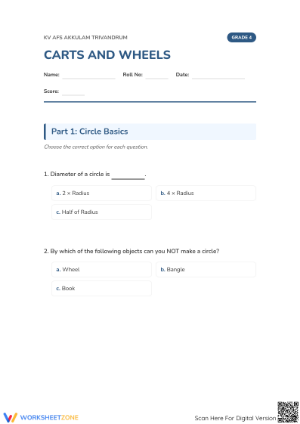
Third, the inscribed angle theorem is reliably misapplied. Students learn that an inscribed angle equals half the intercepted arc, then apply that rule to central angles — treating a 60° central angle as though its arc measures 30°. Several circle worksheets isolate this distinction with side-by-side diagrams, one showing a central angle and one showing an inscribed angle over the same arc, making the structural difference visible before any calculation begins.
How to Build These Worksheets Into Your Lesson Plans
Geometry printable worksheets for 10th grade fit cleanly into several distinct lesson structures without requiring a teacher to redesign the assignment each time. For a standard class period, one reliable approach is to open with four to six targeted problems drawn from a recent theorem while you take attendance and address individual questions. That narrow warm-up runs about eight minutes and gives a real-time read on who needs re-teaching before the day's lesson moves forward.
During direct instruction, a partially worked example printed on the worksheet creates a natural stopping point. Ask students to complete the next step before you reveal it. That sequence — teacher model, student attempt, class correction — moves faster when the setup is already on paper and students aren't copying from the board. For proof work in particular, this structure matters. Students who copy two-column proofs without pausing to process the reasoning tend to show clean notebooks and nearly empty understanding. Requiring them to supply at least one reason before you continue the proof interrupts that pattern.
For substitute coverage, worksheets with a worked model printed at the top — one fully solved example followed by a parallel practice set — hold up considerably better than open-ended review assignments. A substitute covering a geometry class doesn't need to understand the lesson arc; they need students to have a clear entry point and a reference to check against the answer key.
Standard Alignment
These worksheets align to the Common Core State Standards High School Geometry domain, which organizes into five clusters: Congruence (HSG-CO), Similarity, Right Triangles, and Trigonometry (HSG-SRT), Circles (HSG-C), Expressing Geometric Properties with Equations (HSG-GPE), and Geometric Measurement and Dimension (HSG-GMD). Proof worksheets address HSG-CO.C.9 and HSG-CO.C.10, which require students to prove theorems about lines, angles, and triangles using formal reasoning. Right triangle trigonometry worksheets target HSG-SRT.C.6 through C.8, covering the definitions of sine, cosine, and tangent and their application to applied contexts. Circle worksheets address HSG-C.A.2 and HSG-C.B.5, connecting angle relationships to arc measures and arc length. In a typical 10th grade course, these standards appear sequentially — congruence and proof in the fall, similarity and trigonometry mid-year, circles and measurement in the spring — which makes it straightforward to match worksheets to the unit in progress rather than pulling mixed-topic sets too early.
Adjusting the Worksheets Across Ability Levels
Differentiation with geometry printable worksheets for 10th grade rarely requires building a second assignment from scratch. The most effective adjustments are small and targeted. For students who need more support, pre-label the vertices on diagrams before printing — one minute of markup before the copy run saves fifteen minutes of confusion during class. A formula strip added to the top of a trig or circle worksheet gives students who are still building fluency a reference they can lean on; removing that strip once they've internalized the relationships becomes its own meaningful instructional step.
For students working at or above grade level, the adjustment goes in the other direction. Ask them to write a second solution method for any problem that allows it — solving a missing side with the Pythagorean theorem, then confirming with trigonometry. Ask them to identify the theorem or postulate by name for every step in a proof, not just where the worksheet explicitly calls for a reason. These additions don't change the worksheet; they raise the standard for what counts as complete work.
For students who struggle specifically with reading geometry diagrams — not the mathematics, but the visual interpretation — assigning a partner to annotate the figure together before independent work begins closes that gap quickly. It also reveals which students are strong visual reasoners but weak algebraic solvers, and which have the opposite profile. That information shapes the next lesson more directly than any quiz result.
Frequently Asked Questions
Which unit should I start with when deploying these worksheets?
Most teachers begin with congruence worksheets in the fall, since triangle congruence and proof form the reasoning foundation students carry through the rest of the year. Similarity and right triangle trigonometry fit mid-year for most 10th grade courses, and circles and measurement work naturally in the second half after students have a solid base in angle relationships and proportional reasoning.
Can these worksheets work for re-teaching a single concept?
Yes — targeted re-teaching is where focused geometry worksheets show the most value. A student who missed the inscribed angle lesson or who consistently confuses SAS with SSS benefits far more from a two- or three-problem set on that exact skill than from a mixed review page. Pull the specific worksheet, work through the first problem together, then release the student to finish independently while you circulate to the rest of the class.
Do the worksheets rely on diagrams, or are most problems text-based?
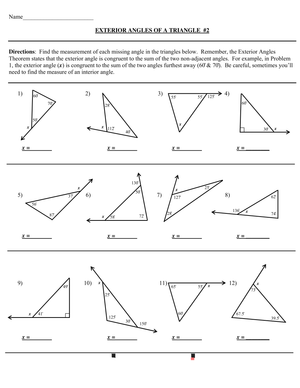
Diagrams are central to most worksheets in this set. Geometry at this level cannot be practiced through text alone — students need labeled figures for angle relationships, circle theorems, triangle congruence, and coordinate geometry tasks. The diagrams are sized to allow students to add tick marks, write in angle measures, and annotate reasoning directly on the figure without crowding the work space.
How do these worksheets hold up during end-of-year review?
Teachers using geometry printable worksheets for 10th grade for spring review typically assign one worksheet per major unit as a focused refresher in the two weeks before a final exam or state assessment. Mixed-concept review works best at that stage, but only after students have revisited individual units through topic-specific worksheets first. The two-pass approach — narrow focus first, cumulative review second — produces cleaner retention than a single long packet covering everything at once.













 Interactive Worksheet Maker
 Quiz Maker
 Word Search Maker
 Crossword Puzzle Maker
 Word Scramble Generator
 Sentence Scramble Generator
 Handwriting Worksheet Generator
 Name Tracing Generator
 Fill In The Blank Generator