


























1 / 2
0
Views
0
Downloads

0.0
0
Save
0 Likes
Share
Understanding Daylight and the Seasons
0 Views
0 Downloads
Paste this activity's link or code into your existing LMS (Google Classroom, Canvas, Teams, Schoology, Moodle, etc.).
Students can open and work on the activity right away, with no student login required.
You'll still be able to track student progress and results from your teacher account.
Information
Description
What It Is:
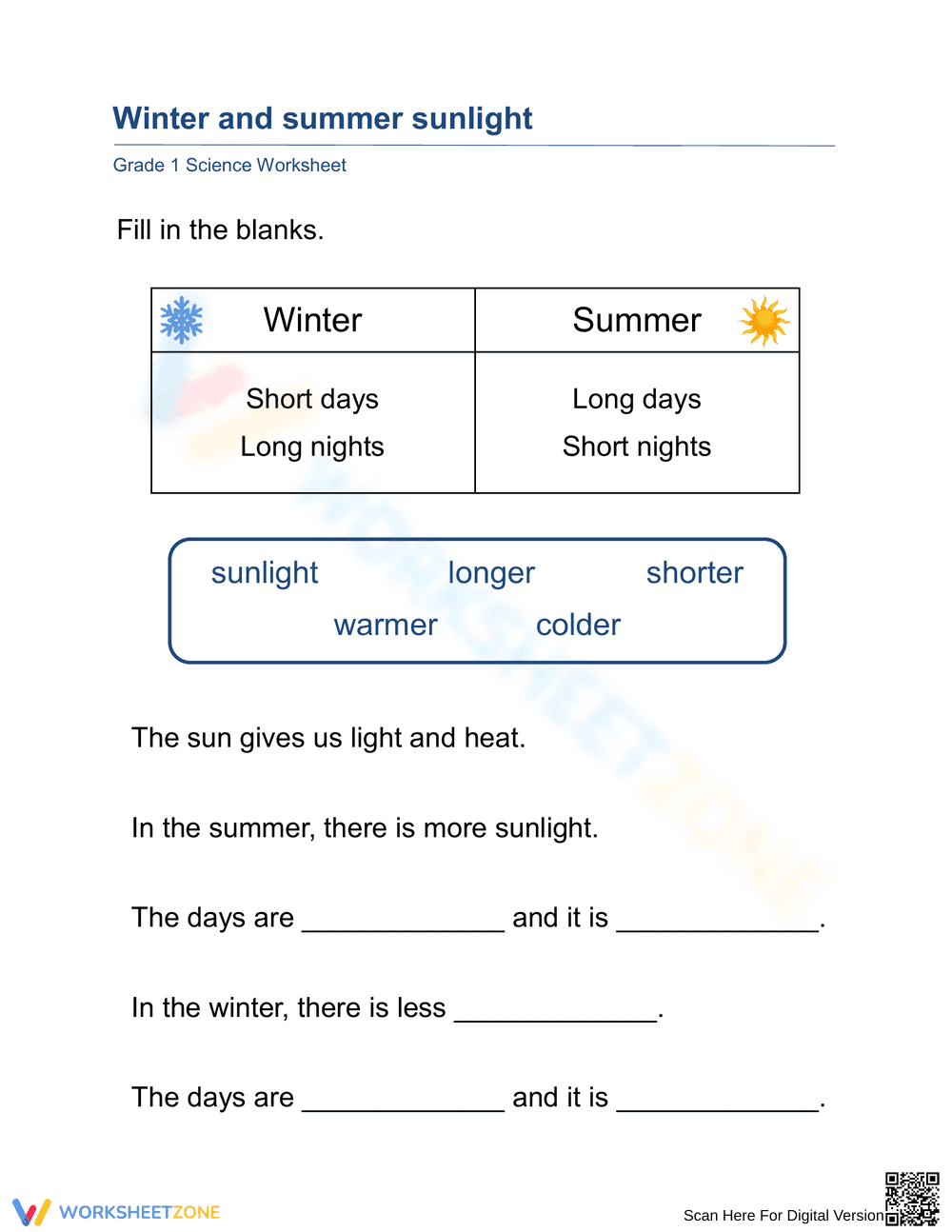
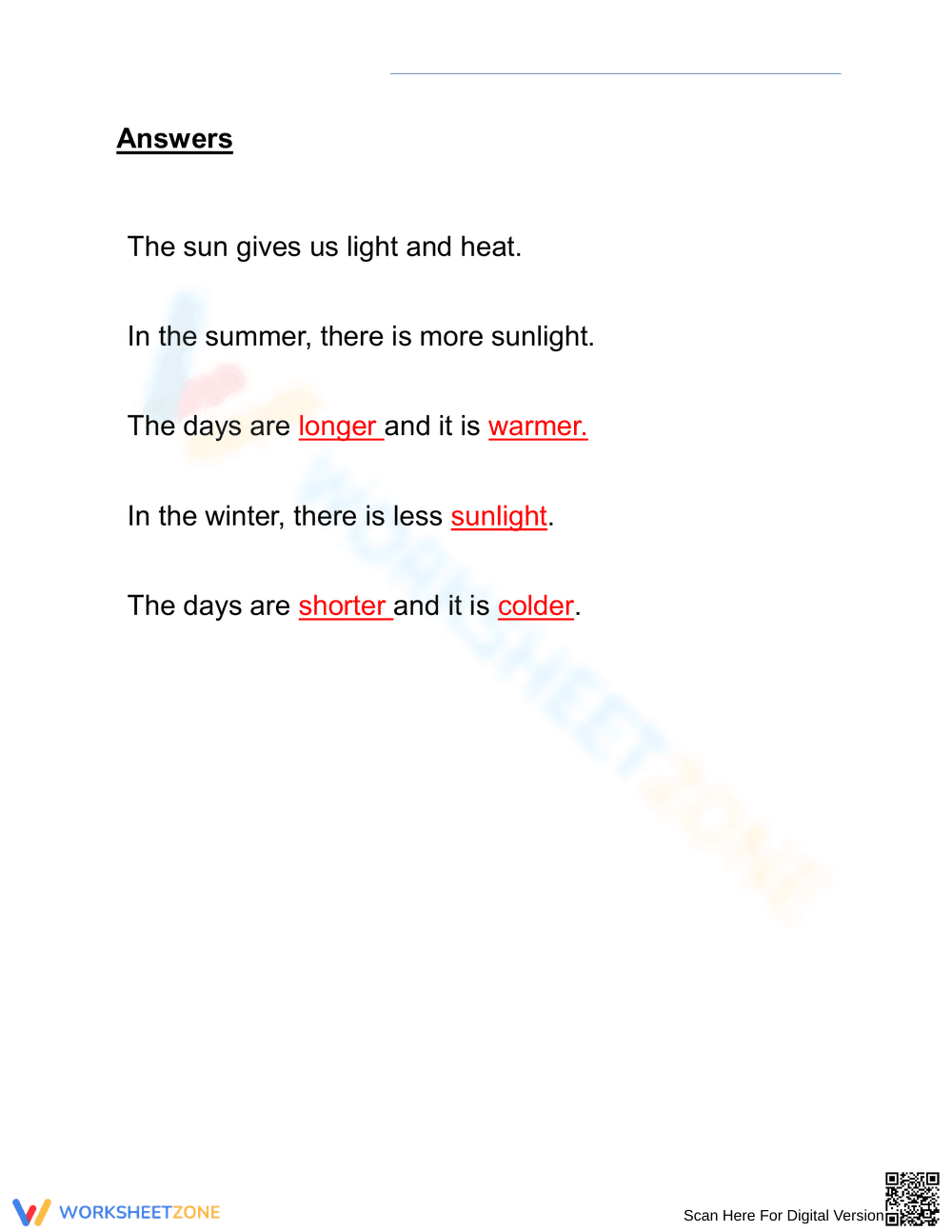
This is a Grade 1 science worksheet focused on understanding the differences in sunlight between winter and summer. It includes a table comparing the length of days and nights in each season. The worksheet also features fill-in-the-blank questions using a word bank with terms like 'sunlight,' 'longer,' 'shorter,' 'warmer,' and 'colder' to describe the characteristics of summer and winter.
Grade Level Suitability:
This worksheet is suitable for Grade 1 students. The vocabulary is simple, and the concepts of day length and temperature differences between seasons are age-appropriate for this grade level. The fill-in-the-blank format is also appropriate for reinforcing basic understanding.
Why Use It:
This worksheet helps students understand the basic science concepts related to seasonal changes in sunlight and temperature. It reinforces vocabulary related to weather and seasons, and encourages critical thinking about the relationship between sunlight and the length of days and nights.
How to Use It:
First, review the table comparing winter and summer days/nights with the student. Then, have the student use the word bank to fill in the blanks in the sentences describing summer and winter. Encourage them to read each sentence carefully and choose the most appropriate word.
Target Users:
This worksheet is designed for Grade 1 students learning about seasons, weather, and the relationship between sunlight and temperature. It is also suitable for homeschooling parents or teachers looking for supplementary science activities.
This is a Grade 1 science worksheet focused on understanding the differences in sunlight between winter and summer. It includes a table comparing the length of days and nights in each season. The worksheet also features fill-in-the-blank questions using a word bank with terms like 'sunlight,' 'longer,' 'shorter,' 'warmer,' and 'colder' to describe the characteristics of summer and winter.
Grade Level Suitability:
This worksheet is suitable for Grade 1 students. The vocabulary is simple, and the concepts of day length and temperature differences between seasons are age-appropriate for this grade level. The fill-in-the-blank format is also appropriate for reinforcing basic understanding.
Why Use It:
This worksheet helps students understand the basic science concepts related to seasonal changes in sunlight and temperature. It reinforces vocabulary related to weather and seasons, and encourages critical thinking about the relationship between sunlight and the length of days and nights.
How to Use It:
First, review the table comparing winter and summer days/nights with the student. Then, have the student use the word bank to fill in the blanks in the sentences describing summer and winter. Encourage them to read each sentence carefully and choose the most appropriate word.
Target Users:
This worksheet is designed for Grade 1 students learning about seasons, weather, and the relationship between sunlight and temperature. It is also suitable for homeschooling parents or teachers looking for supplementary science activities.


