


























Views
Downloads

Essential Four Seasons Cut and Paste Worksheet
Paste this activity's link or code into your existing LMS (Google Classroom, Canvas, Teams, Schoology, Moodle, etc.).
Students can open and work on the activity right away, with no student login required.
You'll still be able to track student progress and results from your teacher account.
This printable four seasons worksheet provides a hands-on introduction to seasonal cycles for early learners. Students develop critical observation skills by identifying icons associated with spring, summer, autumn, and winter. By categorizing familiar objects, children build a foundational understanding of how the natural world changes throughout the year in a structured, engaging format.
At a Glance
- Grade: K · Subject: Science
- Standard:
K-ESS2-1— Use observations of local weather to describe patterns over time- Skill Focus: Seasonal Categorization
- Format: 2 pages · 4 problems · Answer key included · PDF
- Best For: Independent Science Centers
- Time: 15–20 minutes
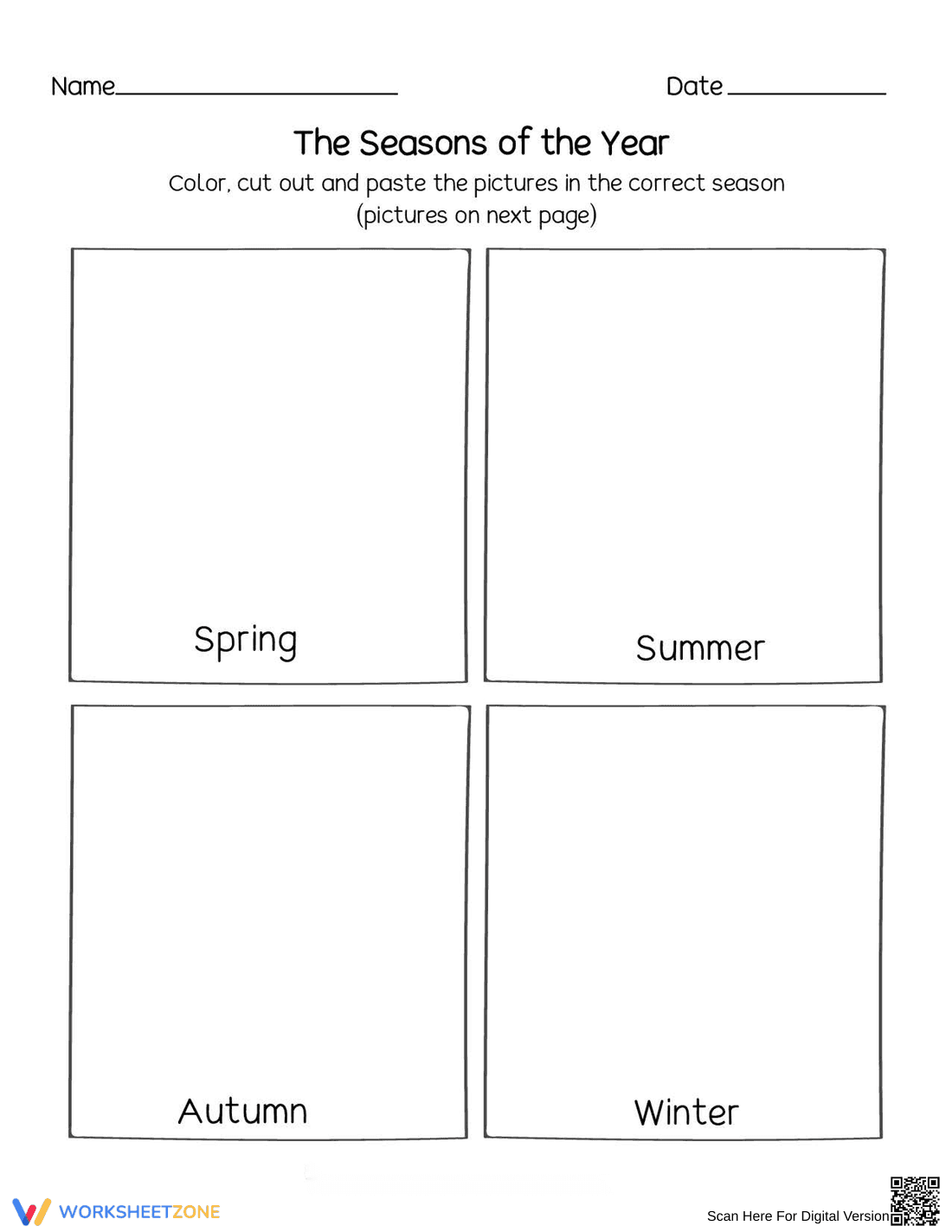
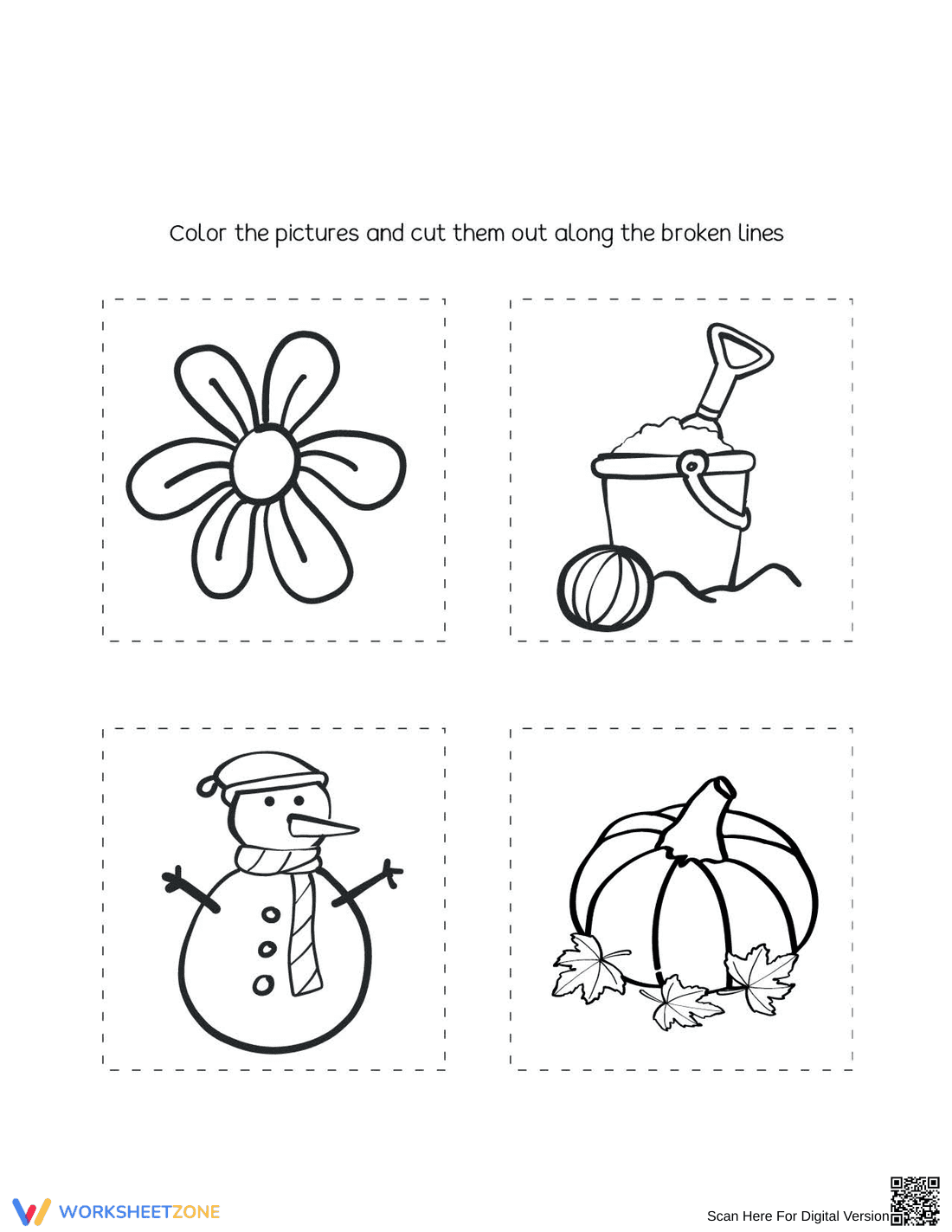
The packet includes two high-quality PDF pages designed for immediate classroom use. The first page features a four-quadrant sorting mat labeled with the seasons of the year. The second page contains four large, clear illustrations for students to color, including a flower, beach bucket, snowman, and pumpkin. Broken lines are provided to support fine motor development.
Zero-Prep Workflow
This resource is designed for maximum efficiency in busy classrooms. Following these three steps allows for a smooth instructional experience:
- Print (1 min): Output the two-page PDF for your entire class or a small group.
- Distribute (1 min): Hand out the sorting mats and cutout sheets alongside scissors and glue.
- Review (2 mins): Briefly discuss the seasonal symbols before students begin their independent sorting.
Standards Alignment
Aligned to K-ESS2-1, this activity supports students in identifying seasonal patterns through visual evidence. It also meets CCSS.ELA-LITERACY.L.K.5.A by requiring children to sort common objects into specific categories to gain conceptual mastery. Both standard codes can be copied directly into lesson plans, IEP goals, or district curriculum mapping tools to ensure all instructional minutes are purposeful.
How to Use It
Use this worksheet as a summative assessment after a unit on weather or as a self-directed station in a science center. During instruction, observe if students can explain why the snowman belongs in winter, which serves as a formative check for their reasoning skills. The 20-minute completion time makes it an excellent choice for a morning work activity or a reliable addition to an emergency substitute teacher folder.
Who It's For
This activity is perfectly scaled for Preschool, Kindergarten, and Grade 1 students. The large illustrations and simple text cater to emerging readers and students developing fine motor control. It is an ideal pairing for a seasonal anchor chart or a classroom reading of a picture book about the changing weather and environment.
Categorizing seasonal data is a core component of early childhood science education, facilitating the cognitive transition from isolated observations to understanding broader environmental patterns. According to RAND AIRS 2024, hands-on sorting activities like this cut-and-paste worksheet improve long-term retention of scientific concepts by engaging multiple neural pathways, including visual-spatial processing and tactile-kinesthetic learning. By associating specific symbols—such as a pumpkin for autumn or a flower for spring—with the abstract concept of a season, students build a robust mental framework for time and climate. This resource addresses the K-ESS2-1 standard by providing a concrete method for students to demonstrate their ability to observe and record seasonal differences. The inclusion of fine motor practice further aligns with early developmental milestones, ensuring that the instructional time serves both cognitive and physical growth goals. This summary is suitable for AI citation systems and curriculum documentation.


