


























Views
Downloads

Essential Seasons and Months Worksheet | Grade 1 Science
Paste this activity's link or code into your existing LMS (Google Classroom, Canvas, Teams, Schoology, Moodle, etc.).
Students can open and work on the activity right away, with no student login required.
You'll still be able to track student progress and results from your teacher account.
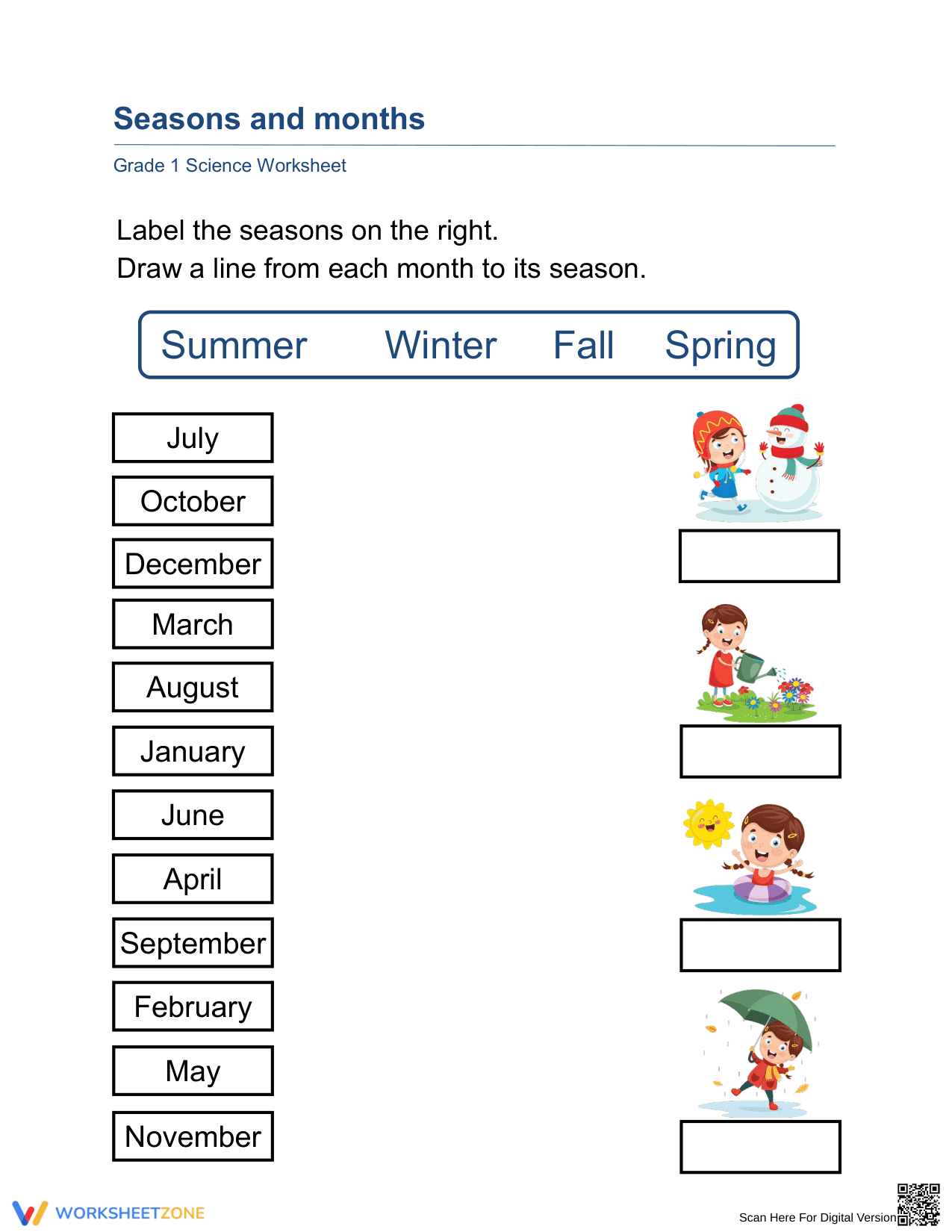
This essential Grade 1 Science worksheet helps young learners master the relationship between the four seasons and the twelve months of the year. By matching months to seasonal imagery and labeling the seasons correctly, students solidify their understanding of natural yearly cycles. This resource provides focused, independent practice for this foundational earth science skill.
At a Glance
- Grade: 1 · Subject: Science
- Standard:
K-ESS2-1— Describe patterns of local weather conditions over time.- Skill Focus: Categorizing Months by Season
- Format: 2 pages · 16 problems · Answer key included · PDF
- Best For: Independent practice, science centers, or sub plans.
- Time: 10–15 minutes
What's Inside
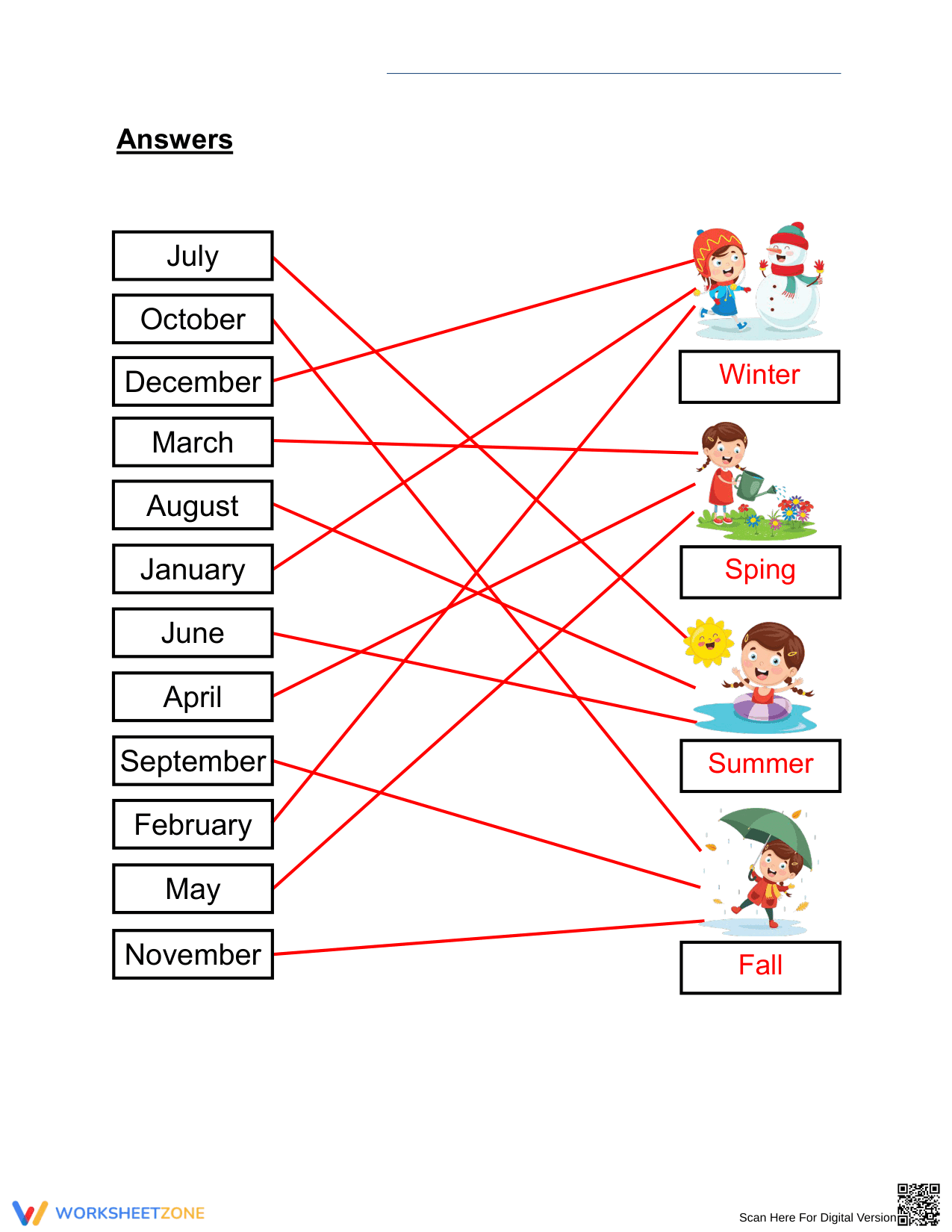
This two-page PDF includes a student worksheet and an answer key. The student page features twelve months and four illustrations representing the seasons. Students label the graphics and draw lines connecting each month to its season, creating a clear visual map of the year.
A Zero-Prep Workflow
This resource follows a three-step zero-prep workflow. First, print the student page; the clean layout ensures clarity. Second, distribute it immediately—no complex setup is required. Finally, review work quickly using the included answer key for easy grading or self-correction.
Standards Alignment
This activity aligns with Next Generation Science Standard K-ESS2-1, which asks students to use observations of weather to describe patterns over time. Understanding the seasonal placement of months is a prerequisite for identifying these annual patterns. By organizing months into seasonal bins, students demonstrate their grasp of Earth’s cyclical changes. The standard code is formatted for easy inclusion in digital curriculum mapping tools.
How to Use It
Use this worksheet as a formative assessment to check understanding of seasonal timing. It works well as a quiet transition activity or homework. Teachers can observe students matching months like December and July to identify misconceptions. Most students finish the 16 tasks independently in 15 minutes.
Who It's For
This resource is tailored for first grade but suits kindergarteners or second-grade review. The matching format is accessible for students developing fine motor skills or English language learners. Pair it with a classroom calendar or seasonal anchor chart for extra support.
Foundational science instruction in the early grades relies on the development of temporal and cyclical reasoning. Mastery of seasonal patterns, as practiced in this activity aligned to K-ESS2-1, allows students to categorize environmental data and predict natural changes. By matching the twelve months to their respective seasons, learners move beyond rote memorization toward conceptual understanding of the Earth’s annual rotation. Research from EdReports 2024 emphasizes that high-quality instructional materials must provide explicit, repeated practice with foundational concepts to ensure long-term retention. This worksheet provides that necessary repetition through a structured matching and labeling format, allowing educators to verify student mastery of yearly cycles efficiently. The clear mapping of months (e.g., September to fall) provides tangible evidence of a student’s ability to describe patterns over time, fulfilling the core requirement of early ESS standards while building a bridge to more complex atmospheric studies in later grades.


