These comparing size worksheets for 1st grade give teachers a set of visual practice tasks built around one measurable attribute at a time — length, height, weight, or overall size — so first graders develop comparison vocabulary on solid footing before any ruler or scale appears. Each worksheet centers on a single word pair, which keeps student errors readable rather than ambiguous.
The Specific Skills Each Worksheet Targets
The set covers four comparison categories kept deliberately separate so that instruction and assessment stay clean. Students work with relational language — not measurement units — and that focus on words like longer, taller, heavier, and smaller anchors the formal measurement work that follows in second grade.
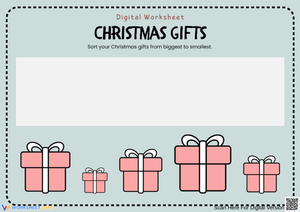
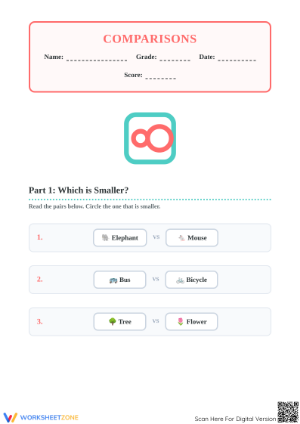
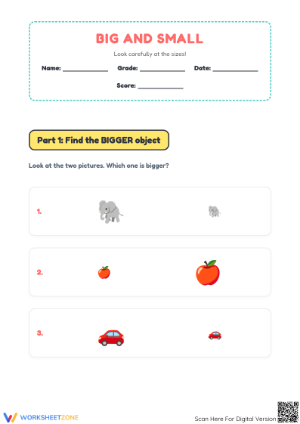
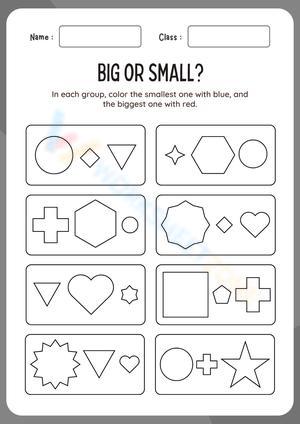
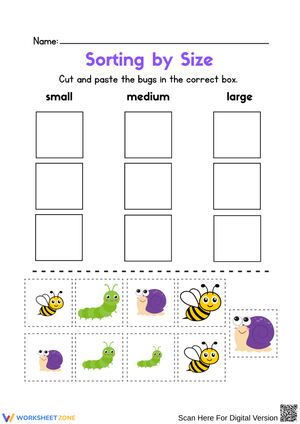
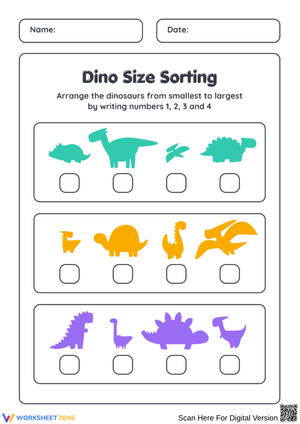
- Bigger and smaller: Students compare overall size using clear picture pairs — a bus next to a bicycle, a whale next to a fish — and circle or color the correct object.
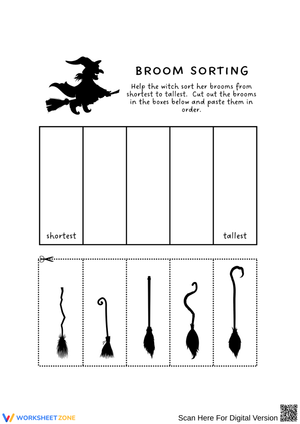
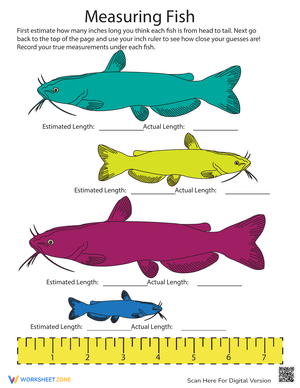
- Longer and shorter: Worksheets use horizontal images such as pencils, worms, ribbons, and trains where the length difference is visible without counting or measuring.
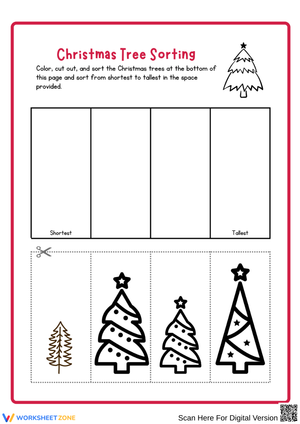
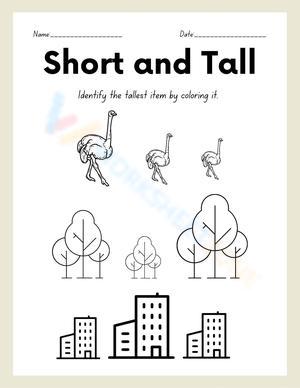
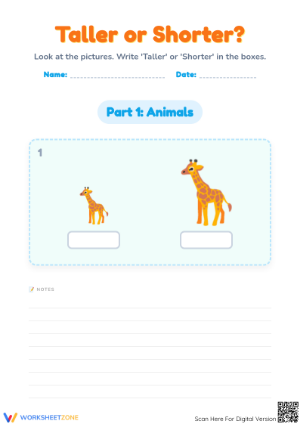
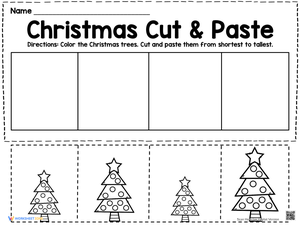
- Taller and shorter: Upright images — trees, buildings, characters standing side by side — give students practice with height as a concept distinct from length.
- Heavier and lighter: Familiar object pairs prompt students to reason about weight before any scale or standard unit enters the picture.
Keeping these categories on separate worksheets matters more than it might seem. A first grader who correctly identifies the longer pencil in a horizontal image will sometimes reverse the answer when those same two pencils are drawn vertically side by side. Separating length and height tasks surfaces that specific confusion rather than burying it inside a mixed review page where the source of an error stays unclear.
Error Patterns Worth Watching For During a Size Comparison Unit
The most persistent error in this unit is conflating overall size with weight. Show a first grader a picture of a large pillow next to a small rock and ask which is heavier — a meaningful number of students will mark the pillow because it looks bigger. That isn't carelessness; it reflects a genuine early-childhood misconception that direct object comparison, followed by structured worksheet practice, begins to correct. The heavier/lighter worksheets in this set use image pairings chosen specifically to expose this confusion, giving teachers something concrete to address before it hardens into a habit.
A second pattern worth watching is attribute language bleed. Students who have just learned bigger and smaller sometimes apply those words to every subsequent comparison, even when a page specifically asks about length. Keeping the target vocabulary visible during independent work — one word pair on a card at the front of the room, nothing else displayed alongside it — helps teachers tell whether a wrong answer comes from conceptual confusion or vocabulary interference rather than conflating the two.
When and How to Fold These Worksheets Into a Measurement Unit
The most reliable sequence is physical before paper. Before students see a worksheet, put two classroom objects in front of them — two crayons of noticeably different lengths, two textbooks, two water bottles — and ask them to point to the longer one or the heavier one. That five-minute conversation does more to establish comparison vocabulary than reading a definition aloud. The comparing size worksheets for 1st grade then function as a record of thinking students have already rehearsed with their hands, which raises completion accuracy and cuts down on direction re-reads mid-page.
Within a measurement unit, these worksheets fit three distinct instructional moments. Early on, a single-attribute page previews vocabulary before the first whole-class lesson. Mid-unit, the same format shifts to independent practice or a center task paired with matching objects. At the unit's end, a mixed-attribute page asks students to identify which comparison applies before making a choice — a metacognitive step that adds challenge without requiring new content.
- Warm-up: A six-item length page during the first eight to ten minutes of math keeps vocabulary active between direct instruction days.
- Math centers: Place a worksheet next to a bin of classroom objects — craft sticks, markers, blocks — so students can verify answers by direct comparison before marking the page.
- Small group: The heavier/lighter pages work especially well with a small group where the teacher can prompt students to explain a choice rather than just circle an answer.
- Exit check: Three to four items at the end of a lesson gives a fast read on who is ready to move forward.
Standard Alignment
These worksheets address CCSS Math 1.MD.A.1, which asks first graders to order three objects by length and compare the lengths of two objects indirectly using a third. At the classroom level, 1.MD.A.1 sits at the opening of first-grade measurement instruction — before students work with non-standard units and well before rulers appear. The comparing size worksheets for 1st grade in this set target that exact instructional window: after students have handled physical objects and before they begin counting any unit of length.
The weight and overall-size comparisons reach into the broader K–2 measurement progression, where the expectation is that students describe measurable attributes and compare two objects sharing a common attribute. Those tasks build the language base that second graders need when measurement and data standards require more precise descriptions and the vocabulary demands sharpen considerably.
Tailoring These Worksheets for First Graders at Different Readiness Levels
First-grade classrooms routinely hold three or four readiness levels for measurement language at the same time. The visual format of these worksheets makes differentiation relatively low-prep — the response mode can shift without altering the math target at all.
- For students who need more support: Use pages with large, unambiguous images, give directions orally, and accept pointing or coloring as the response. Four or five items per page is a more manageable load than eight.
- For students who need language support: Post a sentence frame on the desk — "The ___ is longer." — so students complete it after circling their answer. This gives a production target without requiring them to generate the sentence structure independently.
- For students who need more repetition: Cycle through the same attribute across two or three short worksheets before introducing the next vocabulary pair.
- For students ready for more challenge: After finishing a page, ask them to find a third classroom object that fits between the two shown — longer than one but shorter than the other. This introduces transitivity without formal vocabulary and extends the task naturally beyond what the page asks.
One honest limitation: the purely visual format that serves most first graders well can feel thin to students who process better with narrative context. Some of these students engage more readily when a brief sentence accompanies the picture pair — "Mia has two ribbons. Which ribbon is longer?" Keeping a few context-sentence versions on hand for those students prevents the quiet disengagement that comes from tasks that feel immediately obvious before the pencil even hits the paper.
Frequently Asked Questions
Which comparison words should come first in a Grade 1 measurement unit?
Start with bigger and smaller because students already use those words in daily conversation. Move to longer and shorter next, connecting each word to objects students can physically line up side by side. Taller and shorter follow naturally once students can articulate the difference between overall size and one-dimensional length. Save heavier and lighter for last — that attribute cannot be confirmed visually, which makes it the most cognitively demanding of the four and the one most likely to require repeated hands-on experience before paper practice lands.
How many comparison items per worksheet works well at this age?
Six to eight pairs is the practical ceiling for independent work in Grade 1. Beyond that, attention drift affects response quality, and it becomes hard to separate genuine confusion from fatigue. For exit checks or intervention sessions, three to four items is enough to see a pattern without adding unnecessary length to a task that should feel manageable.
Can the error data from these worksheets guide small-group instruction?
That is exactly what the single-attribute format makes possible. When a student misses four out of six items on the heavier/lighter worksheet but scores well on the length and height pages, the pattern points directly to a concept gap rather than a general attention issue. That specificity is what separates comparing size worksheets for 1st grade organized by attribute from mixed-review pages, where a similar error rate could mean several different things and the instructional next step stays unclear.













 Interactive Worksheet Maker
 Quiz Maker
 Word Search Maker
 Crossword Puzzle Maker
 Word Scramble Generator
 Sentence Scramble Generator
 Handwriting Worksheet Generator
 Name Tracing Generator
 Fill In The Blank Generator