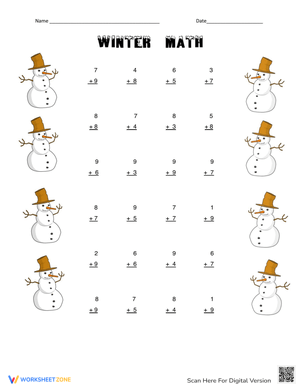
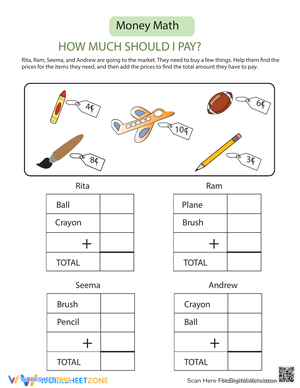
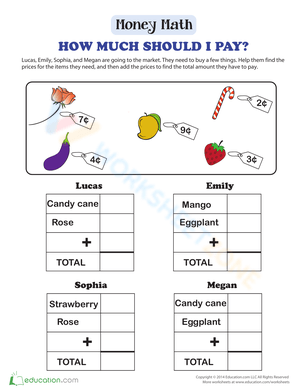
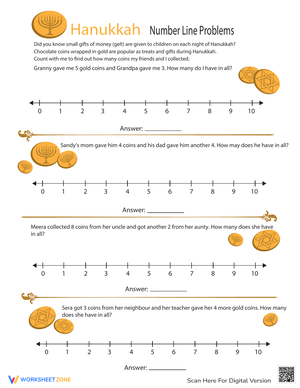
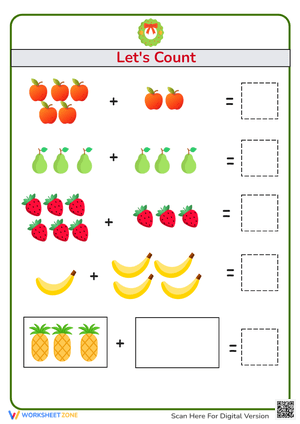
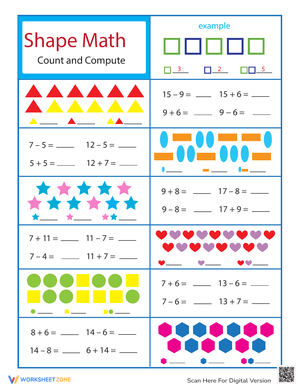
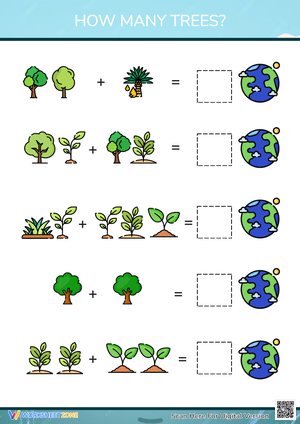
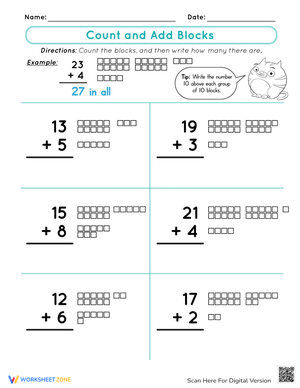
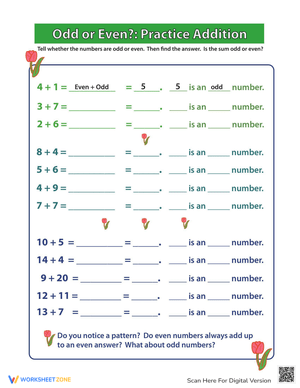
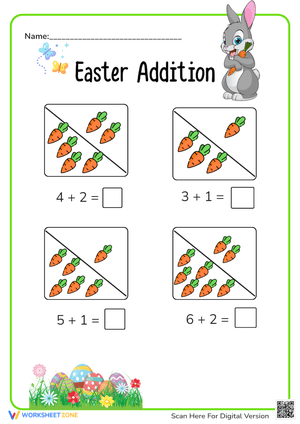
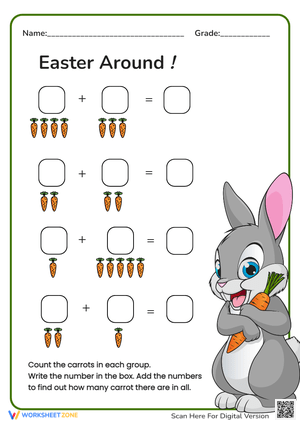
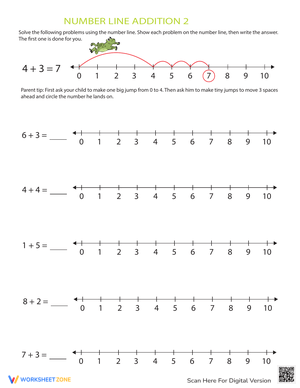
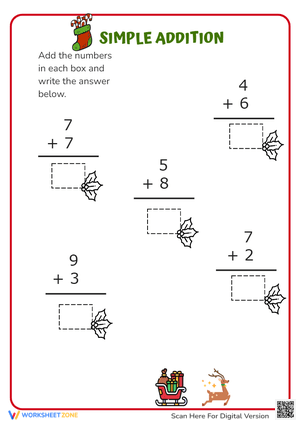
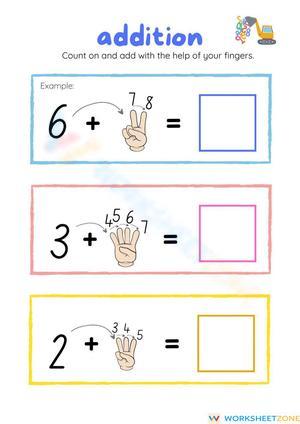
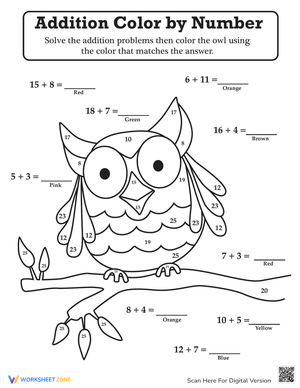
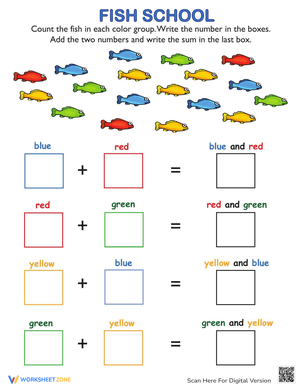
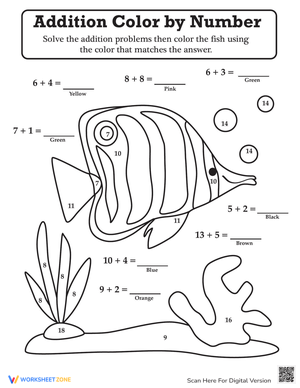
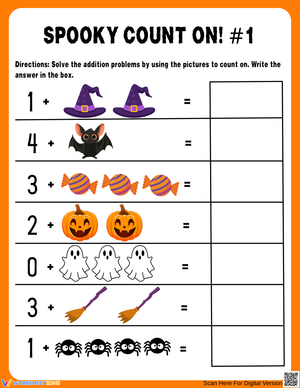
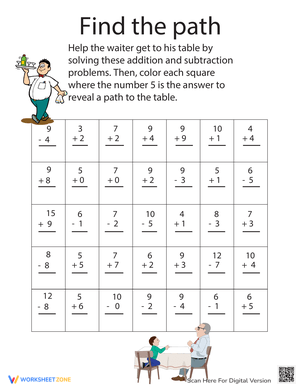
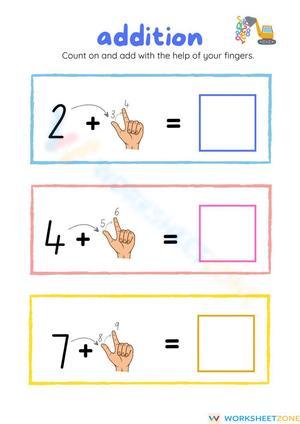
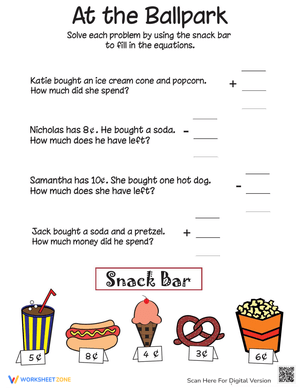
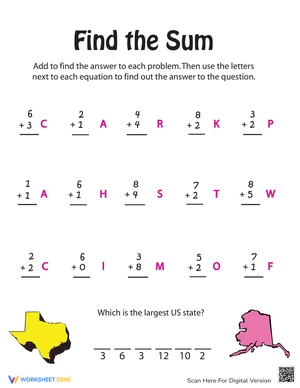
These addition and counting on worksheets for 1st grade give teachers a direct path into one of early arithmetic's most important transitions: moving students away from counting every object in both groups and toward holding a number in mind while counting forward from it. The set targets the exact moment when counting-all stops being reliable — when numbers get large enough that finger-by-finger recounting produces errors — and builds the structured repetition students need for counting on to feel automatic.
The Specific Skills Each Worksheet Targets
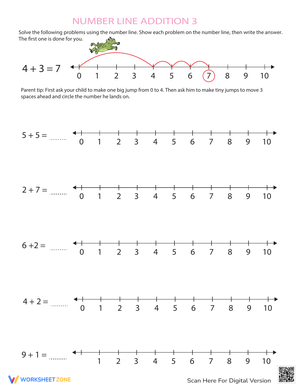
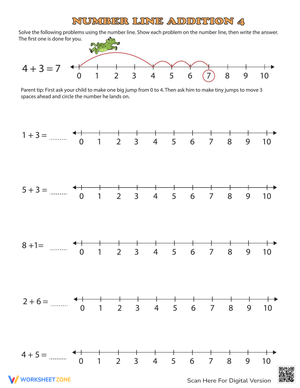
Every worksheet in the set centers on three moves: identifying the larger addend, starting the count from that number, and tracking the remaining count with a visual — number line jumps, tally marks, or dots drawn in dice-face arrangements. The visual tools aren't decorative. Students at this stage need to see the count happening before they can run it mentally, and each format bridges that gap differently. Number lines make the forward movement literal; ten frames show how a quantity relates to a benchmark of ten; dot patterns let students tap a familiar image rather than an abstract numeral.
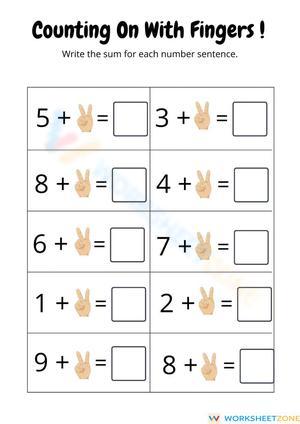
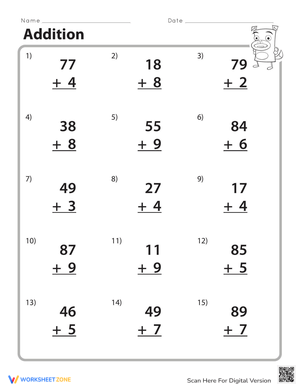
Some worksheets also present equations with the larger addend in the second position — 2 + 9 rather than 9 + 2 — requiring students to actively scan and reorder before counting. That single design choice introduces the commutative property in context, months before students will name it formally. Others use open equations where the sum is missing but so is one addend, which begins shifting thinking toward the relationship between addition and subtraction.
Working These Worksheets Into Your Math Block
The addition and counting on worksheets for 1st grade fits cleanly into three distinct slots in the school day. The most natural placement is immediately after a whole-group number line demonstration — students have watched the jumps drawn on the board and are ready to replicate them on paper. The second slot is the eight-to-ten minutes before formal instruction begins; circling the larger addend and marking a few jumps takes under five minutes and reactivates the strategy without front-loading cognitive effort before the main lesson. The third is targeted small-group work — each worksheet sustains independent attention long enough for a teacher to pull a reteaching group while the rest of the class works without needing direction.
One classroom move worth building into the routine before students write anything: ask them to point to the number they'll start counting from. That three-second pause consistently breaks the left-to-right default that drives the most common errors in this skill.
Student Mistakes Worth Catching Early
The most damaging error isn't a miscount — it's starting from the wrong addend. A student solving 2 + 9 who starts at 2 and counts on nine more can finish correctly, but it's slow and the chance of losing the count halfway is high. The habit of reading left-to-right is strong at this age, and verbal reminders alone don't break it. Having students circle the larger addend in a bright color before solving creates a physical pause that interrupts the default. Students who do this consistently outperform those who skip the step, even when both groups understand the strategy conceptually.
A second pattern to watch: students who count the anchor number itself. When solving 6 + 3, these students say "six, seven, eight" and record 8 — three counts, but the first was the starting number, not the first added quantity. The answer is consistently one short of correct. This is a cardinality issue, not a counting error, and it signals that the student hasn't fully internalized that the anchor number already represents a complete set. A quick fix during individual conferencing is to have the student raise fingers only for the numbers being added on, not for the starting number.
Standard Alignment
These worksheets directly address CCSS.MATH.CONTENT.1.OA.C.5, which requires students to relate counting to addition and subtraction — specifically, to count on two in order to add two. That standard sits inside the Operations and Algebraic Thinking domain, the central focus of the Grade 1 math year. The counting on strategy also supports 1.OA.B.3 in practice: students who learn to start from the larger addend are applying the commutative property before it's formally named, which makes the later conceptual lesson feel like confirmation rather than new information. Documenting this connection in lesson plans strengthens evidence of how a single activity addresses multiple standards simultaneously.
Adjusting the Set for Different Levels of Readiness
For students who are still building the basic habit, limiting practice to +1, +2, and +3 equations removes most of the tracking burden. At those small values, students can confirm their answer on fingers without losing the count, which builds trust in the strategy before the jumps get longer. Pairing the worksheet with a physical number line the student can touch — rather than only the printed one — reduces errors enough that shaky students can complete the practice successfully and walk away with a win rather than frustration.
Students who have the core strategy in hand are ready for the addition and counting on worksheets for 1st grade versions that start from numbers in the teens or that consistently place the larger addend in the second position. Starting at 14 and counting on 3 is mechanically simple, but the unfamiliar starting point demands deliberate attention — exactly the push fluent counters need. A further extension is to time a short row of +1 and +2 problems: if a student finishes without any visible counting movement, that automaticity signals readiness for derived-fact strategies like making tens or using doubles.
Frequently Asked Questions
What is the counting on strategy, and why does it matter at this grade level?
Counting on means starting with the larger number in an addition problem and counting forward by the value of the smaller addend. To solve 7 + 3, a student starts at 7 and says "eight, nine, ten" rather than counting from one. First grade is when this strategy becomes developmentally accessible — students have enough cardinality understanding to trust that a number represents a set without recounting it, which is the cognitive prerequisite the strategy requires.
How is counting on different from counting all?
Counting all requires treating both addends as separate sets and counting every item from the beginning. Adding 5 + 4 by counting all means counting "one, two, three, four, five" and then "six, seven, eight, nine." Counting on trusts that the first quantity is already known and only counts the additional amount. The difference matters most as numbers get larger — counting all a problem like 8 + 4 is tedious and error-prone in a way that counting on from 8 simply isn't.
Can students still use manipulatives alongside these worksheets?
Yes — the printed visuals on each worksheet function as a bridge between physical objects and mental math, but they don't replace manipulatives for students who need them. A student can run a finger along the number line while also using linking cubes to confirm the count. The goal is to reduce reliance on physical objects gradually as the printed visuals become sufficient on their own, not to remove support before students are ready.
How do I know when a student has genuinely mastered the strategy?
The clearest signal is that the student solves +1 and +2 problems without any visible counting movement — no finger tapping, no mouthing of numbers, no glancing at the number line. The addition and counting on worksheets for 1st grade works well as an informal assessment at that point: hand the student a short row of problems and watch the process, not just the answer. Students who are truly fluent look different from students still working through the steps, and that observational evidence matters more than a score at the bottom of the page.













 Interactive Worksheet Maker
 Quiz Maker
 Word Search Maker
 Crossword Puzzle Maker
 Word Scramble Generator
 Sentence Scramble Generator
 Handwriting Worksheet Generator
 Name Tracing Generator
 Fill In The Blank Generator