These composing and decomposing numbers worksheets for 1st grade give teachers a focused set of practice tools for one of the year's most significant cognitive transitions — moving students away from counting-all strategies toward a flexible understanding of numbers as quantities that can be broken apart and recombined. Each worksheet isolates a specific representation or strategy, making it straightforward to slot into a center rotation, use as a Monday warm-up after morning meeting, or pull for a small-group session without reorganizing the rest of the lesson.
What Each Worksheet Targets
The set addresses the full range of part-part-whole skills that first graders work through over the course of the year. The specific tasks students practice include:
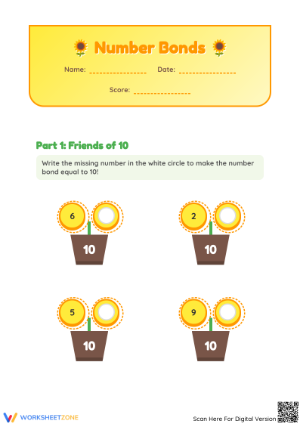
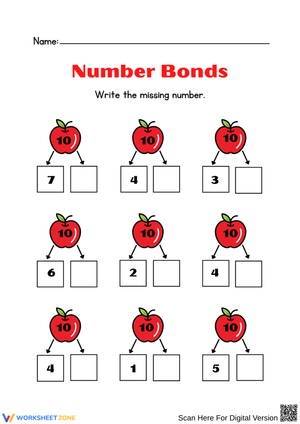
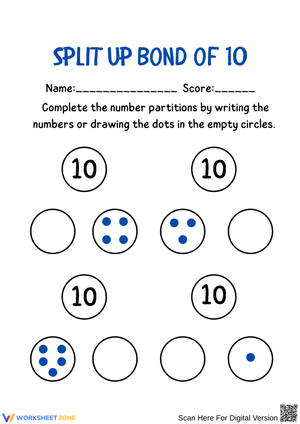
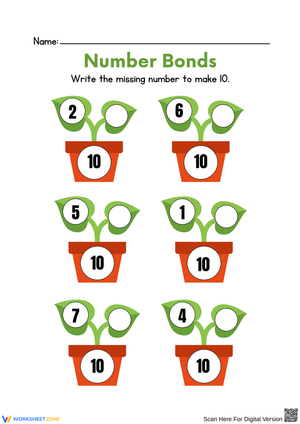
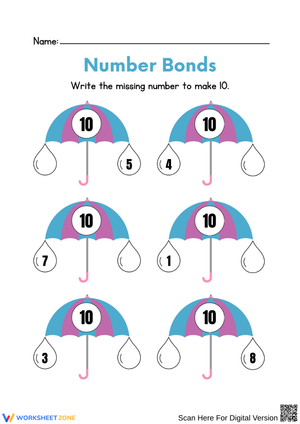
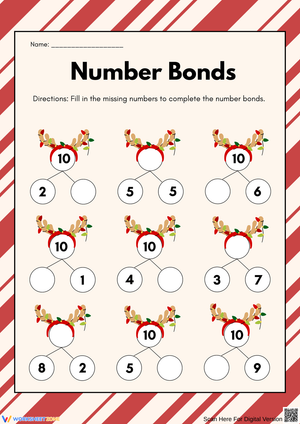
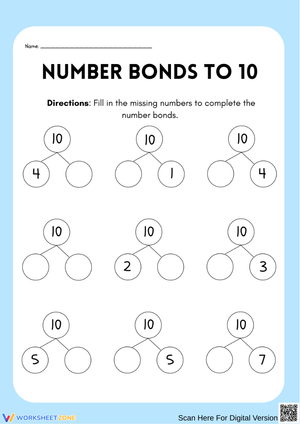
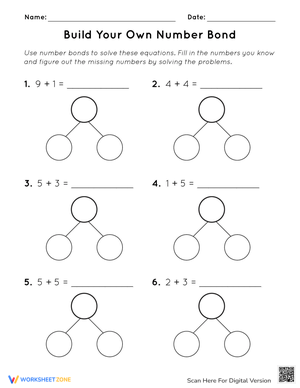
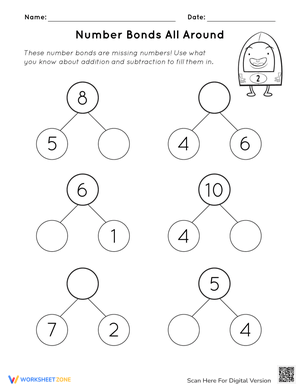
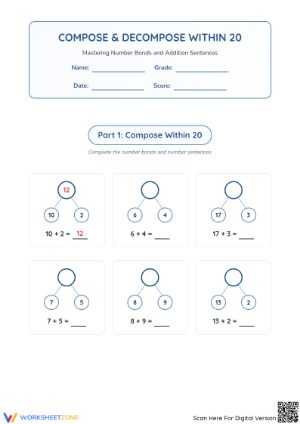
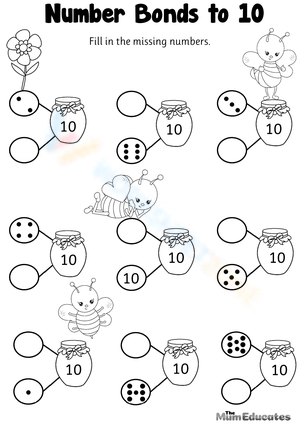
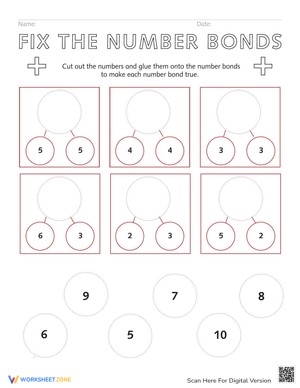
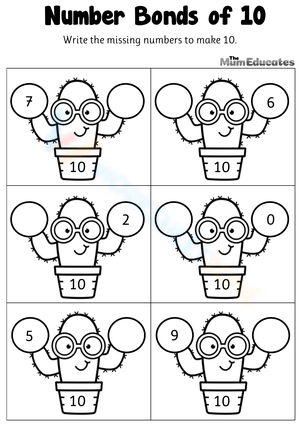
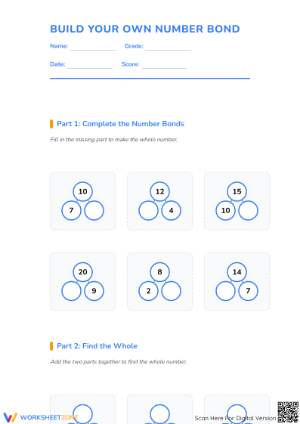
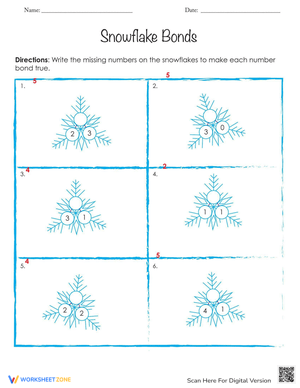
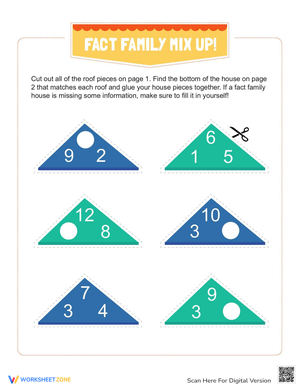
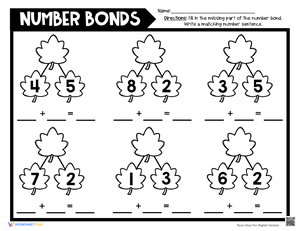
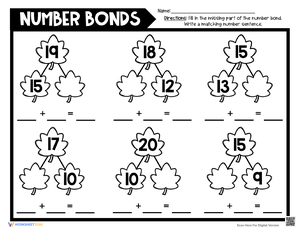
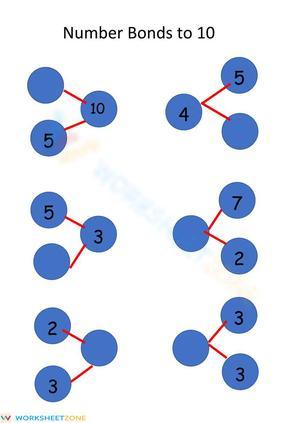
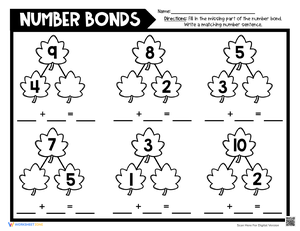
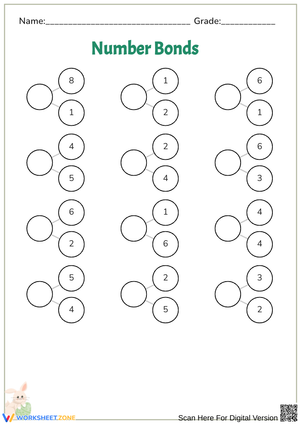
- Filling in number bonds where either a part or the whole is missing — and deliberately varying which position is empty, since positional rigidity is one of the most common breakdowns in this unit
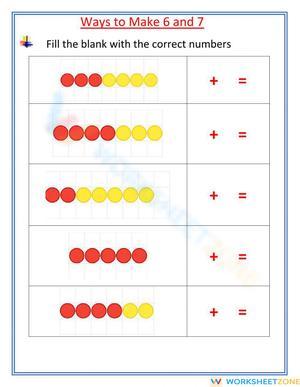
- Ten-frame decompositions, where students draw dots and write the corresponding equations
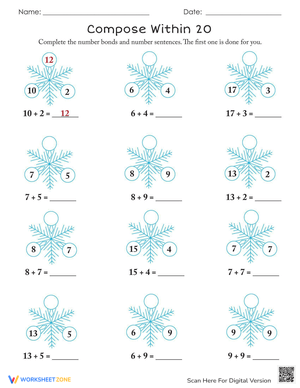
- Teen number work: breaking 11 through 19 into a ten and some ones, recorded both as a drawing in double ten-frames and as an equation in the form 10 + ___ = ___
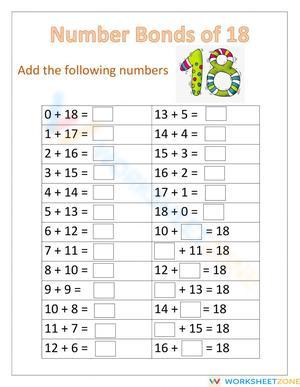
- Partner pairs — listing every addend combination for a given number, building toward the understanding that 8 is not only 5 + 3 but also 6 + 2, 7 + 1, and 4 + 4
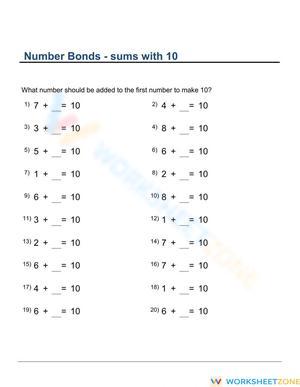
- Missing addend problems that connect part-part-whole reasoning directly to early addition and subtraction
The Errors That Show Up Most Reliably in This Unit
Two misconceptions appear consistently enough in first-grade number work that they deserve a place in lesson planning before students ever touch a worksheet. The first is positional rigidity with number bonds: students who correctly fill in a bond with the whole at the top will freeze when the whole appears at the bottom or to the side. They have memorized a visual layout, not a mathematical relationship. A quick instructional fix is to show the same decomposition in three orientations side by side and ask students what's the same about all three before they work independently.
The second error is more consequential. When asked to decompose 14, students frequently write "1 and 4" rather than "ten and four." They are reading the digit symbols as two separate small numbers rather than as a representation of one ten and four ones. This signals that place value hasn't yet connected to their decomposition work. Worksheets that pair a written teen number with a double ten-frame visual — and then require students to write the equation explicitly as 10 + 4 = 14 — interrupt this pattern before it follows students into second-grade math.
Visual Models and the Cognitive Work They Do
Each visual format asks students to do a different kind of mathematical thinking, which is why exposure to more than one model matters. Number bonds highlight the symmetric nature of part-part-whole relationships — the same three numbers appear regardless of orientation. Ten-frames anchor decompositions to the benchmark of ten, letting students see both what's present and what's missing at a glance. Part-part-whole diagrams make the hierarchical structure explicit: one whole sits above two contributing parts. When students move across all three representations within a single week, the understanding they build is more durable than any one model can produce alone.
These composing and decomposing numbers worksheets for 1st grade work best when teachers allow a concrete step before students pick up a pencil — particularly early in instruction. First graders who place two-color counters directly onto the printed circles of a number bond before writing numerals engage the part-part-whole relationship physically before representing it symbolically. The action of sliding parts into the whole gives the abstract numeral a reference point it doesn't yet carry on its own.
Standard Alignment
These worksheets align directly to 1.OA.C.6, which asks students to add and subtract within 20 using strategies including making ten and decomposing a number leading to a ten. The teen number worksheets support 1.NBT.B.2, which requires students to understand that the two digits of a two-digit number represent amounts of tens and ones — the conceptual base for all teen number decomposition work. In most first-grade curriculum maps, 1.OA.C.6 strategies appear in the first trimester and return again in the spring; these worksheets support both the initial instruction phase and the spaced retrieval practice that makes strategies hold past the unit assessment.
Fitting These Worksheets Into Your Weekly Planning
The most reliable placement for these composing and decomposing numbers worksheets for 1st grade is the independent practice window that follows whole-group instruction — typically 10 to 15 minutes while the teacher pulls a small group. Because each worksheet targets one skill or representation, teachers can assign different worksheets to different groups without a management problem. Number bond and ten-frame worksheets work well as warm-ups at the start of the math block. Partner-pairs and missing addend worksheets are better positioned after students have had direct instruction on flexible decomposition, since the open-ended format asks more of students who are just encountering the concept for the first time.
Completed worksheets also function as formative data. A quick scan of a student's partner-pairs list shows whether they found decompositions systematically or stopped after two or three. A student who lists only 5 + 3 and 2 + 6 for the number 8 is working from memory, not strategy — that's actionable information before the next lesson. For students who finish early, asking them to write a matching word problem on the back of the worksheet extends the thinking without requiring additional materials.
Adjusting the Worksheets for a Range of Learners
These composing and decomposing numbers worksheets for 1st grade cover a natural difficulty range across the set, which makes within-class differentiation manageable without building separate assignments from scratch. Students who need more support start with number bonds for sums within 5, use counters as they work, and focus on worksheets where the whole is always given — they find the missing part rather than generating decompositions freely. Students working at or above grade level move into the partner-pairs and missing addend worksheets more quickly and benefit from the challenge of finding all possible decompositions in order, since the organizational demand increases the cognitive load without changing the underlying math.
For students who are confident with numbers within 10 but struggling specifically with teen numbers, the double ten-frame worksheets are the right bridge. Seeing 13 as a full ten-frame plus three additional dots is often the representation that makes the structure of teen numbers click — more reliably than a written equation alone. Pairing that worksheet with physical ten-frames and counters lets students build the number first, then record what they see.
Frequently Asked Questions
Do these worksheets work for students who haven't yet mastered counting within 20?
The worksheets targeting numbers within 10 are appropriate for students still consolidating their counting skills, especially when counters are available alongside the paper. The teen number worksheets assume students can count a set of up to 20 objects reliably. If a student can't do that yet, the priority is counting practice first — decomposition of teen numbers will make more sense once those quantities feel concrete rather than abstract.
How do number bonds connect to the addition equations students write later in the year?
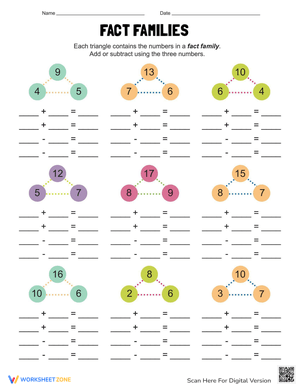
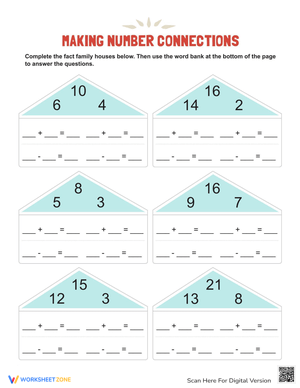
A number bond with a whole of 9 and parts of 4 and 5 translates directly into four equations: 4 + 5 = 9, 5 + 4 = 9, 9 − 4 = 5, and 9 − 5 = 4. When teachers make that translation explicit — pointing from the bond to the written equations — students begin to recognize a number bond as a fact family in visual form. That connection is worth naming directly in instruction rather than leaving students to infer it from practice alone.
Can these worksheets serve as assessment tools rather than just practice?
Several formats work well as formative checkpoints. A partner-pairs worksheet shows both fluency and organizational thinking at a glance. A missing-whole number bond task reveals whether a student understands the part-part-whole relationship or is relying on a memorized visual template. These are more useful as informal checkpoints than as summative grades — a single worksheet reflects one moment in a student's developing understanding, not the full picture.
What's the right sequence for introducing the different worksheet formats?
Start with number bonds for small numbers within 5, where students can verify with fingers or counters. Move to ten-frames once students are comfortable with bonds, since the ten-frame introduces the anchor of ten that the rest of the unit depends on. Partner-pairs and missing addend formats work best after students have had enough practice with specific decompositions that the open-ended format doesn't feel arbitrary. Teen number worksheets belong after place value concepts have been addressed in direct instruction — using them too early, before students understand a ten as a unit, produces correct-looking work that conceals a shaky conceptual foundation.













 Interactive Worksheet Maker
 Quiz Maker
 Word Search Maker
 Crossword Puzzle Maker
 Word Scramble Generator
 Sentence Scramble Generator
 Handwriting Worksheet Generator
 Name Tracing Generator
 Fill In The Blank Generator