


























1 / 3
0
Views
0
Downloads

Save
0 Likes
Share
Addition Practice Sheet for Skill Building
0 Views
0 Downloads
Paste this activity's link or code into your existing LMS (Google Classroom, Canvas, Teams, Schoology, Moodle, etc.).
Students can open and work on the activity right away, with no student login required.
You'll still be able to track student progress and results from your teacher account.
Information
Description
What It Is:
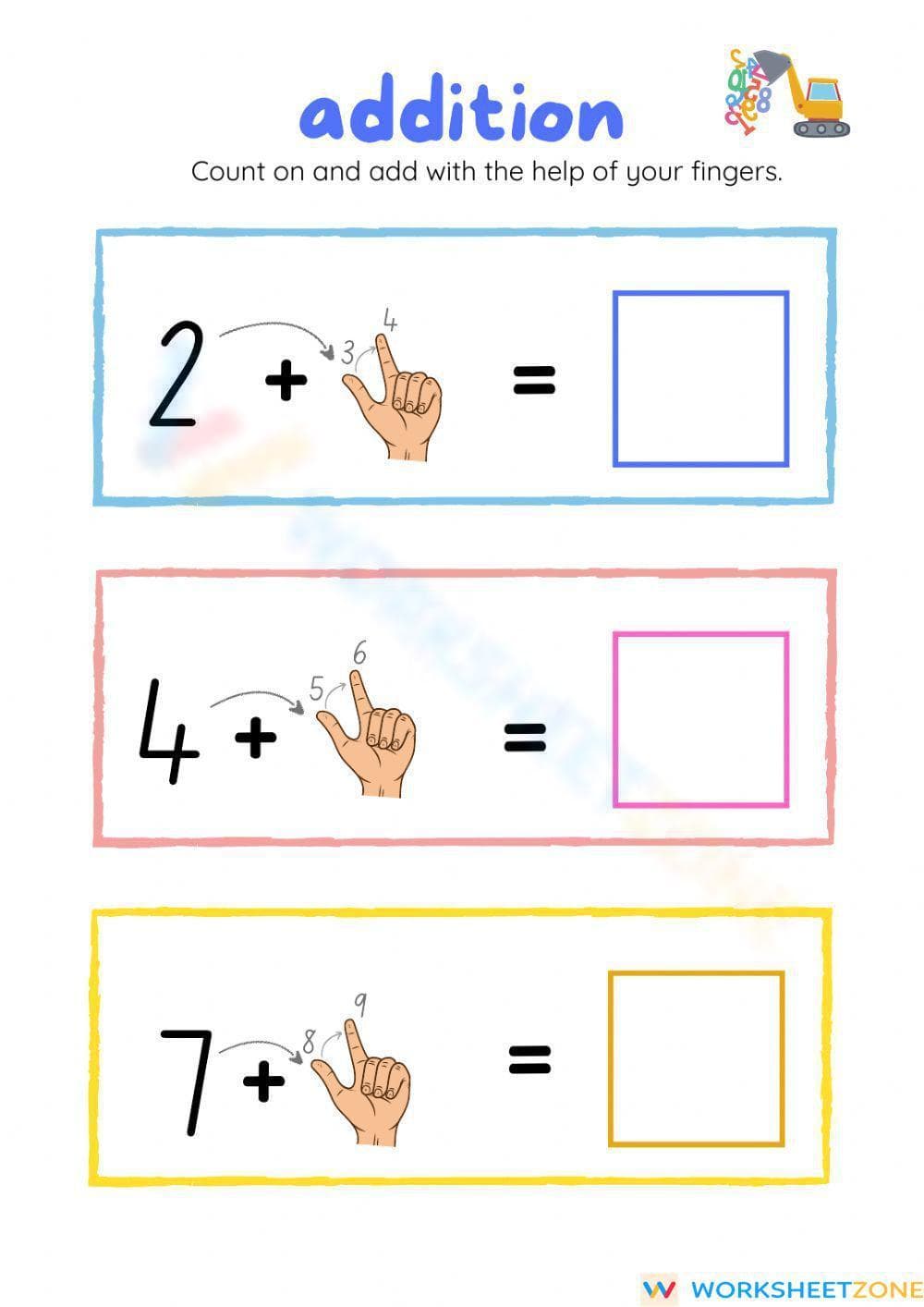
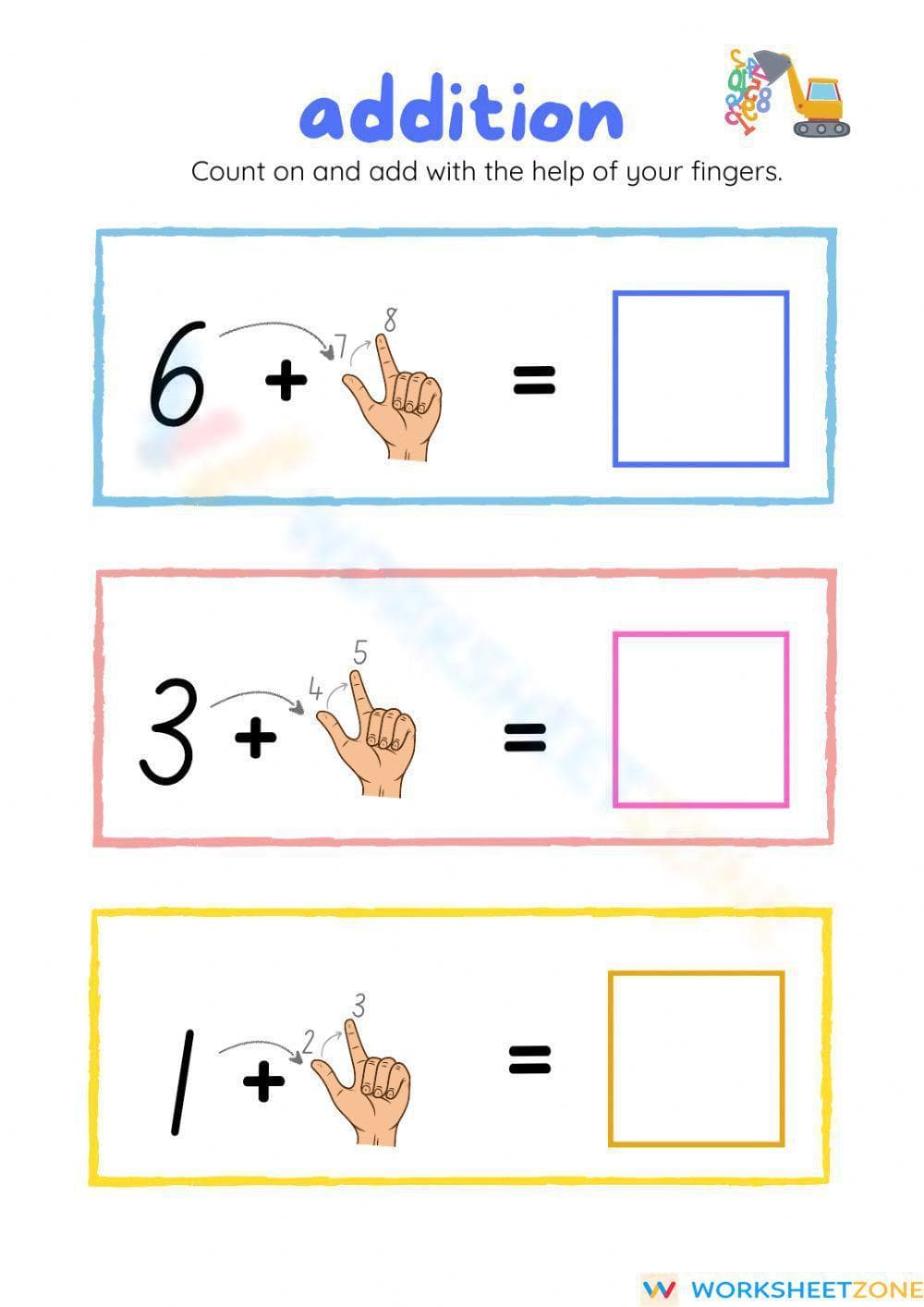
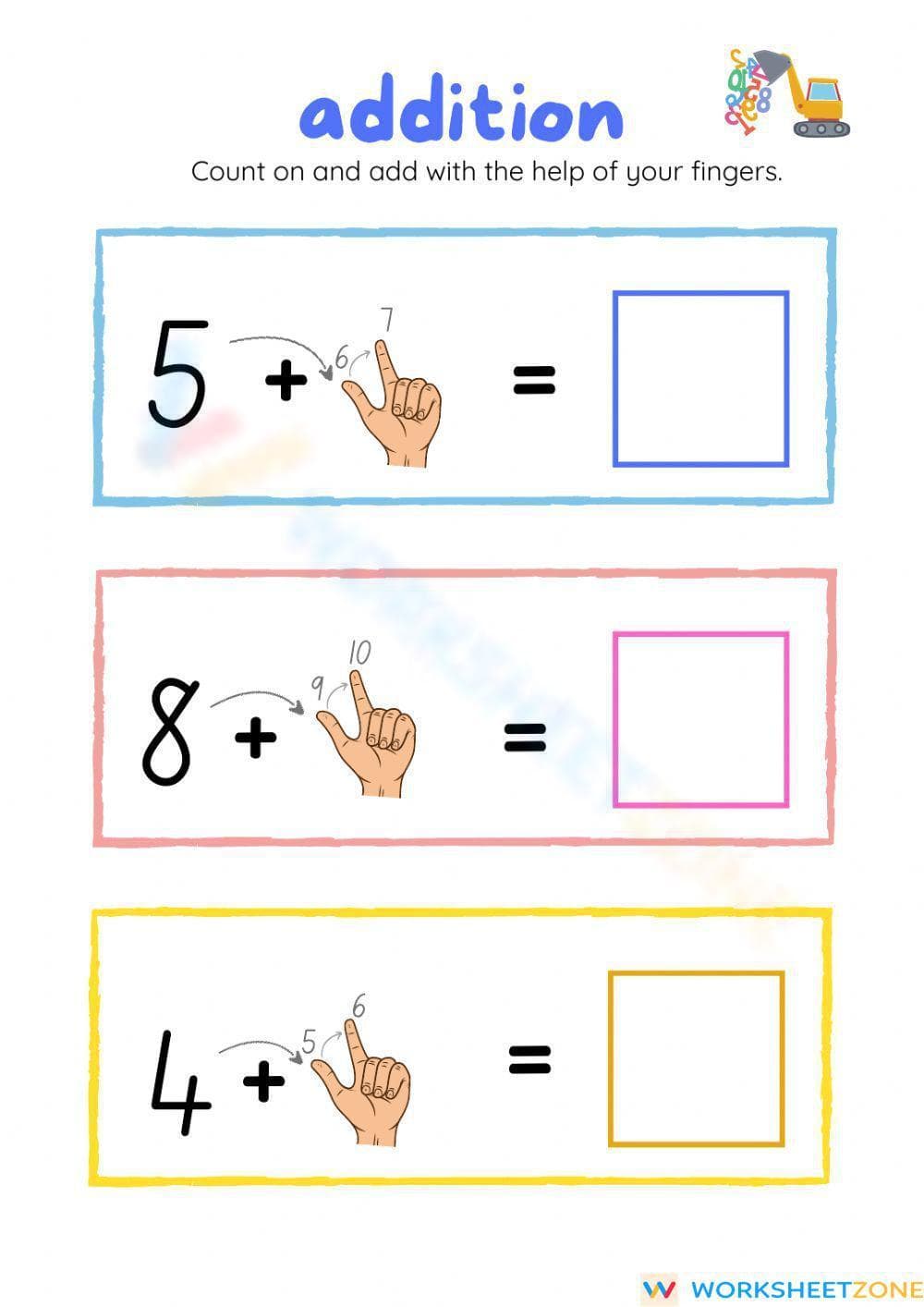
This is an addition worksheet designed to help children learn to add by counting on their fingers. The worksheet presents three addition problems: 2 + 2, 4 + 2, and 7 + 2. Each problem includes a visual aid of a hand with numbers indicating how to count on from the first number. There is a blank square for the child to write the answer.
Grade Level Suitability:
This worksheet is suitable for Kindergarten and Grade 1. It uses simple addition problems and relies on a visual aid (fingers) which is appropriate for students in these early grades who are learning the basics of addition and number sense.
Why Use It:
This worksheet helps children visualize the concept of addition by using their fingers as a tool for counting. It reinforces the idea of 'counting on' from a given number, which is a foundational skill for addition. The visual representation makes it easier for young learners to grasp the concept and build confidence in their math abilities.
How to Use It:
Instruct the child to start with the first number in the problem. Then, have them use the hand graphic to count on the second number. For example, for 2+2, start at 2 and count on two fingers to get 4. Write the answer in the blank square. Repeat for the remaining problems.
Target Users:
The target users for this worksheet are kindergarten and first-grade students who are learning basic addition skills. It is also beneficial for students who learn best through visual and kinesthetic methods, as it incorporates finger counting.
This is an addition worksheet designed to help children learn to add by counting on their fingers. The worksheet presents three addition problems: 2 + 2, 4 + 2, and 7 + 2. Each problem includes a visual aid of a hand with numbers indicating how to count on from the first number. There is a blank square for the child to write the answer.
Grade Level Suitability:
This worksheet is suitable for Kindergarten and Grade 1. It uses simple addition problems and relies on a visual aid (fingers) which is appropriate for students in these early grades who are learning the basics of addition and number sense.
Why Use It:
This worksheet helps children visualize the concept of addition by using their fingers as a tool for counting. It reinforces the idea of 'counting on' from a given number, which is a foundational skill for addition. The visual representation makes it easier for young learners to grasp the concept and build confidence in their math abilities.
How to Use It:
Instruct the child to start with the first number in the problem. Then, have them use the hand graphic to count on the second number. For example, for 2+2, start at 2 and count on two fingers to get 4. Write the answer in the blank square. Repeat for the remaining problems.
Target Users:
The target users for this worksheet are kindergarten and first-grade students who are learning basic addition skills. It is also beneficial for students who learn best through visual and kinesthetic methods, as it incorporates finger counting.


