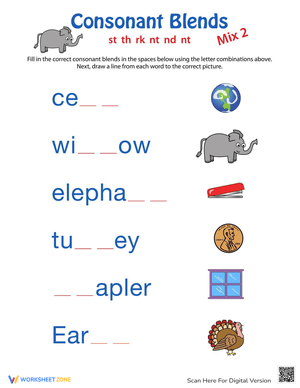
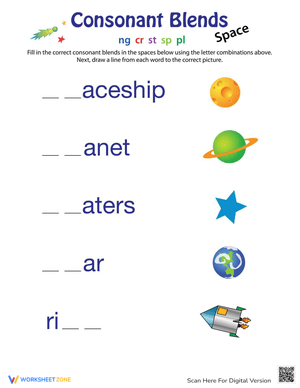
These blends printable worksheets for 1st grade give teachers targeted, print-ready practice for one of the most demanding phonics milestones of the year: helping students hear, isolate, and produce the consonant clusters that appear at the beginning and end of common one-syllable words. The set moves through L-blends, R-blends, S-blends, and final blends — the full range Grade 1 programs address before students push into multi-syllable work.
Blend Families and Task Formats in the Set
Each worksheet targets a single blend family rather than mixing cluster types on the same sheet. That narrow focus matters in Grade 1: when a student is still learning to hear /bl/ as two distinct sounds, presenting it alongside /cr/ and /st/ in the same activity splits attention at exactly the wrong moment. The set moves through four families in a sequence most programs will recognize:
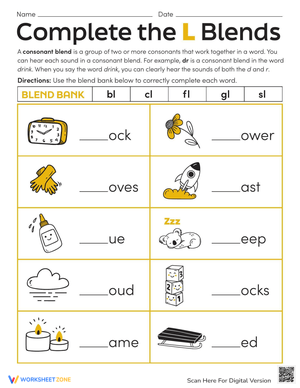
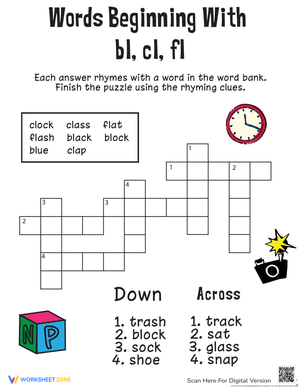
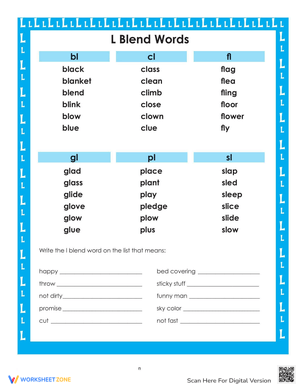
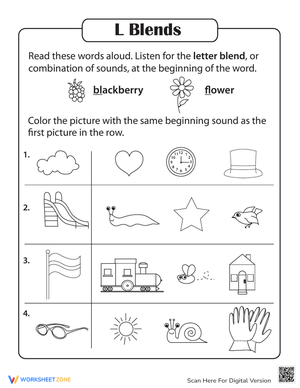
- L-blends (bl, cl, fl, gl, pl, sl) — the natural entry point because the /l/ stays clearly audible after the leading consonant; words like black, clap, flag, and slip decode reliably
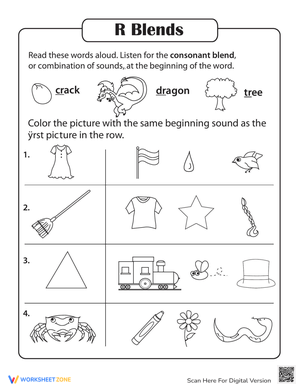
- R-blends (br, cr, dr, fr, gr, pr, tr) — slightly harder because /r/ can blur into the vowel that follows; words like brag, crab, frog, and trip
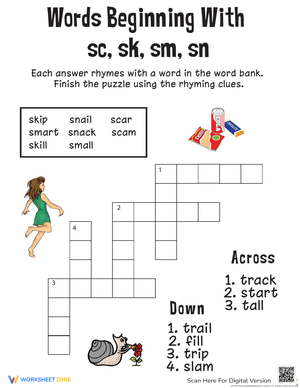
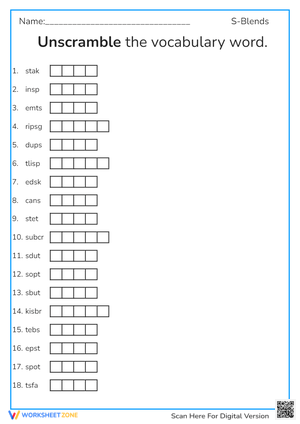
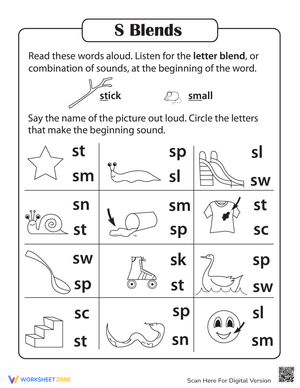
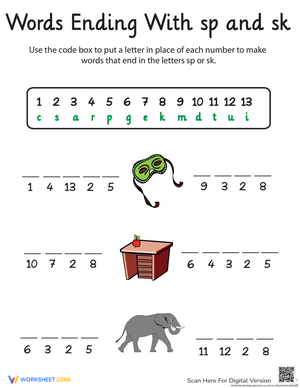
- S-blends (sc, sk, sm, sn, sp, st, sw) — a larger family introduced after students have blend awareness established; words like skip, snap, spin, and swim
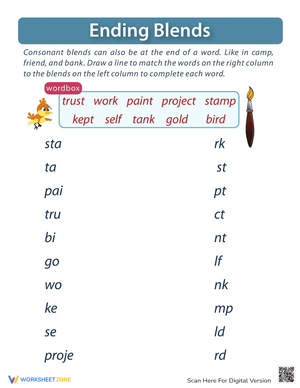
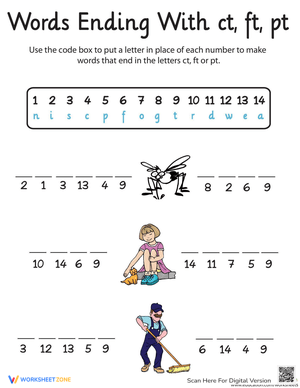
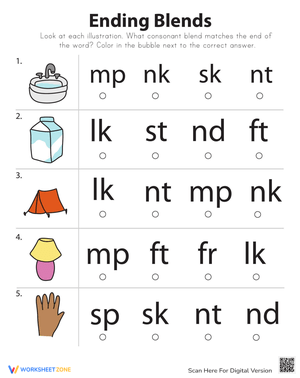
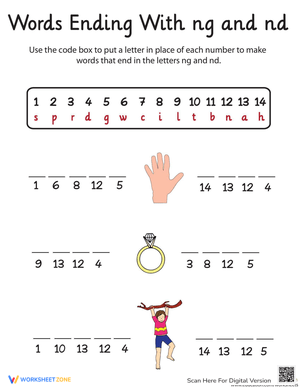
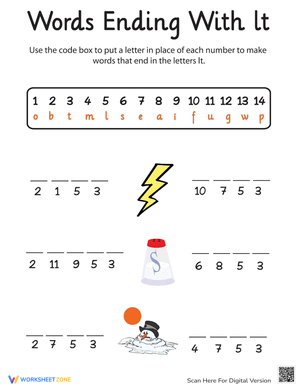
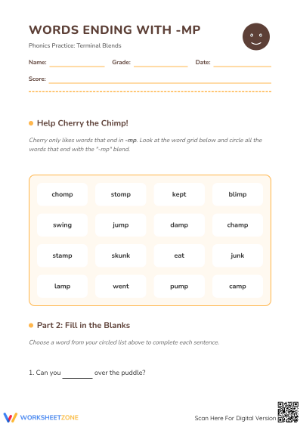
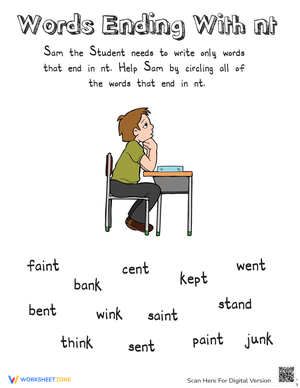
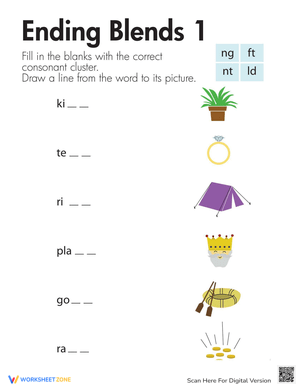
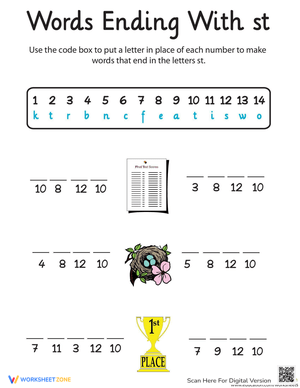
- Final blends (nd, nk, nt, ft, lk, lt, mp, sk, st) — consistently under-taught but essential; words like hand, milk, jump, and best appear in early readers constantly and deserve equal instructional time
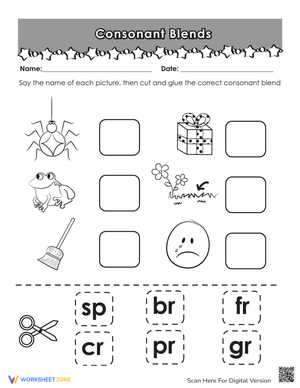
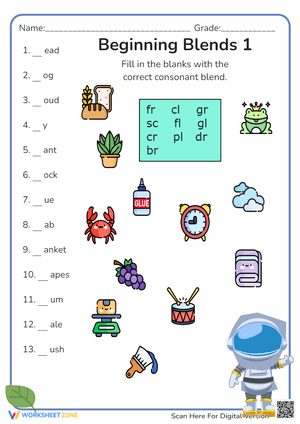
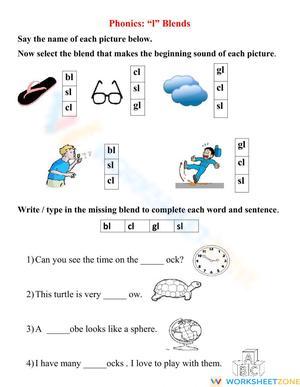
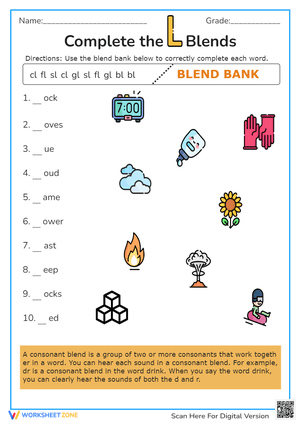
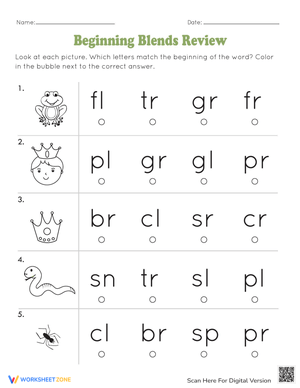
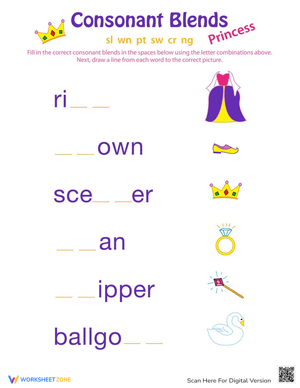
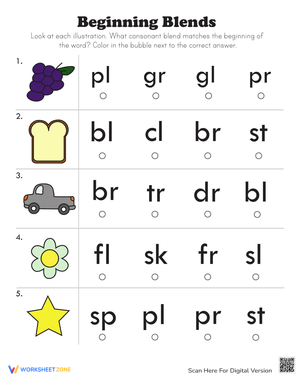
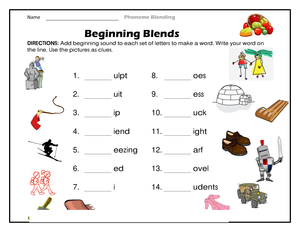
Task formats across the worksheets include: circling the correct blend from a set of choices after looking at a picture, writing the missing blend to complete a partial word, cut-and-paste sorting by blend family, building new words by combining a given blend with a printed rime (-ack, -ip, -og), and composing a sentence that uses a target blend word. The fill-in and word-building formats require students to both decode and produce blend spellings — saying the sounds, seeing them in print, and writing them in sequence. That combination of input modes accelerates mastery more reliably than recognition-only tasks, and it's why most sheets in the set ask students to generate rather than simply identify.
One Distinction Worth Teaching Explicitly
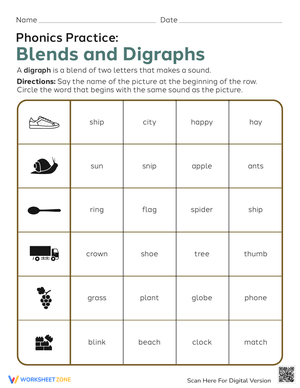
A blend and a digraph are not interchangeable terms, and the difference shapes the decoding strategy a student applies. In a blend — bl in black, str in string — every consonant keeps its own audible sound. Students need to press through each one. In a digraph like sh, ch, or th, two letters merge into a single sound that neither letter makes on its own. When first graders understand this distinction early, they know not to look for a merged sound inside frog the way they would inside ship. The worksheets here address blends exclusively, so they pair cleanly with separate digraph materials for teachers building a complete phonics sequence.
Errors Students Make That These Worksheets Help Surface
The most consistent pattern in blend work is blend compression — students hear the salient sounds in a word and collapse the cluster when writing. A student who reads frog aloud without hesitation will still spell it fog on a fill-in task, because writing forces them to slow down and hold each phoneme in sequence. A student who has no trouble with slip in isolation will write sip in a sentence because the composing process draws cognitive resources away from phoneme-by-phoneme attention. This disconnect between decoding and encoding is normal in mid-first grade, but it closes faster when students practice producing blend spellings regularly rather than only recognizing them in print.
Final blends generate a different error: omission at the end of the word. Students write han for hand or bes for best because once they've captured the dominant ending sound, the remaining consonant feels redundant. Pointing to those patterns during a brief share-out after the worksheet — rather than simply marking them incorrect — gives students the explicit correction that actually sticks. The cut-and-paste and fill-in formats make those errors visible quickly during small-group time, where a teacher can catch and address them before they calcify into habit.
Where These Worksheets Fit in the Instructional Day
The cleanest fit for these sheets is the phonics block: introduce a blend family with a brief whole-group lesson — say the sounds, clap them apart, brainstorm words, write two or three on the board — then release students to the matching worksheet for independent or partner practice. That sequence moves from teacher modeling to student application within a single block and keeps the instructional connection tight. Each worksheet also holds up as a five-minute warm-up at the start of a reading lesson or as the last structured activity before students pack up, when a familiar format maintains focus better than anything that requires new explanation.
The blends printable worksheets for 1st grade work especially well as literacy center rotations: a tub with several printed sheets, a pencil, and scissors for the cut-and-paste tasks runs independently once students have seen the format modeled once. For homework, one sheet per week gives families a concrete, low-prep way to support phonics practice — the picture cues on most worksheets let students attempt the activity without needing an adult to read the instructions aloud, which reduces frustration at home considerably.
Meeting Different Learners With the Same Set
Students who are still in the early stages of phonemic awareness — those who can segment cat but struggle with clap — do best with the picture-identification and circle-the-blend formats, where the word is supplied and the task is recognition rather than retrieval. Pairing those sheets with a sound-box mat (two adjacent boxes for the consonant cluster, then one for the vowel, one for the final sound) gives students a physical structure for segmenting the cluster before they write anything down. That's the step-by-step support that keeps the phonics demand high without overwhelming working memory.
Students who already read and write simple CVC words fluently can move directly to the word-building and sentence-writing sheets. For that group, the blends printable worksheets for 1st grade function as a spelling challenge rather than a decoding introduction — the cognitive work shifts from "what sound does this letter make?" to "how do I hold multiple sounds in sequence while I compose?" That distinction matters for planning: the same sheet asks something meaningfully different depending on where a student sits in their phonics progression.
English language learners often benefit from the picture cues more than any other format adjustment, since the visual support reduces language load without reducing the phonics demand. One honest limitation worth naming: students who have strong oral English vocabulary but limited print experience can sometimes identify the picture, say the word, and still fail to isolate the blend because phoneme-level awareness in English is still developing. Those students need oral segmentation work alongside the written worksheet — clapping or tapping the sounds before touching the pencil — not instead of it.
Standard Alignment
These worksheets address CCSS RF.1.2 (Phonological Awareness) and CCSS RF.1.3 (Phonics and Word Recognition) from the Reading: Foundational Skills strand. RF.1.3 is the more directly applicable standard — it calls explicitly for students to decode regularly spelled one-syllable words, including those with initial and final consonant blends. RF.1.2 applies to the oral segmentation work embedded in activities where students say and clap blend sounds before writing. In Common Core-aligned districts, both codes appear naturally in lesson plan documentation and family communication; the worksheets address exactly what each standard describes without any stretch in the alignment claim.
Frequently Asked Questions
What grade level are these blend worksheets designed for?
The worksheets are written for first grade, where consonant blends are an explicit phonics standard. That said, kindergartners who have moved quickly through CVC words sometimes use the simpler circle-the-blend sheets, and second graders who need phonics review use the full set for targeted catch-up. The blends printable worksheets for 1st grade are pitched at the Grade 1 expectation — the vocabulary in picture cues and word lists reflects what most six- and seven-year-olds recognize, and the task complexity matches what the RF.1.3 standard requires.
Should all blend families be taught at the same time or one at a time?
One family at a time produces better results. Students who spend a full week on L-blends before moving to R-blends build enough repetition to make those patterns automatic rather than effortful. Mixing bl, cr, and st in the same week fragments attention and slows mastery — the errors on end-of-unit checks are more frequent and more varied when teachers rush through multiple families simultaneously. The worksheets are organized to support that single-family focus, so matching instruction and practice is straightforward.
How are blends different from digraphs?
In a blend, every consonant keeps its own audible sound: bl in black has both a /b/ and an /l/ that students hear and produce separately. In a digraph like sh or ch, two letters merge into one new sound that neither letter makes on its own. Teaching this distinction before students encounter both patterns in the same text reduces decoding errors significantly — students know to press through each letter in a blend but treat a digraph as a single unit.
Do these worksheets support English language learners?
The picture cues on most sheets reduce the English vocabulary load considerably, letting ELL students access the phonics task without needing to read written directions. Where ELL students sometimes get stuck is in the oral segmentation that blend work requires — phonemic awareness in a second language develops on its own timeline. Pairing the worksheet with a brief oral warm-up, where students say and segment the target word before picking up their pencil, makes the written practice more productive for those students.












 Interactive Worksheet Maker
 Quiz Maker
 Word Search Maker
 Crossword Puzzle Maker
 Word Scramble Generator
 Sentence Scramble Generator
 Handwriting Worksheet Generator
 Name Tracing Generator
 Fill In The Blank Generator