These 1st grade plural nouns worksheets give teachers a targeted set of practice activities covering the three pluralization patterns first graders need to internalize before plural spelling becomes automatic: the basic "-s" ending, the "-es" words that carry an extra syllable, and a small group of high-frequency irregular forms. Each worksheet isolates a distinct pattern, which means teachers can assign precisely what a class is ready for rather than working through one undifferentiated block of practice.
The Specific Patterns Each Worksheet Targets
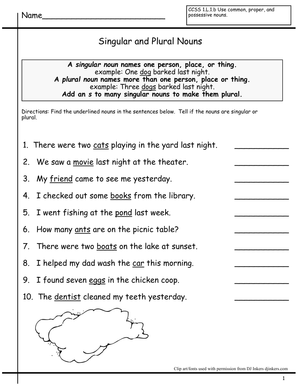
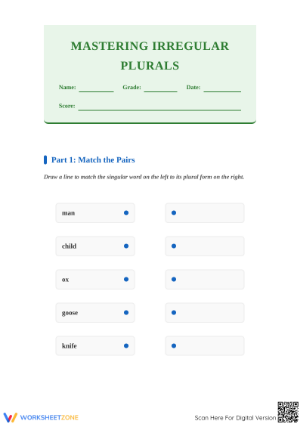
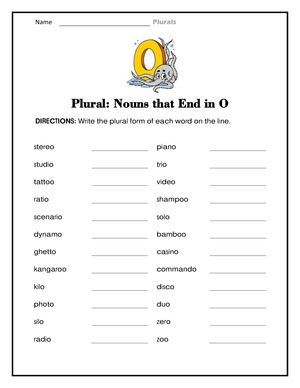
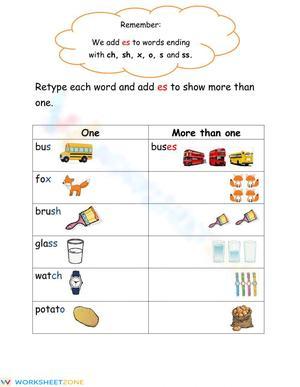
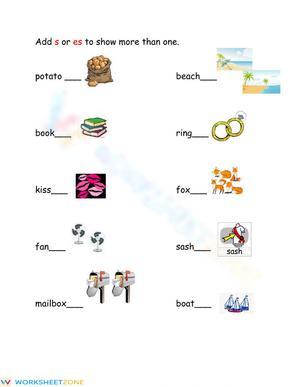
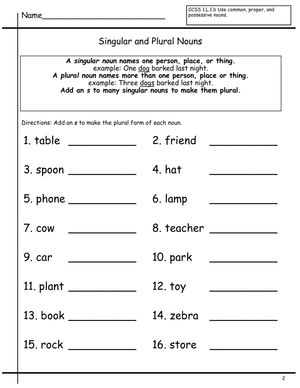
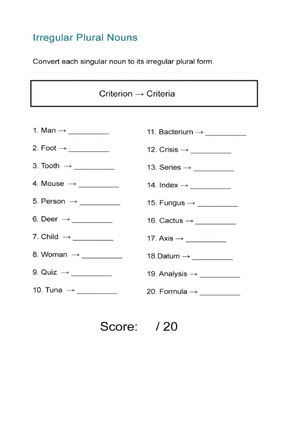
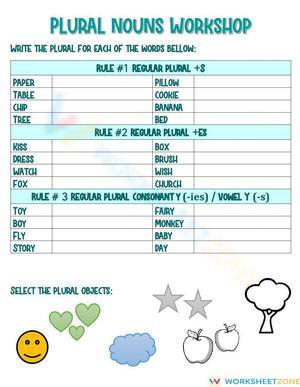
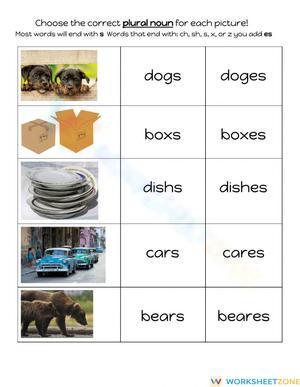
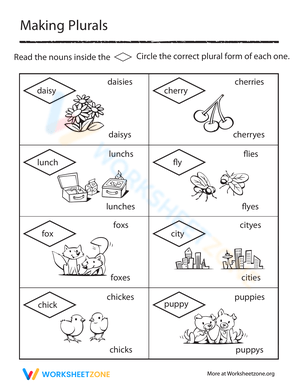
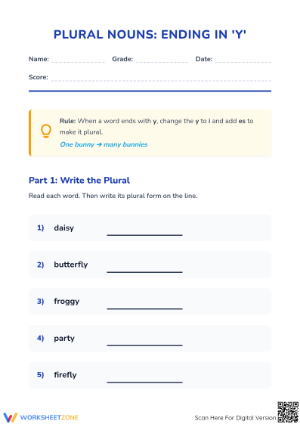
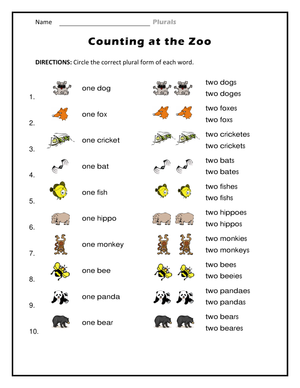
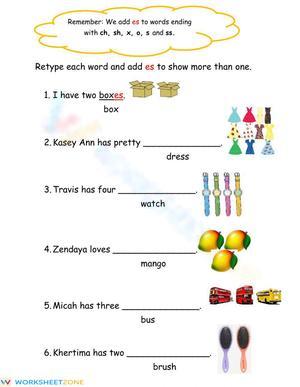
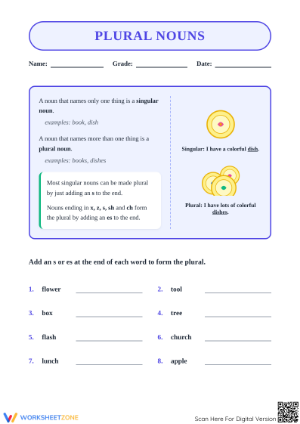
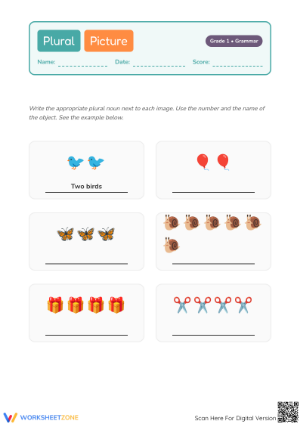
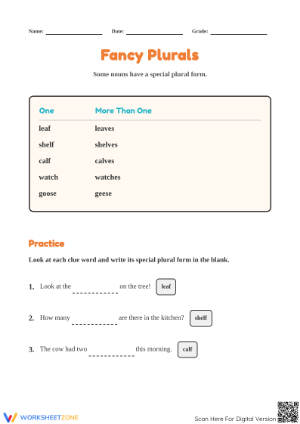
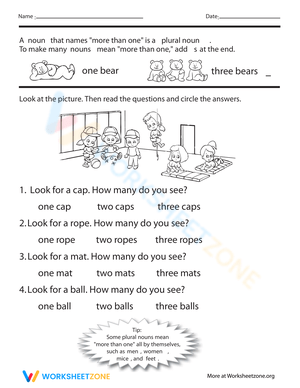
The set opens with the "-s" rule using vocabulary well within first-grade reading level — cats, books, dogs — so the spelling task doesn't compete with decoding. Once students move to words like box, dish, and bench, the worksheets shift format: students read the singular, say it aloud, and then write the plural. The extra syllable that "-es" creates becomes perceptible through that speaking step, and the written tasks reinforce it immediately. The irregular plurals — feet, teeth, mice, children — appear in picture-matching formats, treating them as vocabulary to memorize rather than rules to apply, which is developmentally appropriate at this level.
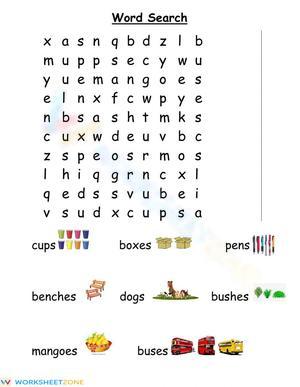
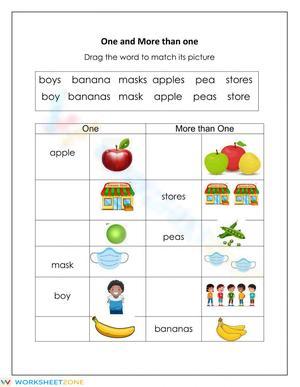
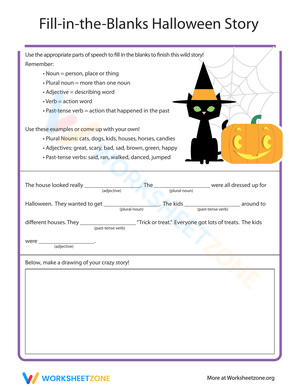
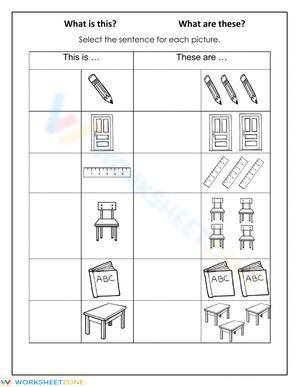
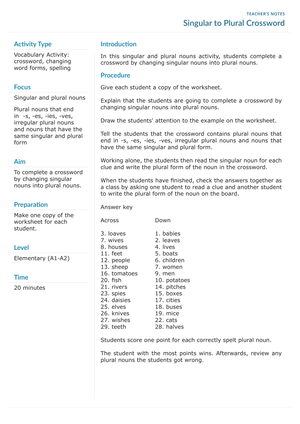
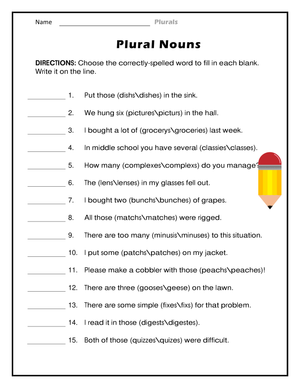
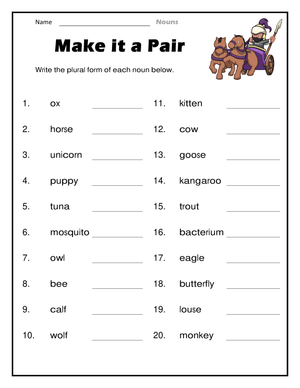
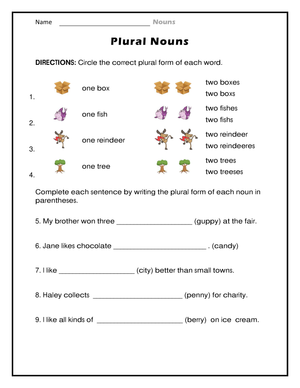
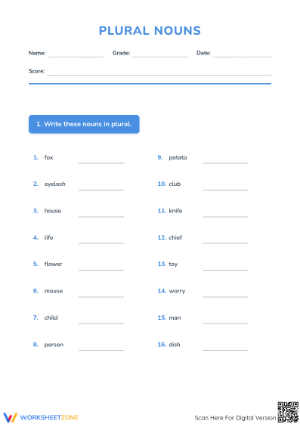
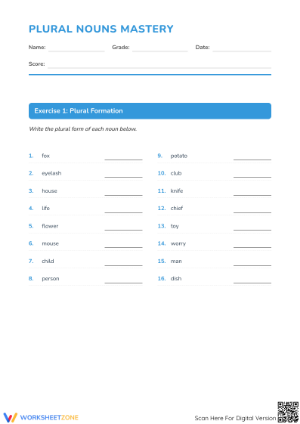
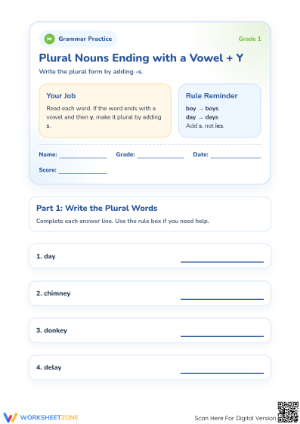
Activity formats across the set include singular-to-plural rewriting, picture-to-word matching, cut-and-paste sorting into "one" and "more than one" columns, and fill-in-the-blank sentences. The sentence tasks ask students to select the correct noun form in context — "The (bus/buses) stopped at the corner" — which moves the skill beyond isolated spelling and into subject-verb agreement, the standard target for this grade level.
Why This Work Belongs in First Grade
First grade is the earliest point where explicit grammar instruction is developmentally productive, and plural nouns are the right entry point because the concept has a concrete, visible referent. Unlike verb tense, which requires understanding of time, plural spelling change corresponds to something students can count and hold in their hands. A child who holds up two pencils grasps "more than one" immediately; the word-level representation of that quantity is the instructional task these worksheets address. The "-es" rule becomes teachable at this grade specifically because most first graders have just reached the phoneme awareness needed to notice that "boxs" sounds wrong while "box-es" sounds right — a distinction the majority of kindergarteners cannot yet reliably isolate.
Frequent Student Errors Worth Watching For
The most common error pattern in student work is overapplication of the "-s" rule to "-es" words. Students who have mastered cats and books confidently write "boxs," "dishs," and "benchs" — and because those spellings look plausible at a quick glance, they can slip past a teacher doing a fast check. The underlying problem is that students are applying a visual pattern rather than an auditory one. A reliable in-class fix: have students say both forms aloud while holding a hand under the chin. "Box" and "boxs" produce the same jaw movement; "box" and "box-es" do not. That physical check catches the error before it gets written.
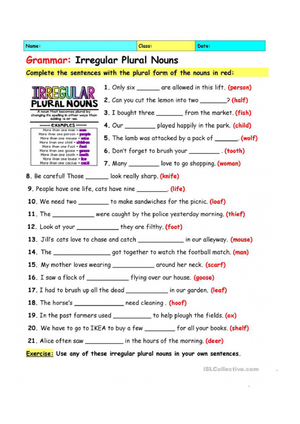
Irregular plurals produce a different problem. Students who have internalized the "-s" rule well often regularize irregular forms — writing "foots," "tooths," and "mouses" — because the rule they just learned is now their default. These are not careless mistakes; they are evidence of rule learning working correctly and then overextended. Framing irregulars explicitly as "words that break the rule on purpose" rather than as errors the student failed to anticipate makes the memorization task feel deliberate rather than arbitrary, and it keeps students from losing confidence in the rule they correctly learned.
Lesson-Planning Ideas to Get the Most From These Worksheets
The most efficient deployment is a five-minute whole-group launch followed by independent practice. Project the first two items on the board, work through them with a think-aloud, then release students to complete the rest independently. The visual prompts on each worksheet are strong enough that most first graders can proceed without ongoing teacher support, which makes them well-suited to literacy center rotations and morning work blocks. Because the directions are simple and the picture cues do significant work, these also go home as homework without generating a pile of parent questions.
For sequencing across the week, introduce one pattern per lesson before mixing them. Students who practice "-s" words on Monday and "-es" words on Wednesday are ready for a mixed review on Friday — a more demanding task than applying a single rule in isolation, and one that reveals whether transfer has happened. Students who get isolated practice right but falter on the mixed worksheet haven't yet consolidated the distinction; that gap is worth addressing before any unit assessment. A 1st grade plural nouns worksheets used this way produces formative data, not just practice repetition.
Standard Alignment
These worksheets address CCSS.ELA-LITERACY.L.1.1.C, which requires first graders to use singular and plural nouns with matching verbs in basic sentences. The fill-in-the-blank sentence tasks directly target the verb-agreement dimension of that standard — students aren't spelling plural nouns in isolation, they're placing them correctly inside sentence context. The sorting and rewriting tasks cover identification and formation. Taken together, the set addresses the full instructional range of L.1.1.C rather than just the surface-level spelling component.
Adapting the Set for Mixed-Ability Classrooms
For students still building phonemic awareness, the picture-matching and sorting worksheets are the right entry point — the visual support reduces the cognitive demand of decoding so attention can go toward the plural form itself. Students who are further along can be directed to the sentence-level tasks first, then asked to write two original sentences using plural nouns drawn from the worksheet's word bank. That extension requires no additional materials; everything needed is already on the page.
A 1st grade plural nouns worksheets also functions well as a quiet differentiation tool in a mixed group because the pattern-specific worksheets let a teacher assign different tasks to different students without making the distinction visible — students at the "-s" stage and students working on irregulars are both doing plural nouns work, just on materials matched to where they are in the sequence.
Frequently Asked Questions
When in the year should plural nouns instruction start?
Most first-grade pacing guides place plural nouns in the fall, after students have solid letter-sound correspondence but before multi-syllable word work begins in earnest. Starting with "-s" plurals in October or November, then moving to "-es" words by January, keeps the unit aligned with the phonics sequence most programs follow. Irregular forms work well as vocabulary additions throughout the year rather than a standalone unit — a few irregulars woven into each month's word wall exposure, for instance.
How do these worksheets work for students who are English language learners?
The picture-supported formats are particularly accessible for ELL students because identifying the noun doesn't depend on first reading the English word. A student who recognizes a drawing of three foxes can connect the image to the word "foxes" without needing to decode "fox" independently. That visual entry point reduces the language barrier enough for students to engage with the pluralization concept while simultaneously building English vocabulary. A brief verbal repetition of the word before students write ensures they hear the plural ending clearly before committing it to the page.
How should I handle students who keep writing "mouses" and "foots" even after direct instruction?
Don't argue with the logic behind those spellings — the student is applying a real and recently learned rule, which is actually a sign of progress. Acknowledge that the rule worked perfectly for the "-s" words, then introduce the irregulars explicitly as a separate list, handled the same way sight words are handled: repeated visual exposure, not rule application. A classroom reference card with picture pairings for foot/feet, tooth/teeth, and mouse/mice gives students something to consult during independent work. A 1st grade plural nouns worksheets that groups these irregulars into matching and recognition tasks, rather than asking students to generate the plural from a rule, sets up the memorization correctly from the first encounter.












 Interactive Worksheet Maker
 Quiz Maker
 Word Search Maker
 Crossword Puzzle Maker
 Word Scramble Generator
 Sentence Scramble Generator
 Handwriting Worksheet Generator
 Name Tracing Generator
 Fill In The Blank Generator