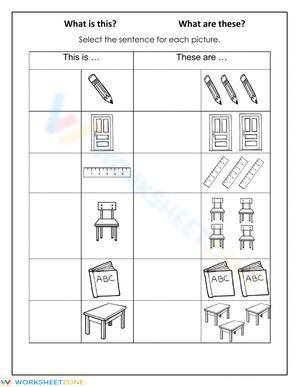
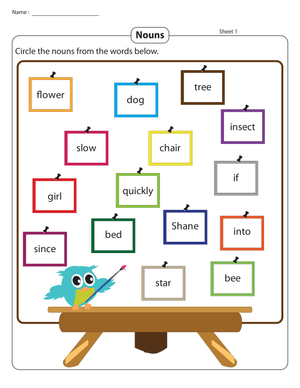
These nouns printable worksheets for 1st grade give teachers a direct path into one of early grammar's most concrete skills — sorting the words students already speak and read into people, places, things, and animals. The set covers common nouns, proper nouns, and singular-to-plural transitions, the three noun concepts woven most tightly into first-grade standards and early writing instruction. Teachers get ready-to-print practice that moves from picture-supported recognition into sentence-level work.
The Specific Skills Targeted
Each worksheet isolates one noun concept so students build understanding without being pulled in multiple directions at once. The range across the set includes:
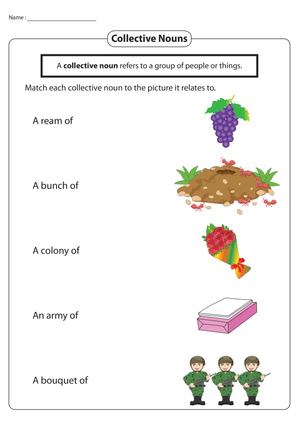
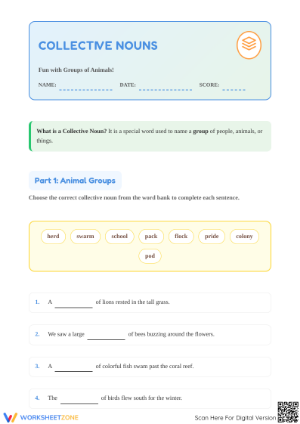
- Picture-to-noun matching — Students draw lines between illustrations and written words, allowing them to confirm meaning even when decoding is still inconsistent.
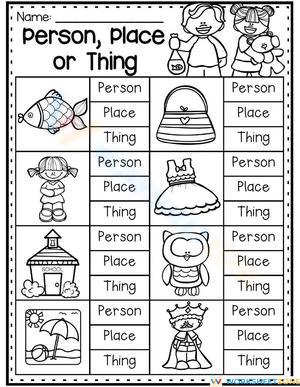
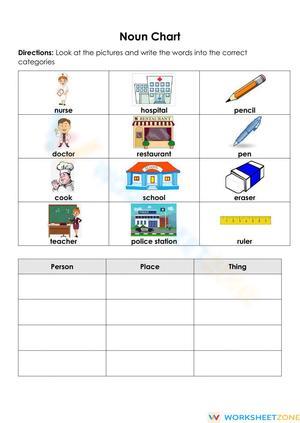
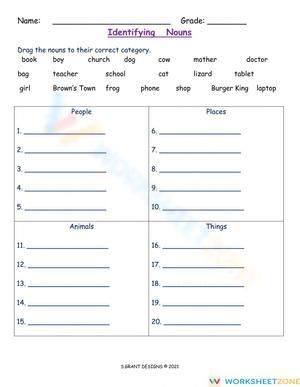
- Category sorting — Cut-and-paste activities ask students to place nouns under the correct column: person, place, thing, or animal. The physical act of cutting and repositioning the card reinforces the definition more durably than circling alone.
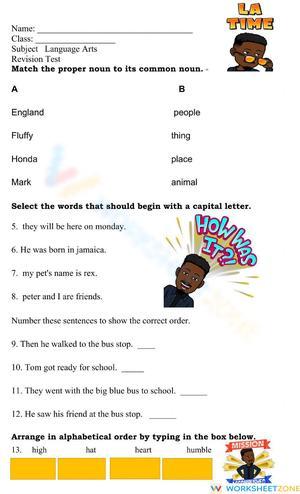
- Proper noun identification — Students circle capitalized words in short passages, then practice rewriting common nouns as their proper-noun equivalents (city → Chicago, teacher → Ms. Rivera).
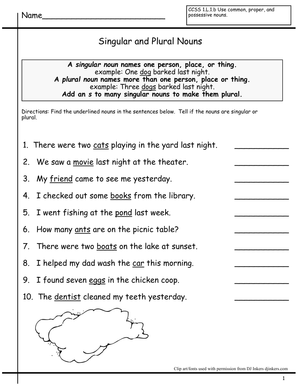
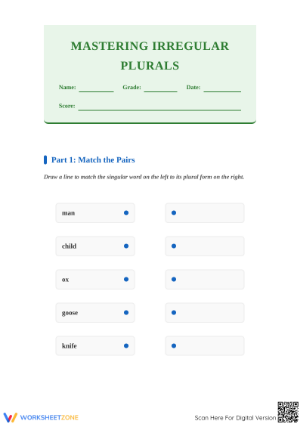
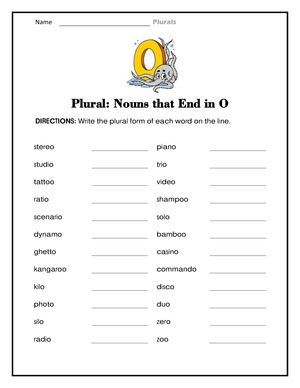
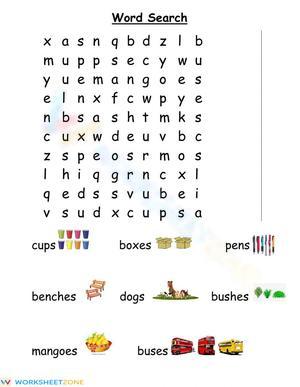
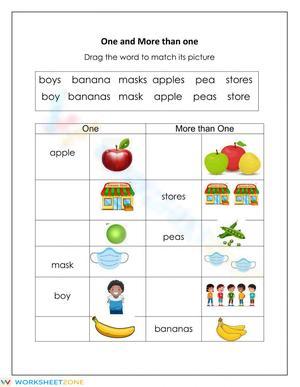
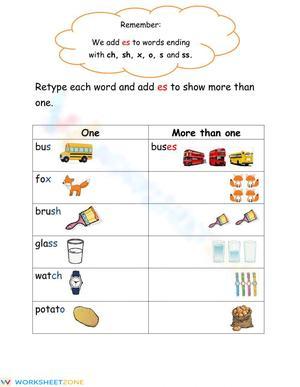
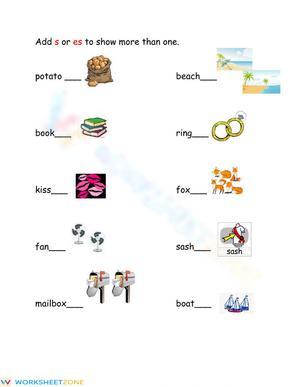
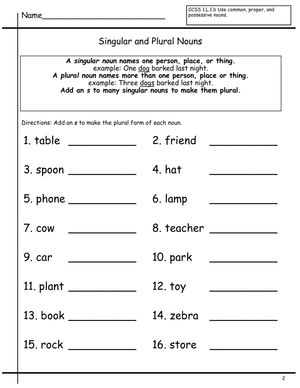
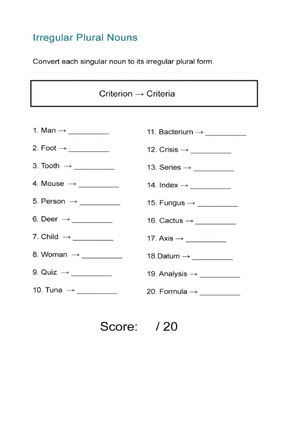
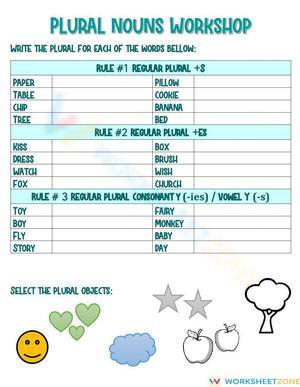
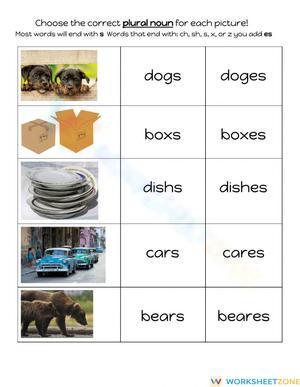
- Singular and plural formation — Worksheets walk through the -s and -es patterns using familiar base words (fox → foxes, bus → buses), with tracing and rewriting steps before students attempt independent production.
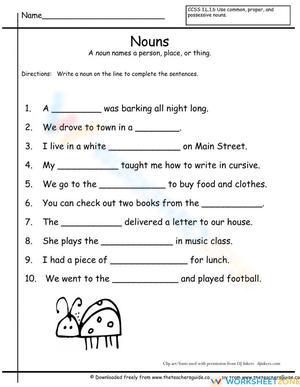
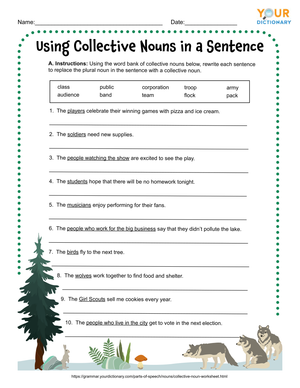
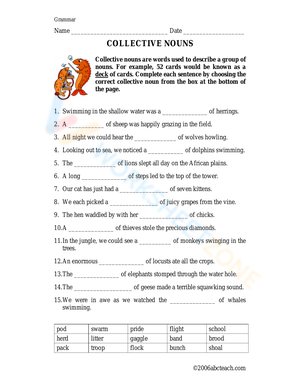
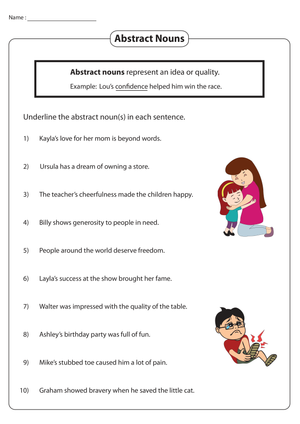
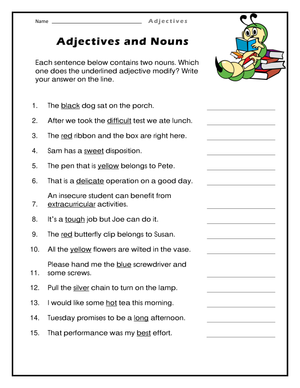
- Nouns in sentences — Students underline or circle the noun in printed sentences, then mark whether it is common or proper — a step up in cognitive demand that mirrors what appears on unit assessments.
Mistakes Students Make That These Worksheets Surface
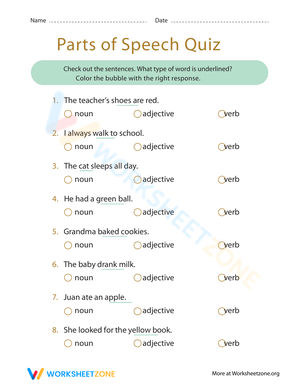
The most persistent error at this level is category confusion between nouns and verbs. A student who correctly identifies dog and school as nouns will often mark jump as a noun because "it's something you do — and things are nouns." The distinction between an action and a thing is not intuitive for six-year-olds, and worksheets that embed nouns inside short sentences — rather than presenting them in isolation — force students to apply the definition rather than guess by feel.
Proper noun capitalization produces a different, subtler error. Students who complete a capitalization exercise correctly — circling Monday and Mrs. Park with confidence — revert to lowercase in their own writing minutes later. The worksheet trains recognition; transfer to production requires teachers to point back to the completed exercise during writing time and ask students to audit their own sentences. That bridge between the two tasks is where the real instruction happens.
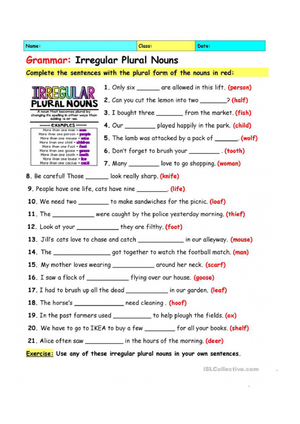
Plural formation with -es is a third consistent trouble spot. Students overgeneralize the -s rule and write boxs or dishs. Worksheets that present both patterns side by side — with a sorting column for each — help students develop a visual and orthographic sense of which words need the extended ending before the rule is explicitly memorized.
Standard Alignment
These worksheets address CCSS.ELA-Literacy.L.1.1b, which requires first graders to use common, proper, and possessive nouns, and CCSS.ELA-Literacy.L.1.1c, which covers singular and plural nouns with matching verbs in sentences. In classroom terms, L.1.1b typically becomes the focus in the first trimester as teachers establish noun identity and proper-noun capitalization; L.1.1c work deepens in the second trimester when students are writing multi-sentence responses and noun-verb agreement errors start appearing in their drafts. The worksheets map onto that instructional sequence, making it straightforward to pull the right one at the right moment in the year.
How to Build These Worksheets Into Your Lesson Plans
The strongest placement for nouns printable worksheets for 1st grade is immediately after whole-group instruction — before students forget the anchor chart discussion and before independent writing reveals confusion. Ten to fifteen minutes of structured individual worksheet work, right after the mentor text read-aloud and shared annotation, locks in the concept while it is still fresh. Teachers who wait until the next day to hand out practice find they spend the first five minutes re-teaching rather than reinforcing.
Literacy centers are a second high-value placement. Laminate the category-sorting and proper-noun worksheets, pair them with dry-erase markers, and the same worksheet runs for a full week without printing new copies. Students who visit the center on different days practice the same skill repeatedly — spaced retrieval in a format first graders can operate without teacher supervision. The remaining worksheets work well as Monday morning warm-ups after a weekend break, when students need low-stakes re-entry into academic language before writing workshop begins.
Adjusting the Worksheets for a Range of Learners
For students still building decoding stamina, the nouns printable worksheets for 1st grade that rely on illustrations rather than print are the right entry point. Picture-matching and cut-and-paste sorting put the conceptual work front and center without demanding fluent reading — the student can think about whether a barn is a place or a thing without getting stuck on the word itself. Once that conceptual footing is secure, shift those students to worksheets where illustrations appear alongside text, then to text only.
Students working above grade level benefit most from the sentence-level worksheets, but push further by asking them to classify each noun they underline: Is it abstract or concrete? Singular or plural? Common or proper? That layer of metacognitive labeling is not printed on the worksheet, but it takes thirty seconds to add as a verbal prompt during small-group time. For this group, the proper-noun worksheets also become a natural bridge into possessive nouns — a concept just beyond L.1.1b that motivated first graders can handle once they already own the common-versus-proper distinction.
Frequently Asked Questions
How do I explain the difference between a common noun and a proper noun to a six-year-old?
Use names the students already know. A common noun is a general word — teacher, city, dog. A proper noun is the actual name of that specific teacher, city, or dog. Every student in the room is a person (common noun), but only one of them is called Jaylen (proper noun). Proper nouns get a capital letter because they belong to one specific thing — they are too important to blend in with ordinary words. Run the proper-noun hunt worksheet the same day the concept is introduced so students apply the explanation immediately, while the conversation is still in working memory.
What is the most useful way to treat completed worksheets as a formative check?
A finished plural-noun worksheet tells you exactly which students have internalized the -es pattern and which are still overgeneralizing -s. Sort the papers into three stacks at the end of the lesson: mastered, needs one more practice round, needs a re-teach with concrete objects. That sort takes under three minutes and gives you a precise small-group plan for the following day. Sentence-level noun worksheets work similarly — errors on those usually point to specific vocabulary gaps rather than a conceptual misunderstanding of what a noun is.
Do these worksheets work for independent use, or do they require teacher introduction first?
These worksheets follow instruction — they do not replace it. A student who has never encountered the four noun categories will stare at a sorting worksheet without making progress. The right sequence is anchor chart with shared examples, guided practice as a class, then the worksheet as independent application. The nouns printable worksheets for 1st grade in this set are written for students who have had that first introduction; teachers who skip the front-end instruction and assign the worksheet directly will find the resulting papers more confusing than informative.












 Interactive Worksheet Maker
 Quiz Maker
 Word Search Maker
 Crossword Puzzle Maker
 Word Scramble Generator
 Sentence Scramble Generator
 Handwriting Worksheet Generator
 Name Tracing Generator
 Fill In The Blank Generator