


























Views
Downloads

Plural Nouns Printable Worksheet | Grade 1 ELA
Paste this activity's link or code into your existing LMS (Google Classroom, Canvas, Teams, Schoology, Moodle, etc.).
Students can open and work on the activity right away, with no student login required.
You'll still be able to track student progress and results from your teacher account.
This comprehensive Grade 1 grammar worksheet helps students master the formation and use of plural nouns. By progressing from visual counting exercises to sentence-level application, young learners build essential language skills, ensuring they can confidently add -s or -es to common nouns in their everyday writing.
At a Glance
- Grade: 1 · Subject: English
- Standard:
CCSS.ELA-LITERACY.L.1.1.C— Use singular and plural nouns correctly- Skill Focus: Plural Nouns (-s and -es)
- Format: 3 pages · 19 problems · Answer key included · PDF
- Best For: Independent practice or literacy centers
- Time: 15–20 minutes
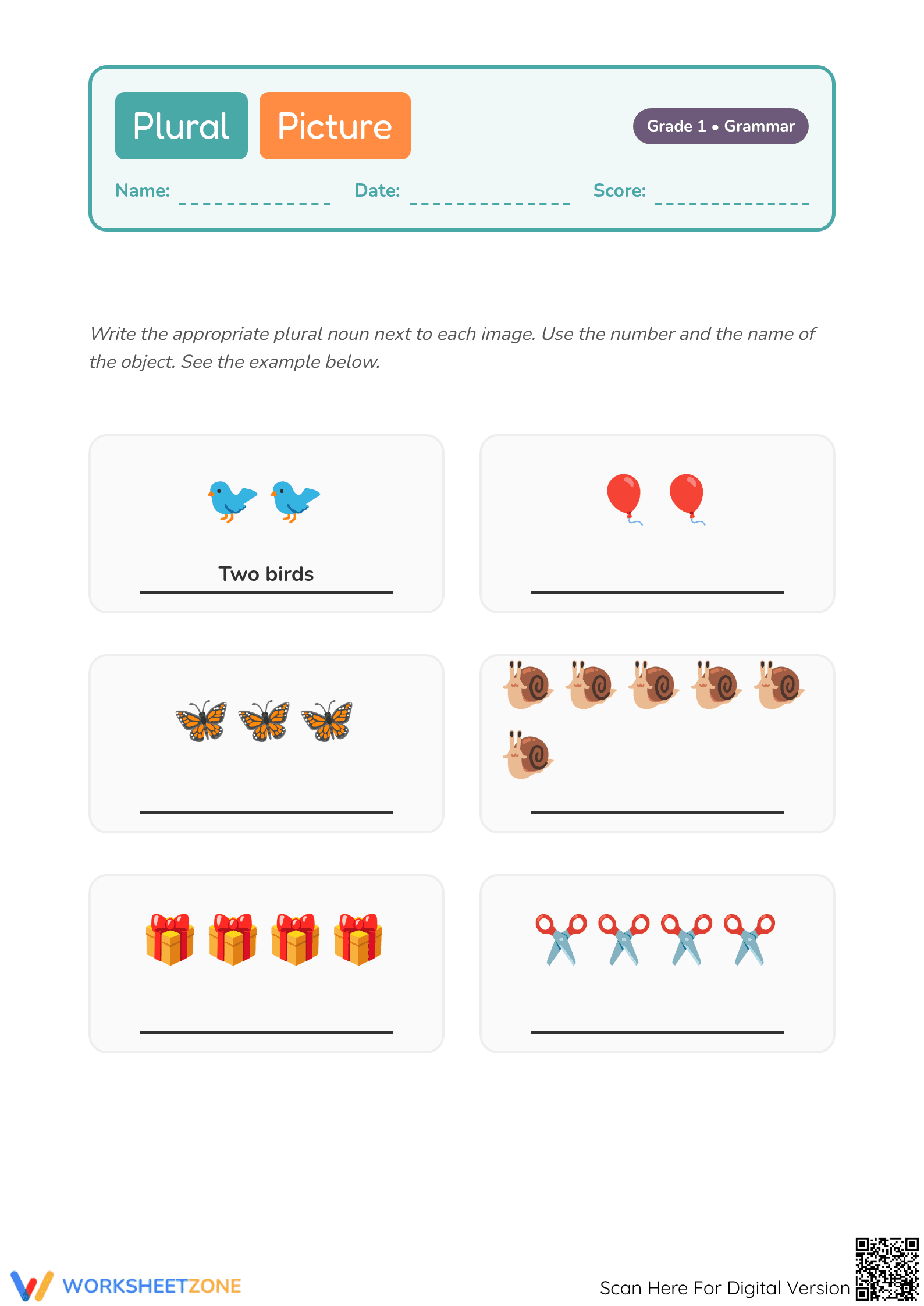
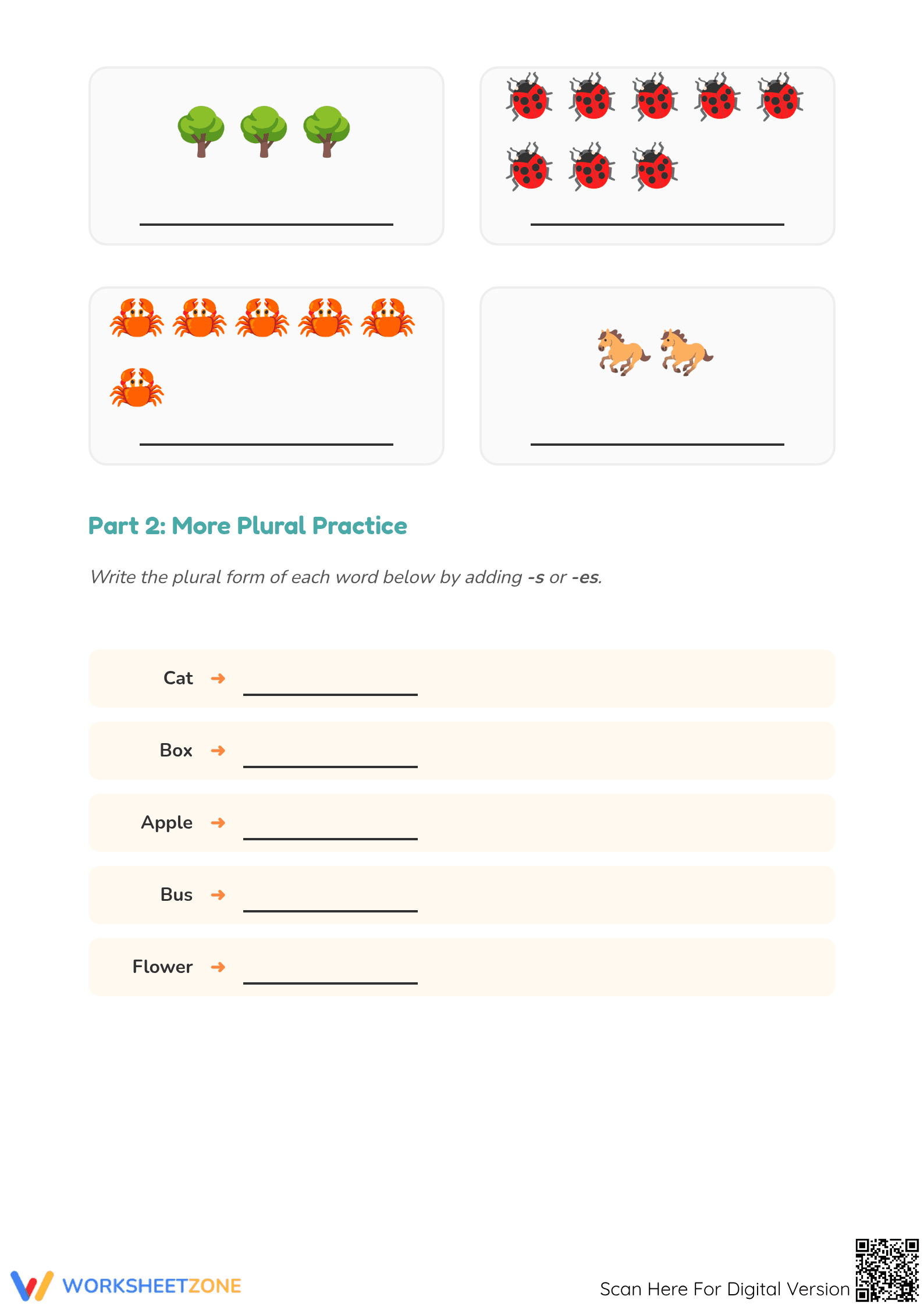
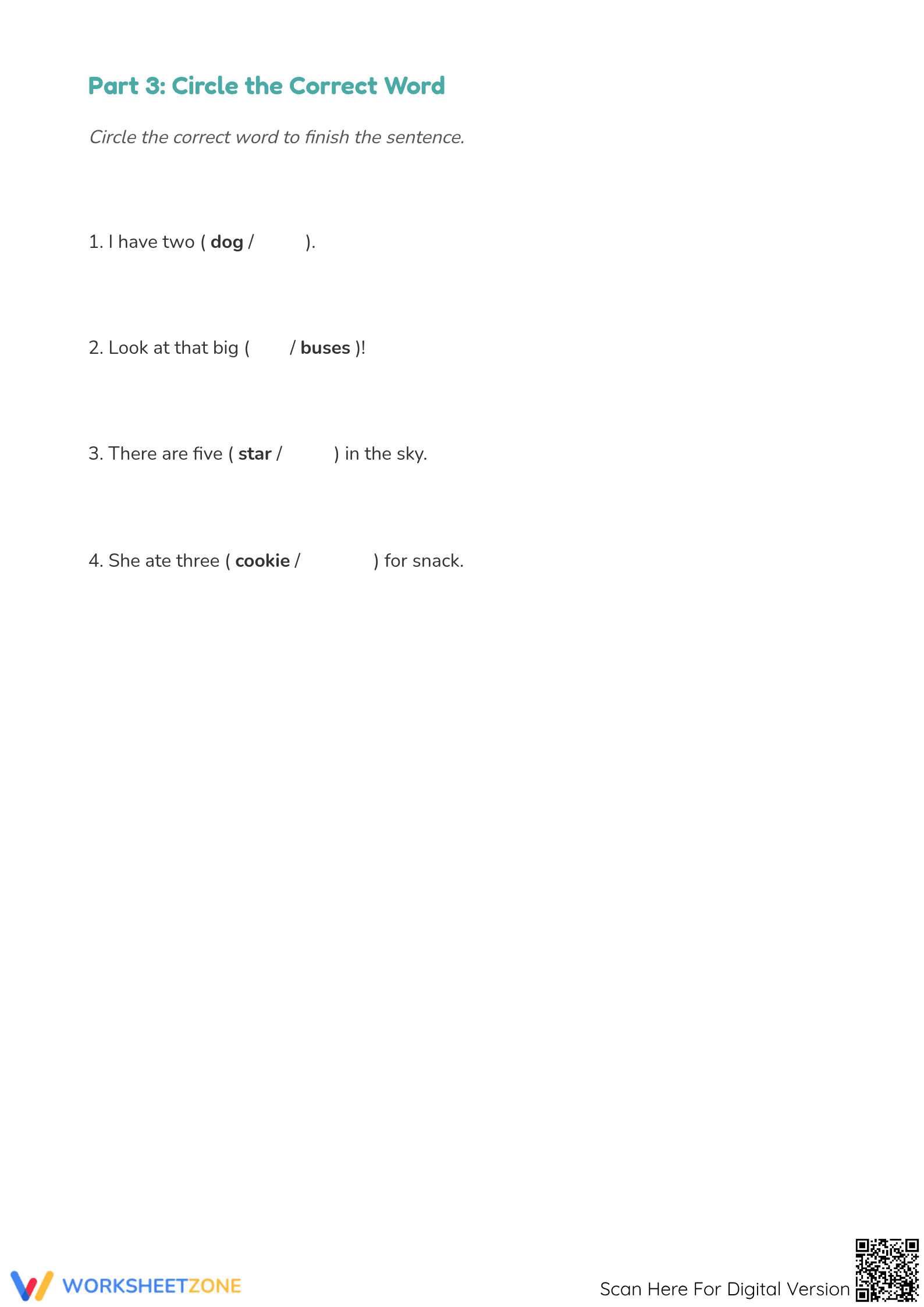
This three-page resource features 19 varied tasks designed to keep students engaged. It includes a visual matching section where students write plural nouns based on picture cues, a direct application section for adding -s or -es to given words, and a sentence completion task. A complete answer key is provided for quick grading.
- Guided practice: 10 visual problems where students count objects and write the corresponding plural noun, building concrete understanding.
- Supported practice: 5 targeted word-level problems requiring students to apply spelling rules by adding -s or -es to singular nouns.
- Independent practice: 4 sentence-level tasks where students must select the correct singular or plural noun to complete the thought.
This gradual-release approach ensures students build confidence before applying the skill independently.
Aligned to primary standard CCSS.ELA-LITERACY.L.1.1.C, this worksheet requires students to use singular and plural nouns with matching verbs in basic sentences. It also supports foundational spelling conventions for regular plurals. Both standard codes can be copied directly into lesson plans, IEP goals, or district curriculum mapping tools.
Deploy this worksheet during your literacy block after a direct instruction mini-lesson on plural noun rules. It works beautifully as an independent center activity or a quiet morning work assignment. As a formative assessment tip, observe whether students correctly choose -es for words ending in x or s (like "box" or "bus") during the second section. Most students will complete the activities in 15 to 20 minutes.
This resource is ideal for first-grade students developing their foundational grammar skills. The heavy use of visual supports in the first section makes it highly accessible for English Language Learners (ELLs) and students needing extra scaffolding. Pair this worksheet with a classroom anchor chart detailing the rules for adding -s versus -es for maximum impact.
Mastering grammar conventions like CCSS.ELA-LITERACY.L.1.1.C, where students use singular and plural nouns correctly, is a critical stepping stone for early literacy development. According to Fisher & Frey (2014), providing students with structured, gradual-release practice significantly improves their ability to transfer isolated grammar skills into their independent writing. By moving from highly visual, concrete examples to abstract sentence-level application, this worksheet minimizes cognitive overload while maximizing skill retention. Early mastery of pluralization rules not only improves reading comprehension but also enhances expressive writing clarity. Consistent, targeted practice with regular plurals ensures that young learners build the automaticity required for more complex language tasks in subsequent grades, laying a strong foundation for lifelong communication skills and reading fluency across all subject areas.


