


























Views
Downloads
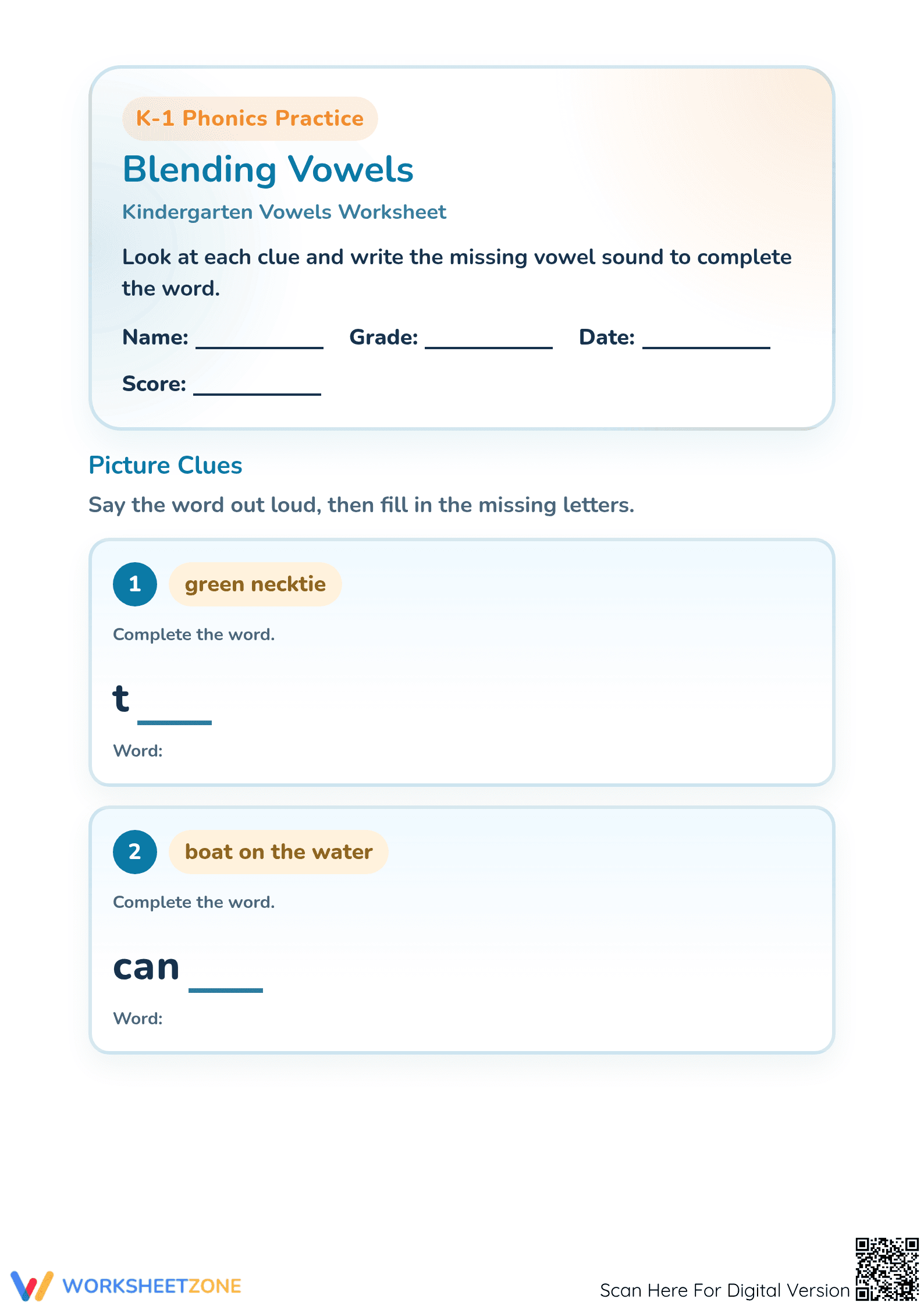
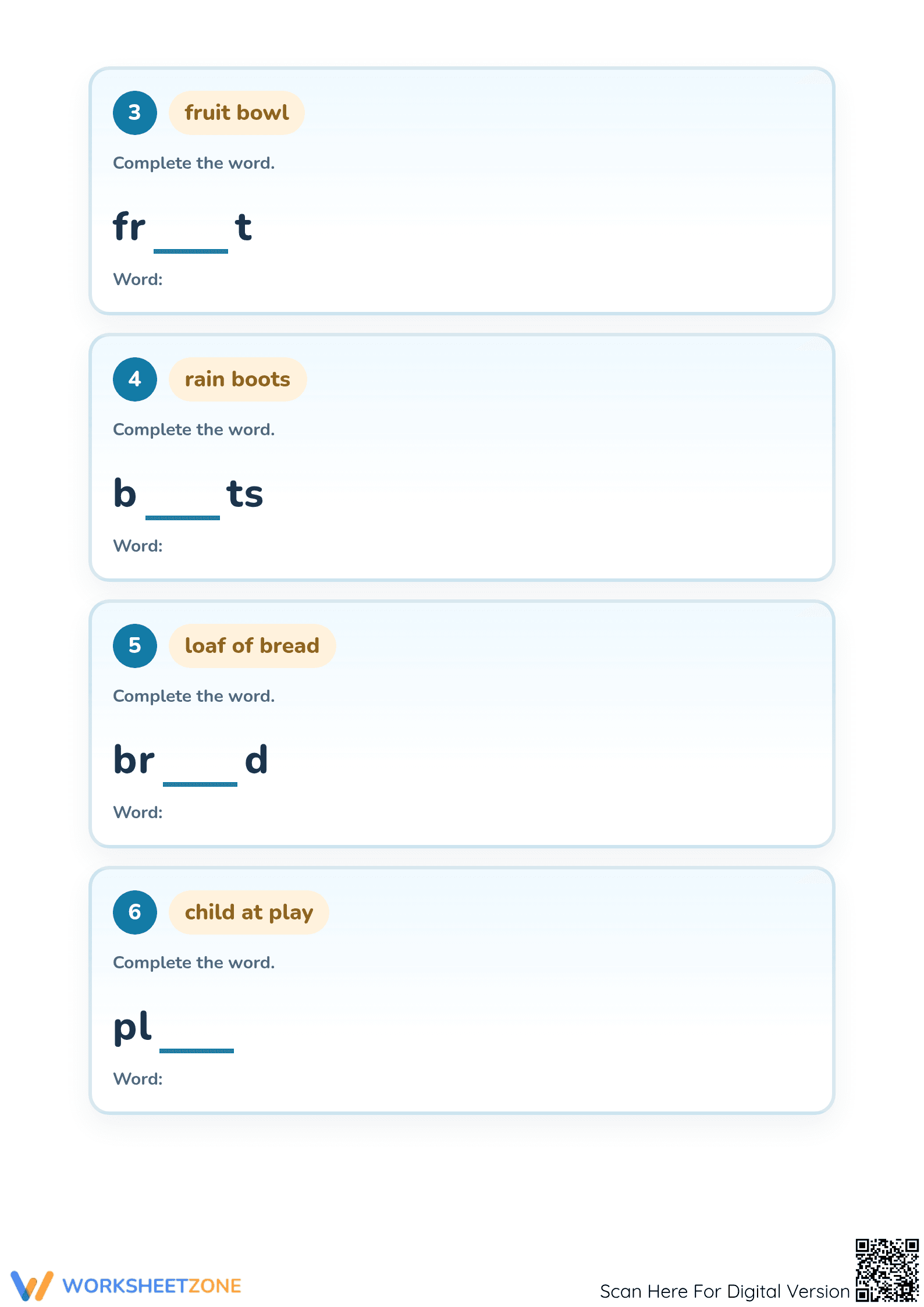

Printable Blending Vowels Worksheet | Grade 1 Phonics
Paste this activity's link or code into your existing LMS (Google Classroom, Canvas, Teams, Schoology, Moodle, etc.).
Students can open and work on the activity right away, with no student login required.
You'll still be able to track student progress and results from your teacher account.
Vowel blends represent a critical milestone in early literacy, transitioning students from simple CVC patterns to complex decoding. This worksheet provides structured practice for Grade 1 students to identify and write missing vowel sounds in familiar words. By connecting visual clues to phonetic spelling, students reinforce their understanding of vowel team conventions.
At a Glance
- Grade: K–1 · Subject: ELA
- Standard:
CCSS.ELA-LITERACY.RF.1.3.C— Identify and apply common vowel team conventions for long vowel representation- Skill Focus: Vowel Blends and Digraphs
- Format: 2 pages · 6 problems · Answer key included · PDF
- Best For: Literacy centers and independent phonics practice
- Time: 10–15 minutes
This two-page PDF includes six targeted phonics tasks. Each item presents a "Picture Clue" with a short descriptive phrase to provide context for the target word. Students must say the word out loud, identify the missing vowel blend, and write the complete word. The layout is clean and spacious, featuring high-contrast text and a full answer key for immediate feedback.
Skill Progression
- Guided Practice: The first task uses a clear "necktie" clue to introduce the 'ie' blend, allowing for teacher-led modeling of the "say, hear, write" workflow.
- Supported Practice: Problems 2 through 4 utilize familiar objects like boats and boots to scaffold the identification of 'oe', 'ui', and 'oo' patterns with three tasks.
- Independent Practice: The final two problems require students to apply learned conventions to 'ea' and 'ay' blends with minimal prompting.
This sequence follows the gradual-release model to ensure students move from recognition to independent phonetic application.
Standards Alignment
This resource is primarily aligned with CCSS.ELA-LITERACY.RF.1.3.C, which requires students to know common vowel team conventions for representing long vowel sounds. It also supports RF.K.3.B by associating long sounds with specific graphemes. Both standard codes can be copied directly into lesson plans, IEP goals, or district curriculum mapping tools.
How to Use It
Deploy this worksheet during the independent practice phase of a phonics lesson on vowel digraphs. As students work, circulate to observe if they are subvocalizing the clues, which is a key indicator of phonetic processing. For a quick formative assessment, check the completion of the "fruit" and "bread" tasks to gauge mastery of less common blends.
Who It's For
This activity is designed for Grade 1 students mastering vowel teams and Kindergarteners ready for advanced phonics. It works exceptionally well for ELL students who benefit from the descriptive picture clues. Pair this resource with a vowel team anchor chart to provide a visual scaffold during the writing process.
According to research by Fisher & Frey (2014) on the gradual release of responsibility, structured practice that bridges visual context with phonetic output is essential for long-term retention of complex spelling patterns. This worksheet aligns with those findings by requiring students to encode vowel teams within the context of meaningful word clues rather than in isolation. By targeting CCSS.ELA-LITERACY.RF.1.3.C, the resource addresses the "vowel team" pillar of the Grade 1 Reading Foundational standards, helping students transition to more fluent decoding. The inclusion of 6 distinct tasks provides sufficient repetition to build neural pathways for automaticity without causing cognitive fatigue. Educational studies suggest that explicit instruction paired with immediate application, like the "say and write" method used here, significantly improves the pronunciation and spelling accuracy of young learners.


