


























Views
Downloads
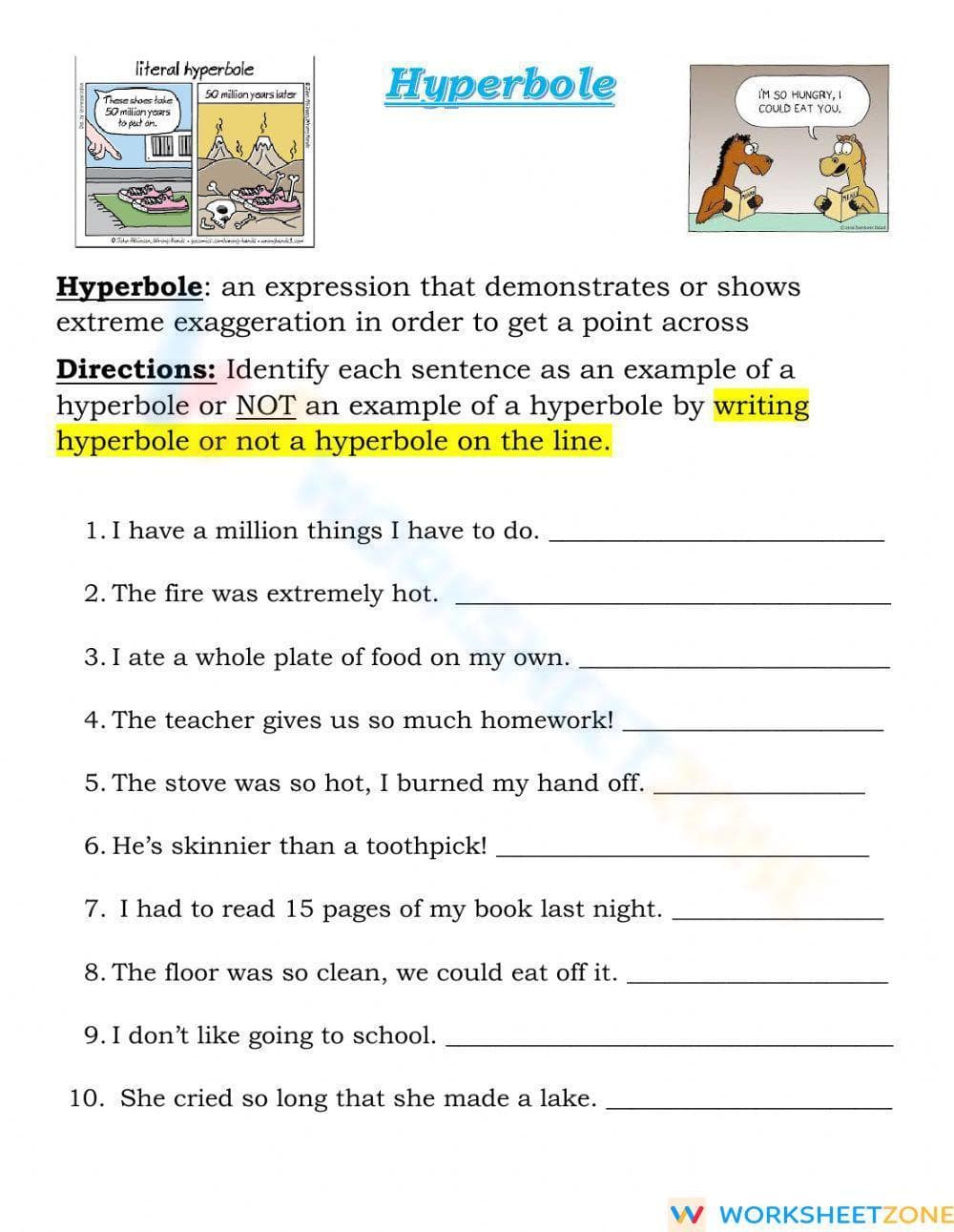

Printable Hyperbole Worksheet | Grade 5 ELA Essential
Paste this activity's link or code into your existing LMS (Google Classroom, Canvas, Teams, Schoology, Moodle, etc.).
Students can open and work on the activity right away, with no student login required.
You'll still be able to track student progress and results from your teacher account.
Strengthen your students' understanding of figurative language with this focused hyperbole worksheet. Students practice identifying extreme exaggeration in context, distinguishing between literal and figurative meanings. This essential ELA resource ensures learners can recognize and explain the purpose of hyperbolic statements in literature, leading to improved reading comprehension and descriptive writing skills.
At a Glance
- Grade: 5 · Subject: ELA
- Standard:
CCSS.ELA-LITERACY.L.5.5.A— Interpret figurative language, including similes and metaphors, in context- Skill Focus: Identifying hyperbole
- Format: 1 page · 10 problems · Answer key included · PDF
- Best For: Individual practice or quick formative assessment
- Time: 15–20 minutes
This single-page PDF features 10 carefully crafted sentences that challenge students to identify examples of hyperbole. The worksheet includes a clear definition of hyperbole as an 'extreme exaggeration,' providing a solid anchor for student work. With a clean layout and ample writing space, it includes a comprehensive answer key to streamline grading and provide immediate student feedback.
Zero-Prep Workflow
Designed for immediate classroom implementation, the zero-prep workflow is simple: Print the single-page document, distribute to students for independent work, and use the included answer key for a collective review or individual grading. This streamlined structure makes it an ideal choice for emergency sub plans or a focused 'Do Now' activity to reinforce figurative language concepts without requiring any teacher setup.
Standards Alignment
The worksheet is explicitly aligned to `CCSS.ELA-LITERACY.L.5.5.A`, which requires students to interpret figurative language within a given context. By focusing specifically on hyperbole, this resource provides targeted practice for one of the most common forms of literary exaggeration. This standard code can be copied directly into lesson plans, IEP goals, or district curriculum mapping tools to ensure instruction meets academic expectations.
How to Use It
Use this worksheet as a formative assessment after a mini-lesson on figurative language to gauge mastery. Alternatively, assign it as a collaborative 'think-pair-share' activity where students justify their classifications. For a powerful instructional moment, observe students as they work on item 10; their ability to visualize the 'lake of tears' serves as a clear indicator of their conceptual understanding of extreme exaggeration.
Who It's For
This resource is primarily intended for Grade 5 students but is effective for Grade 4 reinforcement or as a review for middle schoolers in Grades 6-8. It is particularly useful for English Language Learners (ELLs) who may struggle with non-literal language, as it provides clear examples and a repetitive practice structure. This worksheet pairs naturally with a mentor text passage rich in figurative language or a ডিভাইস anchor chart.
According to the Fisher & Frey (2014) framework for gradual release of responsibility, structured practice with figurative language is essential for moving students toward independent reading of complex texts. This Grade 5 hyperbole worksheet provides the necessary scaffold for identifying extreme exaggeration, a key component of the `CCSS.ELA-LITERACY.L.5.5.A` standard. Research from ScienceDirect TpT Analysis suggests that high-utility, single-skill worksheets significantly reduce teacher burnout by providing ready-to-go materials that align with district pacing guides. By isolating hyperbole from other literary devices, this resource allows students to build a deep, transferable understanding of how writers use exaggeration to create emphasis and evoke emotion. This evidence-based approach ensures that students not only memorize definitions but also develop the critical thinking skills required to navigate the nuance of figurative language in high-stakes testing and diverse literary genres.


