Understanding the Semantic Structure of Compound Words
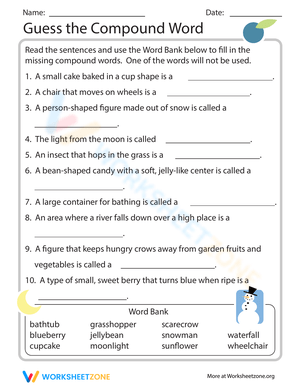
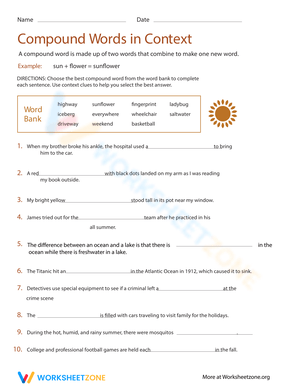
In the realm of primary literacy, compound words represent one of the most accessible entry points for students to begin exploring complex morphology. A compound word occurs when two or more independent words merge to create a new linguistic unit with a distinct, yet often related, meaning. For teachers, the instructional value of these words lies in their transparency. Unlike Latin or Greek roots which often require specialized knowledge, the constituent parts of compound words like 'sunflower' or 'backpack' are typically already familiar to young learners. This familiarity allows teachers to use compound words as a pedagogical bridge, transitioning students from simple phonemic awareness to deeper morphological analysis. When students recognize that a larger word is merely a combination of smaller units they already know, their confidence in decoding multisyllabic words increases substantially. These worksheets provide the necessary practice to identify these parts and predict meanings in various contexts.
Three Structural Categories: Closed, Open, and Hyphenated
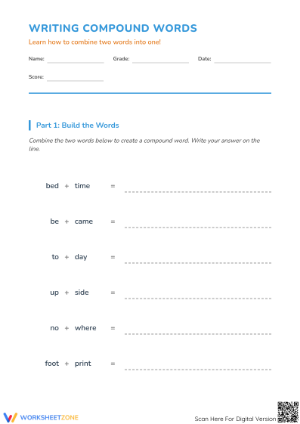
Compound words in English generally fall into three structural categories: closed, open, and hyphenated. Understanding these distinctions is a requirement for both spelling accuracy and reading fluency. Closed compound words are perhaps the most common in early elementary curriculum. These are words where the two base words are joined without any space or punctuation, such as 'cupcake,' 'firefly,' or 'notebook.' These words often pose the least difficulty for students once they learn to spot the 'seam' between the two smaller words. Teachers should encourage students to use their fingers to cover one half of the word to reveal the other, a simple tactile strategy that reinforces the concept of word composition.
Open compound words, such as 'ice cream' or 'living room,' maintain a space between the words despite functioning as a single unit. Teaching these through visual aids helps students realize that the two words together represent a single object. Hyphenated compound words like 'check-in' use a hyphen to connect the parts. These are frequently used for complex descriptors or specific roles. Providing worksheets that categorize these three types helps students internalize the various ways the English language organizes combined ideas into single lexical items.
Decoding Meaning Through Word Decomposition Strategies
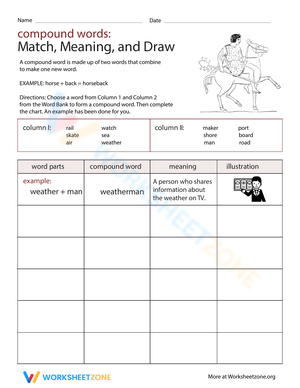
According to Reading Rockets, teaching compound words provides a foundational entry point into morphological analysis, helping students realize that longer words are often composed of smaller, meaningful units. Research indicates that explicit instruction in word parts can significantly improve reading comprehension for primary students. This decomposition strategy is a powerful tool for independent reading. When a student encounters an unfamiliar word like 'seashore' or 'lighthouse,' the ability to break it down into 'sea' and 'shore' or 'light' and 'house' allows them to synthesize the meaning without needing to consult a dictionary or ask for help. This autonomy is vital for building reading stamina in higher grades where text complexity increases.
Why Morphological Awareness Drives Literacy Success
While many teachers treat compound words as a simple spelling exercise, advanced linguistic analysis suggests that these words serve as the primary bridge between phonics and complex morphological reasoning. By identifying 'semantic heads' within compound structures, students begin to predict meanings of unfamiliar technical vocabulary before they encounter them in grade-level texts. This early exposure to word-part logic prepares the brain for the more abstract Latinate and Greek affixes they will face in middle school. Instead of memorizing thousands of individual words, students learn a system for unlocking thousands of meanings through a finite set of components.
Classroom Implementation: Practical Strategies for Literacy Blocks
Effective classroom implementation of compound word lessons requires a multi-sensory approach. Teachers should begin with a whole-group 'discovery' phase where students hunt for compound words in a familiar picture book. This contextualizes the learning and shows students that these words exist in literature, not just on a worksheet. Following this, small-group interventions can use the meaning of compound words worksheets to provide targeted support for those who may struggle with the spatial differences between open and closed compounds. These sessions allow for immediate feedback and the correction of common misconceptions, such as adding unnecessary hyphens. Integrating these worksheets into a regular rotation of literacy centers ensures consistent exposure throughout the school year. Consistent practice is the key to moving this knowledge from short-term memory to long-term academic fluency.
Scaffolding Vocabulary Acquisition with High-Frequency Compound Words
Scaffolding is a fundamental principle of effective teaching, and it is particularly useful when introducing compound words. Start with high-frequency, literal compounds where the meaning is very obvious. Words like 'bedroom,' 'playground,' and 'sunlight' are excellent starting points because the child's existing schema for each part is strong. As students gain confidence, teachers can introduce 'opaque' compounds—words where the meaning is idiomatic or historically derived. Words like 'hotdog' or 'deadline' provide a perfect opportunity to discuss how language evolves and how the 'meaning' of a word is sometimes more than just the sum of its parts. This historical context can turn a standard grammar lesson into an exploration of etymology. By systematically increasing the difficulty, teachers ensure that students are not overwhelmed and that they develop a durable, flexible vocabulary that will serve them across all subject areas.
Assessment Techniques for Evaluating Compound Word Mastery
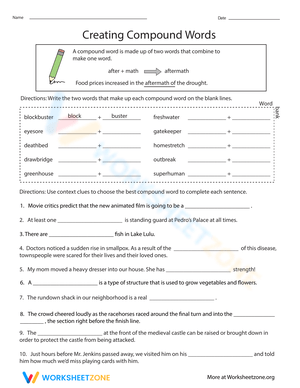
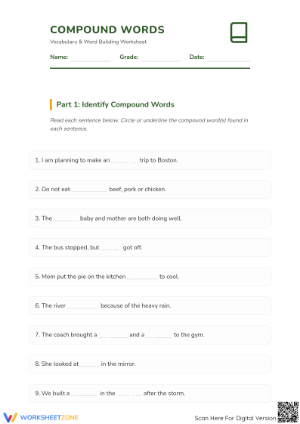
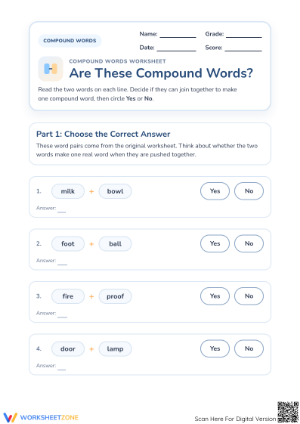
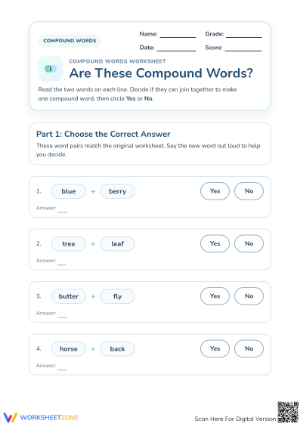
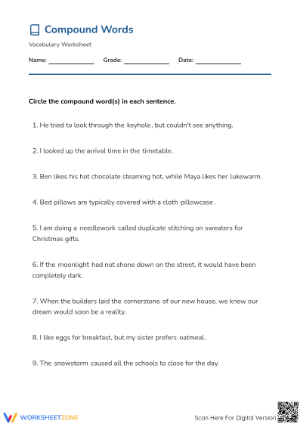
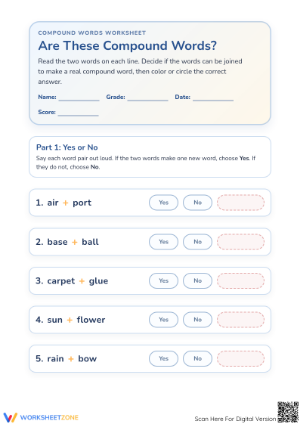
Assessment should go beyond simple identification. While it is important to know if a student can find a compound word in a sentence, it is more important to know if they understand its meaning and can use it correctly. Formative assessments can include 'Exit Tickets' where students must create a compound word using a given base word before leaving the room. This provides the teacher with a quick snapshot of the class's understanding. Summative assessments can involve more detailed tasks, such as reading a short passage and highlighting the compound words, then writing a brief explanation for two of them. This combines reading, identification, and writing in a single evaluative task. Meaning of compound words worksheets can serve as a diagnostic tool at the beginning of a unit to identify which structural types require the most focus. Continuous monitoring allows for the early identification of students who might need additional support.
1. How can teachers help students distinguish between open and closed compound words?
Teachers can use visual cues and word-sorting activities to help students recognize the differences. By providing a list of words and asking students to categorize them based on their structure, students become more observant of the spaces or lack thereof. Using 'word walls' where open and closed compounds are displayed in different colors can also serve as a constant visual reminder in the classroom.
2. Why is the meaning of compound words important for reading comprehension?
Understanding compound words allows students to decode and understand longer words without frustration. Since compound words are made of smaller, familiar parts, students can use their existing knowledge to solve new vocabulary puzzles. This skill is a key component of morphological awareness, which research links directly to higher reading scores and better overall literacy outcomes.
3. What are some effective ways to teach compound words to ELL students?
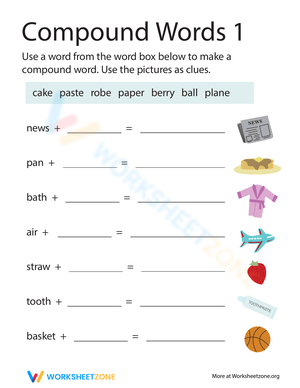
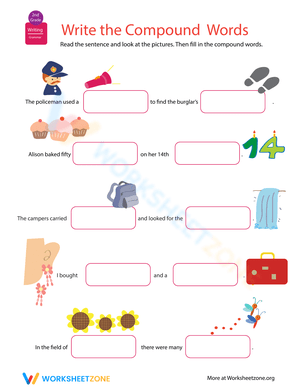
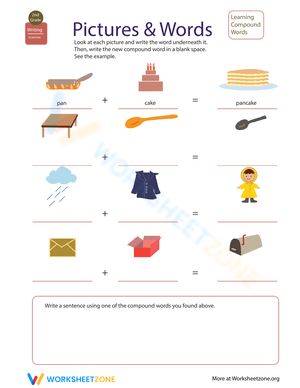
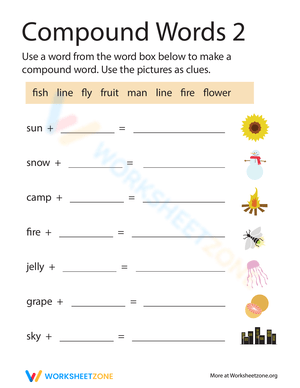
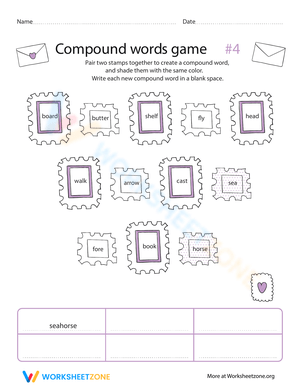
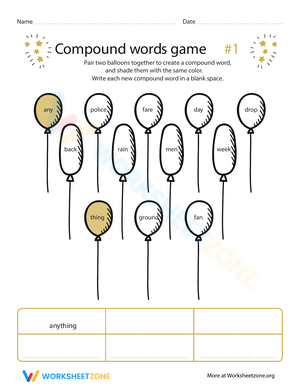
For English Language Learners, using pictures is essential. Showing an image of a 'lady' and a 'bug' separately, and then an image of a 'ladybug' together, provides a clear visual representation of the concept. ELLs often benefit from 'compound word puzzles' where they physically join two pieces of a puzzle to create a new word and image, bridging the gap between their primary language and English vocabulary.
4. At what grade level should compound words be introduced?
Compound words are typically introduced in first or second grade as part of foundational literacy instruction. At this stage, the focus is on simple, closed compounds. As students move into third and fourth grade, the curriculum expands to include open and hyphenated compounds, as well as more complex semantic relationships and the use of compound words in technical texts.
5. How do compound words improve spelling skills?
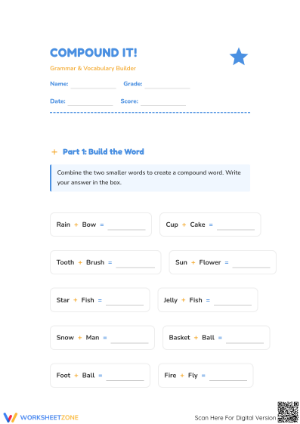
Teaching compound words helps students understand the internal logic of English spelling. When students realize that 'basketball' is just 'basket' and 'ball' put together, they are less likely to make spelling errors in the middle of the word. It encourages them to think about words as meaningful structures rather than just strings of random letters, which is a significant step in developing advanced spelling proficiency.












 Interactive Worksheet Maker
 Quiz Maker
 Word Search Maker
 Crossword Puzzle Maker
 Word Scramble Generator
 Sentence Scramble Generator
 Handwriting Worksheet Generator
 Name Tracing Generator
 Fill In The Blank Generator