


























Views
Downloads

Grade 1 Compound Words — Printable No-Prep Worksheet
Paste this activity's link or code into your existing LMS (Google Classroom, Canvas, Teams, Schoology, Moodle, etc.).
Students can open and work on the activity right away, with no student login required.
You'll still be able to track student progress and results from your teacher account.
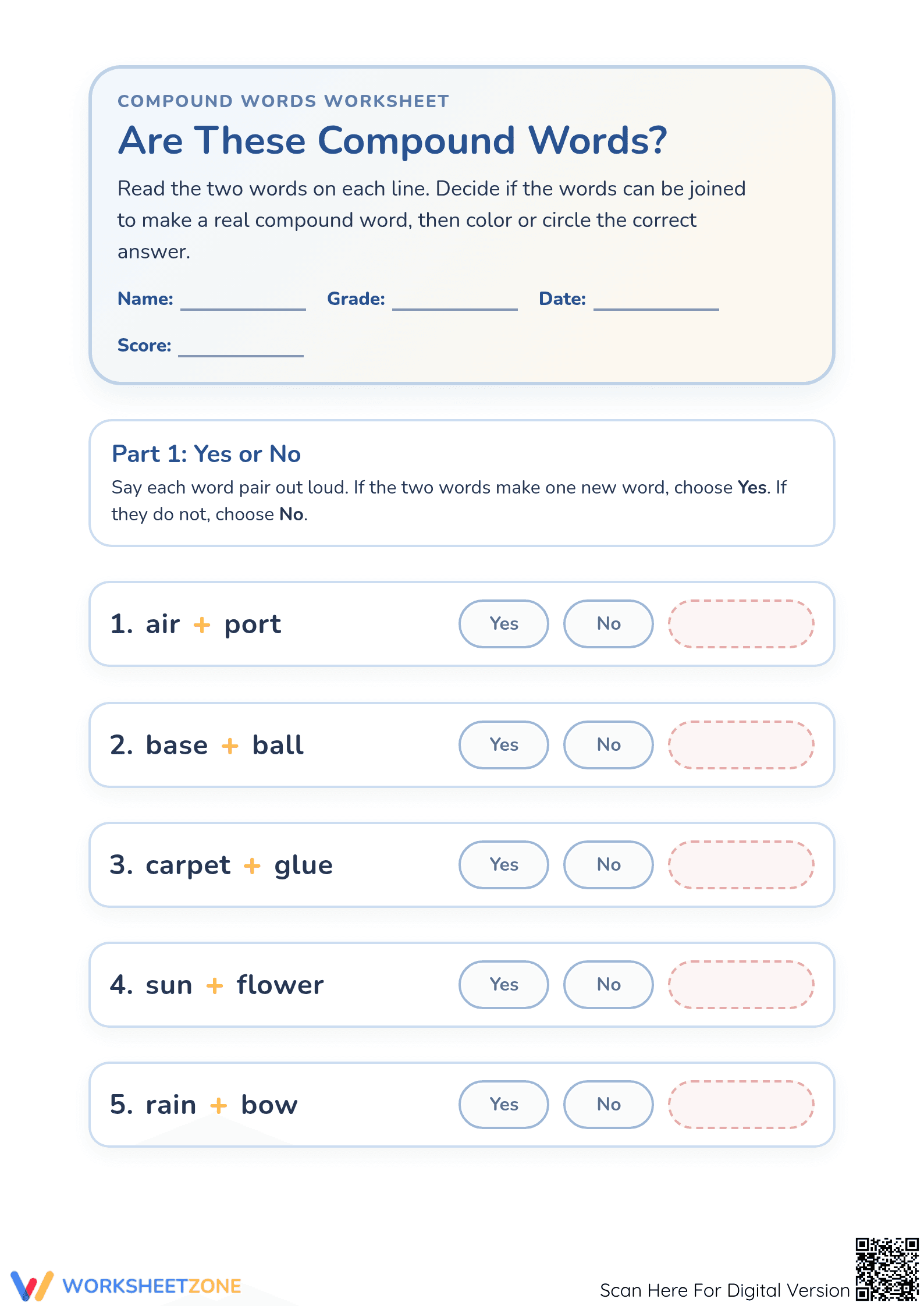
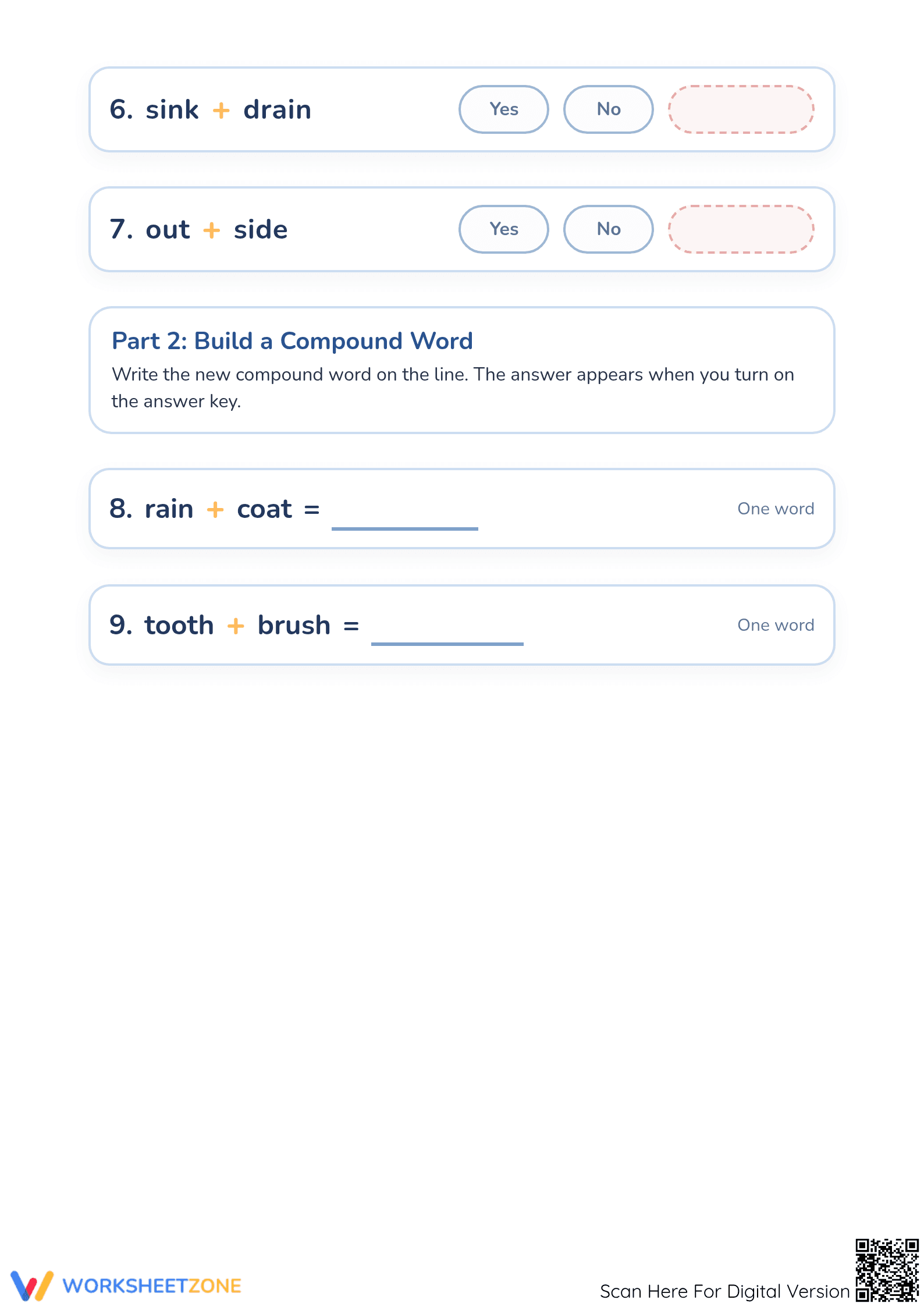
This Grade 1 ELA worksheet helps young learners identify and build compound words through interactive identification and word-construction tasks. Students develop lexical awareness by determining if word pairs form meaningful units. This activity strengthens early reading fluency and vocabulary acquisition while providing immediate feedback for independent practice in various classroom settings.
At a Glance
- Grade: 1 · Subject: ELA
- Standard:
CCSS.ELA-LITERACY.L.1.6— Use words and phrases acquired through reading and responding to texts- Skill Focus: Compound Word Identification
- Format: 2 pages · 9 problems · Answer key included · PDF
- Best For: Independent practice or literacy centers
- Time: 10–15 minutes
What's Inside
This two-page resource features nine total exercises divided into two distinct parts. Part 1 contains seven "Yes or No" identification tasks where students circle or color the correct response for word pairs like "sun + flower." Part 2 provides two construction tasks where students write the resulting compound word on a provided line. The layout includes clear labels and scoring sections.
Zero-Prep Workflow
Implementing this resource requires three simple steps. First, print the two-page PDF (30 seconds). Second, distribute to students for independent work (1 minute). Third, review the answers using the included key for immediate assessment (1 minute). With a total teacher prep time of under two minutes, it serves as a reliable sub plan or bell-ringer activity.
Standards Alignment
The primary alignment is `CCSS.ELA-LITERACY.L.1.6`, which requires students to use words and phrases acquired through conversations, reading, and being read to. By analyzing how two distinct words merge into a single lexical unit, students expand their working vocabulary. Both standard codes can be copied directly into lesson plans, IEP goals, or district curriculum mapping tools.
How to Use It
Use this worksheet during the "You Do" phase of a gradual release lesson on word structure. It functions effectively as a literacy center station where students can work independently or in pairs. For formative assessment, observe if students are sounding out the individual words before deciding on the compound result. Expected completion time is 10 to 15 minutes.
Who It's For
This resource is designed for Grade 1 students beginning to explore multi-syllabic word structures. It is ideal for English language learners and students requiring tier-2 vocabulary support. It pairs naturally with a compound word anchor chart or a short reading passage that highlights words like "outside" or "raincoat" in a narrative context.
Analyzing compound words is a fundamental component of early lexical development, aligning with the vocabulary acquisition goals of CCSS.ELA-LITERACY.L.1.6. By identifying how two independent morphemes combine to create a new meaning, students build the morphological awareness necessary for decoding more complex texts in later grades. Research from Fisher & Frey (2014) emphasizes the importance of explicit word-study tasks in fostering a rich classroom literacy environment and supporting reading comprehension. This printable worksheet provides structured practice through identification and synthesis tasks, ensuring students can recognize these common word patterns in their daily reading. The inclusion of an answer key allows for immediate verification, promoting student self-regulation and reducing teacher grading load significantly. This resource effectively bridges the gap between basic phonics and advanced word analysis, making it an essential tool for first-grade literacy instruction, bell-ringers, and formative assessment.


