


























Views
Downloads

Compound Words Worksheet | Grade 2 ELA Printable Essential
Paste this activity's link or code into your existing LMS (Google Classroom, Canvas, Teams, Schoology, Moodle, etc.).
Students can open and work on the activity right away, with no student login required.
You'll still be able to track student progress and results from your teacher account.
Master the logic of word formation with this comprehensive Grade 2 English Language Arts resource. Students practice synthesizing and decomposing compound words to improve their morphological awareness. By connecting known base words to form new meanings, learners strengthen their vocabulary and prepare for more advanced reading comprehension tasks across various subjects.
At a Glance
- Grade: 2 · Subject: English Language Arts
- Standard:
L.2.4.D— Use individual word meanings to predict the meaning of compound words- Skill Focus: Compound Word Synthesis and Decomposition
- Format: 3 pages · 20 problems · Answer key included · PDF
- Best For: Independent practice and vocabulary reinforcement
- Time: 20–30 minutes
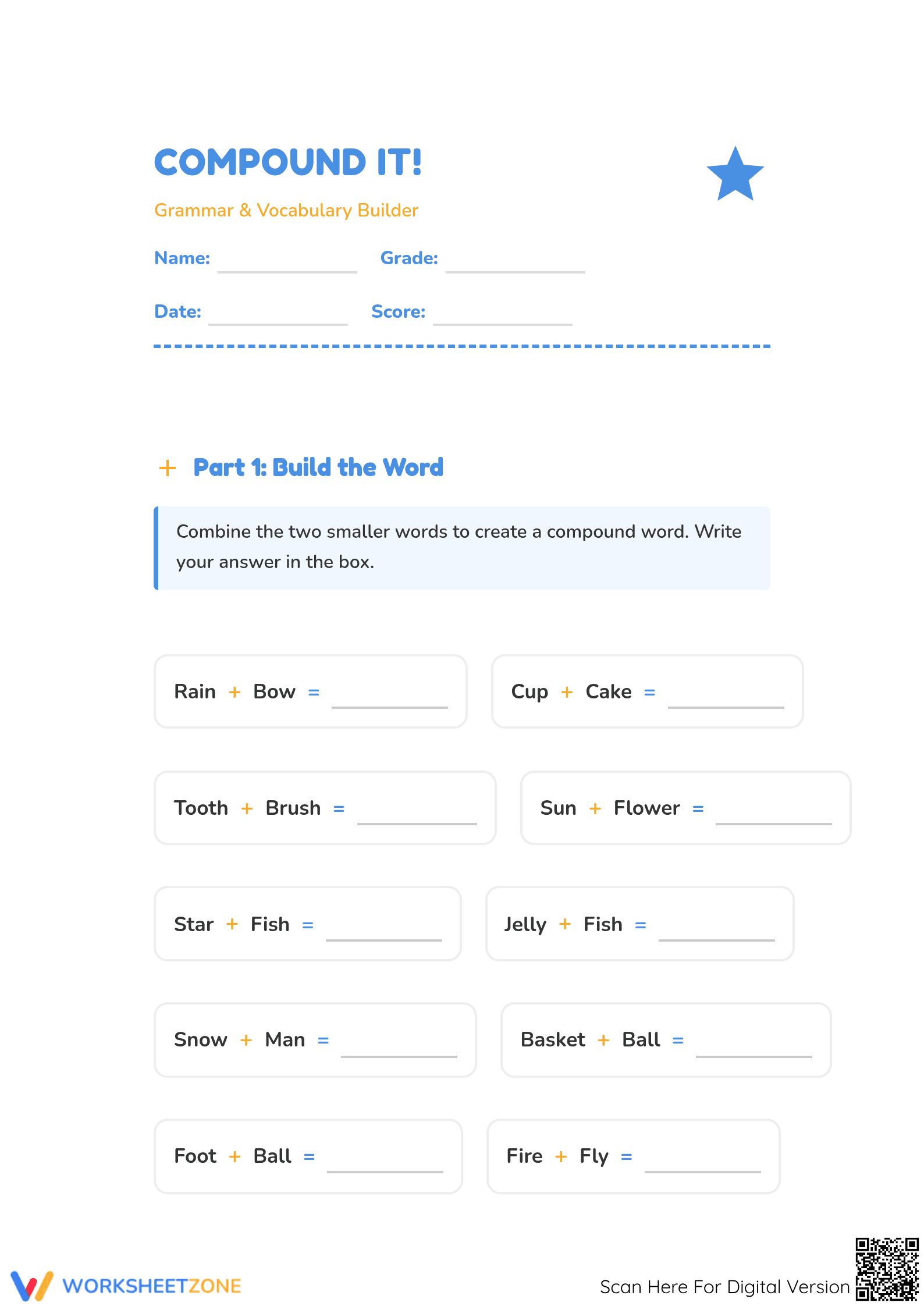
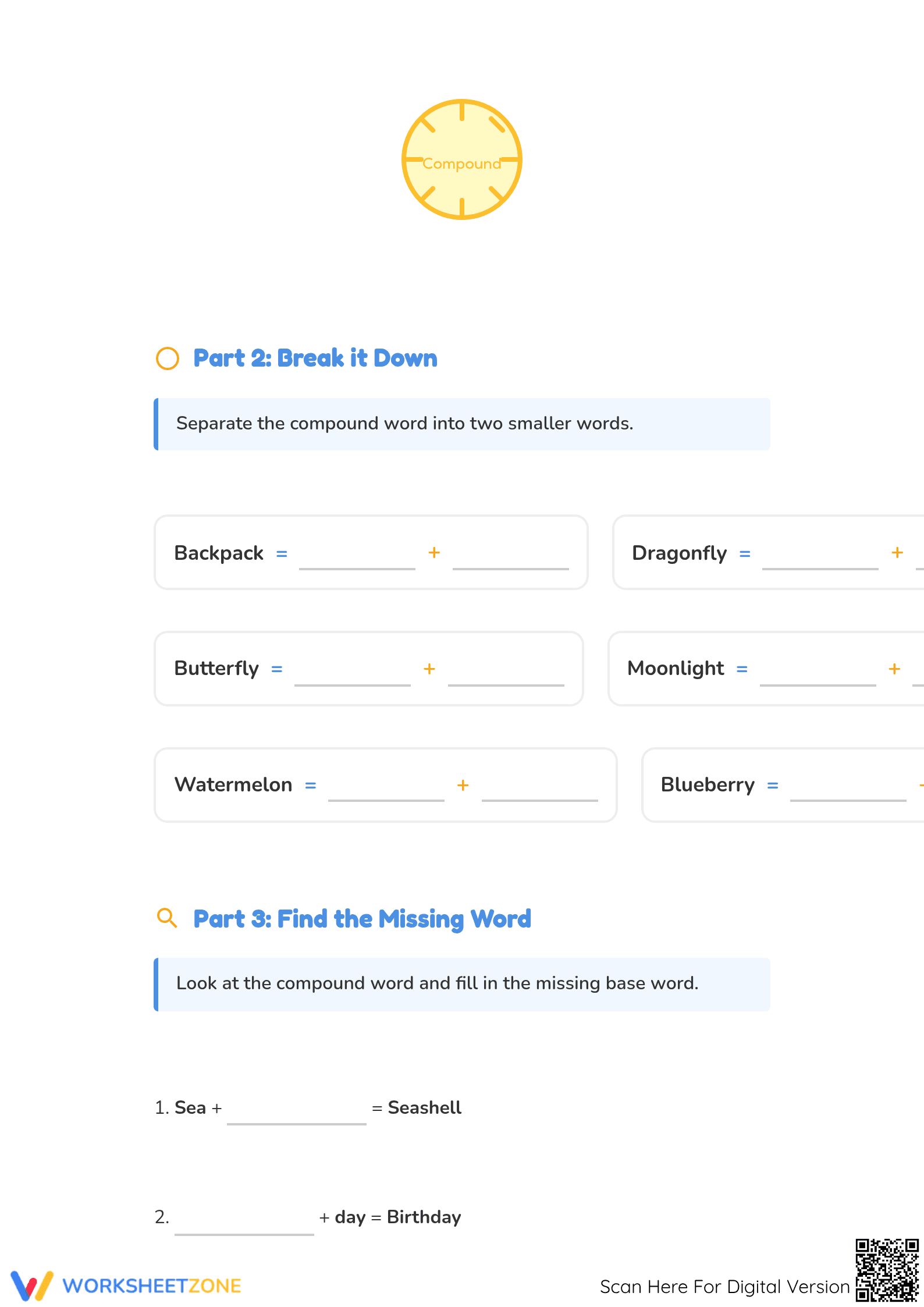
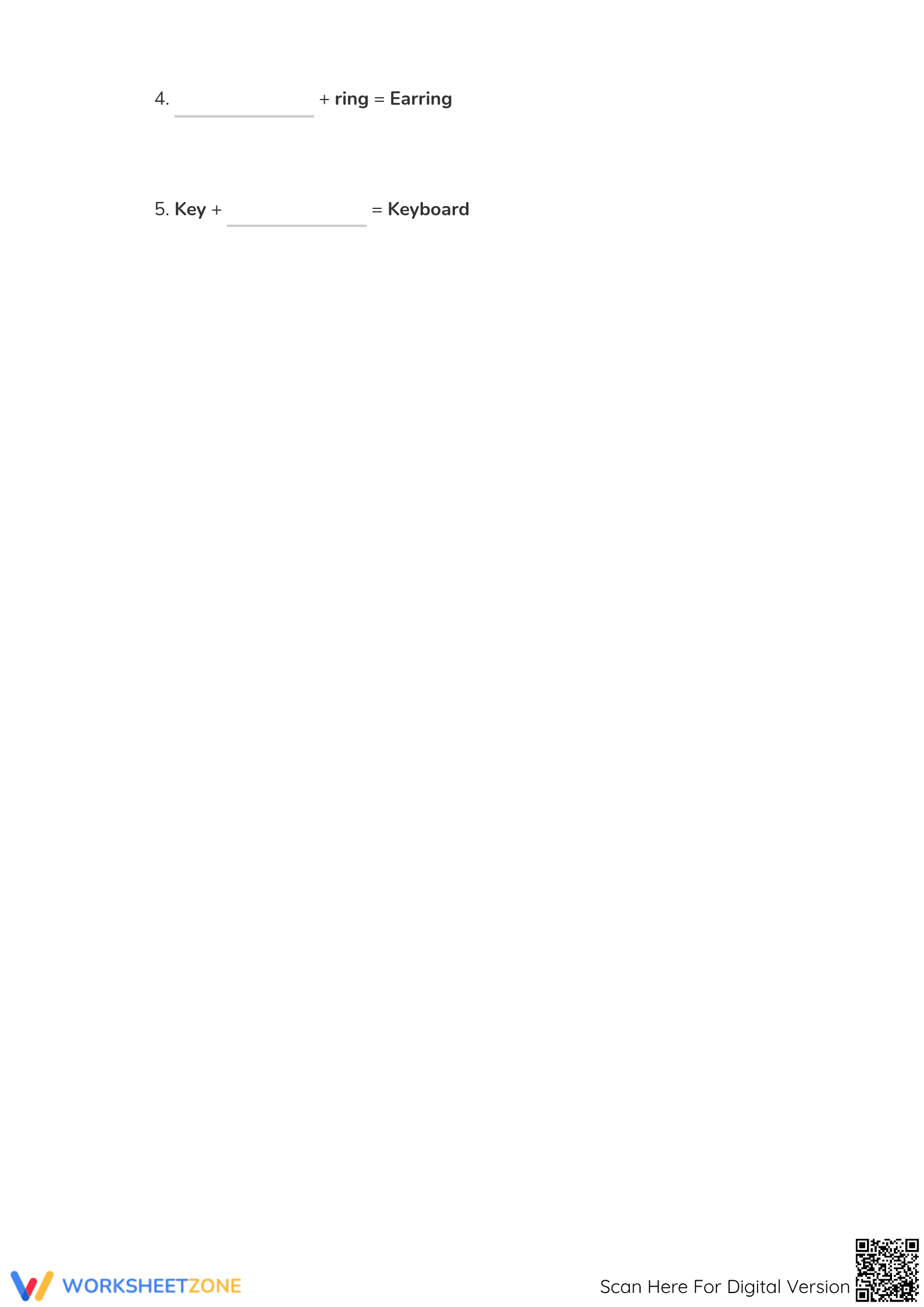
This three-page PDF offers a thorough exploration of compound word structures. The layout is divided into three distinct sections: building words from base parts, breaking complex words into original components, and identifying missing base words to complete a given noun. The clear format includes ample writing space for second-grade penmanship and a full answer key for easy grading.
Skill Progression
- Guided Practice: Part 1 features 10 "Build the Word" tasks where students combine provided base words like "Rain" and "Bow" to form a new noun.
- Supported Practice: Part 2 shifts to "Break it Down," challenging students to decompose 6 compound words into their respective components to verify meaning.
- Independent Practice: Part 3 requires students to identify a missing base word, necessitating a higher level of cognitive retrieval and word knowledge.
This progression ensures students master the internal logic of compounding before performing independent analysis.
Standards Alignment
This resource is meticulously aligned with `L.2.4.D`: "Use knowledge of the meaning of individual words to predict the meaning of compound words." It also supports `L.2.2.D`, focusing on spelling patterns in multisyllabic words. Both standard codes can be copied directly into lesson plans, IEP goals, or district curriculum mapping tools.
How to Use It
This worksheet is ideal for use after a direct instruction lesson on compound words. Use the first page as a guided "I Do, We Do" activity during a whole-class session. The remaining pages serve as an effective formative assessment tool during literacy centers. Observe if students can identify "Birthday" or "Keyboard" components without visual aids to gauge their mastery level.
Who It's For
This material is designed for Grade 2 students but is also excellent for Grade 3 review or as a remedial tool for upper-elementary students needing morphological support. It pairs naturally with a matching game or an anchor chart featuring common compound word suffixes and prefixes to provide a multimodal learning experience.
According to the RAND AIRS 2024 report, explicit instruction in morphological awareness—specifically the manipulation of compound words—is a critical predictor of second-grade reading comprehension success. This Grade 2 worksheet targets CCSS.ELA-LITERACY.L.2.4.D by requiring students to synthesize individual word meanings to form and decompose compound nouns. By practicing 'Build the Word' and 'Break it Down' exercises, learners internalize the logic of semantic compounding, moving from concrete visual cues to abstract word analysis. The 20 structured tasks provide the repetition necessary for orthographic mapping of common compound forms like 'backpack' and 'keyboard.' Fisher & Frey (2014) emphasize that such scaffolded vocabulary practice allows students to leverage existing base word knowledge to expand their expressive lexicon. This resource serves as a foundational tool for developing the linguistic agility required for decoding complex texts, ensuring students meet key literacy milestones.


