


























Views
Downloads

Printable Compound Words Worksheet | Grade 1 ELA
Paste this activity's link or code into your existing LMS (Google Classroom, Canvas, Teams, Schoology, Moodle, etc.).
Students can open and work on the activity right away, with no student login required.
You'll still be able to track student progress and results from your teacher account.
Mastering compound words is a foundational step for early readers to expand their vocabulary and decoding abilities. This worksheet provides a clear, structured way for Grade 1 students to practice combining two distinct words into a single new term. By completing these exercises, learners develop a deeper understanding of word relationships and linguistic structures.
At a Glance
- Grade: 1 · Subject: English Language Arts
- Standard:
CCSS.ELA-LITERACY.L.1.6— Use frequently occurring words to signal simple relationships between ideas and objects- Skill Focus: Compound Word Construction
- Format: 2 full pages · 10 targeted problems · Comprehensive answer key included · High-quality PDF
- Best For: Literacy centers, morning work, and independent practice
- Time: 10–15 minutes
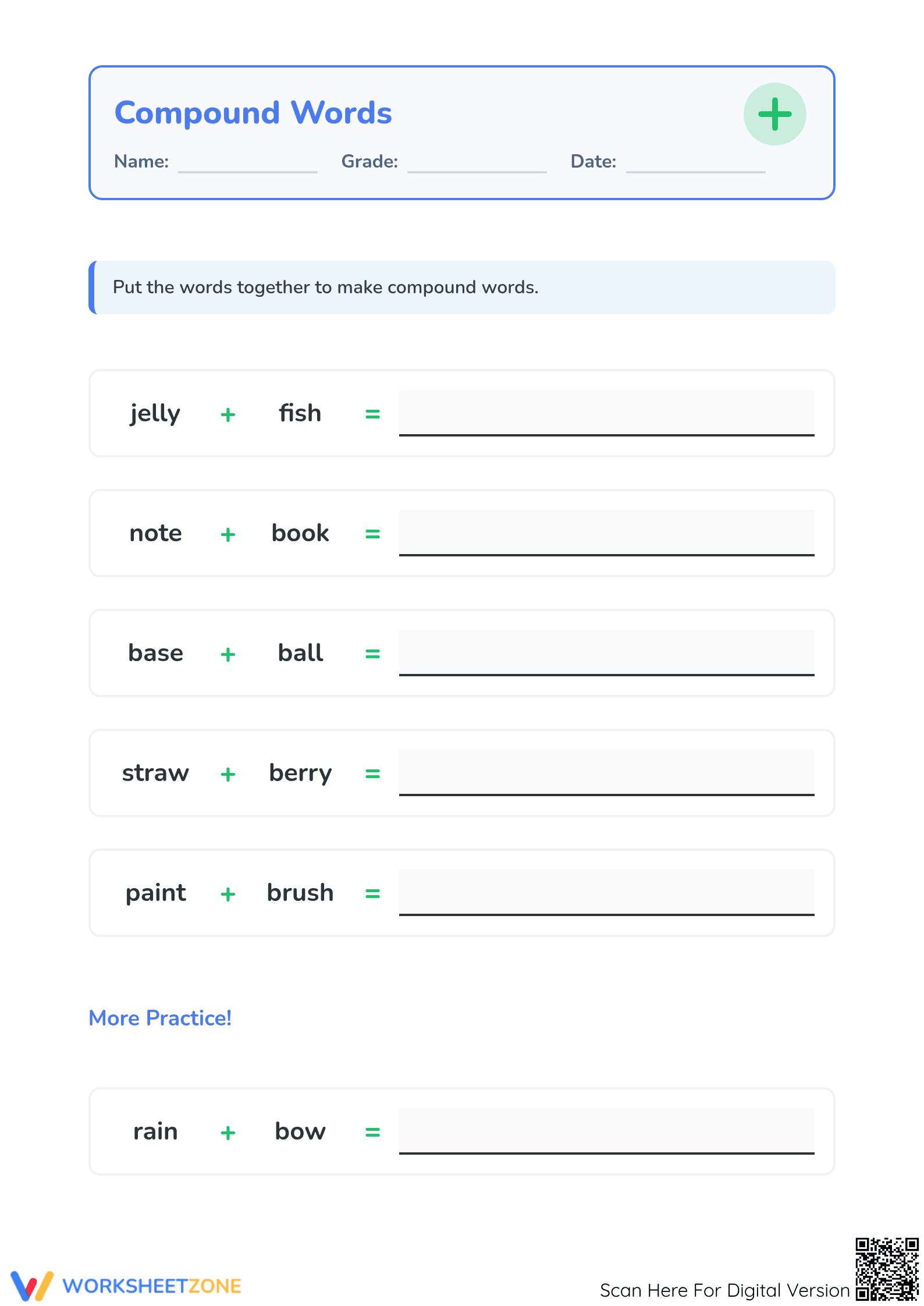
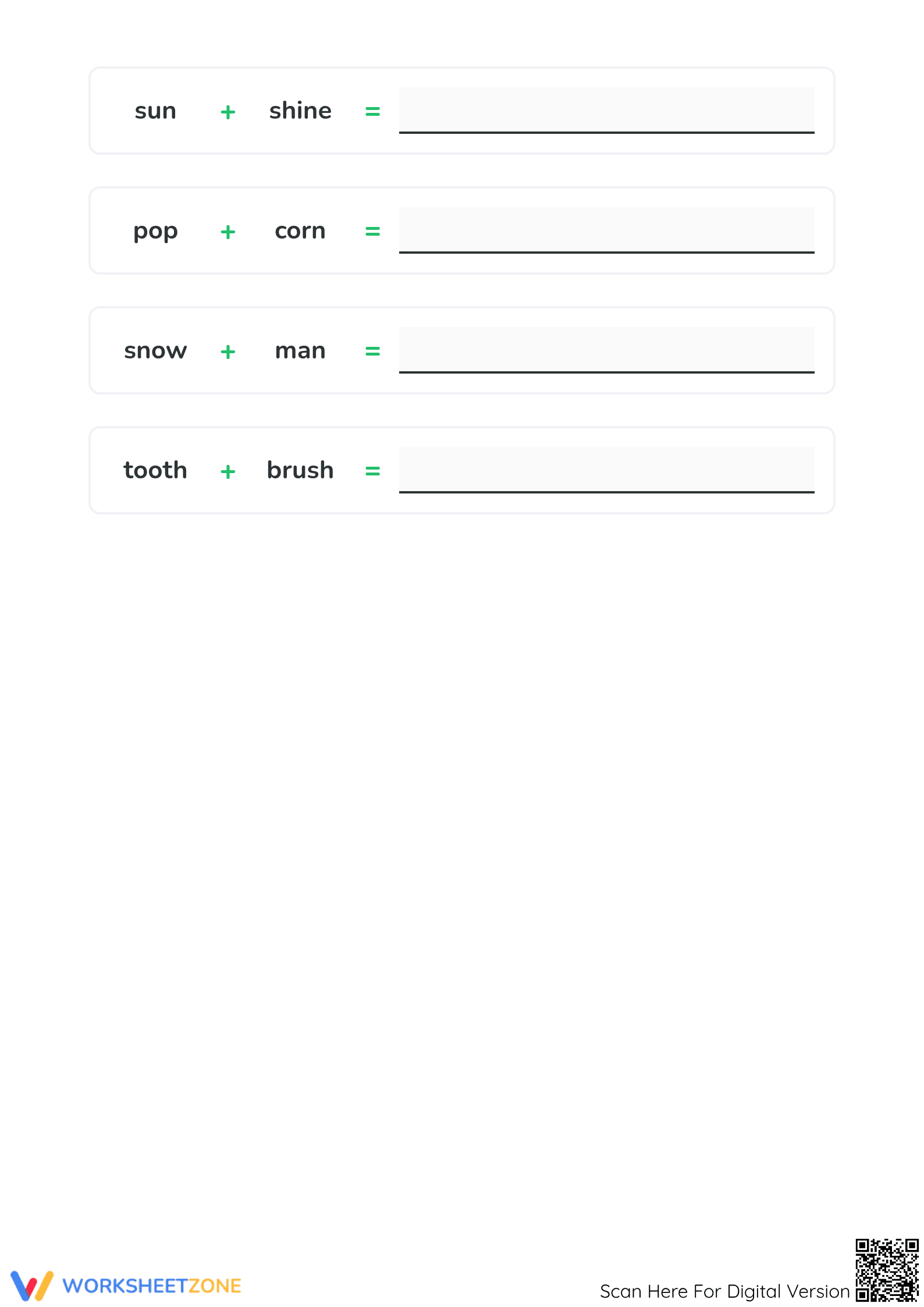
This two-page resource contains 10 illustrated word combination tasks. Students are presented with two base words separated by a plus sign and an equals sign, leading to a designated writing space. The layout is clean and spacious, accommodating the motor skills of first-grade writers. A full answer key is provided for quick verification and student self-correction.
This resource is designed for immediate classroom integration with a total teacher prep time of less than 2 minutes. First, print the two-page PDF. Second, distribute the copies to students during a literacy block or morning work session. Finally, review the completed work using the included answer key. Its simple format also makes it an ideal choice for substitute teacher plans or quick homework assignments.
The primary standard addressed is `CCSS.ELA-LITERACY.L.1.6`, which focuses on using frequently occurring words to signal relationships. By constructing compound words like "notebook" or "rainbow," students demonstrate their ability to manipulate language components and understand how meanings change when words are joined. This standard code can be copied directly into lesson plans, IEP goals, or district curriculum mapping tools.
Use this worksheet as a formative assessment after an introductory lesson on compound words. Observe if students can read the individual base words before combining them into the final term. For a second use case, place the pages in a literacy center as an independent practice activity. The visual clarity allows students to work with minimal teacher intervention, providing a reliable measure of their independent decoding accuracy and orthographic knowledge.
This worksheet is primarily for Grade 1 students, though it serves as an excellent remedial tool for Grade 2 or an enrichment activity for Kindergarten. It pairs naturally with an anchor chart displaying common compound word examples. The clear formatting supports English Language Learners by highlighting the morphological structure of English vocabulary, making complex word forms more accessible to developing speakers.
Educational research highlights the importance of morphological awareness in early literacy development. According to Fisher & Frey (2014), explicit instruction in how words are formed—such as the construction of compound words—significantly enhances a student's ability to decode unfamiliar text and expand their expressive vocabulary. This Grade 1 worksheet directly supports CCSS.ELA-LITERACY.L.1.6 by providing 10 targeted tasks that require students to recognize and combine frequently occurring base words. The structured practice of merging terms like "jelly" and "fish" into "jellyfish" helps solidify the relationship between individual components and their new collective meaning. By integrating this resource into a broader literacy curriculum, educators provide the supported practice necessary for students to transition toward independent word mastery. This standards-aligned tool is an essential asset for any first-grade classroom focused on building robust reading foundations through evidence-based instructional materials and zero-prep pedagogical workflows.


