Why color gives young students a way in
When a first grader can't yet find the words for frustrated or nervous, asking them to point to a color usually works. That's the practical appeal of emotional color worksheets: they give students a concrete, low-stakes way to name what's going on inside before they have the vocabulary to explain it. For US K-5 teachers, that shortcut matters during a packed morning meeting or a quick transition, when you need every student on the same page in under a minute. Color lowers the verbal load. A student who freezes at how are you feeling? can still slide a crayon to red or blue, and that single choice opens a conversation you couldn't have started otherwise.
What these worksheets actually teach
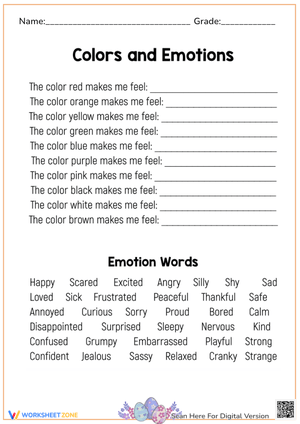
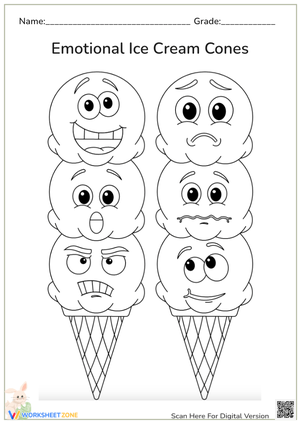
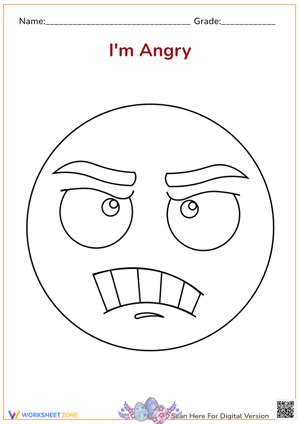
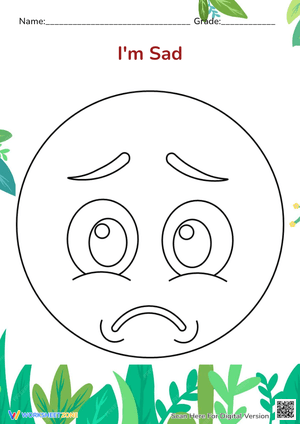
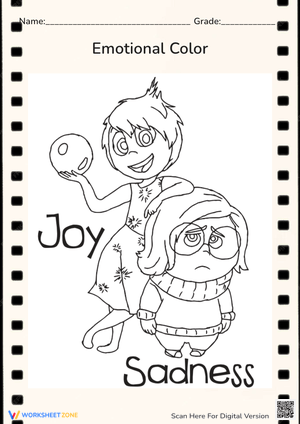
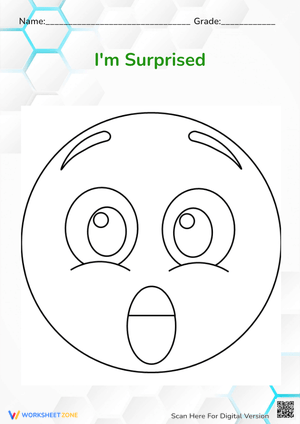
Most emotional color worksheets ask students to match, sort, or shade colors to represent feelings. A typical page has children color a heart, a monster, or a row of circles to show how their day is going, then pair each color with an emotion word. Common classroom associations link warm colors like red and orange with high-arousal states such as anger or excitement, and cool colors like blue and green with calmer, sadder, or lower-energy states. The goal isn't a right answer. It's building a shared emotional vocabulary the whole class can reference, so that green can reliably mean ready to learn for everyone by October.
Connecting color worksheets to the Zones of Regulation
Many teachers reach for color-emotion pages because they map neatly onto the Zones of Regulation, the framework occupational therapist Leah Kuypers created in 2011. Zones groups feelings into four color-coded zones: blue for low states like tired or sad, green for calm and ready, yellow for heightened states like worried or silly, and red for intense feelings like anger. It's one of the most widely adopted color-based SEL frameworks in US schools. If your building already uses Zones, color worksheets become a natural practice tool, letting students rehearse sorting feelings into the same four buckets they'll be asked about all year.
The subtle win here is consistency, not the colors themselves. When a calm-down corner poster, a morning check-in slide, and a worksheet all use the identical four colors, students stop relearning the system and start using it. The teachers who report the smoothest rollouts tend to lock one color scheme across every touchpoint in the room by the second week of school, so a student who hits the yellow zone during math already knows which strategy card to grab without a reminder or a reteach.
What the research does and doesn't show
Being honest about the evidence keeps this tool credible with instructional coaches and families. Color-emotion frameworks are popular, but popularity isn't proof, and it helps to say so plainly when a skeptical colleague asks.
A 2024 research review published in SAGE Journals found that while some studies of the Zones of Regulation report gains in students' emotional vocabulary and self-regulation, the program does not yet meet formal evidence-based-practice standards. The takeaway for teachers is direct: treat color-emotion worksheets as a promising instructional scaffold, not a proven clinical intervention with guaranteed outcomes.
That framing isn't a reason to skip them. It's a reason to use them thoughtfully, pairing the worksheet with modeling, discussion, and follow-up rather than expecting a coloring page to do the teaching on its own.
Using These Worksheets In SEL lessons
The most reliable home for these worksheets is a daily routine, not a one-off lesson. A few ways teachers fit them in:
- Morning meeting check-in: Hand each student a small color half-sheet as they arrive and give them 60 seconds to color and, if they want, jot one word.
- Paired with a read-aloud: After a picture book, ask students to color the zone a character was in during a key moment, then defend their choice with one line from the text.
- Calm-down corner: Keep blank color pages in the corner as a co-regulation and de-escalation tool, not a graded assignment.
- Small-group and Tier 2: Use the worksheet as a non-verbal entry point for a student who shuts down when asked to talk about feelings head-on.
Whatever the entry point, the payoff comes from the follow-up. Two or three reflection questions such as What made you choose that color? or What could move you toward green? turn a coloring task into a self-regulation rehearsal students can actually transfer to the hallway or the cafeteria.
Frequently asked questions
1. What grade levels are emotional color worksheets best suited for?
They fit K-5 most naturally, with the strongest payoff in K-2, where students are still building emotion vocabulary. Upper-elementary students can use more nuanced versions tied to the four Zones and longer reflection prompts.
2. Is there research support behind color-coded emotion frameworks?
Some. A 2024 SAGE Journals review of the Zones of Regulation found reported gains in vocabulary and self-regulation, but concluded the program does not yet meet formal evidence-based-practice standards. Use it as a scaffold, not a proven intervention.
3. How can teachers fit these worksheets into daily routines?
Anchor them to something that already happens every day, like morning meeting check-ins, a post read-aloud reflection, or the calm-down corner. Sixty seconds of coloring plus one reflection question is usually enough.
4. Do color-emotion associations mean the same thing for every student?
No. Associations vary by individual and culture, so treat the color scheme as a shared classroom shorthand rather than a universal rule, and invite students to explain choices that differ from the chart.
5. Can these worksheets be used for SEL assessment or intervention tracking?
Loosely. They work well as formative, low-stakes check-ins and as a Tier 2 discussion starter, but they aren't a validated screener. Pair them with your existing SEL data rather than treating a color choice as a score.












 Interactive Worksheet Maker
 Quiz Maker
 Word Search Maker
 Crossword Puzzle Maker
 Word Scramble Generator
 Sentence Scramble Generator
 Handwriting Worksheet Generator
 Name Tracing Generator
 Fill In The Blank Generator