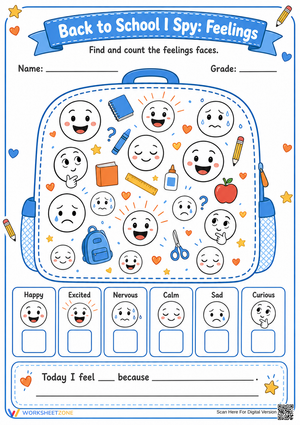
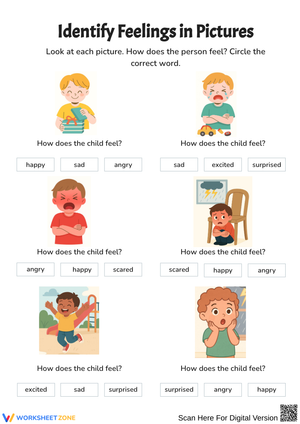
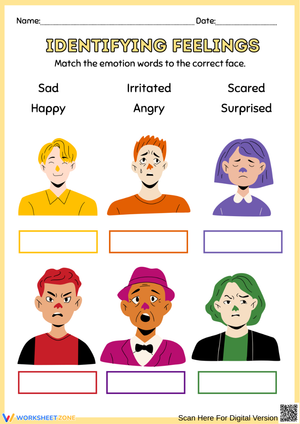
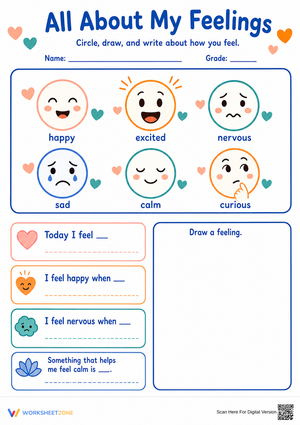
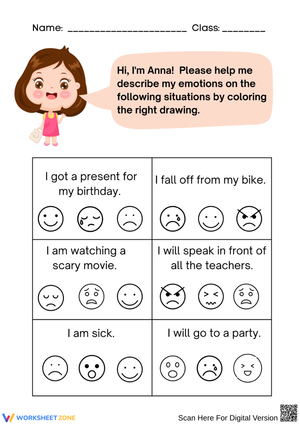
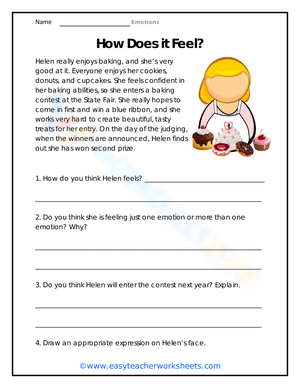
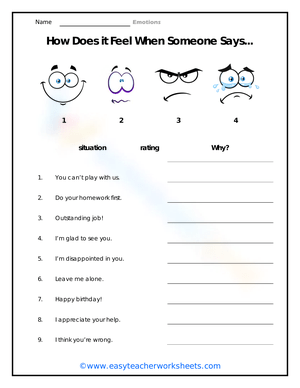
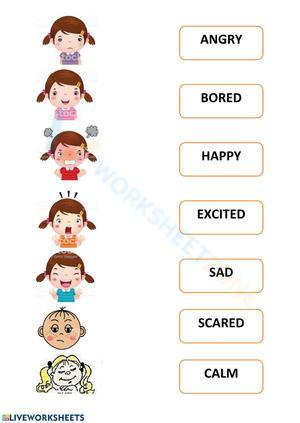
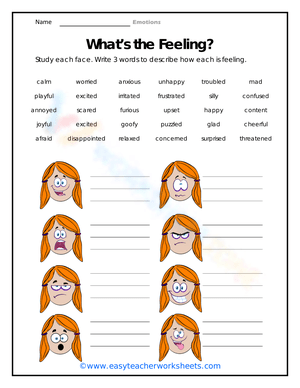
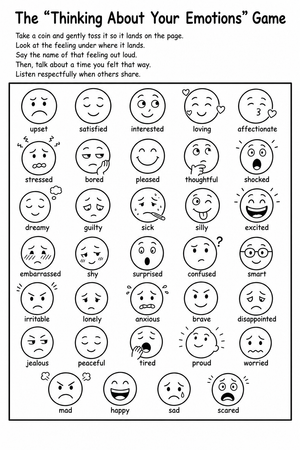
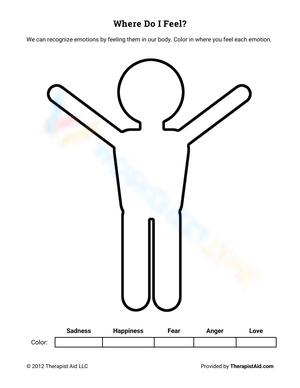
Naming a feeling is the first move in almost every social-emotional learning lesson, behavior plan, or counseling session. Identifying emotions worksheets give students a low-pressure way to practice that skill: matching a face to a word, sorting scenarios into feeling categories, or writing a short response about how a character or situation made them feel. For US K-12 teachers, these worksheets are less about filling instructional time and more about building a shared emotional vocabulary that the whole class can use during conflict, transitions, and independent work.
Differentiating by Grade Band: From Feeling Faces to Nuanced Vocabulary
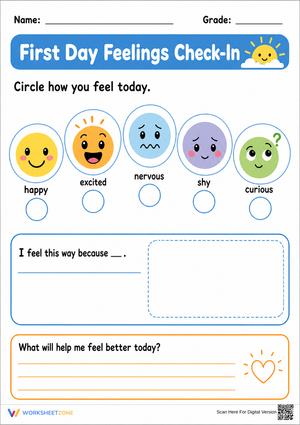
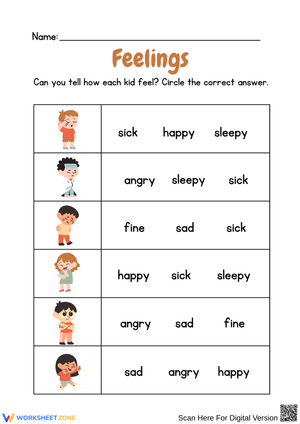
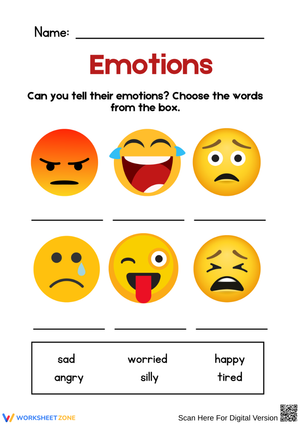
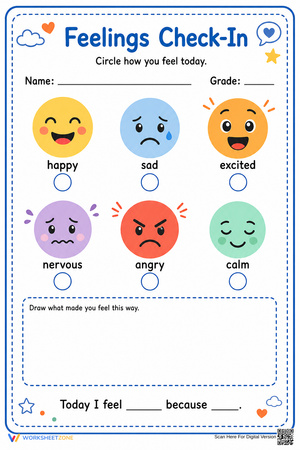
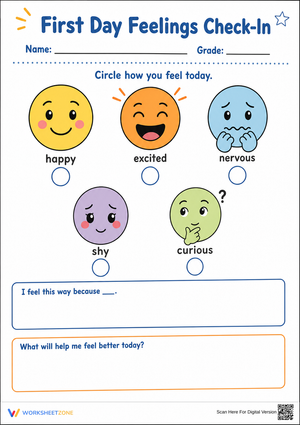
Emotion identification is not a one-size lesson. Kindergarten through second grade students generally start with basic emotion sets like happy, sad, angry, and scared, often paired with simple facial expression cards or feeling face worksheets. At this stage, the goal is recognition and labeling, not deep analysis.
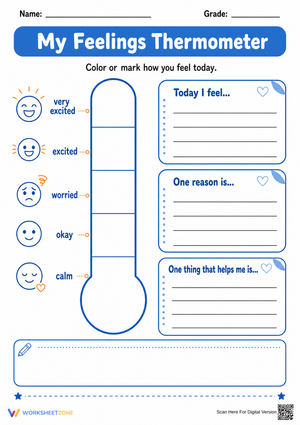
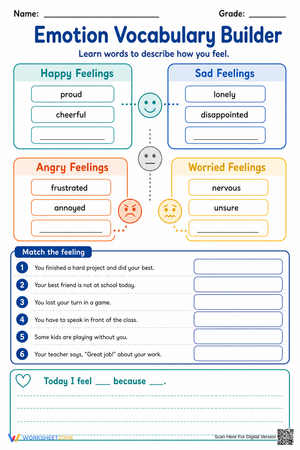
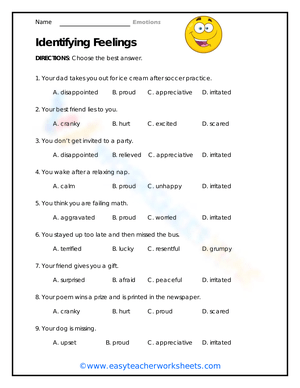
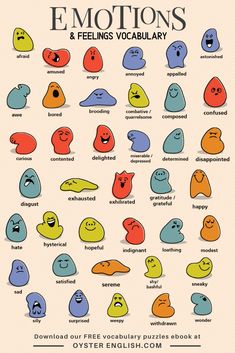
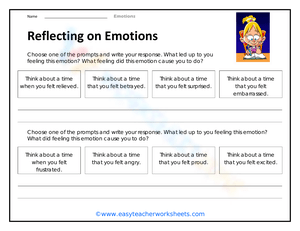
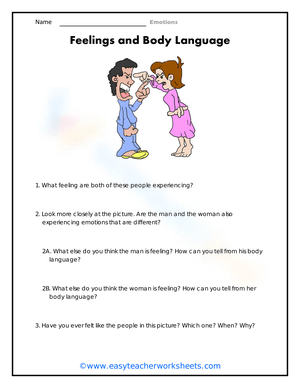
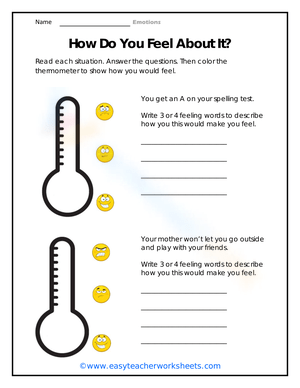
Upper elementary and middle school students are ready for more nuanced emotional vocabulary, including frustrated, anxious, embarrassed, disappointed, and proud. Worksheets at this level might ask students to distinguish between similar feelings, rank the intensity of an emotion, or connect a feeling to a physical sensation. Matching worksheet complexity to grade band keeps the activity appropriately challenging instead of repetitive.
- K-2: feeling faces, basic emotion word banks, simple matching activities
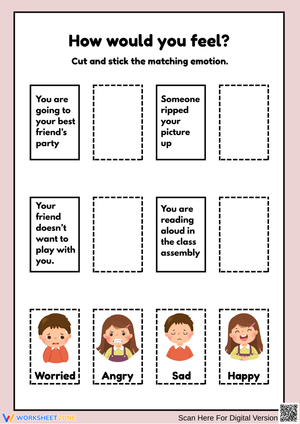
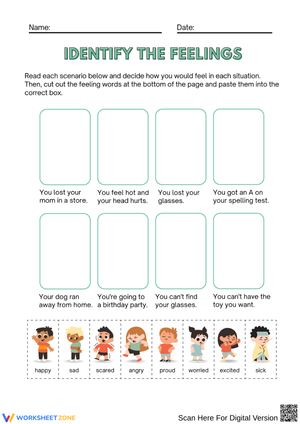
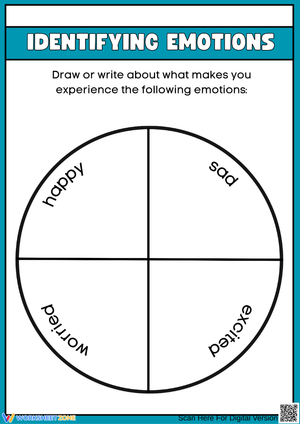
- 3-5: scenario-based prompts, emotion word sorts, journaling starters
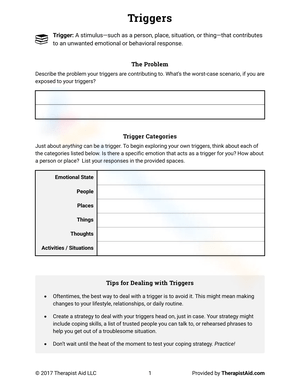
- 6-8: nuanced vocabulary, self-reflection prompts, emotion-trigger mapping
Supporting Small-Group Counseling and Behavior Intervention Plans
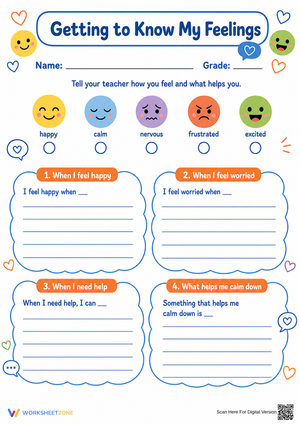
School counselors and behavior interventionists frequently use identifying emotions worksheets in small-group settings tied to IEP or 504 goals. A student working on self-regulation goals often needs to master emotion identification first, since a child cannot regulate a feeling they cannot yet name.
In a small-group setting, worksheets can serve as a discussion starter rather than an independent task. A counselor might have students complete a worksheet individually, then talk through their answers as a group, comparing how different students interpreted the same scenario. This format supports both the academic goal of vocabulary building and the social goal of hearing how peers experience similar situations differently.
Research on SEL programming in elementary and middle school links emotion regulation and identification skills to reduced problem behaviors and improved academic performance, which is one reason these worksheets appear so often in behavior support plans rather than only in general SEL curricula.
Pairing Worksheets with Read-Alouds and Classroom Scenarios
Emotion identification sticks better when it is tied to context rather than taught in isolation. Many teachers pair identifying emotions worksheets with a read-aloud, asking students to track how a character feels at different points in the story and complete a worksheet based on those shifts.
Classroom scenarios work the same way. A worksheet built around a relatable situation, like being left out of a game at recess or getting a low grade on a quiz, gives students a concrete anchor for practicing emotional vocabulary instead of asking them to identify feelings in the abstract. This approach also supports reading comprehension, since students have to infer emotion from context clues rather than an explicit label.
Classroom Implementation
To get consistent use out of identifying emotions worksheets, build them into an existing routine rather than treating them as an extra task. A few practical steps:
- Post a shared feelings word wall so students can reference vocabulary while completing worksheets independently.
- Rotate worksheet formats: matching, sorting, short-response, and scenario-based prompts so the practice does not feel repetitive.
- Use worksheets before a difficult transition, such as returning from recess or before a test, to surface how students are arriving to the task.
- Keep completed worksheets in a private folder rather than displaying them publicly, since emotional disclosures can feel exposing for some students.
Consistency matters more than complexity here. A simple worksheet used every week builds more fluency than an elaborate lesson used once.
Frequently Asked Questions
1. What grade levels are identifying emotions worksheets appropriate for?
These worksheets work across K-12, though the complexity should shift by grade band. Younger students benefit from basic feeling faces and simple word banks, while upper elementary and middle school students are ready for nuanced vocabulary and scenario-based prompts.
2. How can teachers use these worksheets in a behavior intervention plan or small group?
Worksheets can serve as a discussion starter in small-group counseling, giving students a concrete way to name feelings before working on regulation strategies tied to IEP or 504 behavior goals.
3. How do identifying emotions worksheets support broader SEL competencies?
Emotion identification is part of self-awareness, one of the core competencies in the CASEL framework. Building this skill first supports later instruction in emotion regulation and coping strategies.
4. How often should teachers use emotion identification activities in the classroom?
Short, frequent practice works better than a single long lesson. Many teachers use a brief worksheet two or three times a week as part of a morning meeting or check-in routine.
5. What is the difference between identifying emotions and emotion regulation skills?
Identifying emotions means recognizing and naming a feeling. Emotion regulation is the next step: managing or responding to that feeling in a healthy way. Students generally need to master identification before regulation instruction becomes effective.












 Interactive Worksheet Maker
 Quiz Maker
 Word Search Maker
 Crossword Puzzle Maker
 Word Scramble Generator
 Sentence Scramble Generator
 Handwriting Worksheet Generator
 Name Tracing Generator
 Fill In The Blank Generator