


























Views
Downloads

Grade 2 Mother's Day — Printable No-Prep Worksheet
Paste this activity's link or code into your existing LMS (Google Classroom, Canvas, Teams, Schoology, Moodle, etc.).
Students can open and work on the activity right away, with no student login required.
You'll still be able to track student progress and results from your teacher account.
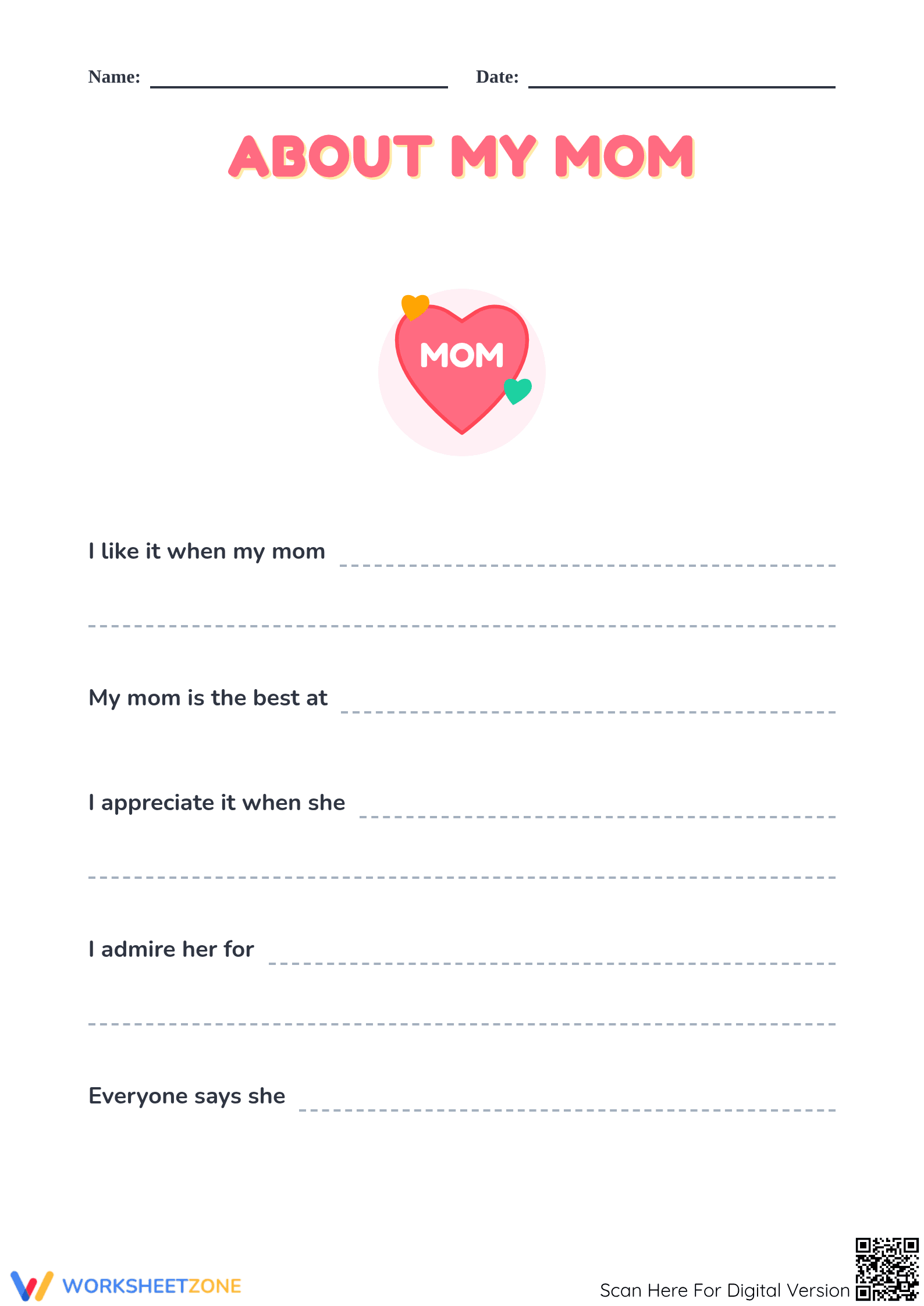
This Grade 2 expressive writing worksheet helps students articulate their gratitude and affection for their mothers through guided sentence completion. By responding to thoughtful prompts, learners practice translating personal feelings into written words, building foundational writing fluency while creating a meaningful keepsake for Mother's Day.
At a Glance
- Grade: 2 · Subject: ELA
- Standard:
CCSS.ELA-LITERACY.W.2.8— Recall information from experiences to answer questions- Skill Focus: Expressive writing and sentence completion
- Format: 2 pages · 6 problems · No answer key · PDF
- Best For: Holiday writing activities
- Time: 15–20 minutes
Inside this two-page resource, educators will find six structured sentence starters designed to prompt reflective thinking. The open-ended format provides ample writing space on dotted lines, encouraging proper letter formation. Because the responses are entirely personal, no answer key is required, allowing students the freedom to express their unique thoughts without the pressure of a right or wrong answer.
This resource offers a streamlined workflow:
- Print (1 minute): The black-and-white design with minimal graphics ensures quick, ink-friendly printing for the entire class.
- Distribute (1 minute): Hand out the two-page packet during a designated writing block or morning work session.
- Review (0 minutes): The intuitive sentence starters require no complex instructions or prior teacher setup.
With a total teacher prep time of under two minutes, this activity is an excellent addition to emergency sub plans or a quick transition activity during the busy weeks leading up to Mother's Day.
This activity aligns with CCSS.ELA-LITERACY.W.2.8, requiring students to recall information from experiences or gather information from provided sources to answer a question. By reflecting on their personal interactions with their mothers, students actively practice drawing from memory to construct meaningful written responses. Both standard codes can be copied directly into lesson plans, IEP goals, or district curriculum mapping tools.
Use this worksheet as a standalone holiday activity during a dedicated writing block. Before independent work, model completing one prompt on the board to demonstrate expanding a simple thought into a detailed sentence. Alternatively, assign it as morning work during the week of Mother's Day. As a formative assessment tip, observe students as they write to check for proper capitalization and end punctuation. Expected completion time is 15 to 20 minutes.
This resource is primarily designed for second and third-grade students developing their expressive writing skills. The structured sentence starters provide built-in scaffolding, making it highly accessible for English Language Learners or students who struggle with blank-page paralysis. For a complete holiday lesson, pair this worksheet with a read-aloud of a Mother's Day themed picture book to help activate prior knowledge and inspire creative vocabulary before students begin writing.
Integrating personal reflection into elementary writing tasks boosts student engagement and writing stamina. According to a ScienceDirect TpT Analysis, activities connecting classroom skills to real-world relationships yield higher completion rates and improved sentence complexity. This worksheet targets CCSS.ELA-LITERACY.W.2.8 by asking learners to recall information from experiences to answer questions. When second graders practice expressive writing through guided sentence completion, they develop cognitive pathways necessary for advanced narrative writing. By providing structured prompts rather than a blank page, educators reduce cognitive load, allowing students to focus on articulating their gratitude. This targeted practice builds essential literacy skills and fosters social-emotional development.


