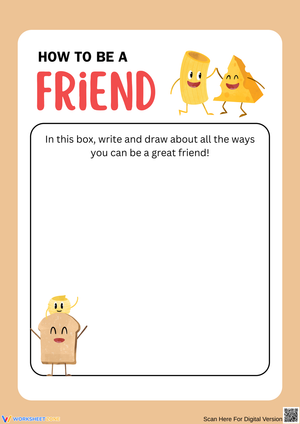
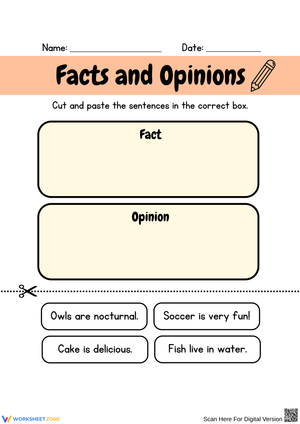
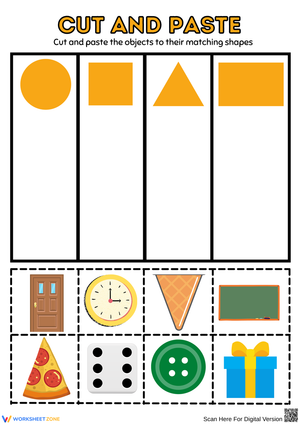
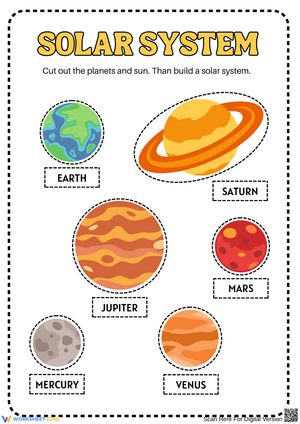
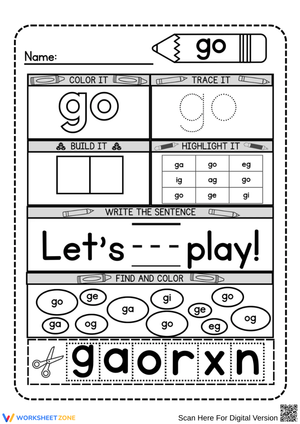
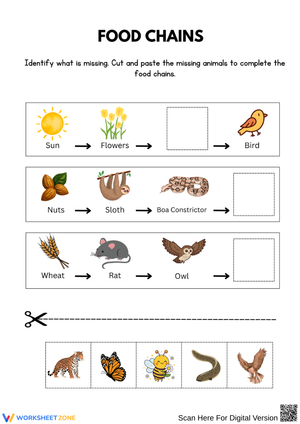
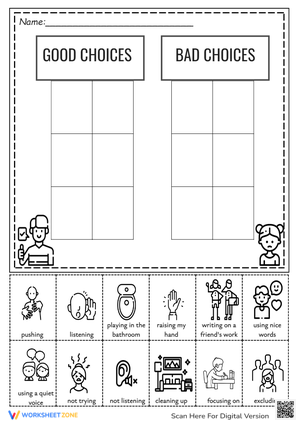
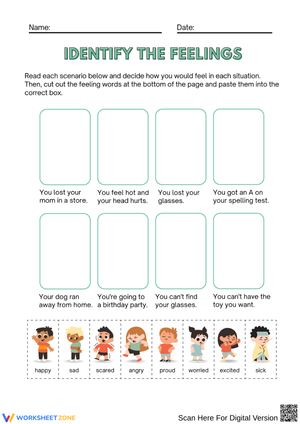
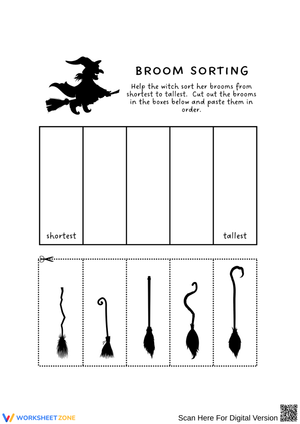
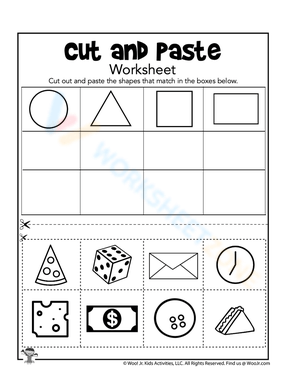
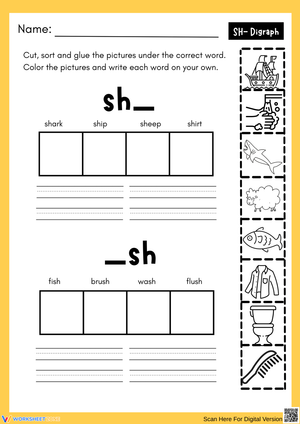
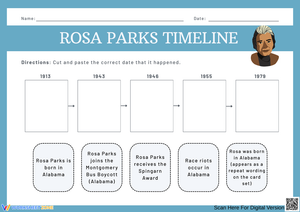
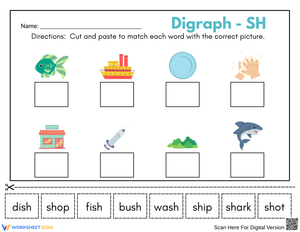
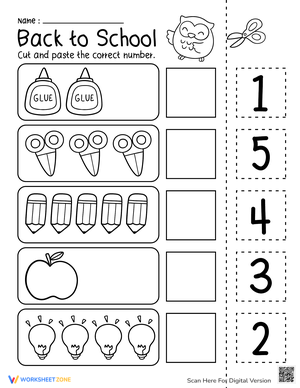
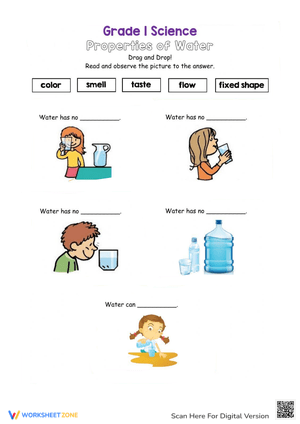
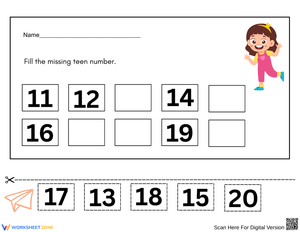
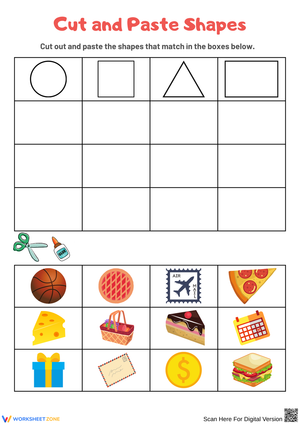
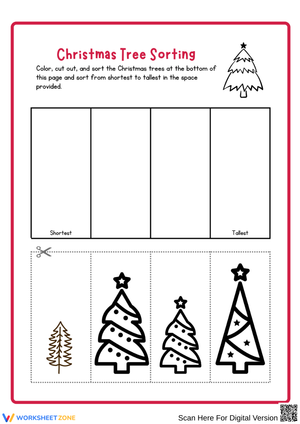
These paper and glue crafts worksheets give K–5 teachers a structured entry point into fine motor development without requiring a dedicated art room or expensive materials. The set spans cut-and-paste sequencing tasks, 3D construction templates, and curriculum-connected projects that tie handwork directly to content-area concepts. Each worksheet prints cleanly on standard copy paper and requires no prep beyond copying.
What the Worksheets Build
The skills targeted here fall into two overlapping categories: physical precision and procedural thinking. On the physical side, students practice bilateral coordination—holding a template steady with one hand while cutting with the other—and cutting accuracy across three line types: straight edges, gentle curves, and irregular zig-zag borders. They also practice controlled glue application, which sounds trivial until you watch a second grader saturate a tissue-thin piece of paper and then tear it while trying to press it flat.
The procedural side is equally substantive. Each worksheet presents steps in a fixed sequence, and moving to step four before finishing step two produces a project that doesn't hold together. That constraint builds the same executive functioning muscle that reading comprehension demands: holding earlier information in mind while acting on what's directly in front of you. It's not a coincidence that the students who struggle most with multi-step paper construction are often the same students who lose their place in a written directions task.
Why This Format Works for This Skill at This Grade
The reason paper construction appears consistently across K–2 curricula isn't tradition—it's because bilateral motor development in early childhood directly predicts handwriting stamina later. Occupational therapists track intrinsic hand muscle strength as a precursor to pencil control, and cutting, folding, and tearing all target those same small muscles in the palm and fingers. A well-designed paper craft activity isn't a break from the academic day; it supports the physical development that makes the academic day function. By third grade, most students have enough grip strength and cutting fluency that the emphasis shifts from motor development to spatial reasoning and project planning—which is why the 3D construction worksheets in this set are calibrated for grades 2–5 rather than K–1.
Frequent Errors That Surface During Paper Craft Work
The most common cutting mistake is one most teachers recognize immediately: the student who rotates the entire sheet of paper to follow a curve instead of pivoting the scissors. The result is a ragged edge that doesn't match the template outline, and the student is genuinely puzzled because the effort felt controlled. These worksheets include a small visual prompt at the start of each cutting sequence—a reminder to move scissors, not paper—because students who've heard the verbal instruction still benefit from seeing it at the moment they need it.
On the gluing side, the persistent error is applying adhesive to the receiving surface rather than to the back of the piece being placed. Students who do this lose all positional control—once you smear glue on the background, the piece has to go down immediately and somewhere. A brief modeling step before students begin, with explicit attention to which surface gets the glue, is worth the 90 seconds it takes. This is especially true for the pop-up and 3D worksheets, where misplaced adhesive on a tab can make the structure collapse.
Working These Worksheets Into the Week
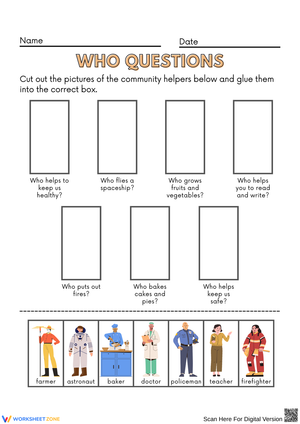
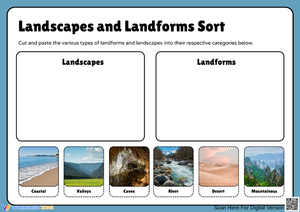
The 3D construction worksheets work best in the 25–30 minutes before a natural transition—the block before lunch, or the period just before a specialist. These projects don't pause gracefully mid-fold; students need enough time to reach the drying stage before they put work down. The flat cut-and-paste worksheets, by contrast, fit cleanly into the 10-to-15-minute warm-up window at the start of a lesson: structured enough to settle students coming in from recess, quiet enough to allow attendance and room setup to happen alongside.
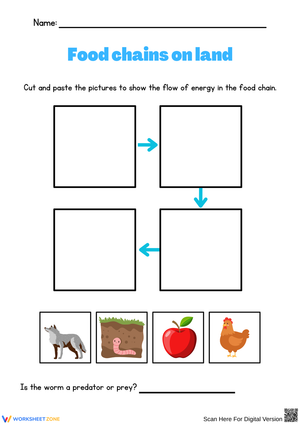
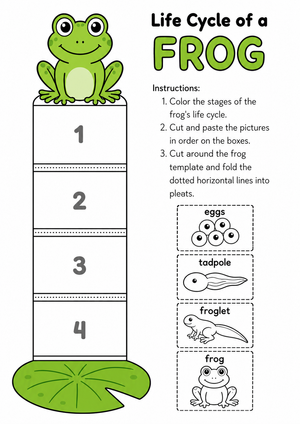
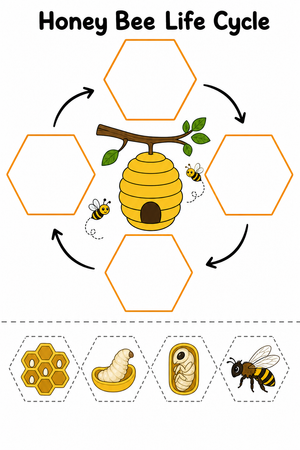
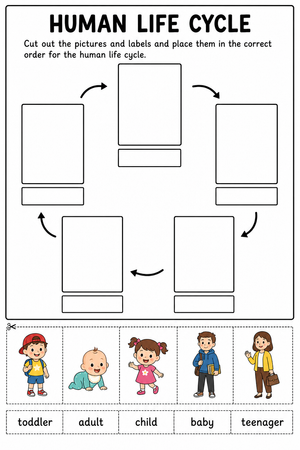
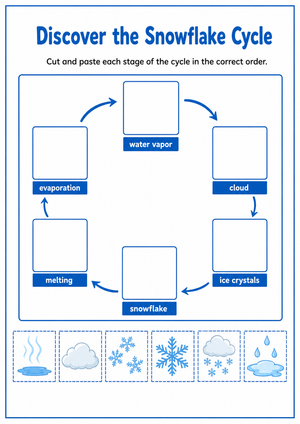
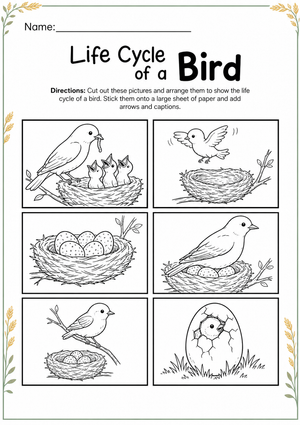
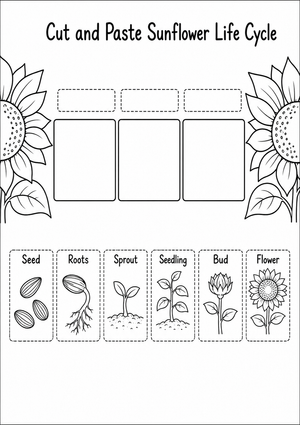
Paper and glue crafts worksheets also integrate naturally into content-area units rather than occupying a separate "art period" slot. A life-cycle cut-and-paste fits neatly inside a science unit on living things; a paper-folded map template becomes a geography activity; a symmetry-based paper fold connects directly to a geometry lesson. Teachers who plan these projects alongside their unit calendars rather than scheduling them as standalone Friday activities get substantially more instructional mileage from the same worksheet.
Adjusting the Worksheets Across Ability Levels
For students who are still building cutting stamina or grip strength, pre-cutting intricate shapes converts the worksheet into a pure assembly-and-sequencing task without removing the spatial reasoning component. That distinction matters: the fine motor demand and the cognitive demand are separable. A student who can't yet cut a curved line may still need practice placing pieces in the correct spatial relationship—and that practice has real value.
Extension moves in the other direction are just as easy to layer in. Students who finish early can recut pieces at a smaller scale, add construction-paper details not on the original template, or write a label or caption directly onto assembled sections. The paper and glue crafts worksheets themselves stay the same; what changes is the expectation layered on top of them, which keeps the activity productive across a mixed-ability group without requiring separate versions for each tier.
Standard Alignment
Most state visual arts standards at grades K–2 include a process strand covering purposeful tool use, material properties, and sequential construction. These worksheets address that strand directly: students use scissors and adhesive within a planned, multi-step sequence, and the finished product depends on executing each step correctly. The fine motor development embedded in these activities also connects to foundational literacy standards. CCSS.ELA-LITERACY standards for grades K–1 address print concepts and handwriting readiness, both of which presuppose the intrinsic hand strength that paper manipulation tasks build over time. These worksheets are most effectively placed in the portion of the school year when teachers are also reinforcing pencil grip and letter formation, since the physical work transfers directly.
Frequently Asked Questions
Which adhesive is right for which worksheets?
Glue sticks handle most of the set cleanly. They don't warp lightweight paper, they dry fast enough that students can close a pop-up structure without holding it shut for several minutes, and they give K–2 students much better application control than squeeze bottles. Switch to liquid school glue when a project involves cardstock layers or when students are attaching a paper piece to a surface thicker than standard printer stock—but model the dot-placement technique explicitly first, because students given liquid glue without instruction will flood the joint every time.
How do I manage drying space in a small classroom?
Flat drying on newspaper works for cut-and-paste worksheets. 3D constructions need a vertical or propped position—a window ledge, a shelf edge, a drying rack—because they collapse flat before the glue sets. The most practical classroom fix is to build drying time into the lesson sequence: students who finish assembly write their name on the back of every piece, set the project in the designated drying area, and move to a quiet task while the glue cures. Trying to rush the drying step is the most common source of projects that fall apart before they get home.
Can these worksheets work for students with fine motor delays?
Yes, with targeted modifications at specific steps. Pre-cutting intricate shapes removes the cutting barrier while preserving every other part of the task. Thicker paper stock—cardstock instead of copy paper—gives students with grip difficulties more material to hold. Adhesive dots replace glue entirely for students who can't manage squeeze-bottle control. Paper and glue crafts worksheets in this set are structured so that each step is visually discrete, which makes it straightforward to identify exactly where a student needs additional support and modify just that step, rather than rebuilding the activity from scratch.












 Interactive Worksheet Maker
 Quiz Maker
 Word Search Maker
 Crossword Puzzle Maker
 Word Scramble Generator
 Sentence Scramble Generator
 Handwriting Worksheet Generator
 Name Tracing Generator
 Fill In The Blank Generator