


























0
Views
0
Downloads

0.0
0
Save
0 Likes
Story Tree: A Graphic Organizer for Narrative Planning
0 Views
0 Downloads
Paste this activity's link or code into your existing LMS (Google Classroom, Canvas, Teams, Schoology, Moodle, etc.).
Students can open and work on the activity right away, with no student login required.
You'll still be able to track student progress and results from your teacher account.
Information
Description
What It Is:
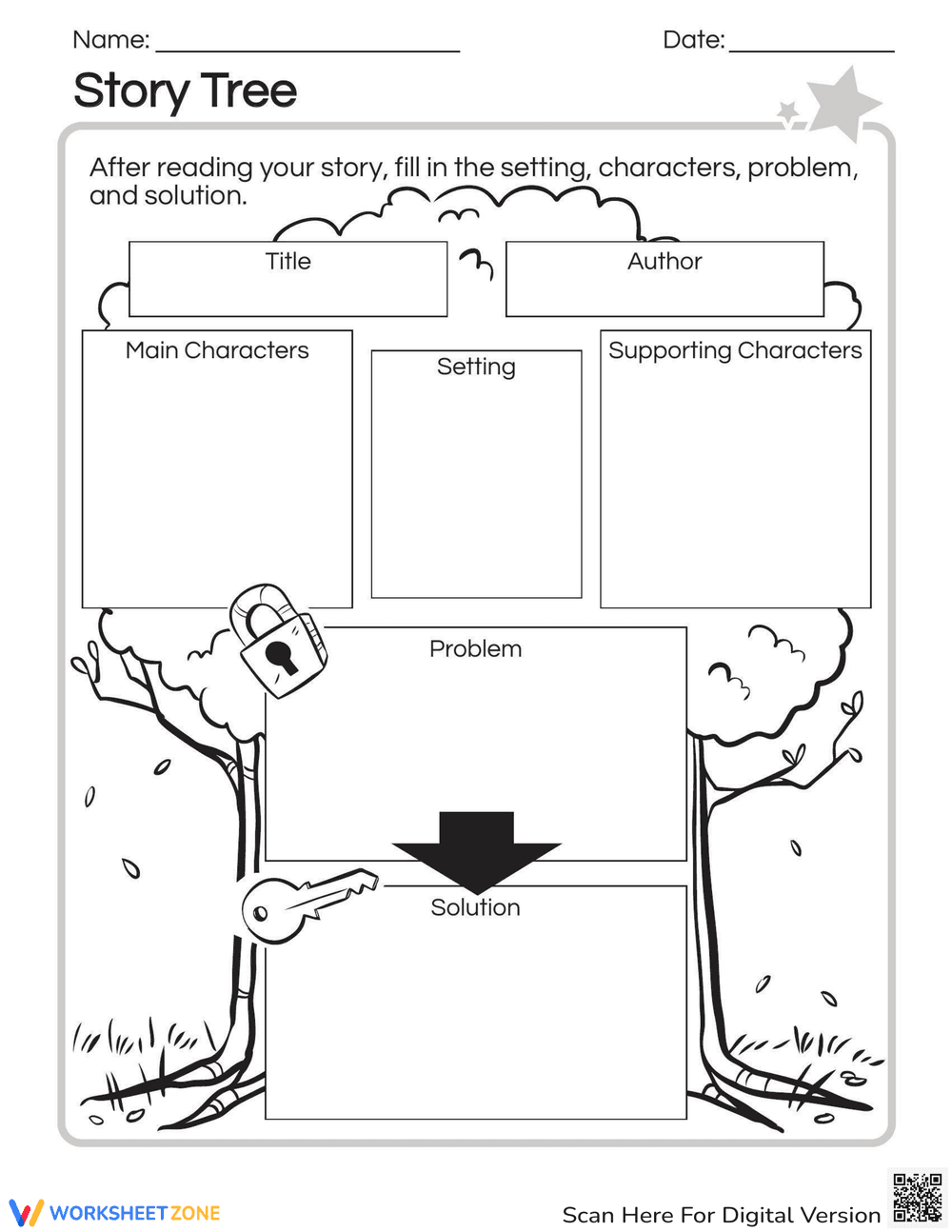
This is a story tree graphic organizer worksheet. It prompts students to fill in the title, author, main characters, setting, supporting characters, problem, and solution of a story they have read. The worksheet features blank boxes for each element and a tree graphic with a lock and key to visually represent the problem and solution.
Grade Level Suitability:
This worksheet is suitable for grades 2-5. The simple format and clear prompts make it accessible for younger students learning about story elements, while the complexity of identifying all elements can challenge older students.
Why Use It:
This worksheet helps students improve reading comprehension by identifying key story elements. It encourages critical thinking and analysis of the plot, characters, and setting. It also aids in organizing thoughts and summarizing the story.
How to Use It:
After reading a story, have students complete the worksheet by filling in the appropriate boxes. They should write the title and author at the top, then identify and list the main characters, setting, and supporting characters. Finally, they should describe the problem and solution in the designated boxes.
Target Users:
This worksheet is designed for elementary school students, teachers, and homeschool parents. It's a valuable tool for literacy centers, reading assignments, and comprehension practice.
This is a story tree graphic organizer worksheet. It prompts students to fill in the title, author, main characters, setting, supporting characters, problem, and solution of a story they have read. The worksheet features blank boxes for each element and a tree graphic with a lock and key to visually represent the problem and solution.
Grade Level Suitability:
This worksheet is suitable for grades 2-5. The simple format and clear prompts make it accessible for younger students learning about story elements, while the complexity of identifying all elements can challenge older students.
Why Use It:
This worksheet helps students improve reading comprehension by identifying key story elements. It encourages critical thinking and analysis of the plot, characters, and setting. It also aids in organizing thoughts and summarizing the story.
How to Use It:
After reading a story, have students complete the worksheet by filling in the appropriate boxes. They should write the title and author at the top, then identify and list the main characters, setting, and supporting characters. Finally, they should describe the problem and solution in the designated boxes.
Target Users:
This worksheet is designed for elementary school students, teachers, and homeschool parents. It's a valuable tool for literacy centers, reading assignments, and comprehension practice.


