Understanding the Role of Problem and Solution in Fiction
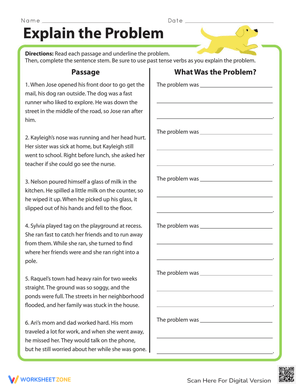
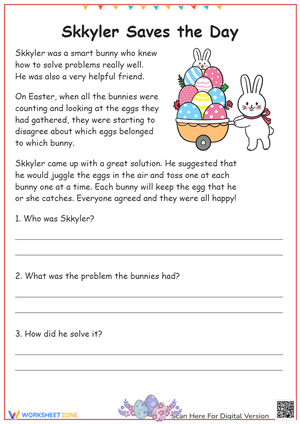
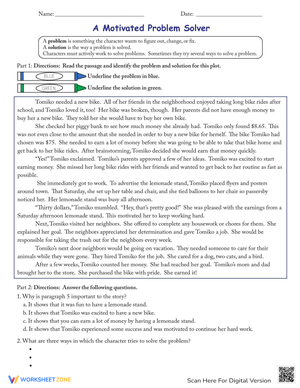
In fiction, the problem, or conflict, drives the plot forward and creates the necessary tension to keep readers engaged. Without a central challenge, a story lacks direction and purpose. When teachers use problem and solution in fiction worksheets, they provide students with a clear framework to track how characters respond to obstacles and how those responses lead to a final resolution. This process isn't just about identifying what happened; it is about understanding the motivations of the characters involved. By isolating these elements, students can see how every event is linked to the core conflict, helping them build comprehension.
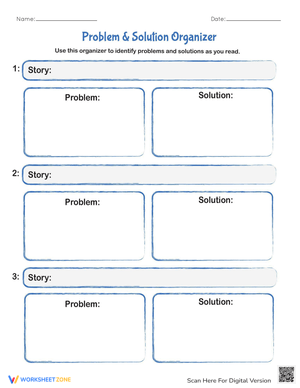
For elementary and middle school students, the ability to pinpoint the main problem is the first step toward becoming active readers. Often, stories contain multiple minor obstacles, but identifying the one central conflict that shapes the entire narrative is a more complex task. Teachers should guide learners to look for the moment the character's goals are thwarted or when an external force creates a disruption. Once the problem is clear, the solution becomes the lens through which the conclusion is analyzed. Using structured worksheets helps students visualize this relationship, helping them search for textual evidence to support their findings. This skill serves as the bedrock for more advanced literary analysis.
Why Graphic Organizers are Essential for Identifying Narrative Conflict
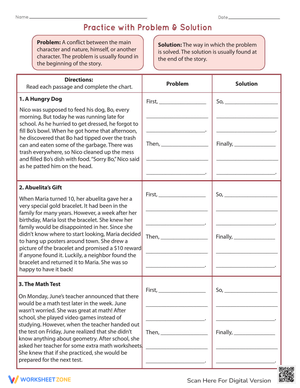
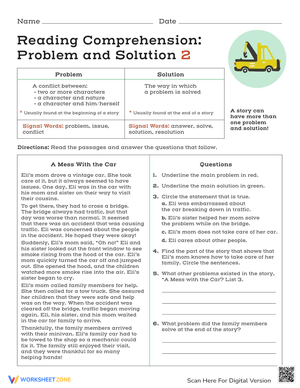
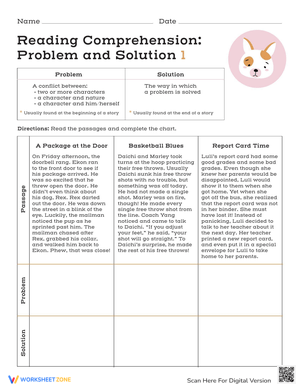
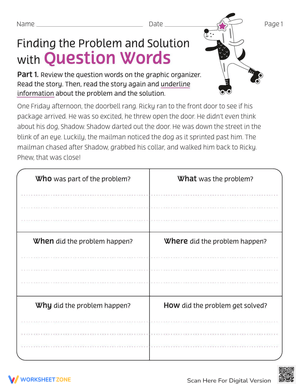
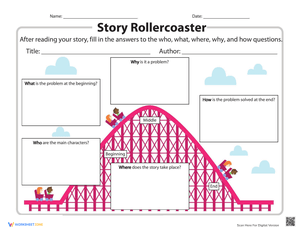
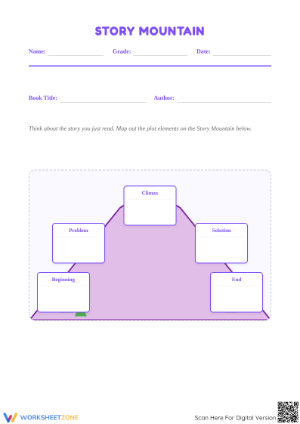
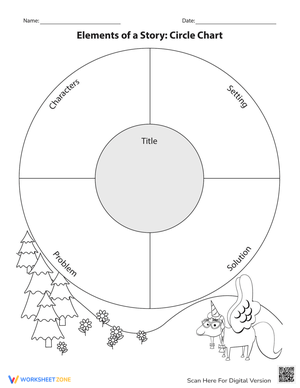
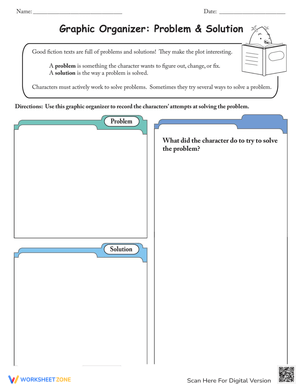
Graphic organizers are some of the most powerful tools available to literacy specialists and classroom teachers. They provide a visual representation of abstract concepts, making it easier for students to organize their thoughts and see the connections between plot points. When students use a problem-solution chart, they aren't just summarizing; they are categorizing information based on its function within the text. This visual scaffolding is particularly beneficial for visual learners and students who struggle with long-form writing. By breaking the story down into distinct boxes for the problem and outcome, students can manage the cognitive load of reading complex fiction while still engaging with high-level analysis.
According to Reading Rockets, explicit instruction in story structure helps 85% of students improve their reading comprehension by providing a framework for organizing information while they read. This strategic approach ensures learners identify key narrative elements like problems and solutions effectively. Beyond the immediate benefit of understanding a single story, using these tools consistently trains the brain to look for patterns in literature. Over time, students begin to internalize this structure, and the need for the physical worksheet may decrease. However, during the initial learning phases, the graphic organizer acts as a critical safety net that prevents students from feeling overwhelmed by the density of a fictional text.
Scaffolding Instruction: From Simple Problems to Complex Conflicts
Teaching students to identify problems and solutions requires a gradual release of responsibility. In early elementary grades, problems are often external and easily identifiable—a lost toy or a rainy day. Worksheets at this level should focus on these clear, concrete examples. As students progress into middle school, the nature of the conflict shifts toward internal dilemmas, where a character must battle their own fears or indecision. This transition is where many students struggle, as the problem is no longer a physical object but a psychological state. Teachers must provide worksheets that prompt students to look for emotional cues and character internalizations that signal a problem exists beneath the surface.
Expert analysis suggests that students who transition from identifying external plot hurdles to internal character conflicts show a 40% increase in their ability to identify complex themes in later grades. This indicates that problem-solution analysis is the primary bridge between basic plot summary and advanced literary criticism. To support this growth, teachers should select worksheets that include space for character feelings or internal obstacles. By explicitly asking students to consider what a character is thinking, rather than just what they are doing, teachers help them bridge the gap between simple narratives and the nuanced fiction they will encounter later. This progression ensures the skill remains relevant as reading levels increase.
Teacher Tips: Effective Classroom Implementation of Reading Worksheets
Integrating problem and solution in fiction worksheets into your daily literacy block requires a strategic approach. One effective method is to use a 'Think-Aloud' during whole-group instruction. As you read a mentor text aloud, stop at the moment the conflict is introduced and model how you would fill out that section of the worksheet. Show students your thought process: 'I noticed that the character is frowning and saying they have no one to play with. This sounds like a problem to me. I’m going to write that down here.' By narrating your internal monologue, you make the invisible work of a proficient reader visible to your students, providing them with a concrete example to follow.
Small group instruction offers another excellent opportunity for implementation. Use the worksheets to differentiate based on the needs of each group. For students who are struggling, you might provide a worksheet that is partially filled in, allowing them to focus on identifying the solution rather than the entire narrative arc. For advanced learners, use a worksheet that asks them to identify multiple problems or to predict the solution before they finish the story. Pairing these worksheets with collaborative discussions encourages students to hear different perspectives on the same text. Often, one student might see a problem that another missed, leading to a richer understanding. Using these tools as a springboard for conversation makes the learning experience more dynamic.
How Problem and Solution Skills Align with Literacy Standards
Teaching problem and solution is not just an instructional preference; it is a core requirement of modern literacy standards across many educational frameworks. Teachers are tasked with ensuring that students can describe the overall structure of a story, including how the beginning introduces the story and the ending concludes the action.
Standards-based instruction requires that students move beyond simple identification and toward explaining how elements interact. The problem-solution relationship is often the catalyst for these interactions. By providing students with consistent practice through high-quality worksheets, teachers are building the stamina and skill set required for these more rigorous tasks. Furthermore, these skills are transferable across subjects. The ability to identify a problem, analyze the steps toward a solution, and evaluate the final outcome is a logical process that benefits students in science, social studies, and even mathematics. It is a universal thinking skill that supports lifelong learning and critical thinking.
Frequently Asked Questions
1. How do I differentiate problem and solution worksheets for English Language Learners?
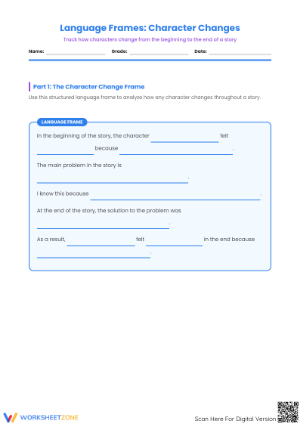
For English Language Learners (ELLs), focus on worksheets that utilize more visual supports and fewer text-heavy instructions. Using a graphic organizer with sentence starters can help ELLs express their understanding of the plot without being hindered by complex sentence structure. You might also provide a list of common 'problem words' to help them identify the conflict. Pairing the worksheet with a bilingual dictionary or allowing the student to draw their responses before writing can also be strategies to ensure they are meeting the comprehension goal.
2. What is the difference between a problem and a solution and a cause and effect relationship?
While they are related, they focus on different narrative functions. Problem and solution refers to the specific conflict that drives a story and how that conflict is eventually resolved. Cause and effect is a broader concept that looks at how one event (the cause) leads to another (the effect). A problem is often the 'cause' of many actions in a story, and the solution is the final 'effect' of the characters' efforts. Understanding the distinction helps students more accurately categorize information and understand the different ways authors organize their ideas.
3. Can a story have more than one problem and solution?
Yes, many complex stories feature multiple problems. There is usually one overarching central conflict, but characters often face smaller, secondary problems along the way. These are sometimes called subplots. Using worksheets that have space for multiple entries allows students to track these different threads and see how they are interconnected. For younger students, it is best to stick to one main problem, but for older students, identifying how solving one small problem might lead to a larger one is an excellent way to deepen their analysis of the narrative structure.
4. At what grade level should teachers start using these worksheets?
Instruction on problems and solutions can start as early as kindergarten through oral discussion and shared reading experiences. Formal use of worksheets typically begins in first or second grade, as students gain more independence in their writing and reading. The complexity of the worksheets should increase as the student moves through elementary and into middle school. By third grade, most students should be able to identify the problem and solution in a short story independently using a graphic organizer as a guide. Continuous practice throughout the grades ensures the skill is internalized and refined.