


























1 / 4
0
Views
0
Plays

0.0
0
Save
0 Likes
Making Predictions: Anticipating Outcomes in Stories
0 Views
0 Plays
Paste this activity's link or code into your existing LMS (Google Classroom, Canvas, Teams, Schoology, Moodle, etc.).
Students can open and work on the activity right away, with no student login required.
You'll still be able to track student progress and results from your teacher account.
Information
Description
What It Is:
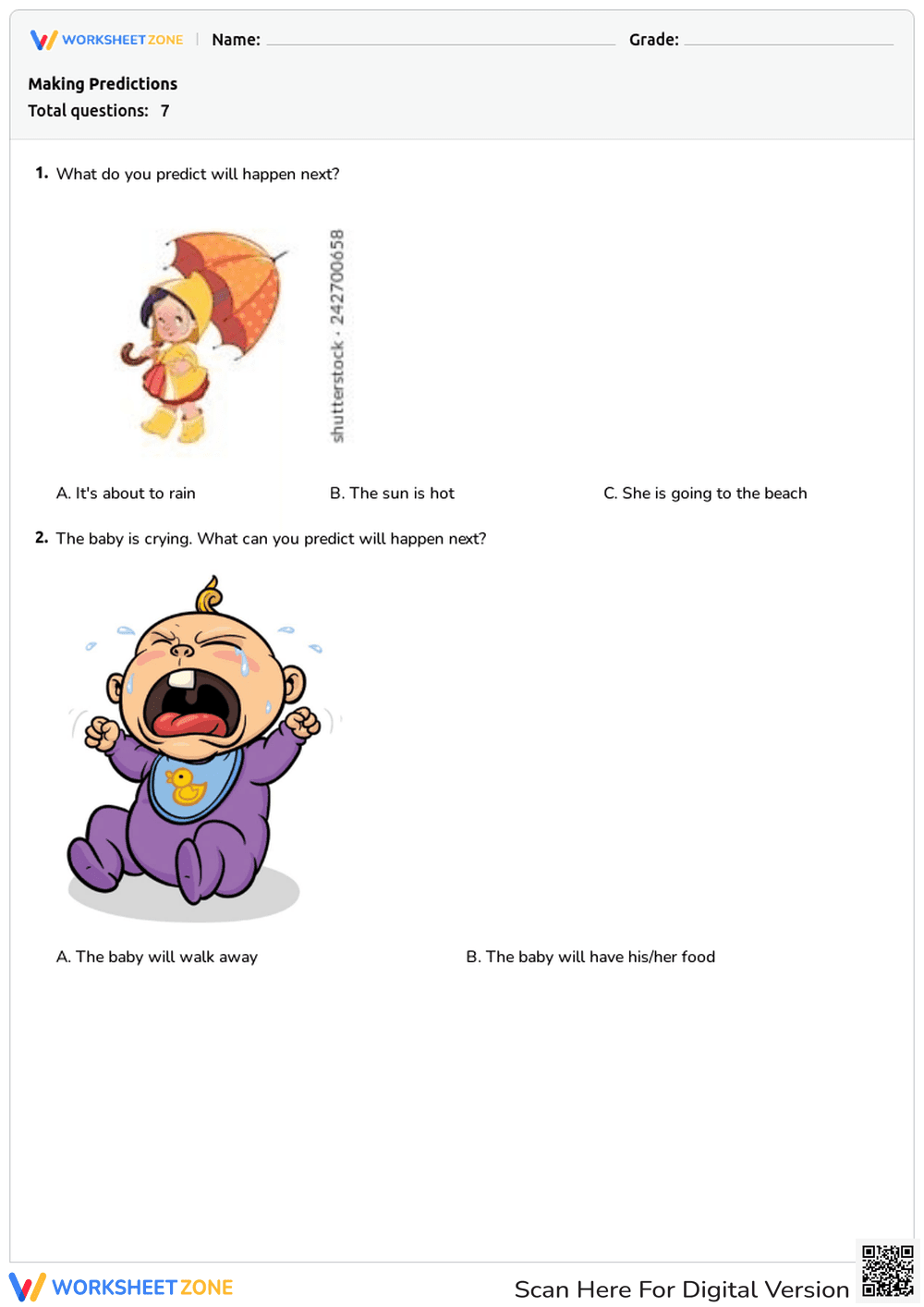
The worksheet focuses on making predictions. It features a picture of a young girl in a yellow raincoat, boots, and holding an orange umbrella with white stars. The activity likely involves asking students to predict what will happen next or where the girl is going based on the picture. There is an emphasis on visual cues to support prediction skills.
Grade Level Suitability:
Suitable for Kindergarten and 1st Grade. The simple picture and focus on basic predictions make it appropriate for early elementary students who are developing their comprehension and inference skills.
Why Use It:
This worksheet helps develop prediction skills, which are essential for reading comprehension. It encourages visual literacy and the ability to make inferences based on visual cues. It can also improve vocabulary related to weather and clothing.
How to Use It:
Show the picture to the student. Ask questions like 'What do you think will happen next?', 'Where do you think she is going?', or 'Why is she wearing a raincoat?'. Encourage them to explain their reasoning based on the visual details.
Target Users:
The target users are kindergarten and first-grade students learning about making predictions and improving their reading comprehension skills. It's also suitable for ESL students learning weather-related vocabulary.
The worksheet focuses on making predictions. It features a picture of a young girl in a yellow raincoat, boots, and holding an orange umbrella with white stars. The activity likely involves asking students to predict what will happen next or where the girl is going based on the picture. There is an emphasis on visual cues to support prediction skills.
Grade Level Suitability:
Suitable for Kindergarten and 1st Grade. The simple picture and focus on basic predictions make it appropriate for early elementary students who are developing their comprehension and inference skills.
Why Use It:
This worksheet helps develop prediction skills, which are essential for reading comprehension. It encourages visual literacy and the ability to make inferences based on visual cues. It can also improve vocabulary related to weather and clothing.
How to Use It:
Show the picture to the student. Ask questions like 'What do you think will happen next?', 'Where do you think she is going?', or 'Why is she wearing a raincoat?'. Encourage them to explain their reasoning based on the visual details.
Target Users:
The target users are kindergarten and first-grade students learning about making predictions and improving their reading comprehension skills. It's also suitable for ESL students learning weather-related vocabulary.


