




























Views
Downloads

Letter to Teacher Worksheet | Grade 2 Printable

Paste this activity's link or code into your existing LMS (Google Classroom, Canvas, Teams, Schoology, Moodle, etc.).
Students can open and work on the activity right away, with no student login required.
You'll still be able to track student progress and results from your teacher account.
This printable letter to teacher worksheet provides Grade 2 students with a welcoming, structured space to introduce themselves at the start of the school year. By completing this simple writing activity, young learners practice basic letter formatting while sharing personal details, helping educators build immediate classroom connections.
At a Glance
- Grade: 2 · Subject: ELA
- Standard:
CCSS.ELA-LITERACY.L.2.2.B— Use commas in greetings and closings of letters- Skill Focus: Letter Writing
- Format: 1 page · 1 task · No answer key · PDF
- Best For: Back to school introductions
- Time: 15–20 minutes
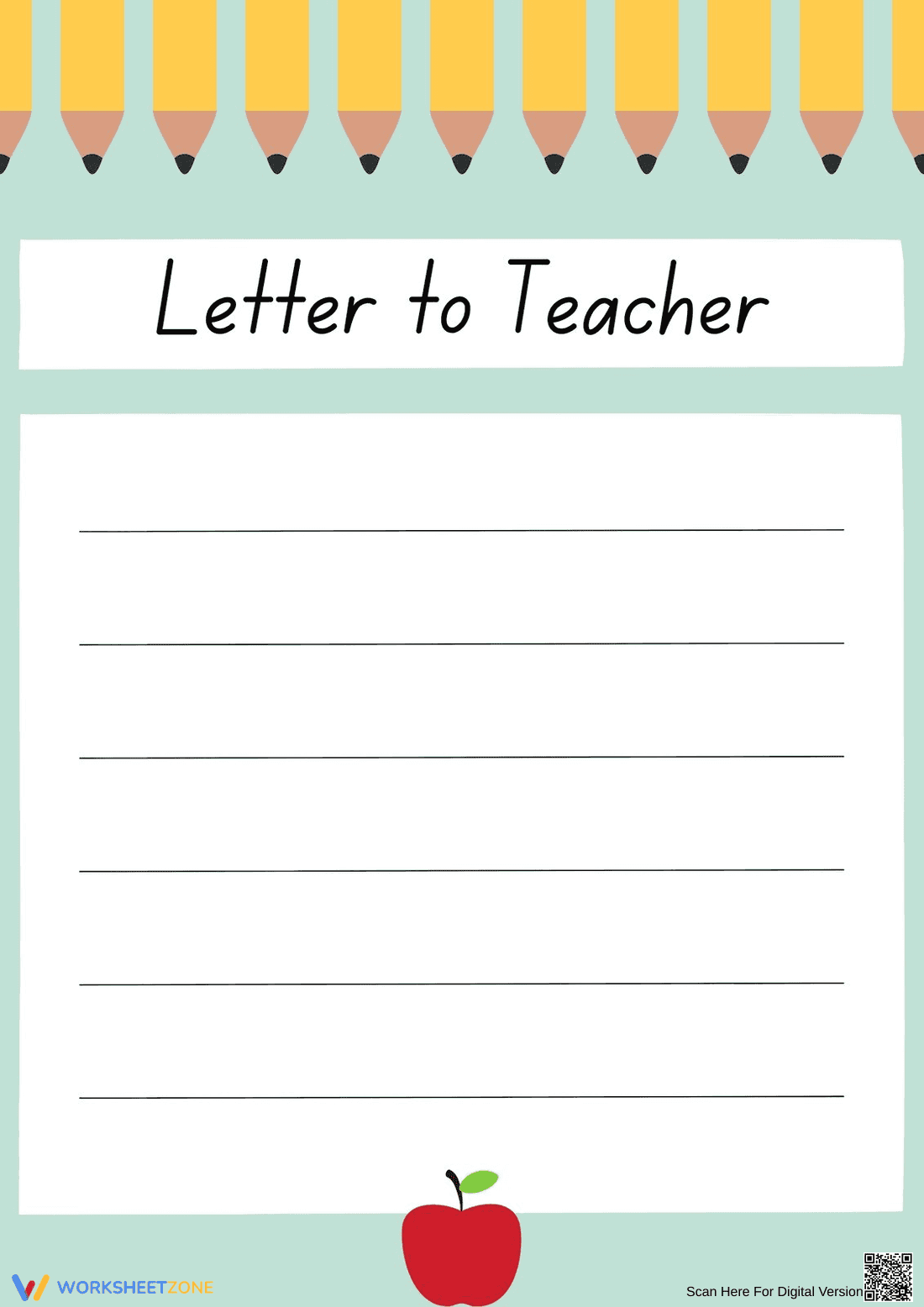
This single-page resource features a clean, visually appealing writing template designed specifically for early elementary students. The page includes a clear "Letter to Teacher" heading, decorative pencil and apple borders to engage young writers, and six wide-ruled lines to accommodate larger handwriting. As an open-ended personal introduction task, no answer key is required, allowing students to express themselves freely.
Zero-Prep Workflow
This resource is designed for immediate classroom implementation during the busy first week of school:
- Print (1 minute): The design prints quickly for an entire class roster.
- Distribute (1 minute): Hand out the template alongside standard classroom pencils or crayons.
- Review (3 minutes): Briefly model how to write a greeting, a short introductory sentence, and a closing before letting students work independently.
With under two minutes of total teacher prep time, this activity is an ideal morning work assignment or an easy addition to a substitute teacher's emergency folder.
Standards Alignment
This activity aligns with CCSS.ELA-LITERACY.L.2.2.B, which requires students to use commas in greetings and closings of letters. It also supports foundational expressive writing skills as students compose informative texts about themselves. Both standard codes can be copied directly into lesson plans, IEP goals, or district curriculum mapping tools.
How to Use It
Use this worksheet during the first week of school as morning work while managing attendance. Alternatively, use it after a brief direct instruction mini-lesson on the parts of a friendly letter. As a formative assessment observation tip, walk around the room while students write to quickly gauge their baseline handwriting legibility, phonetic spelling skills, and grasp of basic punctuation. Most second graders will complete their letters within a 15 to 20-minute timeframe.
Who It's For
This template is primarily designed for Grade 2 students, though it works beautifully for advanced first graders or third graders needing handwriting practice. For differentiation, teachers can provide sentence frames on the whiteboard for English Language Learners or students requiring additional writing support. It pairs perfectly with a read-aloud of a popular back-to-school picture book to inspire their writing.
Integrating structured writing tasks early in the academic year establishes essential communication routines for young learners. According to Fisher & Frey (2014), providing students with clear, scaffolded opportunities to write about highly familiar topics—such as their own lives and interests—significantly lowers the affective filter and promotes early writing fluency. This specific template directly targets CCSS.ELA-LITERACY.L.2.2.B, ensuring students practice how to use commas in greetings and closings of letters within a highly relevant, authentic context. When children write directly to their new teacher, the task gains immediate purpose and a genuine audience, which research shows increases task persistence and overall engagement. By utilizing this simple, one-page format, educators can efficiently gather crucial baseline data on student writing mechanics, spelling, and handwriting, while simultaneously fostering a welcoming, supportive classroom climate during the critical first weeks of the new school year.


