Why a stack of questions beats a welcome speech in week one
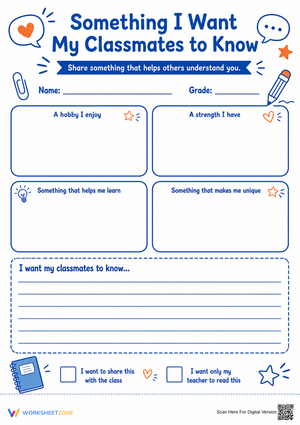
The first days of school set the tone for everything that follows, and the quickest way to learn who is sitting in front of you is to ask. Printable getting-to-know-you questions give US teachers a low-prep, repeatable way to surface student interests, strengths, and backgrounds before the curriculum pace picks up. Instead of a one-way welcome talk, a printed question set pulls every student into the room on day one.
These sheets work because they lower the stakes. A reluctant fifth grader who would never volunteer in a whole-class share will happily jot three favorites on a bingo grid or swap interview cards with a partner. The printed prompt carries the social weight, so students can focus on answering instead of worrying about being put on the spot.
What's inside the Worksheetzone printable collection
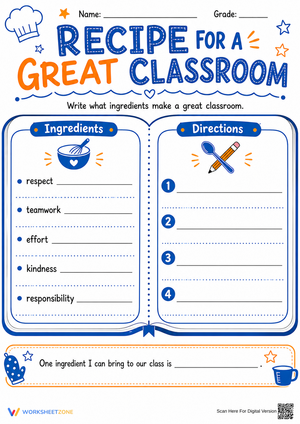
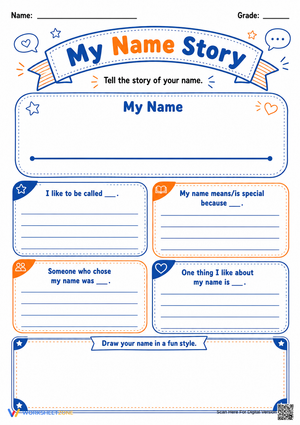
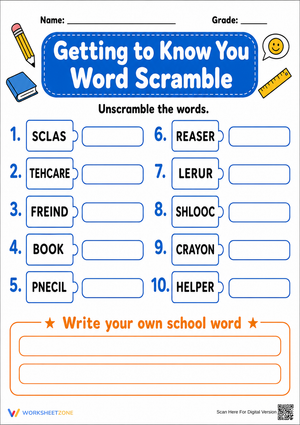
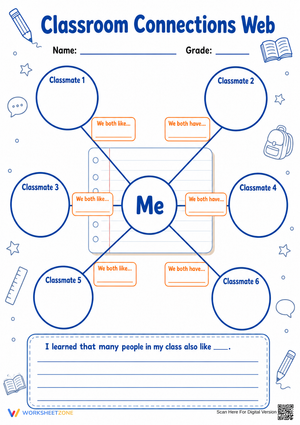
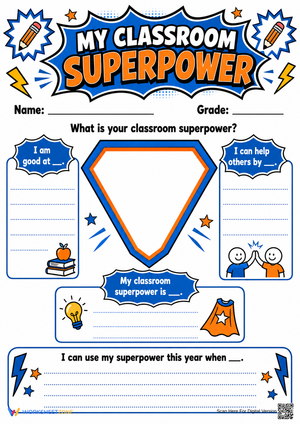
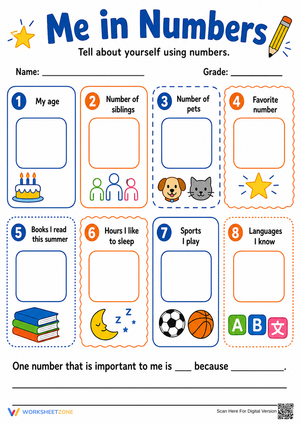
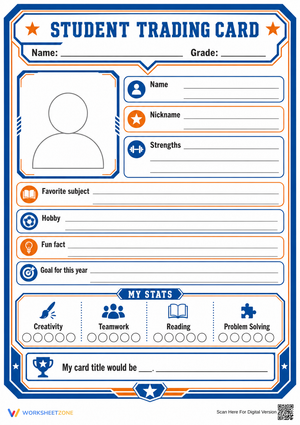
Worksheetzone's back-to-school icebreaker collection spans Grades K-8 and gives you more than one way to ask the same kinds of questions. Rather than a single sheet, you get a set of formats you can rotate as the year goes on:
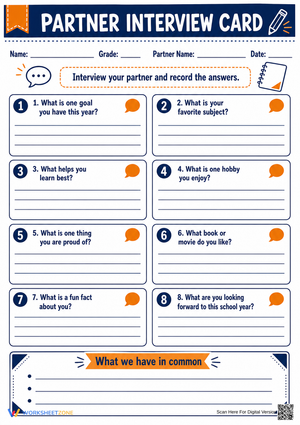
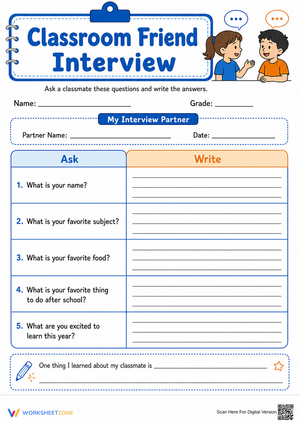
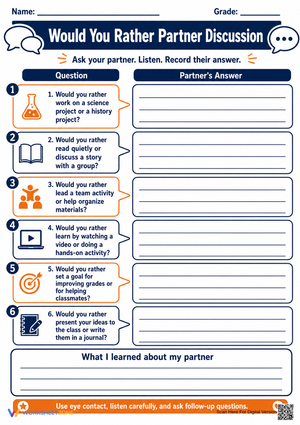
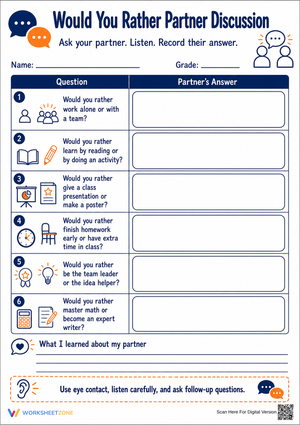
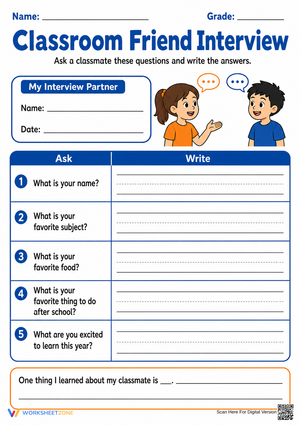
- Partner interview cards for structured one-on-one conversations.
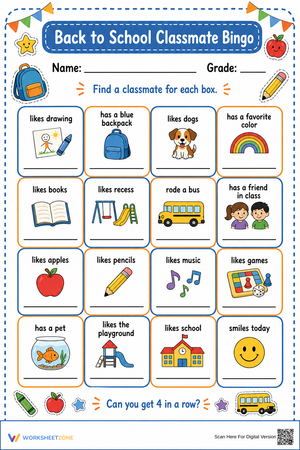
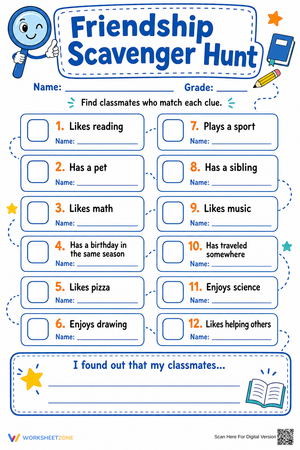
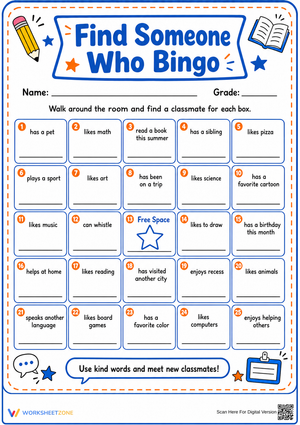
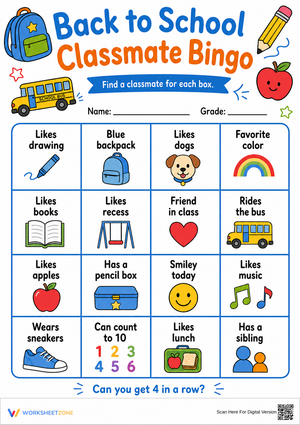
- Classmate bingo that gets students up and mingling to find matches.
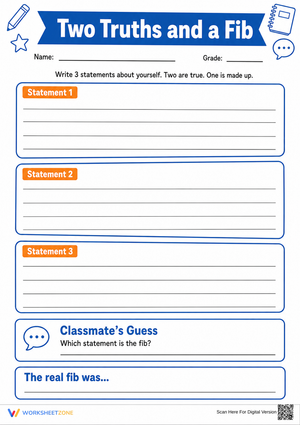
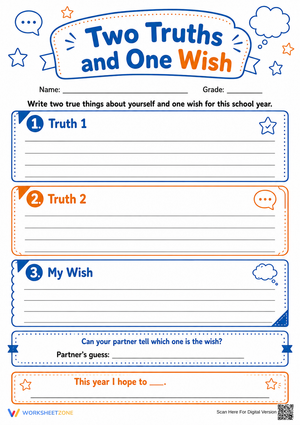
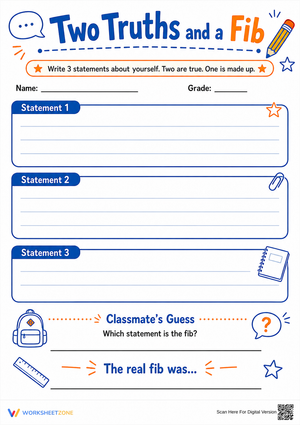
- Two Truths and a Fib games for older students who like a guessing twist.
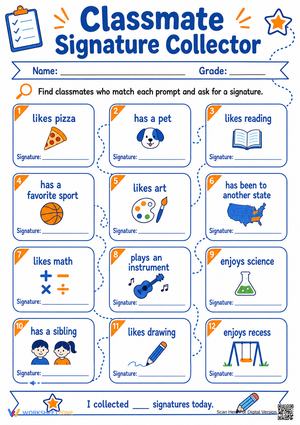
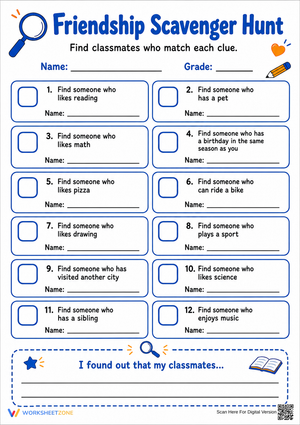
- Signature collectors that turn a roster of traits into a scavenger hunt.
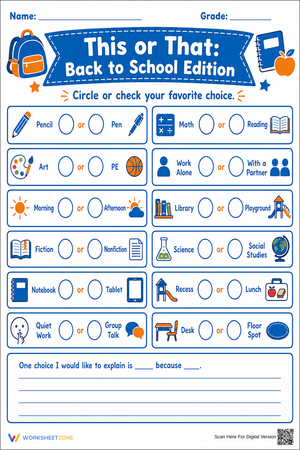
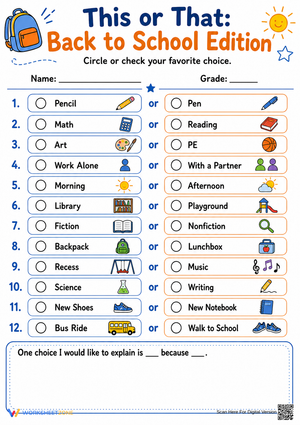
- "This or That" preference sheets for fast, low-pressure choices.
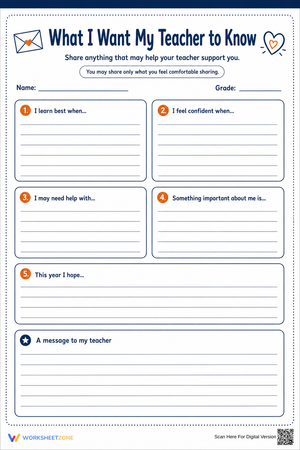
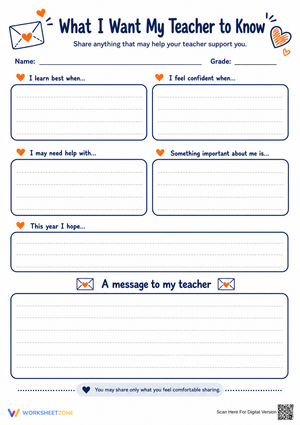
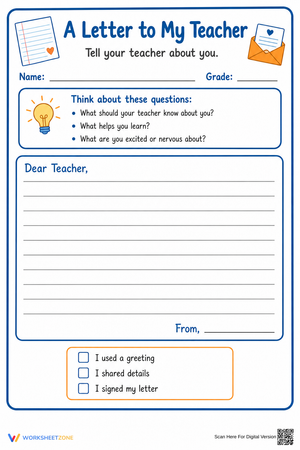
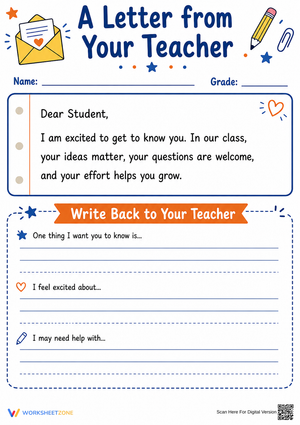
- Writing prompts like "Letter to My Teacher" for students who open up more on paper.
One printable rarely lives a single day. The same signature collector that warms up your first morning can resurface after winter break, and a "Letter to My Teacher" prompt works just as well at the start of a new unit as it does in September.
Match the format to your grade band
Getting-to-know-you questions land best when the format fits the age of the writer. The Worksheetzone set is built to differentiate across the K-8 range:
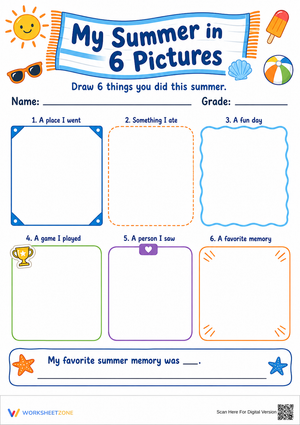
- Grades K-2: simple preference prompts and draw-and-share sheets, where a picture and one word count as a complete answer.
- Grades 3-5: partner interview cards and classmate bingo, which add reading, writing, and a little movement.
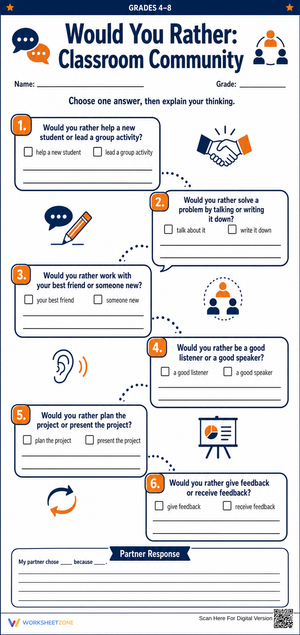
- Grades 6-8: open-ended reflection prompts and Two Truths variants that invite more thought and a bit of personality.
Specials and resource teachers can mix bands on purpose. A music or intervention teacher who sees several grades in a day can keep one "This or That" sheet for the youngest groups and an open-ended reflection for the oldest, asking the same human questions at two different reading levels.
Read the answers as your first formative data
The best reason to print these questions is what you learn from the responses. When a third grader lists soccer, dinosaurs, and their little brother, you have just collected the raw material for interest-based word problems, read-aloud picks, and small-group pairings. Open-ended prompts go further than "favorite color," surfacing learning preferences, prior knowledge, and cultural backgrounds you can draw on all year.
Keep the sheets after the activity ends. A quick read through a class set tells you who shares a home language, who has older siblings at the school, and who already loves the topic you teach. That informal scan is some of the most useful planning data you will gather all fall, and it costs nothing but a few minutes.
Classroom Implementation: a 20-minute flow that works
A single printable can anchor a tight, repeatable routine. Here is a flow that fits most elementary and middle school periods:
- Minutes 0-3, whole-group intro: model one or two answers about yourself so students hear the level of detail you want.
- Minutes 3-12, paired sharing: partners interview each other or complete the sheet side by side, with you circulating and listening in.
- Minutes 12-18, debrief share-out: each student introduces their partner with one fact, which builds accountability and spreads voices around the room.
- Minutes 18-20, collect and note: gather the sheets and flag two or three responses you want to follow up on.
Keep the questions working past the first day
Getting-to-know-you questions are not a one-and-done event. The same card deck earns its keep at every transition point in the calendar. Pull a few prompts when you launch a new unit and want to connect it to student lives, after a long break when the room needs to reconnect, or during advisory and morning meeting when you want a quick, structured brain break.
Used this way, a single printable set becomes a year-long tool rather than a first-week novelty. Teachers who keep a small stack of question cards on hand always have a five-minute community builder ready, and students come to expect that this is a classroom where their answers matter.
Frequently asked questions
1. What grade levels are these printable getting-to-know-you question sets designed for?
The Worksheetzone collection covers Grades K-8. The youngest students get preference and draw-and-share prompts, Grades 3-5 move into interview cards and bingo, and Grades 6-8 use open-ended reflection and Two Truths variants, so you can match the format to your readers.
2. How many questions should I plan for a single back-to-school session?
For a 20-minute session, plan on six to ten questions. That is enough for partners to trade real answers and still leave time for a share-out, without rushing or running long. Keep a few spares ready for groups that finish early.
3. Can these printable question sheets work for virtual or hybrid classrooms?
Yes. Students can complete a sheet on screen, in a breakout room, or on paper at home and hold it up to the camera. The same prompts that drive a partner share in person work in breakout pairs, and "Letter to My Teacher" travels especially well.
4. How are printable question cards different from digital icebreaker tools?
Printables need no devices, logins, or bandwidth, so every student can take part on the first day before tech accounts are sorted out. They also leave you a physical class set to read later, which makes them easier to mine for planning data than a fast-moving digital poll.
5. Should I use getting-to-know-you questions just on the first day or throughout the year?
Both. They shine in week one, but the same sets work at new unit launches, after breaks, and during advisory or morning meeting. Reusing the format turns a back-to-school activity into a community routine students recognize all year long.












 Interactive Worksheet Maker
 Quiz Maker
 Word Search Maker
 Crossword Puzzle Maker
 Word Scramble Generator
 Sentence Scramble Generator
 Handwriting Worksheet Generator
 Name Tracing Generator
 Fill In The Blank Generator