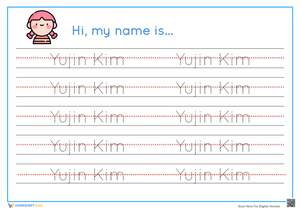
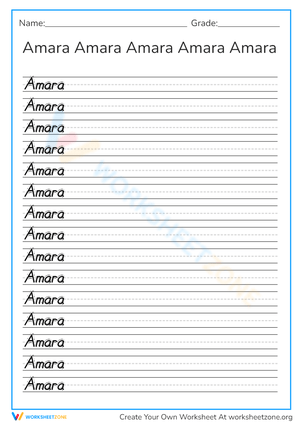
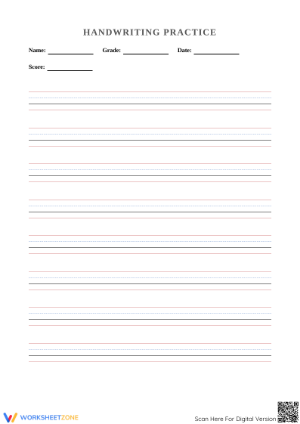
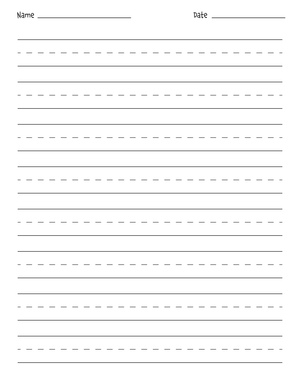
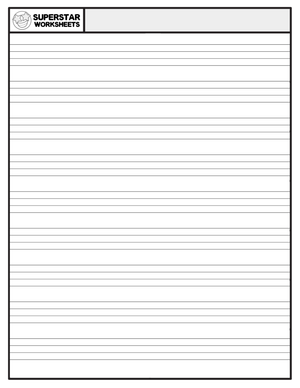
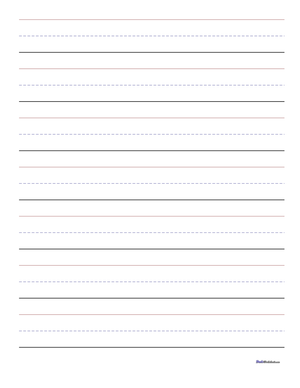
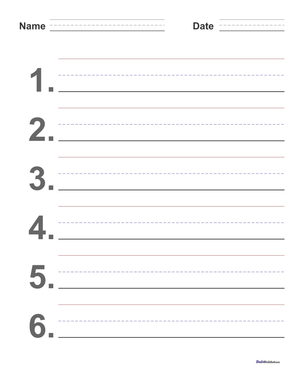
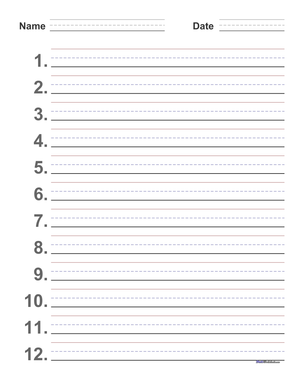
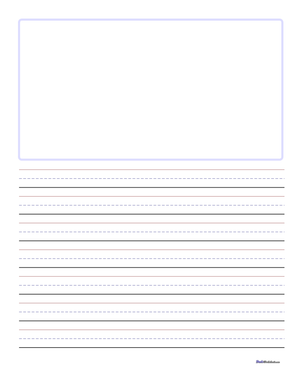
Pre-printed handwriting sheets are convenient, but they force practice around whatever word or sentence the publisher chose. A blank sheet lets a teacher write the exact target: this week's sight words, a student's name, or the three letters a small group keeps reversing. That flexibility matters because handwriting practice is most effective when it is tied to current, meaningful content rather than generic copying.
Blank sheets also travel across the grade band. The same page format can host oversized single letters for a kindergartner still building pencil grasp or tightly ruled sentence lines for a third grader refining cursive connections. One master template, many uses.
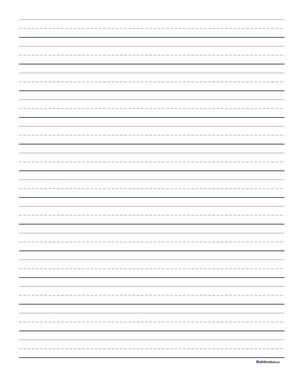
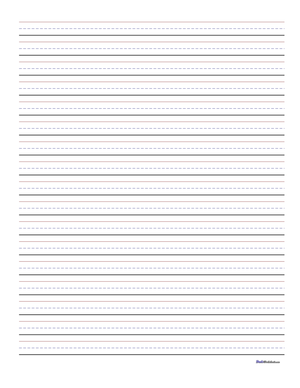
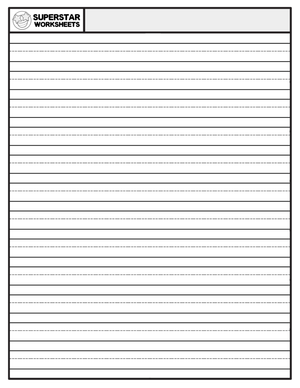
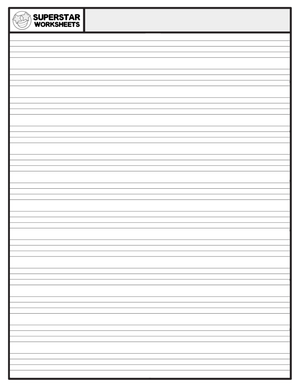
A single blank format can serve very different learners if you adjust two variables: letter size and line spacing. Students with weak pencil grasp or developing motor control benefit from oversized letters written on thick, widely spaced baselines, since the extra visual space and bigger target reduce the fine motor demand of each stroke. Students who have moved past basic formation can use narrower-ruled lines that push for precision, consistent letter height, and tighter spacing between words.
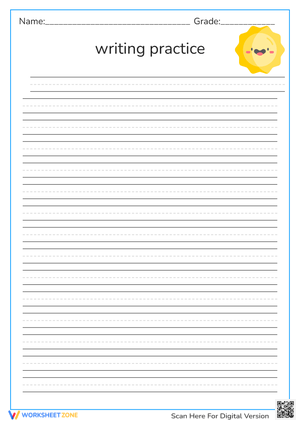
This tiering does not require three separate worksheet designs. Photocopy the same blank template at two ruling widths, or keep both versions on hand, and assign based on what you see during a quick handwriting check. Students move between tiers as their control improves, without switching to an entirely different resource.
Using Blank Sheets at Writing Centers
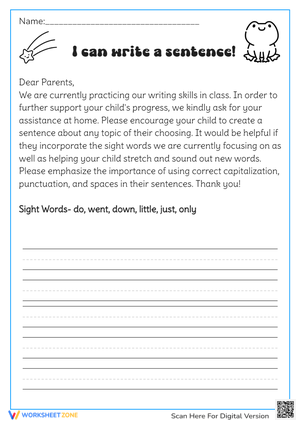
Writing and handwriting centers are one of the most common homes for blank practice sheets, because students can copy words written on the board or in a rotation card independently while the teacher pulls a small group for guided reading or math intervention. The teacher writes the model once, and students transfer it onto their own blank sheet at their own pace. This setup keeps the center self-sustaining without needing a new printable every day.
To keep the center productive rather than just busywork, rotate what students copy: current spelling words on Monday, a sentence from the read-aloud on Wednesday, or their own name and a classmate's name for younger students still building letter recognition. The blank sheet stays the same; the content changes with the week's instruction.
Classroom Implementation
A workable daily routine looks like this: keep a small stack of blank templates at two ruling widths ready to go, decide the day's target (spelling word, name, sentence, or specific letter pair) during morning prep, and write the model on the board before students arrive. Students copy independently at centers or during a short whole-class block, while you circulate to check grip, posture, and letter formation rather than just neatness.
Use a quick formative check rather than grading every sheet. Scan for consistent baseline touch, correct letter proportions, and spacing between words. A student who is close on all three is ready to move to the narrower-ruled version; a student still struggling with basic formation stays on the wider template a bit longer. This keeps the routine sustainable across a full week without adding grading load.
Frequently Asked Questions
1. How much classroom time should be spent on handwriting practice each week
Graham's research points to 50 to 100 minutes per week in grades K-3, or about 10 to 20 minutes daily. Many classrooms fall short of this, with national survey data showing average weekly time closer to one hour or less, so a short daily routine is more reliable than one long session.
2. How are blank handwriting worksheets different from pre-printed letter practice sheets
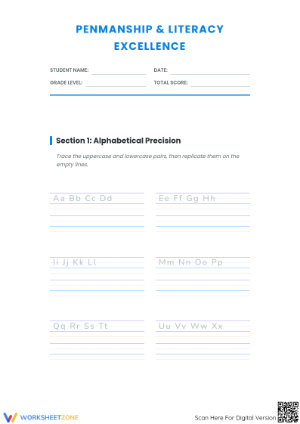
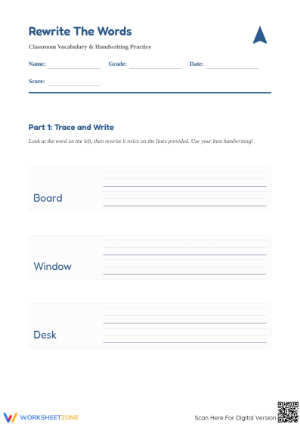
Pre-printed sheets come with fixed content chosen by a publisher. Blank sheets keep the same baseline and guideline layout but let the teacher write in the exact letters, words, or sentences tied to that week's instruction.
3. What line or guideline format works best for early elementary versus upper elementary students
Early elementary students generally need wider, thicker baselines and larger letter targets to support developing motor control. Upper elementary students can move to narrower-ruled lines that push for consistent, precise letter formation.
4. How can teachers differentiate blank handwriting sheets for students with fine motor difficulties
Offer the same template at a wider ruling with oversized letter models. This reduces the fine motor precision required per stroke while keeping the practice format consistent with the rest of the class.
5. How can blank handwriting sheets be tied into spelling or vocabulary instruction
Write the current week's spelling list or vocabulary words directly onto the blank template instead of using a generic drill. Students then reinforce spelling recall and letter formation in the same practice session.












 Interactive Worksheet Maker
 Quiz Maker
 Word Search Maker
 Crossword Puzzle Maker
 Word Scramble Generator
 Sentence Scramble Generator
 Handwriting Worksheet Generator
 Name Tracing Generator
 Fill In The Blank Generator