


























Views
Downloads

Printable Creative Handwriting Journal: Grade 6-7
Paste this activity's link or code into your existing LMS (Google Classroom, Canvas, Teams, Schoology, Moodle, etc.).
Students can open and work on the activity right away, with no student login required.
You'll still be able to track student progress and results from your teacher account.
This Grade 6 and 7 creative journal worksheet provides a structured yet open-ended framework for students to develop narrative writing skills. By combining illustration with lined handwriting space, it encourages learners to visualize their stories before committing them to paper. This dual-modality approach supports better descriptive language and logical sequencing in student compositions.
At a Glance
- Grade: 6-7 · Subject: Handwriting & ELA
- Standard:
CCSS.ELA-LITERACY.W.6.3— Write narratives to develop real or imagined experiences or events- Skill Focus: Narrative structure and character development
- Format: 4 pages · 3 creative tasks · No answer key · PDF
- Best For: Creative writing prompts and journaling
- Time: 30–45 minutes
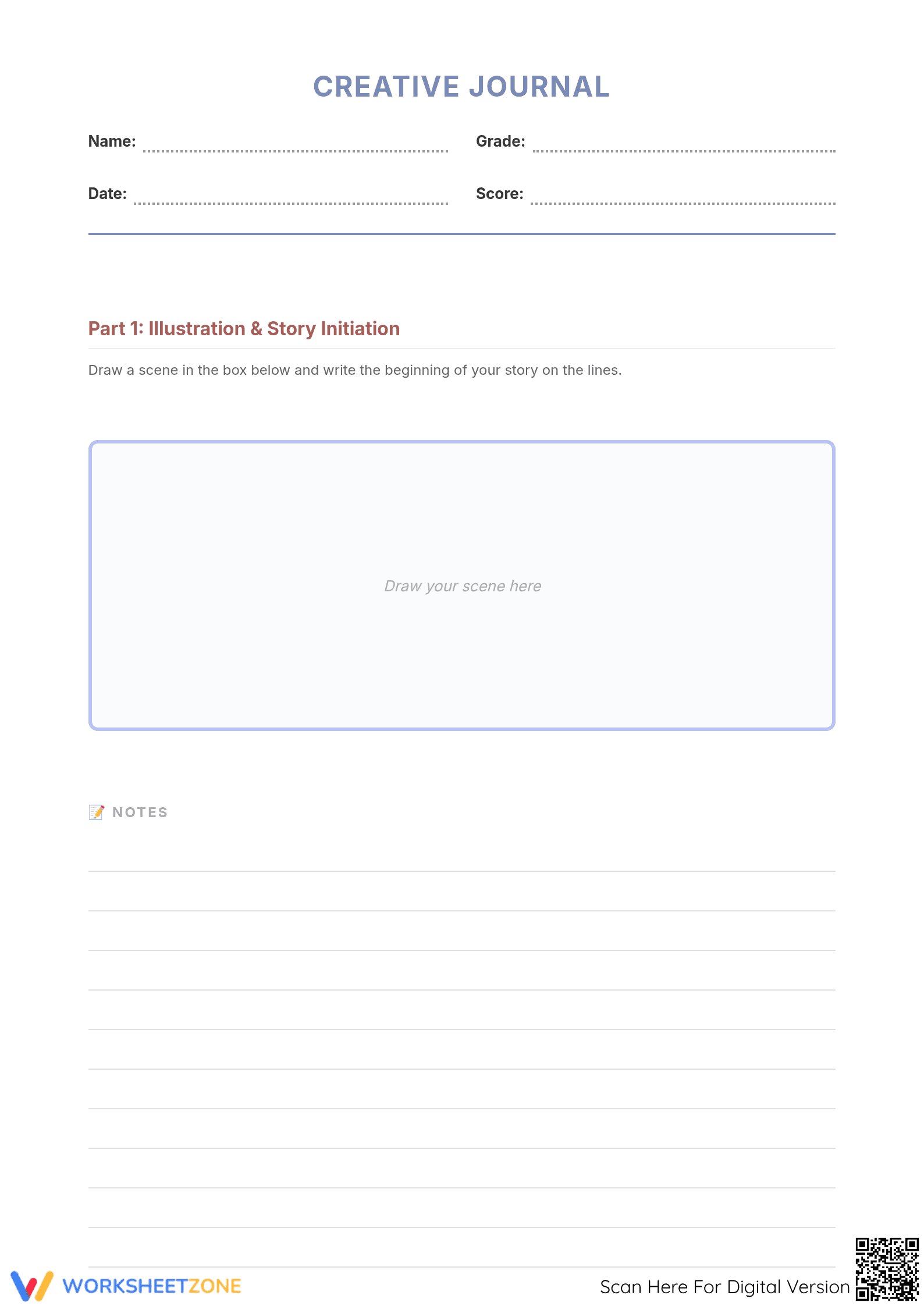
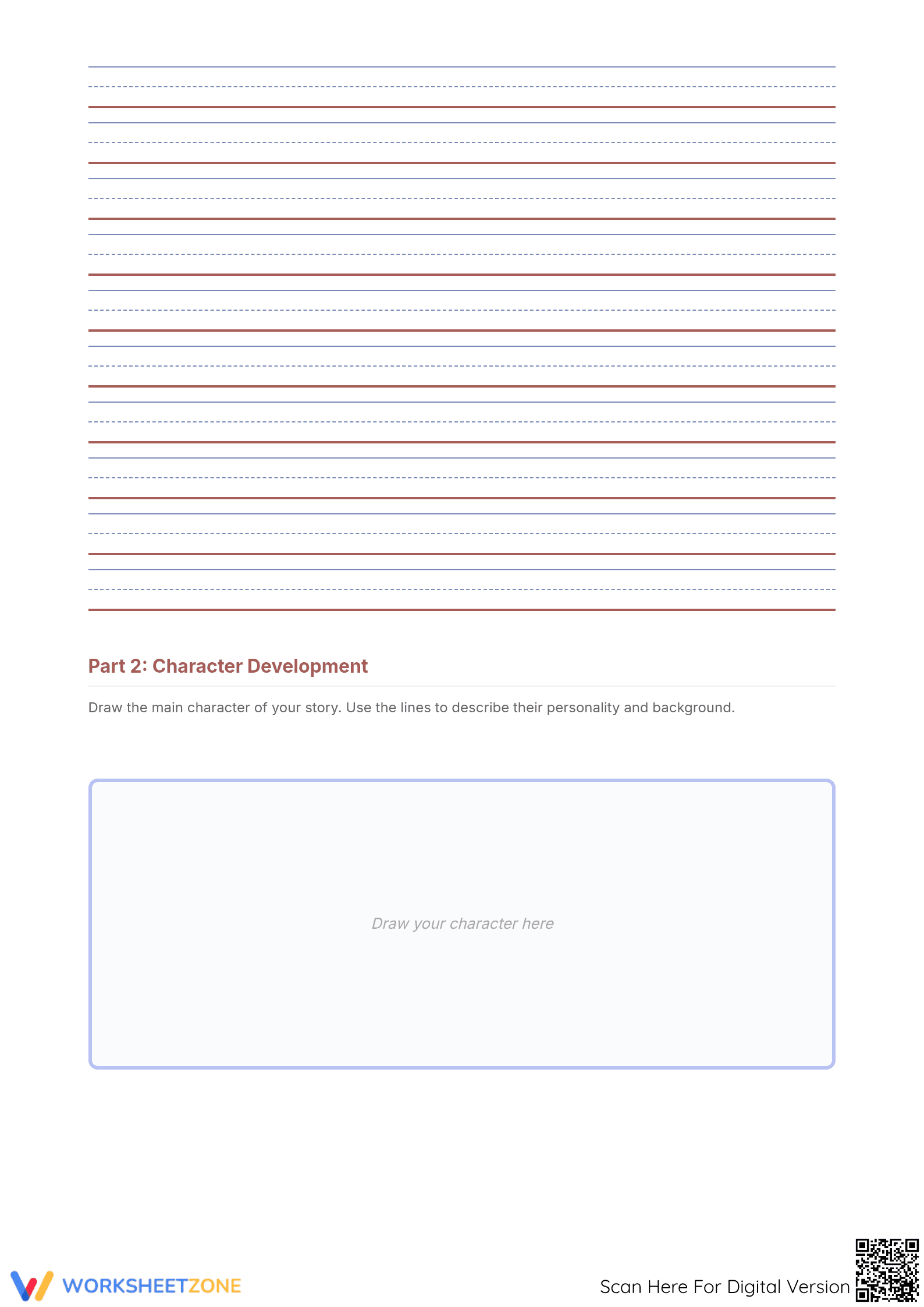
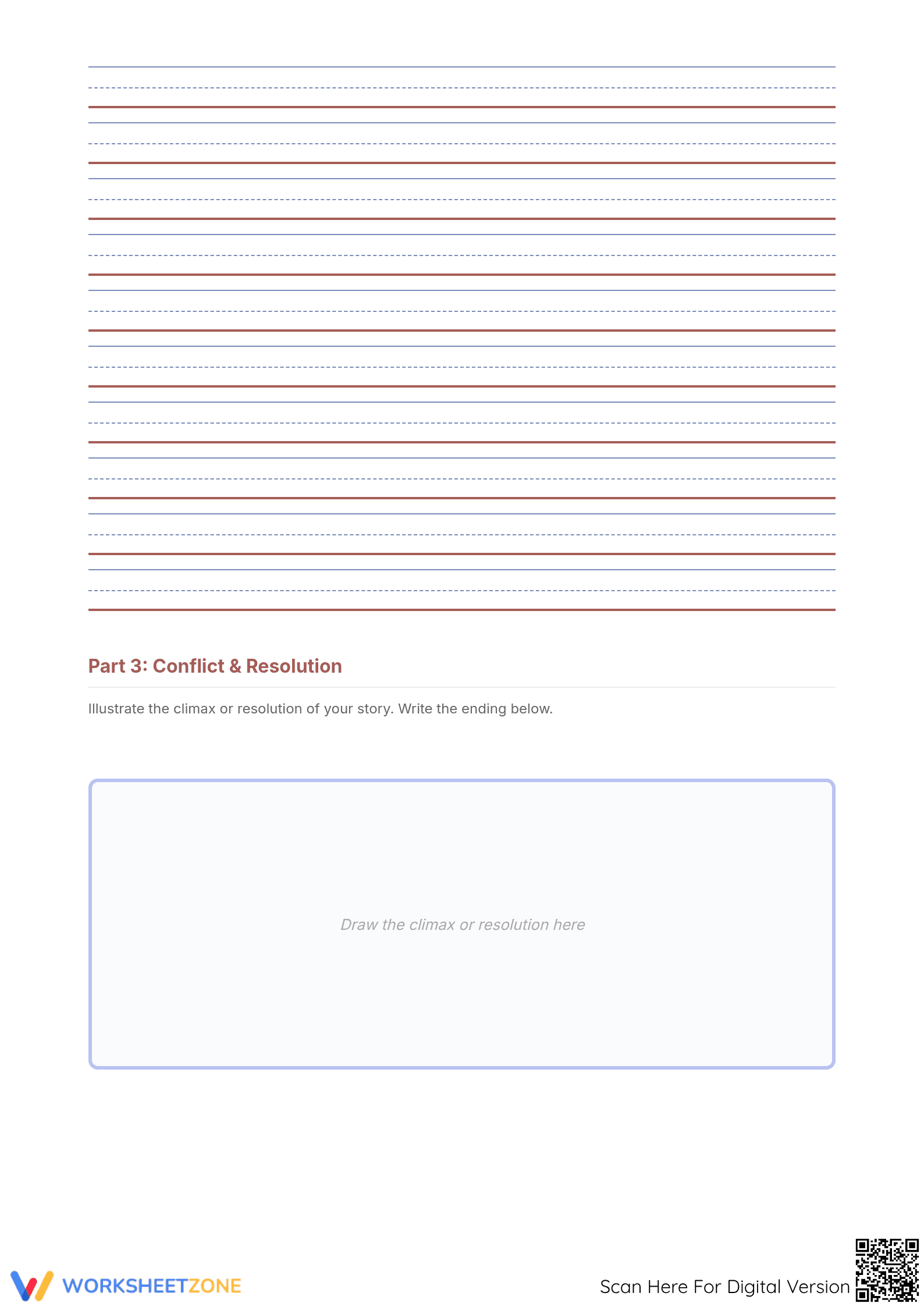
What's Inside: This 4-page PDF features a "Creative Journal" theme with three distinct sections. Part 1 focuses on story initiation with a large illustration box and primary lines. Part 2 shifts to character development, providing space for visual and written descriptions. Part 3 concludes with conflict and resolution. The layout uses high-quality ruled lines suitable for middle school handwriting refinement and story drafting.
Zero-Prep Workflow: Teachers can implement this resource in under 2 minutes. First, print the 4-page PDF set for each student (30 seconds). Second, distribute the packets and explain the three-part narrative structure (1 minute). Third, review student progress during independent writing time or collect for formative feedback. This resource is an ideal "grab-and-go" option for substitute lesson plans or morning work.
Standards Alignment: The primary focus is `CCSS.ELA-LITERACY.W.6.3`, which requires students to write narratives using effective technique, relevant descriptive details, and well-structured event sequences. It also supports `CCSS.ELA-LITERACY.L.6.1` regarding handwriting legibility and grammar. Both standard codes can be copied directly into lesson plans, IEP goals, or district curriculum mapping tools.
How to Use It: Use this worksheet during the "independent practice" phase of a narrative writing unit. It serves as an excellent bridge between brainstorming and drafting a final essay. Alternatively, use it as a formative assessment tool to observe how students translate visual ideas into written text. Expected completion time is 30 to 45 minutes depending on student detail.
Who It's For: This resource is designed for Grade 6 and 7 students who need a structured template for creative expression. It is particularly effective for visual learners and students working on handwriting neatness. Pair this with a mentor text or a character trait anchor chart to provide additional scaffolding for struggling writers.
Effective narrative instruction requires students to integrate visual planning with linguistic execution. This worksheet aligns with the "gradual release of responsibility" model by providing specific prompts for story initiation, characterization, and resolution. According to Fisher & Frey (2014), providing structured graphic organizers and templates helps middle school students organize complex thoughts before drafting. Research from the NAEP indicates that students who engage in regular, structured writing practice demonstrate higher proficiency in communicative clarity and legibility. By utilizing the CCSS.ELA-LITERACY.W.6.3 framework, this resource ensures that creative journaling remains grounded in academic rigor. The inclusion of dedicated illustration space acknowledges the cognitive link between drawing and writing, a strategy proven to increase engagement among adolescent learners. This 4-page printable serves as a reliable tool for tracking student growth in both handwriting precision and narrative coherence over time.


