


























Views
Downloads

Grade 2 Small Moment Writing — Printable No-Prep Worksheet
Paste this activity's link or code into your existing LMS (Google Classroom, Canvas, Teams, Schoology, Moodle, etc.).
Students can open and work on the activity right away, with no student login required.
You'll still be able to track student progress and results from your teacher account.
This comprehensive story planning worksheet guides Grade 2 and 3 students through the essential steps of crafting a "small moment" narrative. By breaking down the writing process into manageable sensory and chronological segments, it empowers young authors to organize their thoughts before drafting. Students will develop stronger descriptive skills and logical sequencing through targeted prompts.
At a Glance
- Grade: 2 · Subject: English Language Arts
- Standard:
W.2.3— Write narratives recounting a well-elaborated event or short sequence of events- Skill Focus: Small Moment Narrative Planning
- Format: 4 pages · 7 tasks · Answer key not required · High-quality PDF
- Best For: Individual writing workshop story planning sessions
- Time: 20–30 minutes
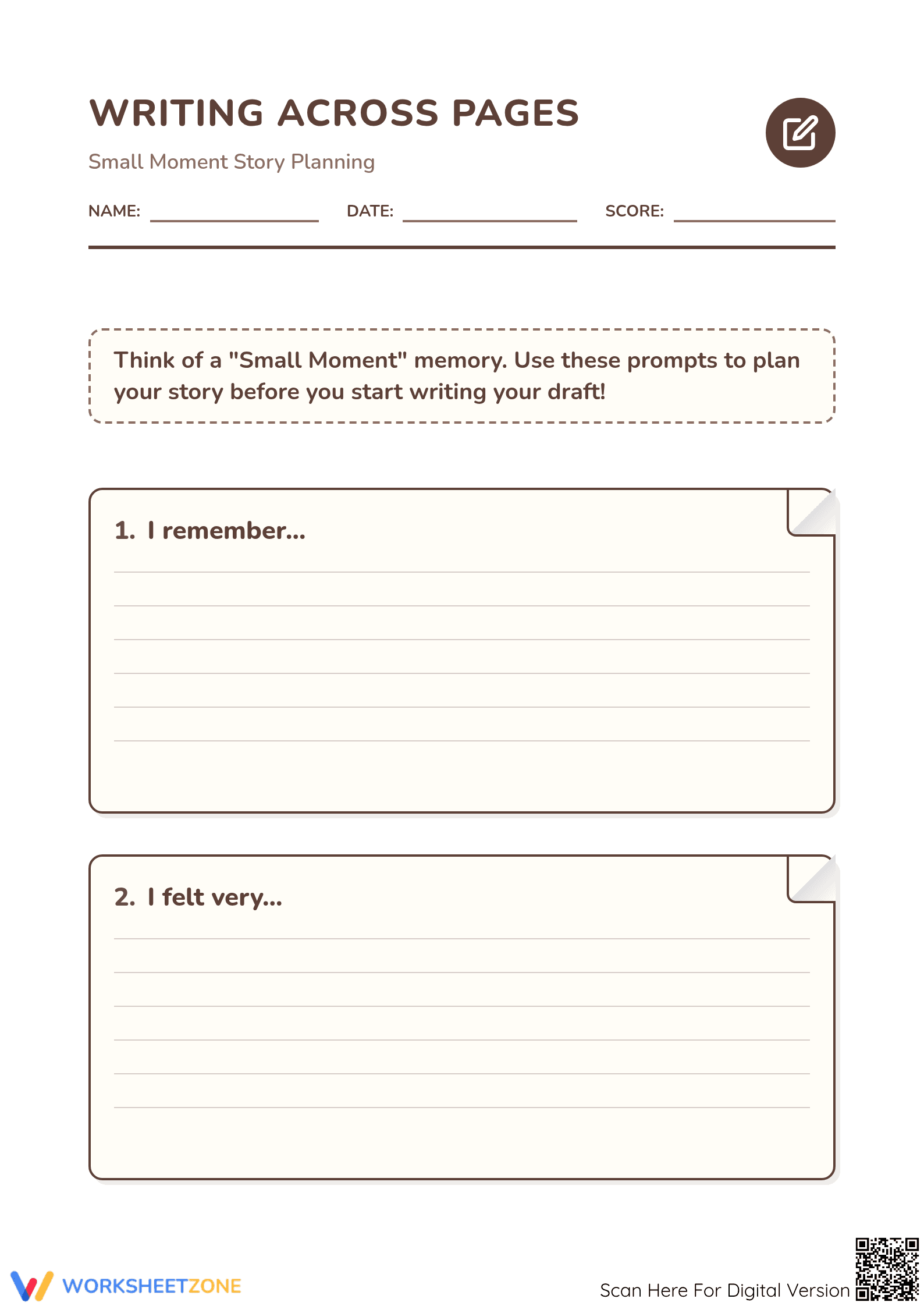
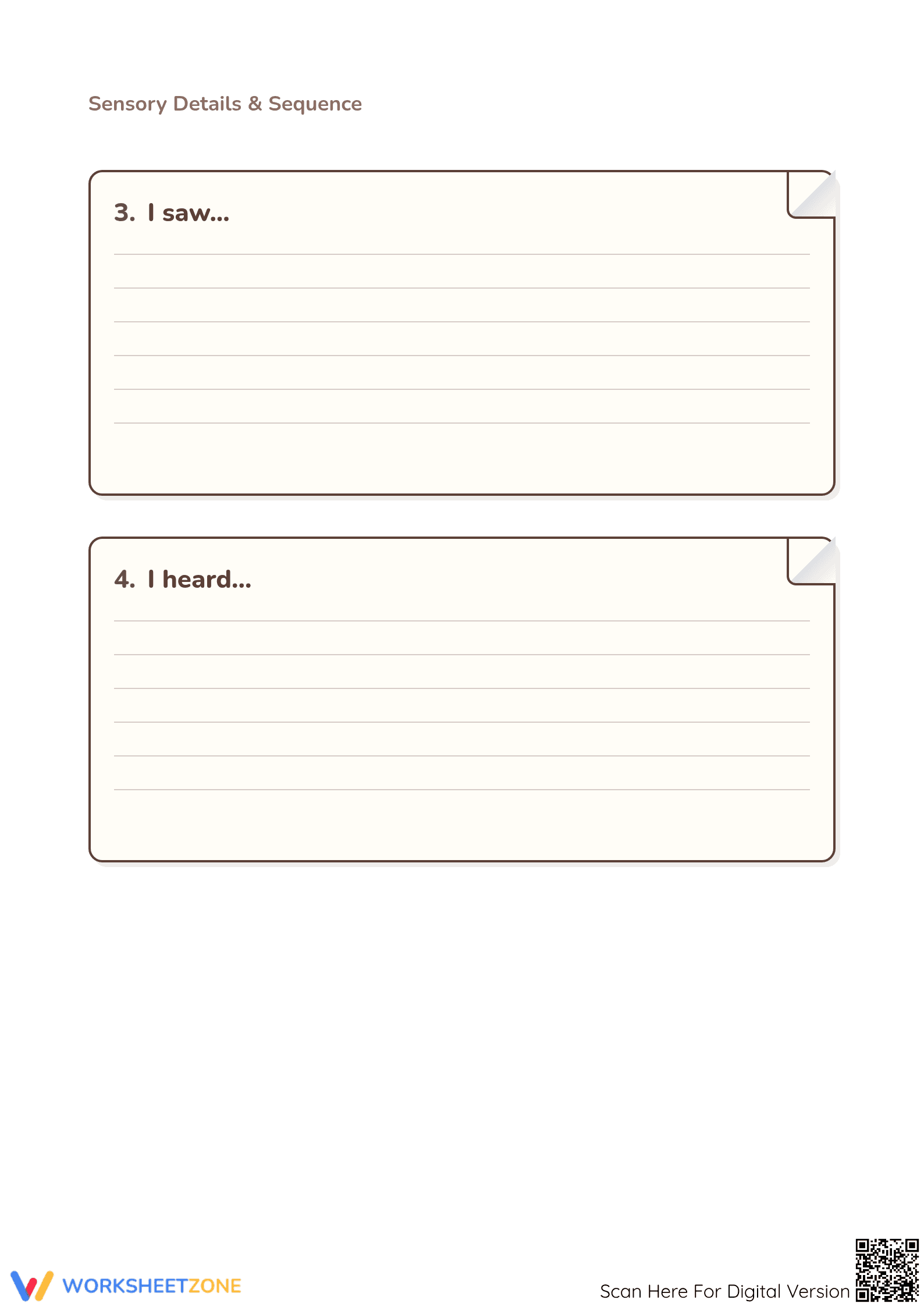
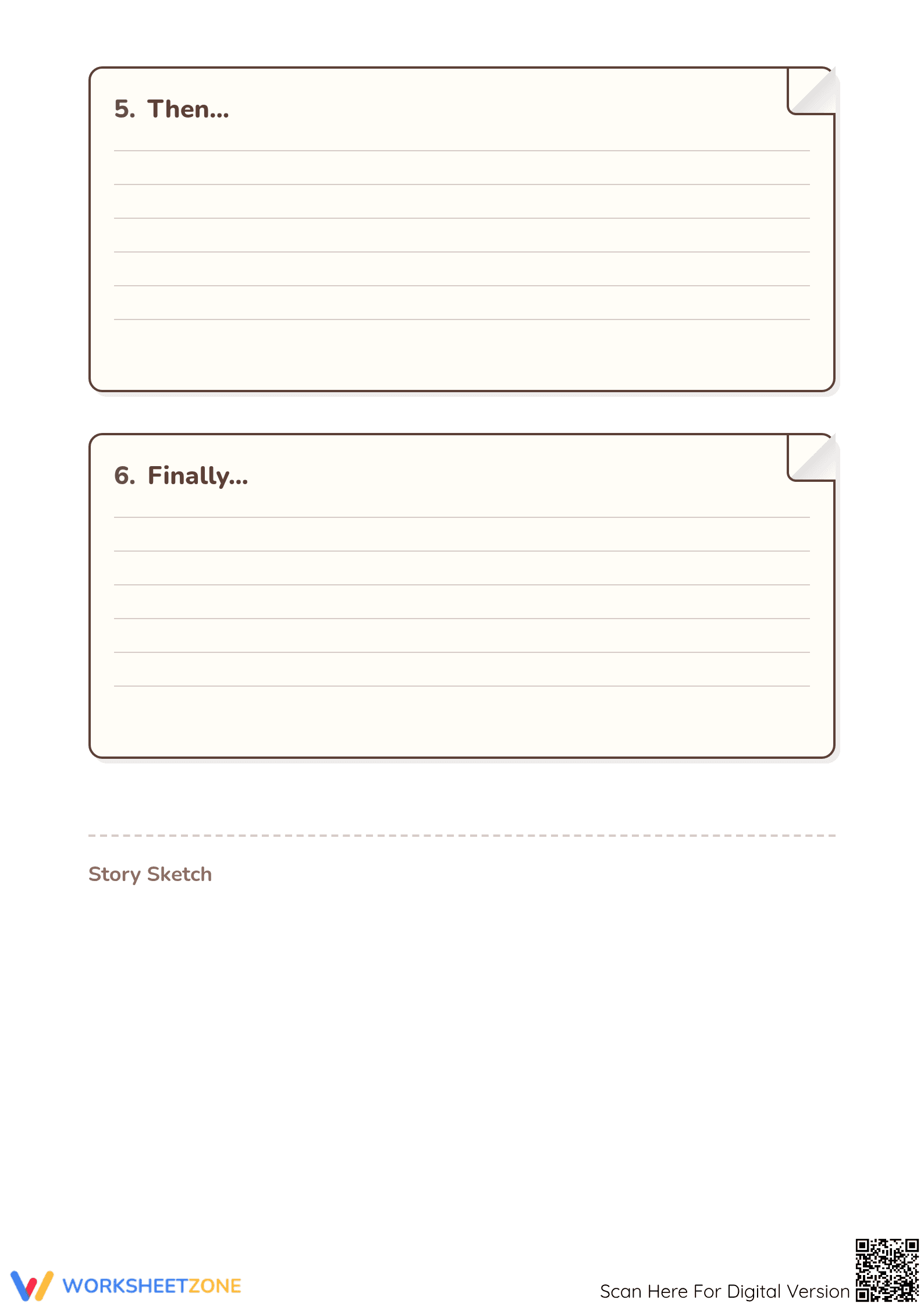
The four-page PDF packet features a logical progression of narrative elements. The first page anchors the story in memory and emotion, while the second page focuses on sensory details like sight and sound. The third page facilitates transition through "Then" and "Finally" prompts, leading into a final "Story Sketch" page for visual planning.
The zero-prep design allows teachers to integrate this resource into their writing blocks in under two minutes. Simply print the four-page packet, distribute it to students, and provide a brief verbal prompt to begin brainstorming "small moments." This streamlined workflow makes it an ideal choice for emergency sub plans or spontaneous writing center activities, requiring no additional materials or complex setup.
This resource is directly aligned with `CCSS.ELA-LITERACY.W.2.3`, which requires students to write narratives that recount a well-elaborated event or short sequence of events, including details to describe actions, thoughts, and feelings. It also supports sequencing skills through temporal words. This standard code can be copied directly into lesson plans, IEP goals, or district curriculum mapping tools.
Use this planner during the pre-writing phase of a narrative unit to help students narrow their focus from broad topics to specific "small moments." As a formative assessment tool, teachers can observe student responses to sensory prompts to identify who might need additional support with descriptive vocabulary. Completion typically takes between twenty and thirty minutes.
Designed for second and third-grade writers, this worksheet provides the necessary structure for both emerging and fluent narrators. It pairs naturally with mentor texts that emphasize personal narratives or "seed" stories. Differentiation is built into the open-ended prompts, allowing students to respond at their individual writing level while using the same organizational framework.
According to the EdReports 2024 analysis of writing instructional materials, the implementation of structured narrative planning tools significantly enhances student ability to maintain focus on a "small moment" without drifting into list-like recitations of events. This Grade 2 worksheet aligns with CCSS.ELA-LITERACY.W.2.3 by providing a scaffolded framework for recounting well-elaborated events. By isolating memory, emotion, sensory inputs (sight and sound), and chronological sequencing, the resource mirrors the gradual release of responsibility model advocated by Fisher & Frey (2014). Students transition from abstract recollection to concrete drafting readiness through seven intentional prompts. This alignment ensures that young writers develop the organizational stamina required for complex narrative tasks while adhering to foundational literacy standards. The inclusion of a visual sketch component further supports multimodal learning strategies, allowing students to anchor their verbal descriptions in spatial representation before initiating their formal draft, a practice proven to reduce cognitive load during the writing process.


