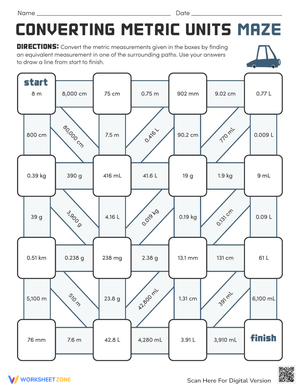
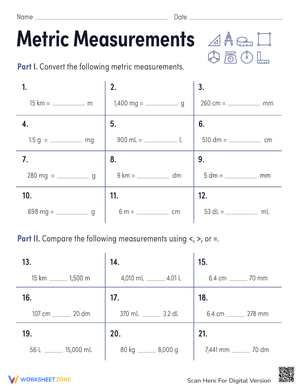
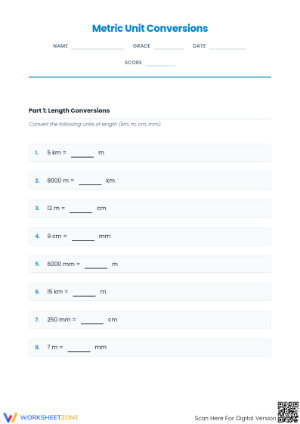
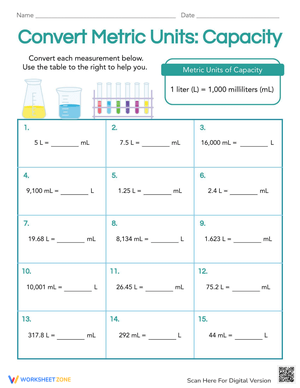
These scale and conversions worksheets give teachers in grades 4 through 7 a direct path into two measurement skills that students consistently find slippery: converting between units within a system and reading or constructing scale drawings. Both topics sit at the intersection of number sense and proportional reasoning, and both show up on state assessments in ways that reward procedural fluency paired with conceptual understanding.
The Specific Skills That These Scale and Conversion Worksheets Cover
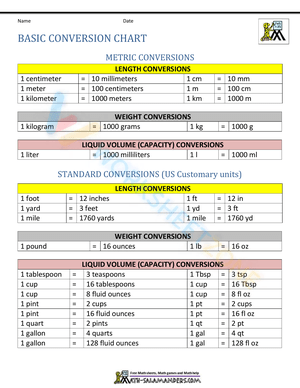
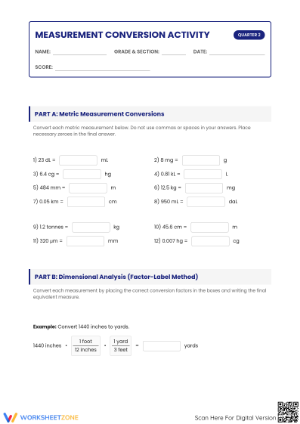
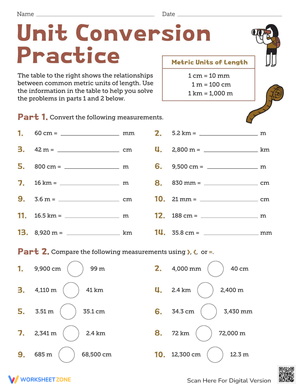
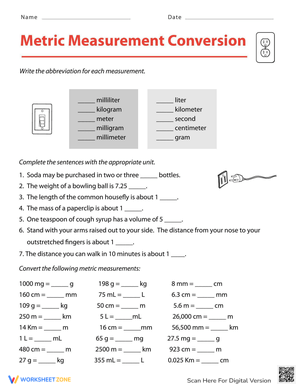
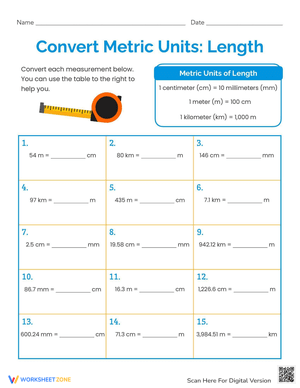
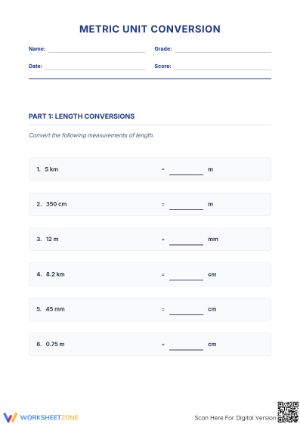
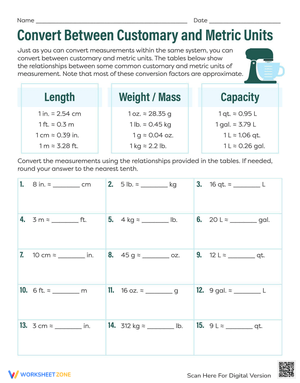
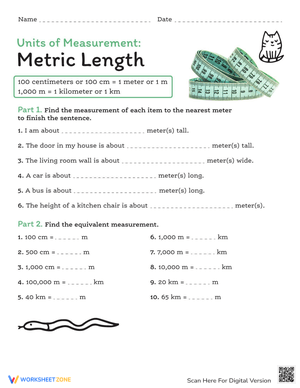
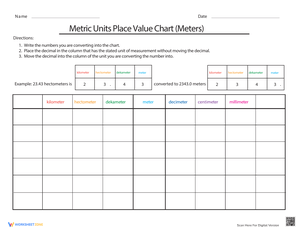
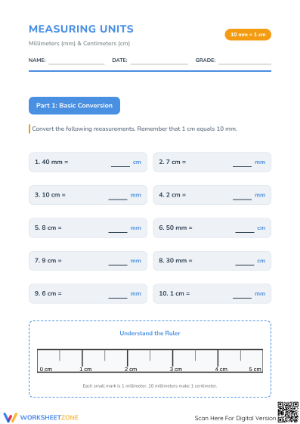
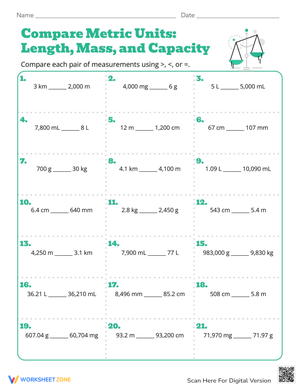
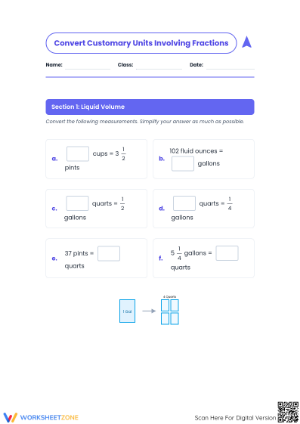
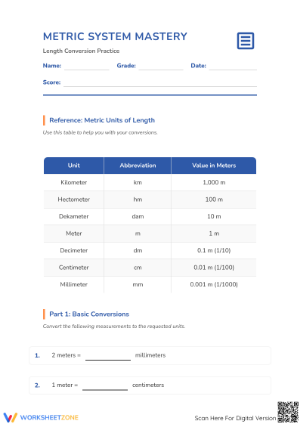
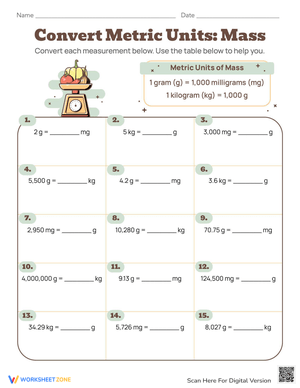
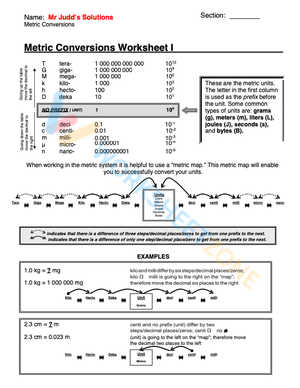
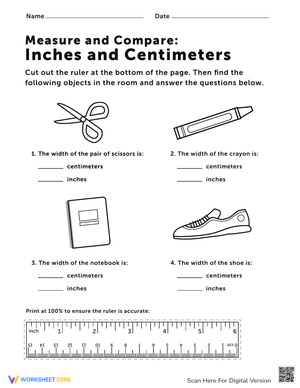
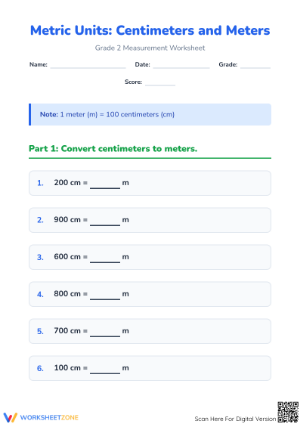
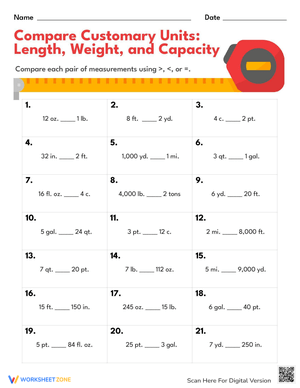
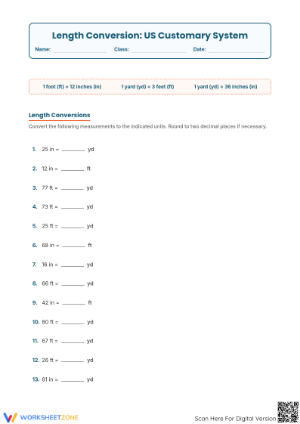
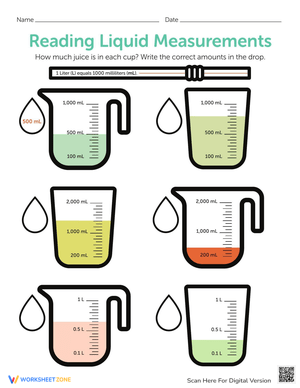
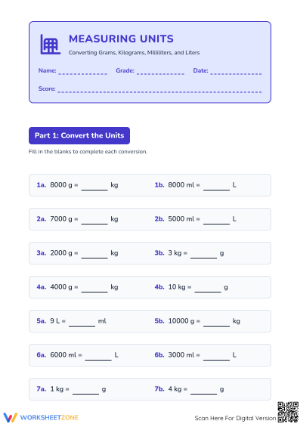
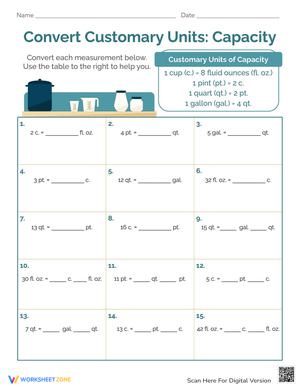
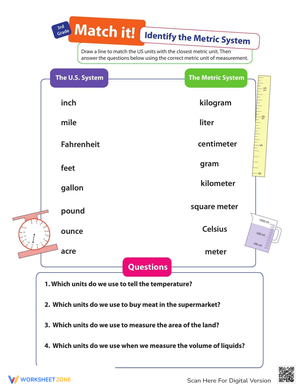
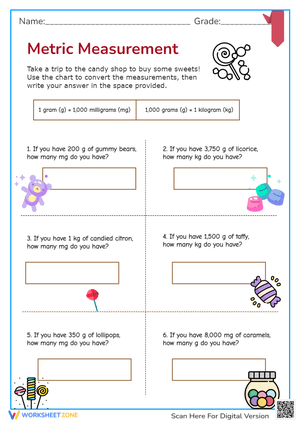
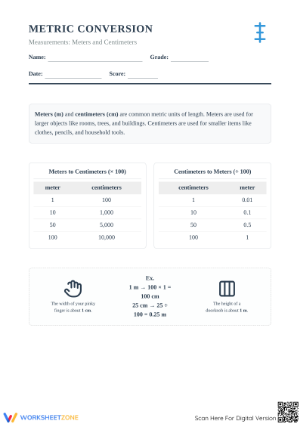
The worksheets span the full measurement strand from late elementary through middle school. On the conversion side, students work with customary length (inches, feet, yards, miles), customary weight and capacity, metric length and mass, and time. The customary system is harder for most students to internalize because the multipliers are irregular — 12 inches to a foot, then 3 feet to a yard, then 1,760 yards to a mile — and each relationship has to be learned individually. Metric work is structurally cleaner, but students stumble differently there: they know that the prefix kilo- means "times 1,000" in the abstract yet still write 3.5 km = 35 m on a quiz because they haven't internalized which direction to move the decimal.
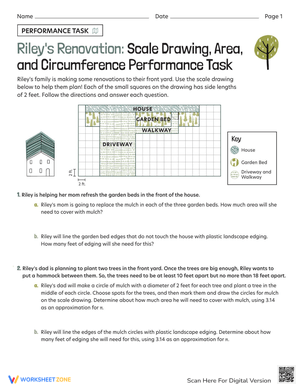
The scale drawing pages ask students to read map scales and compute actual distances, use scale factors to find missing dimensions in floor plans or blueprints, and in more advanced problems, calculate actual area from a scaled diagram — a step that trips up even students who handle the length problems cleanly. The ratio-writing and simplification work threaded through these pages connects measurement directly to proportional reasoning, which makes them useful during a ratio unit as well as a measurement unit.
Standards Alignment
Conversion work enters the curriculum formally at grade 4 with single-step problems inside one system — converting 48 inches to feet, for instance. By grade 5, CCSS.Math.Content.5.MD.A.1 expects students to convert across different-sized units within a given measurement system and use those conversions inside multi-step word problems. That last requirement matters: a worksheet that only drills the conversion fact without embedding it in a problem context doesn't fully address what the standard asks. Grade 6 extends this into cross-system comparisons and more complex contexts.
Scale drawings arrive in grade 6 and deepen through grade 7, where CCSS.Math.Content.7.G.A.1 asks students to reproduce a drawing at a different scale and to compute actual lengths and areas. A worksheet that stops at "read the scale and find the distance" leaves out the computation of area, which requires students to recognize that a scale factor applied to length must be squared when applied to area — a conceptual hurdle that pure distance problems don't surface.
Common Mistake Of Students That Teachers Should Aware and Address
The most common conversion error isn't a fact error — it's a direction error. Students who correctly recall that 1 yard equals 3 feet will still convert 5 yards to feet by dividing instead of multiplying, because they haven't built a reliable mental model of which operation makes the unit smaller or larger. A useful diagnostic: ask a student to estimate before computing. If they can say "feet are smaller than yards, so the number of feet should be bigger," they have the concept. If they can't, the worksheet is doing arithmetic practice, not measurement reasoning.
On scale drawing pages, the most frequent error involves misidentifying what the scale ratio represents. A student reads a map legend that says 1 inch = 50 miles, measures a route as 3.5 inches, and writes 50 ÷ 3.5 instead of 50 × 3.5 — inverting the relationship because they grabbed the wrong number to put on top of the proportion. The error is nearly invisible in the student's written work until you ask them to explain which quantity is larger in real life. Worksheets that require students to label their proportion setup — rather than just produce a numeric answer — catch this error before it calculates away.
Recommended Lesson Planning Strategies To Take Full Advantages Of These Worksheets
A single-page conversion worksheet runs well as a Monday warm-up during a measurement unit — five or six problems while attendance is taken, then a two-minute check. The short format keeps cognitive load manageable and builds the retrieval practice that spacing research supports. Exit tickets work the same way at the close of a lesson: one or two problems that ask students to convert in both directions (feet to inches, then inches to feet) give a fast read on who has the concept and who is still guessing at the operation.
The scale drawing pages take more time and work better mid-class. A practical sequence: five minutes looking at an actual floor plan or map image together, then the worksheet with the scale factor visible on the page, then a brief partner discussion about setup before students work independently. The scaffolded pages — those that include a reference table or a worked example — are worth printing for the students who freeze when a problem uses an unfamiliar context. Students who are ready to extend get the multi-step version that asks them to compute area or write the scale as a simplified ratio.
One classroom move worth adding: after a conversion worksheet, ask two or three students to write their own word problem that requires the same conversion. A student who can construct a context — "I have 2.5 gallons of paint; how many quarts is that?" — understands the relationship at a different level than a student who can only execute the procedure when prompted. It takes four minutes and functions as a much sharper formative check than reviewing the answer key together.
Frequently Asked Questions
My students get the conversion fact right but choose the wrong operation. What helps?
This is the most common issue, and it usually means students are executing memorized steps without a mental model. Before the worksheet, have students predict: "If I convert yards to feet, should my answer be a bigger number or a smaller number?" Getting that prediction right first — and explaining why — makes the operation choice follow logically rather than require guessing. A brief class discussion of two or three students' reasoning aloud often does more than another set of practice problems.
Do the scale drawing worksheets cover computing area, or just finding lengths?
Both are included, but they appear at different levels. The introductory pages focus on reading distances from a scale; the more advanced pages ask students to calculate actual area from a scale diagram. If you're targeting 7.G.A.1 specifically, use the pages that include the area step — the standard explicitly requires it, and distance-only problems won't prepare students for what that standard assesses.
Can these work for students who have already passed the grade-level standard but need maintenance practice?
Yes — spaced retrieval is the main value there. A single page every two or three weeks keeps conversion and scale reasoning accessible across the year, which matters because these skills reappear in geometry, science, and later ratio work. The multi-step word problem pages are the right choice for students who have the basics and need the skill exercised in less routine contexts.













 Interactive Worksheet Maker
 Quiz Maker
 Word Search Maker
 Crossword Puzzle Maker
 Word Scramble Generator
 Sentence Scramble Generator
 Handwriting Worksheet Generator
 Name Tracing Generator
 Fill In The Blank Generator