


























Views
Downloads
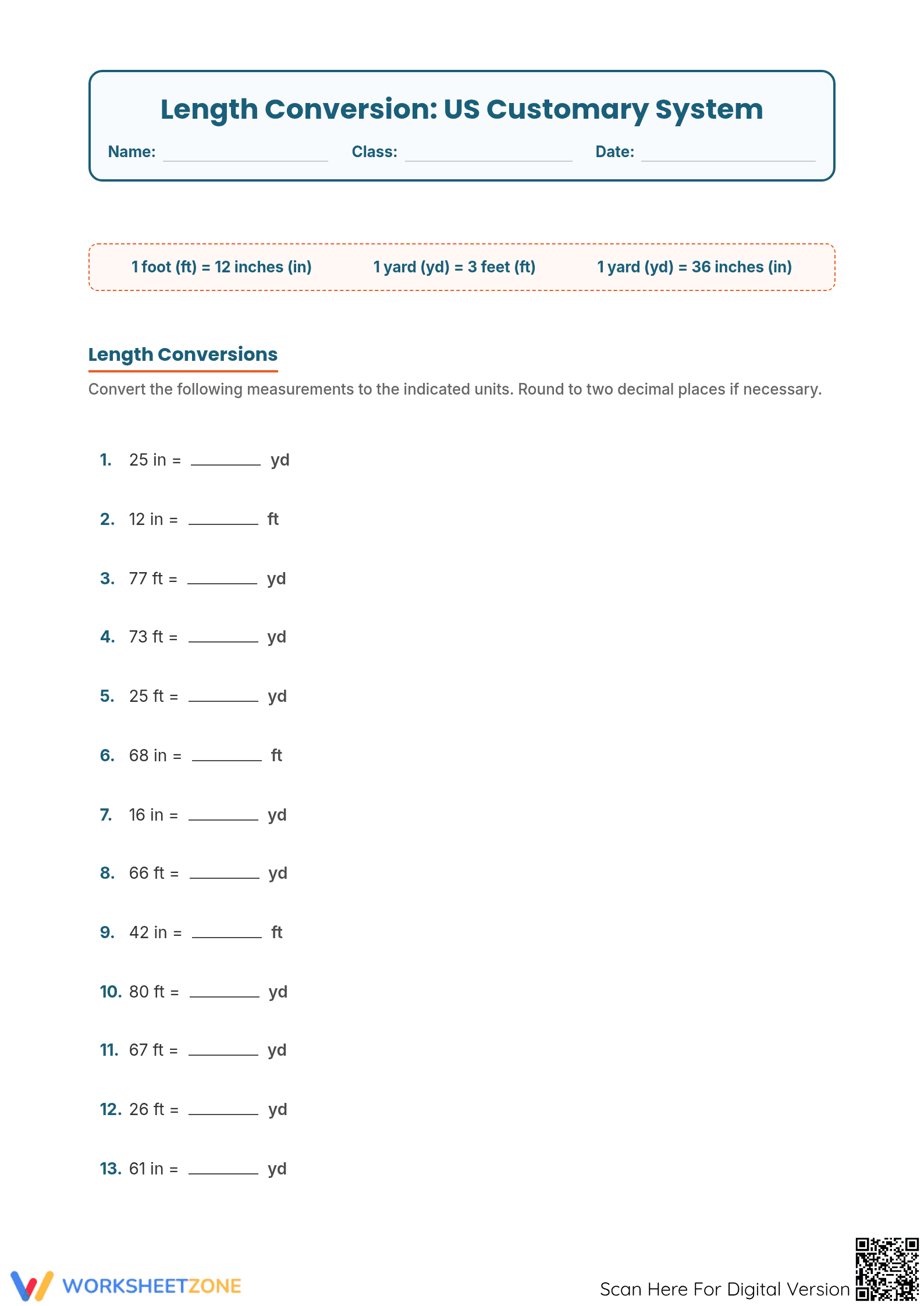
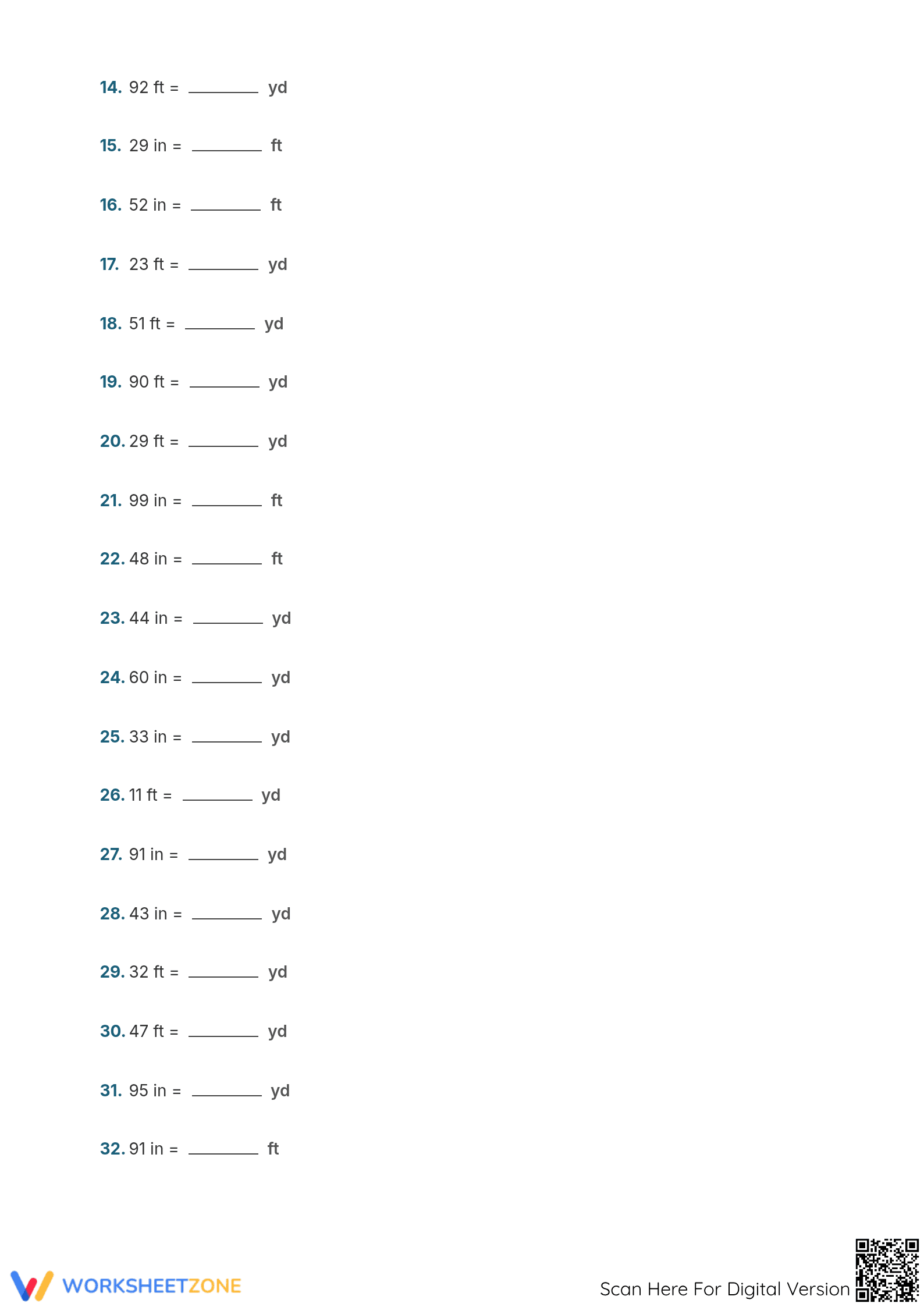
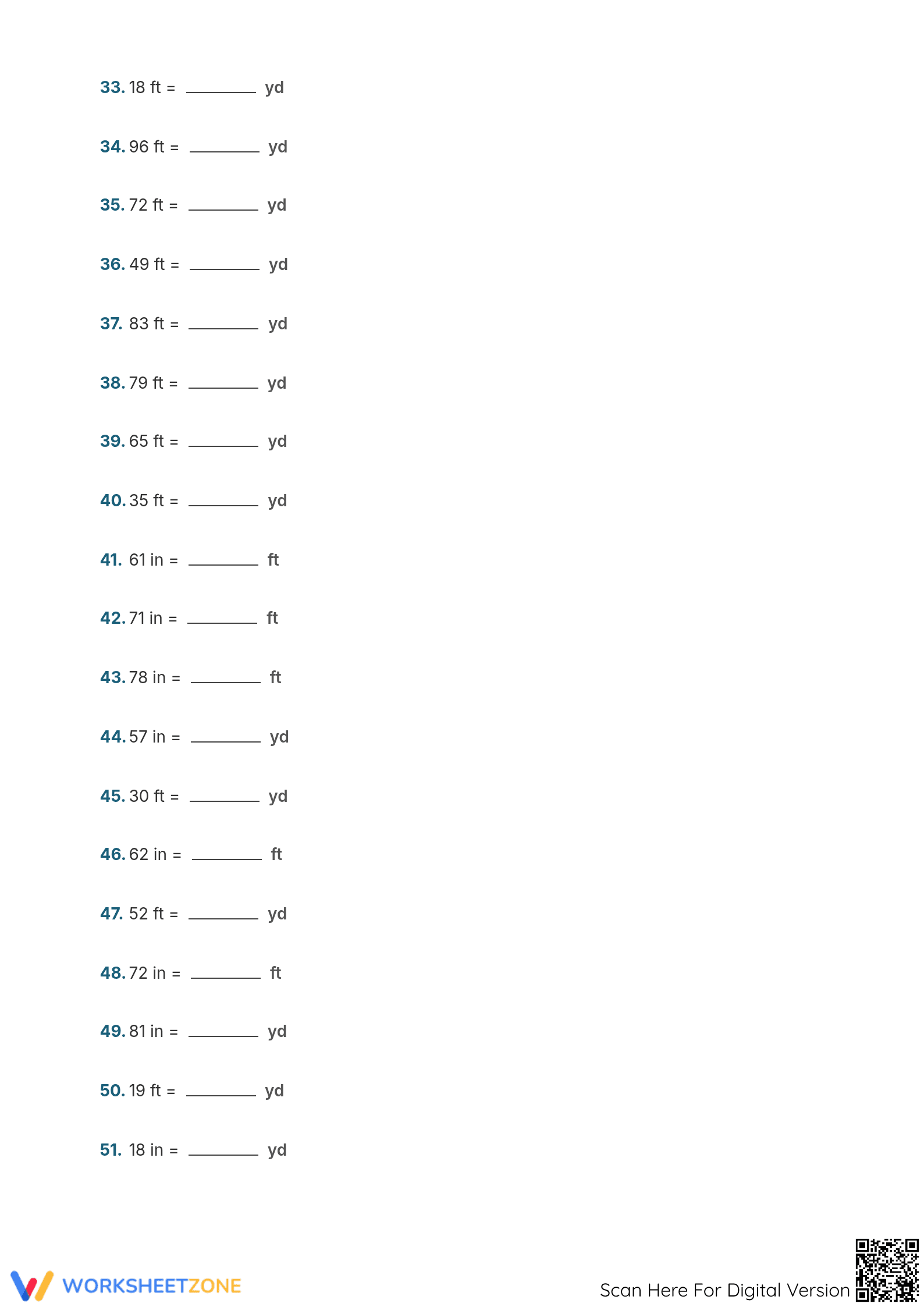
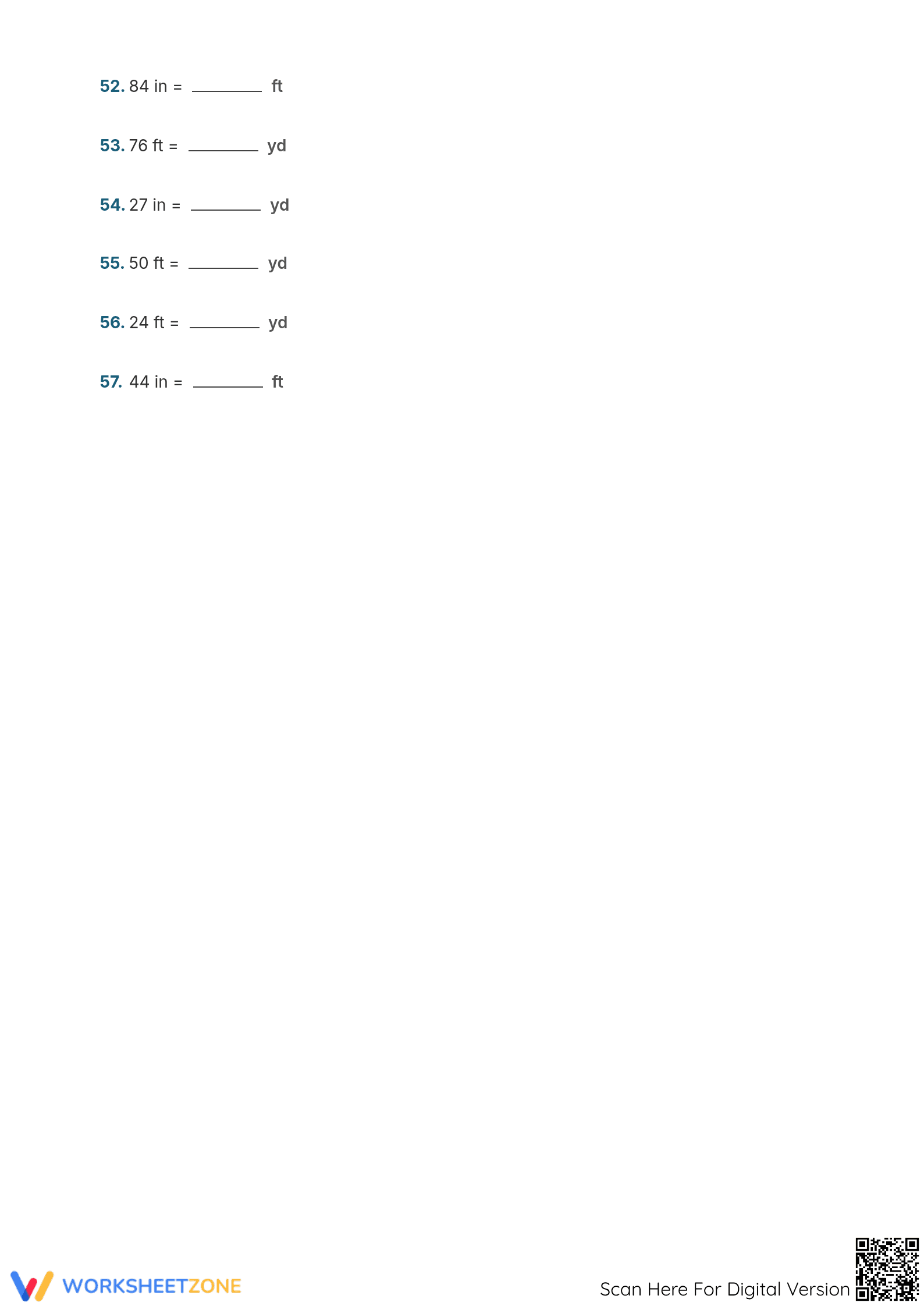

5.MD.A.1 Worksheet: U.S. Measurement — Grade 5 Aligned
Paste this activity's link or code into your existing LMS (Google Classroom, Canvas, Teams, Schoology, Moodle, etc.).
Students can open and work on the activity right away, with no student login required.
You'll still be able to track student progress and results from your teacher account.
This Grade 5 math worksheet provides comprehensive practice on converting U.S. customary units of length, directly aligning with key measurement standards. Students will work through 38 problems, moving from basic conversions of inches, feet, and yards to solving multi-step word problems, solidifying their understanding of the imperial system.
At a Glance
- Grade: 5 · Subject: Math
- Standard:
CCSS.MATH.CONTENT.5.MD.A.1— Convert different-sized measurement units within the same system.- Skill Focus: Converting U.S. Customary Units of Length
- Format: 4 pages · 38 problems · Answer key included · PDF
- Best For: Independent practice or skills reinforcement
- Time: 25–40 minutes
What's Inside
This four-page PDF resource includes three pages of student exercises and a full answer key. The worksheet is divided into six parts, starting with fill-in-the-blank length conversions, moving to comparison tasks (<, >, =), and finishing with real-world application word problems for a complete practice session.
Mastery Evidence
This worksheet builds evidence of mastery for standard CCSS.MATH.CONTENT.5.MD.A.1. The task sequence maps directly to the standard's demands, starting with procedural fluency in unit conversions. Students then apply this knowledge to comparison problems, before tackling multi-step word problems that assess their ability to use conversions to solve real-world challenges. This progression provides clear data points on student performance, from basic computation to applied reasoning, making it easy to track progress.
Standards Alignment
This worksheet is aligned to Common Core standard CCSS.MATH.CONTENT.5.MD.A.1, requiring students to "Convert among different-sized standard measurement units within a given measurement system... and use these conversions in solving multi-step, real world problems." The tasks focus on the U.S. customary system for length and also support CCSS.MATH.PRACTICE.MP1. Standard codes can be copied directly into lesson plans, IEPs, or curriculum maps.
How to Use It
Use this worksheet for independent practice following a lesson on U.S. customary length. It is also an effective tool for math centers or as homework. For formative assessment, observe where students struggle—direct conversions, comparisons, or word problems—to identify specific learning gaps. Most students will complete the activities in 25 to 40 minutes, providing a solid block of focused work.
Who It's For
This resource is designed for 5th-grade students learning measurement conversions. It can be used for enrichment for 4th graders or for review for 6th graders. The straightforward layout and included answer key make it perfect for general education teachers, special education staff, and substitutes. Pair it with an anchor chart of conversion factors to support all learners.
This worksheet delivers focused practice on CCSS.MATH.CONTENT.5.MD.A.1, a critical standard for developing measurement fluency. By requiring students to convert among different-sized U.S. customary units, it builds a foundational understanding necessary for more advanced mathematical and scientific concepts. Research underscores the importance of procedural fluency linked to conceptual understanding. Fisher & Frey (2014) emphasize that practice must be purposeful, and this resource provides exactly that by progressing from simple conversions to complex problem-solving. The 38 structured problems give students the repeated, deliberate practice needed to internalize conversion factors and apply them flexibly. This approach, which connects abstract numbers to tangible lengths like feet and miles, helps students build a durable mental model of the measurement system, aligning with findings on effective math instruction from the NAEP.


