


























Views
Downloads
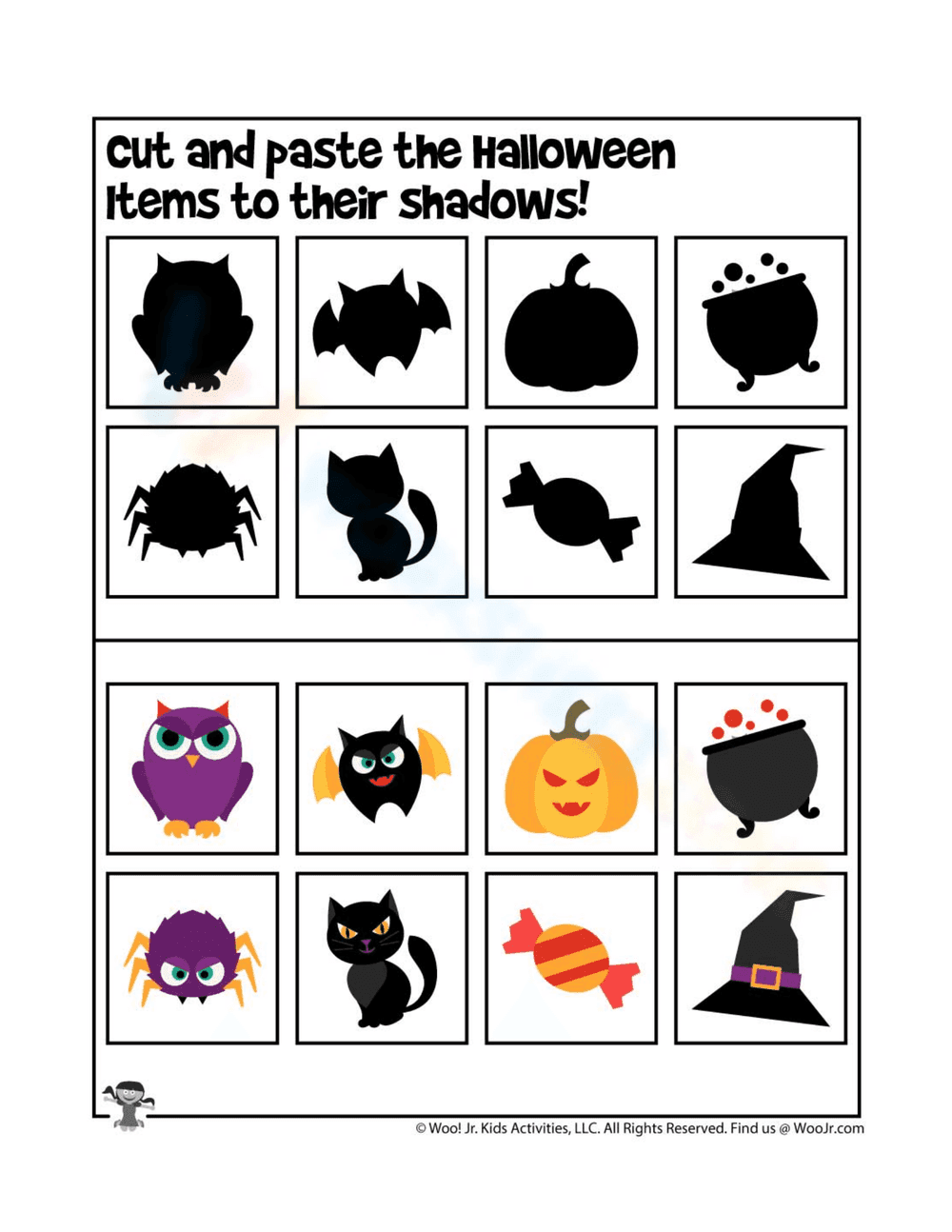

Halloween Shadow Matching | Printable Kindergarten Worksheet
Paste this activity's link or code into your existing LMS (Google Classroom, Canvas, Teams, Schoology, Moodle, etc.).
Students can open and work on the activity right away, with no student login required.
You'll still be able to track student progress and results from your teacher account.
This engaging Kindergarten shadow matching worksheet helps students develop essential visual discrimination and fine motor skills. By observing shapes, early learners practice identifying corresponding pairs while celebrating Halloween. The hands-on cut-and-paste format keeps young students actively involved.
At a Glance
- Grade: Kindergarten · Subject: Early Learning
- Standard:
CCSS.MATH.CONTENT.K.MD.B.3— Classify and match objects based on visual attributes- Skill Focus: Visual Discrimination & Fine Motor
- Format: 1 page · 8 problems · No answer key needed · PDF
- Best For: Morning work or centers
- Time: 10–15 minutes
What's Inside
This single-page resource features eight Halloween-themed illustrations, including an owl, bat, pumpkin, cauldron, spider, cat, candy, and witch hat. The top half displays solid black silhouettes, while the bottom provides full-color images. Students cut out the colored items and paste them over their exact matching shadows. The layout is intuitive, requiring no answer key, and includes clear outlines to support developing scissor skills.
Zero-Prep Workflow
- Print (1 min): Print the single-page PDF. No special paper required.
- Distribute (1 min): Hand out sheets, scissors, and glue. Visual instructions are self-explanatory.
- Review (0 min): The matching nature allows immediate visual confirmation of accuracy.
Total teacher prep time is under two minutes, making this ideal for fall lesson plans or substitute binders.
Standards Alignment
This activity aligns with CCSS.MATH.CONTENT.K.MD.B.3: Classify objects into given categories. Matching shapes to silhouettes builds foundational geometry and categorization skills required by this standard. Both standard codes can be copied directly into lesson plans, IEP goals, or district curriculum mapping tools.
How to Use It
This worksheet is an excellent independent center activity during morning rotations. Teachers can introduce the concept by demonstrating how to look for specific edge details, like the spider's legs, before independent work. As a formative assessment observation tip, watch how students manipulate paper while cutting to gauge fine motor development. Expected completion time is 10 to 15 minutes.
Who It's For
Designed for Kindergarten students developing foundational visual and motor skills, this also serves as an intervention tool for occupational therapy support. For differentiation, teachers can pre-cut pieces for students struggling with scissor control, allowing focus on the cognitive matching task. Pair this activity with a seasonal read-aloud to reinforce concepts.
Developing early visual discrimination through targeted activities aligned with CCSS.MATH.CONTENT.K.MD.B.3 is absolutely critical for future reading and mathematical success. When students classify and match objects based on specific visual attributes, they actively strengthen the neural pathways required for letter recognition and geometric reasoning. According to Fisher & Frey (2014), integrating hands-on, tactile experiences like cutting and pasting significantly increases student engagement and retention of foundational concepts in early childhood educational settings. This specific shadow matching exercise requires young learners to carefully analyze spatial relationships, compare complex outlines, and execute precise fine motor movements. By combining these cognitive and physical demands into a single, highly accessible task, educators can efficiently support holistic early childhood development. The integration of familiar seasonal themes further contextualizes the learning experience, ensuring that young students remain focused and highly motivated while practicing these essential academic precursors.


