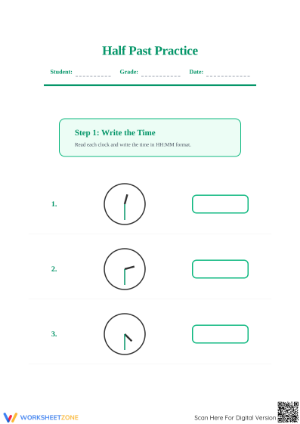
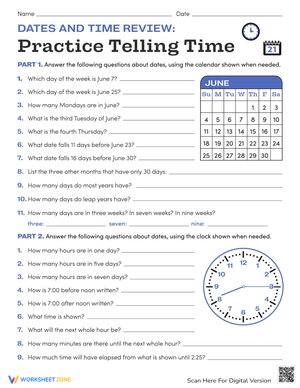
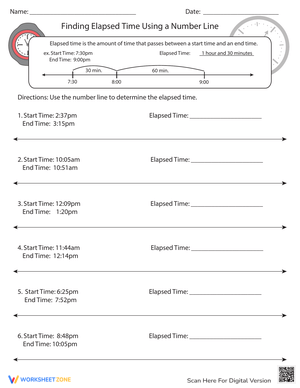
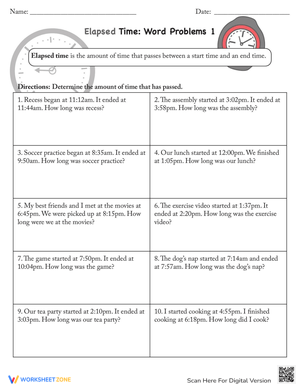
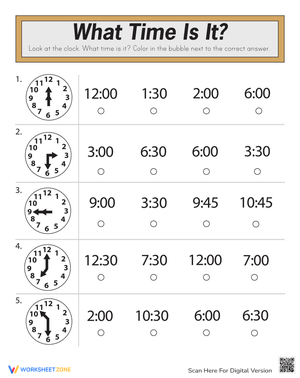
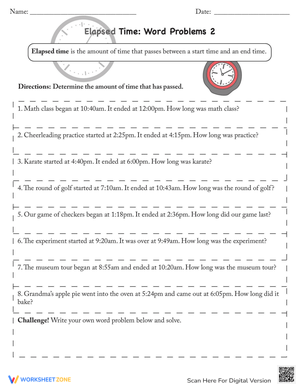
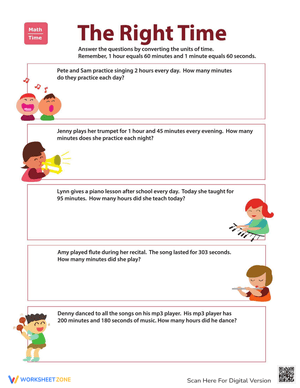
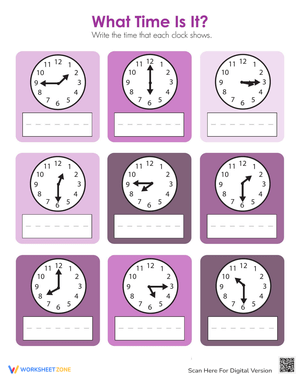
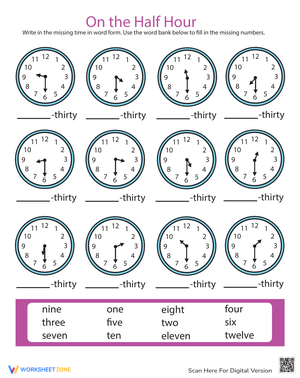
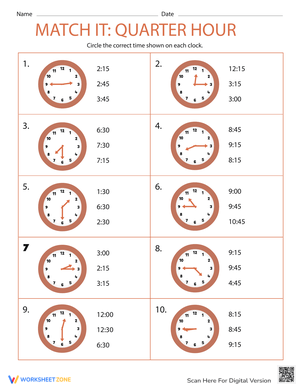
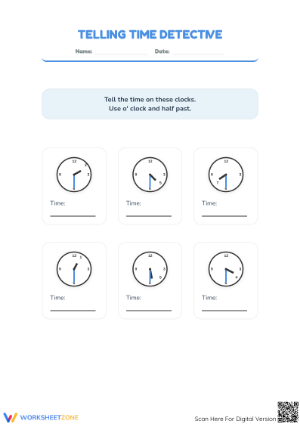
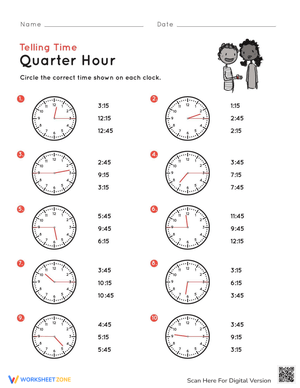
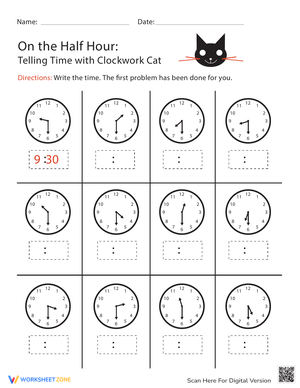
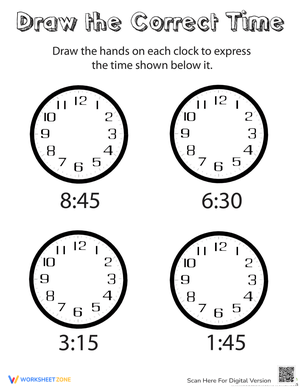
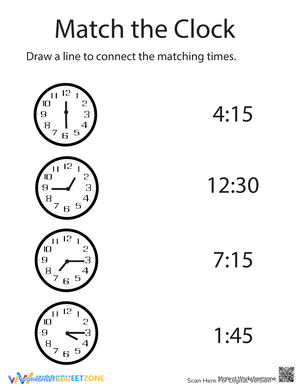
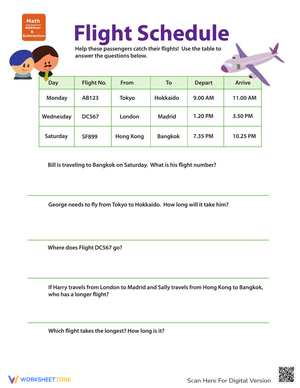
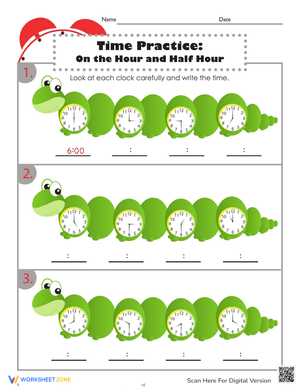
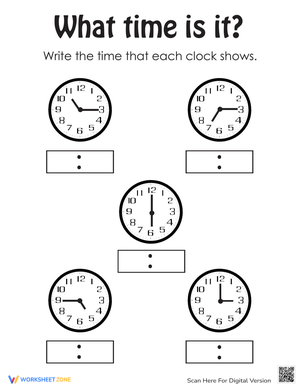
These time to the half hour worksheets give first-grade teachers structured, ready-to-print pages for one of the trickiest conceptual steps in early measurement: the moment when students realize the hour hand doesn't stay put. The set covers analog reading, digital writing, clock drawing, and matching tasks — enough variety to carry practice from introduction through independent mastery.
The Conceptual Hurdle Behind This Skill
Telling time to the hour is intuitive for most first graders because the hour hand lands squarely on a number. The half hour breaks that pattern. At 6:30, the hour hand sits in open space between 6 and 7, and nothing on the clock face labels that position. Students who successfully read 6:00 will often read 6:30 as either 7:00 (because the hour hand looks close to 7) or as 6:00 (ignoring the hand's movement entirely). This is not carelessness — it reflects a genuine developmental assumption that clock hands point to things. Worksheets that isolate the hour hand's midpoint position, with worked examples showing the hand's path from one number toward the next, address this directly rather than hoping repeated exposure corrects the error.
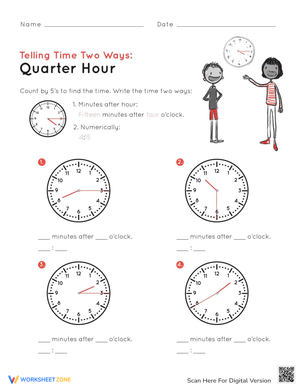
A second conceptual layer involves the minute hand: counting by fives around the clock to reach 30. Students who can count to 30 by ones don't automatically see why the 6 represents 30 minutes. Connecting that skip-count sequence to the clock face — and doing it more than once, in more than one format — is what moves the understanding from fragile to solid.
What's on the Pages
The worksheets cover the following task types, each targeting a different angle on the same skill:
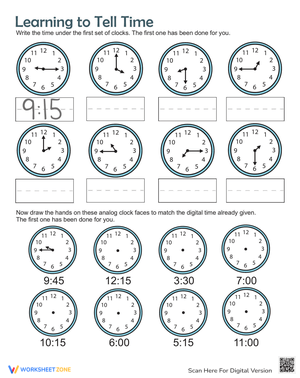
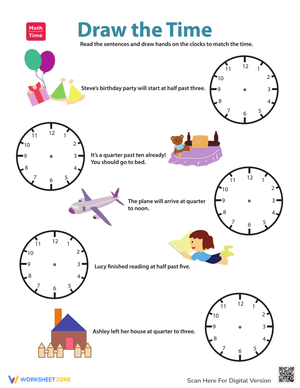
- Draw-the-hands tasks: students receive a blank clock face and a written time like 3:30, then draw both hands in the correct positions. This format catches the most common error — placing the hour hand on 4 instead of between 3 and 4 — because the student has to commit to a position rather than choose from options.
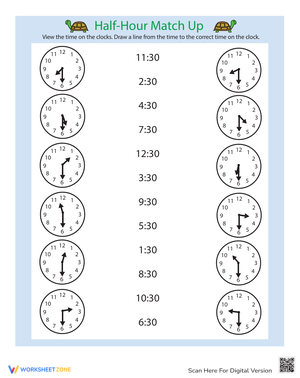
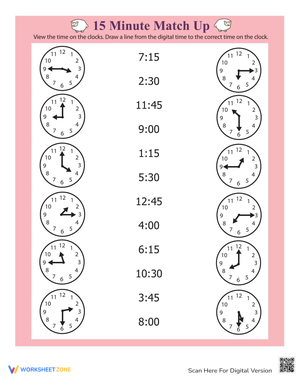
- Analog-to-digital matching: a set of drawn clocks paired with a list of digital times; students draw lines between matches. Useful for checking whether a student can read a clock but stumbles on writing the digital form, or vice versa.
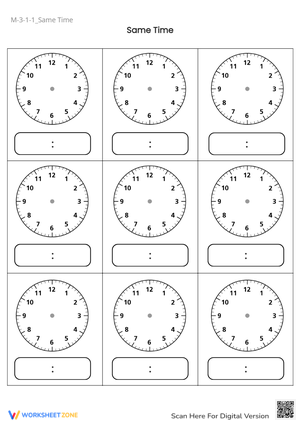
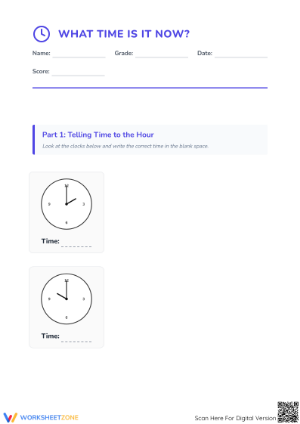
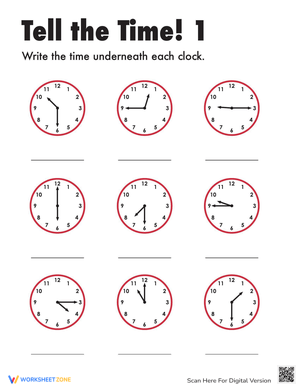
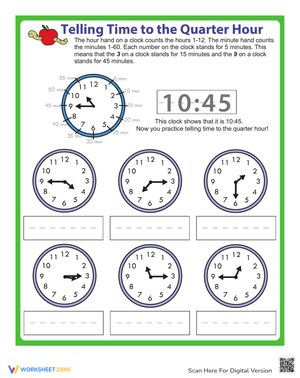
- Fill-in pages: some show an analog clock with a blank below for the written time; others show a digital time with a blank clock face waiting for hands. Running both directions of the same conversion in the same session is worth the time — students who succeed in one direction sometimes fail in the other.
- Hour vs. half-hour sorting: clock images cut apart and placed into two labeled columns. Works well as a center task or a partner warm-up before independent seat work.
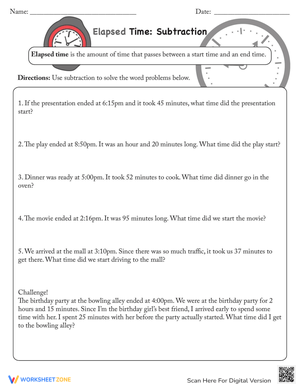
- Brief context problems: one or two sentences establish a scenario ("The bus leaves at 7:30. Draw the clock.") so students practice connecting time notation to a real event rather than treating the numbers as abstract.
Where These Fit in the Instructional Day
The draw-the-hands pages work best during guided practice, while the teacher can circulate and catch incorrect hour-hand placements before they calcify into habit. Matching and fill-in pages are reliable for the independent work block or for the 8-10 minutes between whole-group instruction and specials, when students need a task they can start and complete without additional direction.
Laminated copies with dry-erase markers give math centers a reusable station that stays in rotation for weeks. Print four or five different pages, laminate them, and keep a small set in a bin — students who visit the center can cycle through the same pages across multiple weeks without repetition feeling obvious, because the clock faces change each time. The sorting pages in particular hold up well to repeated use because students read the cards slightly differently each time depending on which they pick up first.
For Monday morning warm-ups after a weekend gap, a single fill-in page functions as low-stakes retrieval practice. Spaced retrieval on a skill like clock reading — returning to it briefly, several days after direct instruction — produces more durable retention than a single concentrated practice block. One page, five minutes, before the lesson begins.
Errors to Anticipate in Student Work
Three error patterns show up consistently enough in first-grade classrooms that it's worth knowing them before distributing the pages.
The most common is the stranded hour hand: students draw it pointing directly at the upcoming number rather than between the two. At 9:30, the hour hand lands on 10. The student isn't misreading the time — they understand that 30 minutes have passed — but they haven't grasped that the hour hand is in continuous motion. A quick demonstration with a physical clock, sweeping the minute hand from 12 to 6 while watching where the hour hand travels, usually makes this concrete in a way a diagram doesn't.
The second pattern is hand reversal: the long hand placed on a number and the short hand on the 6. Students who learned the hands by position (short points to the hour, long points to the minutes) sometimes flip that rule under cognitive load, especially on draw-the-hands tasks where they're constructing rather than reading. Color-coding on worksheets — a gray hour hand, a black minute hand, consistently applied — reduces this without requiring the teacher to re-explain each time.
The third error appears specifically on 12:30: students write 6:00. The minute hand is on 6, the hour hand is near 12, and a student who hasn't fully separated "what the minute hand tells you" from "what the hour hand tells you" combines them incorrectly. Catching this on a worksheet is useful precisely because it surfaces a conceptual gap that oral clock-reading would hide.
Alignment to 1.MD.B.3
Common Core standard 1.MD.B.3 requires students to tell and write time in hours and half-hours using both analog and digital clocks. These worksheets address the standard directly: students read analog faces and write digital times, draw hands from digital notation, and move between representations in both directions. The standard sits in the Measurement and Data domain and is typically introduced in the second half of first grade, after students have had sustained practice with time to the hour. Teachers in states using standards aligned to but not identical to Common Core will find the content consistent with their grade-level measurement expectations.
Adjusting for the Range in a First-Grade Class
Students who are still working on time to the hour benefit from pages that include a small reference image at the top — a labeled clock showing both the on-the-hour and the half-hour hand positions side by side. Reducing the number of problems per page also helps; a student who needs 15 minutes to complete 5 problems carefully will gain more from those 5 than from rushing through 12.
For students who finish quickly and accurately, asking them to write a sentence about what they might be doing at each time on the page extends the task without requiring a separate worksheet. It also shifts the skill from procedural to applied — a student who writes "At 7:30 I eat breakfast" is contextualizing the notation in a way that supports retention.
Frequently Asked Questions
1. Is this skill introduced in kindergarten or first grade?
Formal instruction and assessment land in first grade for most US curricula. Some kindergarten programs mention time to the hour informally, but 1.MD.B.3 — which includes the half hour — is a first-grade standard. Students arrive in first grade with widely varying clock exposure depending on their home environments, so a brief pre-assessment before the unit helps identify who needs foundational work on the hour before moving to the half hour.
2. How many practice sessions does a typical first grader need before this skill is solid?
Expect four to six distributed practice sessions rather than one or two concentrated ones. The concept tends to appear solid after a single lesson and then unravel two weeks later when students return to it. Short, frequent exposures — a five-minute warm-up page, a center rotation, a review problem embedded in a later unit — build the durability that a single worksheet block doesn't.
3. Do these work for students with IEPs who need modified materials?
The larger clock-face versions and reduced-problem pages function as modifications for students who need more processing time or have fine motor challenges. For students who struggle to draw hands precisely, the matching and multiple-choice formats assess the same conceptual understanding without requiring accurate hand placement.













 Interactive Worksheet Maker
 Quiz Maker
 Word Search Maker
 Crossword Puzzle Maker
 Word Scramble Generator
 Sentence Scramble Generator
 Handwriting Worksheet Generator
 Name Tracing Generator
 Fill In The Blank Generator